How to Build a Mini Spa Day at Home – 8 Easy Steps for a Full Reset
You do not need an expensive reservation or a long drive to feel genuinely pampered. Everything you need for a restorative, head-to-toe spa experience is already within reach — your bathroom, your kitchen, and a little intentional time set aside just for you.
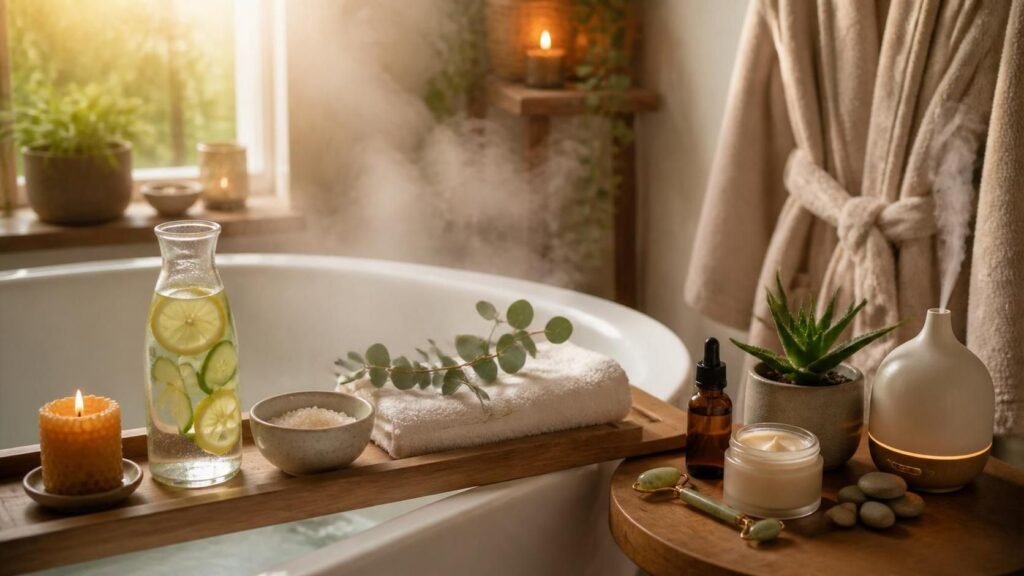
A home spa day is one of the most underrated forms of self-care. It costs almost nothing, requires no planning weeks in advance, and can be customized entirely around what your body and mind actually need that day.
Whether you have an entire Saturday or just two quiet hours on a weeknight, a mini spa day at home will leave you feeling recharged, glowing, and reset.
Below are 8 simple, indulgent steps for building a mini spa day at home — designed for real life, real budgets, and real results.
Step 1: Set the Mood First
The atmosphere you create sets the tone for everything that follows — this step matters more than any product you own.
Dim or switch the lights: Soft, warm lighting immediately signals to your nervous system that it is time to slow down and relax.
Light a candle or diffuse oils: Lavender calms, eucalyptus clears the mind, and citrus lifts your mood — pick one that fits how you want to feel.
Put on a playlist: Gentle instrumental music, nature sounds, or a lo-fi playlist creates a consistent backdrop of calm throughout your spa session.
Silence your phone: Notifications pull your attention back into the outside world — turn on Do Not Disturb and protect your peace completely.
Grab your robe and slippers: Slipping into something cozy before you even begin signals that this time belongs entirely to you.
You are not just setting a scene — you are sending a message to your mind that rest is allowed, and it is happening right now.
Step 2: Draw a Luxurious Soak Bath
A warm, intentional bath is the heart of any home spa experience and one of the fastest ways to melt tension from your body.
Add Epsom salts: Two cups dissolved in warm water draw out muscle tension and leave skin feeling noticeably softer after soaking.
Drop in essential oils: Five to ten drops of lavender or chamomile oil turn a plain bath into genuine aromatherapy you can feel.
Try a bath bomb or soak: Pre-made bath soaks with botanicals like rose petals or oats make the experience feel effortlessly luxurious.
Set the temperature thoughtfully: Warm, not scalding — too-hot water dries out skin and raises your heart rate, which works against the relaxation goal.
Soak for at least twenty minutes: Give your body real time to unwind — this is not the moment to rush, multitask, or check the time.
Close your eyes, breathe slowly, and let the water do exactly what it is designed to do: restore you.
Step 3: Give Your Skin a Deep Facial
Your face deserves as much attention as the rest of your body, and a simple at-home facial produces genuinely visible results.
Start with a thorough cleanse: Remove every trace of makeup and surface buildup before anything else touches your skin — clean skin absorbs everything better.
Steam your pores open: Hold your face over a bowl of hot water with a towel draped over your head for five to eight minutes to soften congestion.
Apply a face mask: Choose based on your skin’s current needs — clay for oily skin, sheet masks for hydration, or honey-based options for sensitive skin.
Leave it on long enough: Follow the time on the packaging — pulling a mask off too early means missing the active ingredient payoff entirely.
Finish with serum and moisturizer: Lock in all that pore-opening, mask-infusing work with a hydrating serum followed by your richest moisturizer.
A weekly facial done consistently at home will produce real changes in your skin’s texture, clarity, and overall glow over time.
Step 4: Exfoliate Your Body
Body exfoliation is the step most people skip — and it is also the one that makes the single biggest difference in how smooth and radiant your skin looks.
Use a sugar or salt scrub: These physical exfoliants slough off dead skin cells and leave behind skin that feels genuinely different to the touch.
Work in circular motions: Massaging in small circles rather than scrubbing back and forth boosts circulation while covering the skin more evenly.
Focus on rough patches: Elbows, knees, heels, and ankles hold the most buildup and respond dramatically to even one good exfoliating session.
DIY option: A mix of brown sugar, coconut oil, and a drop of vanilla extract makes a deeply nourishing scrub from ingredients already in your kitchen.
Rinse with cool water: Ending with a cool rinse closes pores and seals in the smoothness your skin just worked hard to reveal.
Soft, polished skin is not just about the moisturizer you apply after — it starts with clearing away what is sitting on top before anything else.
Step 5: Treat Your Hair
Your hair is often the last thing to receive intentional care, yet a single nourishing treatment can completely transform how it looks and feels.
Apply a deep conditioning mask: Whether store-bought or DIY, a hair mask left on for twenty to thirty minutes replenishes moisture stripped by heat and environmental damage.
Try a coconut oil treatment: Warm coconut oil massaged from roots to ends and left under a shower cap is one of the most effective and affordable hair treatments available.
Massage your scalp: Use your fingertips to massage the mask or oil into your scalp in slow, firm circles — this stimulates blood flow and feels incredible.
Wrap in a warm towel: Heat helps conditioning ingredients penetrate deeper into the hair shaft for more noticeable softness and shine after rinsing.




Rinse thoroughly with cool water: Warm water opens the cuticle to receive moisture and cool water seals it back shut — do not skip the cool rinse.
Hair that has been properly deep conditioned moves differently, catches light better, and simply feels like a treat every time you touch it.
Step 6: Do a Mini Mani-Pedi
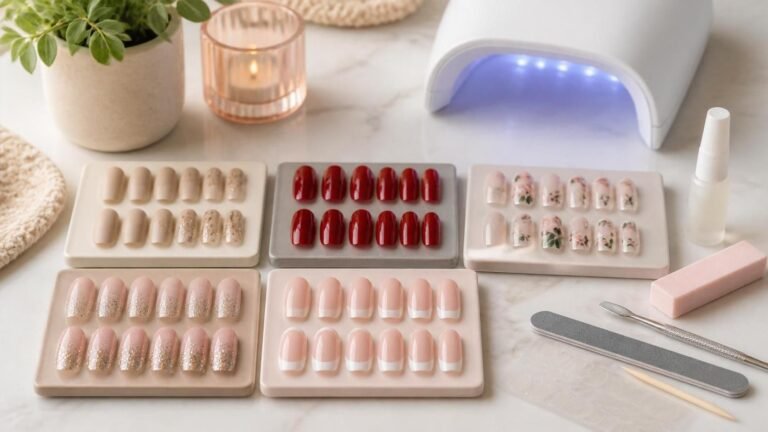
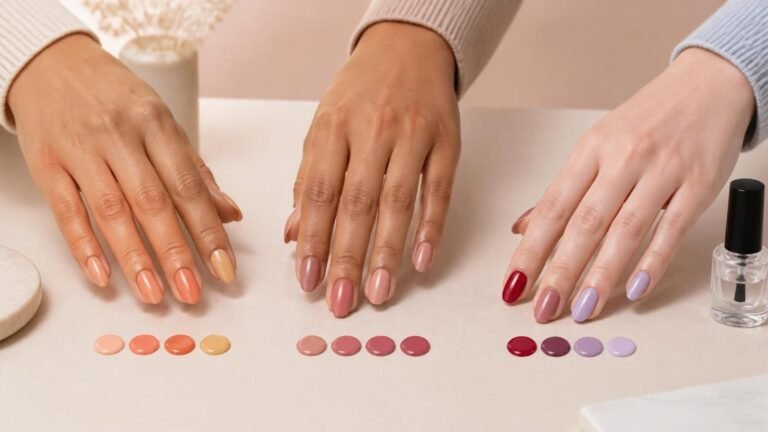
Polished, well-tended nails complete the spa experience and are one of the most satisfying forms of self-care you can do entirely at home.
Soak hands and feet first: Five minutes in warm water with a drop of gentle soap softens skin and cuticles before you do anything else.
Push back and tidy cuticles: Use a wooden cuticle pusher rather than cutting — it is safer, gentler, and still produces clean, salon-looking results.
File into your preferred shape: Rounded or oval edges chip less than sharp square ones — shape before you polish for the smoothest finish.
Apply base coat, color, and top coat: Thin layers, patience between coats, and a proper top coat are the three things that make DIY polish last.
Finish with cuticle oil: Massaging oil into each nail bed seals in moisture and leaves hands and feet looking completely finished and cared for.
There is something quietly satisfying about looking down at neat, polished nails that you did yourself — it is a small but real act of self-respect.
Step 7: Wind Down with Mindful Relaxation
The physical treatments are only half of a proper spa experience — the mental reset matters just as much as any mask or scrub.
Try five minutes of deep breathing: Slow, deliberate inhales and exhales activate the parasympathetic nervous system and physically lower stress hormones in the body.
Do a short guided meditation: Apps like Calm or Insight Timer offer sessions as short as five minutes that leave you feeling genuinely more centered.
Stretch gently: Simple seated stretches or gentle yoga poses after a bath help release the last pockets of tension your body has been holding.
Journal if it feels right: Writing down three things you are grateful for or simply what you want to feel more of shifts your mental state toward the positive.
Resist the urge to scroll: Picking up your phone at this stage undoes a significant portion of the calm you just spent time building — protect the stillness.
A spa day that ends in genuine mental quiet is one that actually restores you, rather than simply making your skin look better for a day.
Step 8: Hydrate and Nourish from the Inside Out
The final step of any good spa session is giving your body the internal care that reflects everything you have just done on the outside.
Drink a large glass of water: Baths and steam treatments are mildly dehydrating — rehydrating immediately helps your body hold onto all that flushed, glowing work.
Brew a cup of herbal tea: Chamomile, peppermint, or a calming blend is a warm, ritual-like way to close your spa session and ease into the evening.
Apply rich body lotion immediately after bathing: Damp skin absorbs moisturizer more effectively — applying straight out of the bath locks in hydration at its deepest level.
Eat something nourishing: A light, colorful snack like fruit, nuts, or a smoothie feels right after a spa session and keeps the feel-good energy going.
Sleep is the final treatment: If your spa day falls in the evening, go to bed a little earlier — sleep is when everything you just did actually repairs and renews itself.
What you put into your body on a spa day matters as much as what you put on it — inner nourishment is what makes the glow last beyond the next morning.
Frequently Asked Questions
Q: How long does a mini spa day at home actually need to be? Even ninety minutes done with real intention covers the essential steps and leaves you feeling genuinely refreshed and restored.
Q: What are the most important products to have for a home spa day? Epsom salts, a face mask, a body scrub, deep conditioner, and a good candle cover most of the experience for very little cost.
Q: Can I do a home spa day without a bathtub? Absolutely — a long shower with steam, a facial over the sink, body scrub, and hair mask work perfectly without needing a full tub.
Q: How often should I do a home spa day? Once a week is ideal, but even once or twice a month creates a meaningful self-care rhythm that your body and mind will genuinely benefit from.
Q: Are DIY face masks as effective as store-bought ones? For basic hydration and gentle exfoliation, DIY masks with honey, oats, or yogurt work beautifully and cost almost nothing to put together.
Q: What is the single best thing I can do to make my home spa feel more luxurious? Warm your towels in the dryer for ten minutes before you need them — the difference that one small detail makes is genuinely surprising.
Why Your Body Is Literally Begging You to Slow Down
Modern life does not come with natural stopping points built in. Most people move from task to task, screen to screen, and obligation to obligation without a single moment of genuine stillness. The result is not just tiredness — it is a kind of chronic, low-level depletion that accumulates quietly over weeks and months.
A home spa day is one of the few things that interrupts that pattern in a real, physical way. The combination of warm water, calming scents, touch, and intentional quiet sends direct signals to your nervous system that it is safe to relax. That is not a small thing — it is physiologically restorative in a way that simply sitting on the couch is not.
You do not need to justify slowing down, booking time off, or spending an afternoon on yourself. Rest is not a reward for productivity — it is a requirement for being well. A mini spa day at home is one of the most effective and accessible ways to meet that requirement every single week.
Glow Up
A spa day does not require a booking confirmation, a drive across town, or a triple-digit bill. It requires a little time, a little intention, and the willingness to treat yourself as someone who deserves care — because you are.
Every step in this guide is designed to feel genuinely indulgent while staying completely accessible. The warm bath, the face mask, the quiet music, the cup of tea — none of it is complicated, and all of it adds up to something that feels like a real reset.
The best version of this is one you actually do regularly. Start with just two or three steps on your next quiet evening. Build the habit slowly and let it become the kind of ritual you actually look forward to every single week.
Your mind, your skin, and your whole body will thank you for every single minute you invest in this kind of care.