
How to Build a Simple Everyday Makeup Routine That Works
A great everyday makeup routine does not have to be complicated, expensive, or take half your morning. Most people who look consistently put-together are working with five to eight products and a sequence they have done so many times it runs on autopilot.
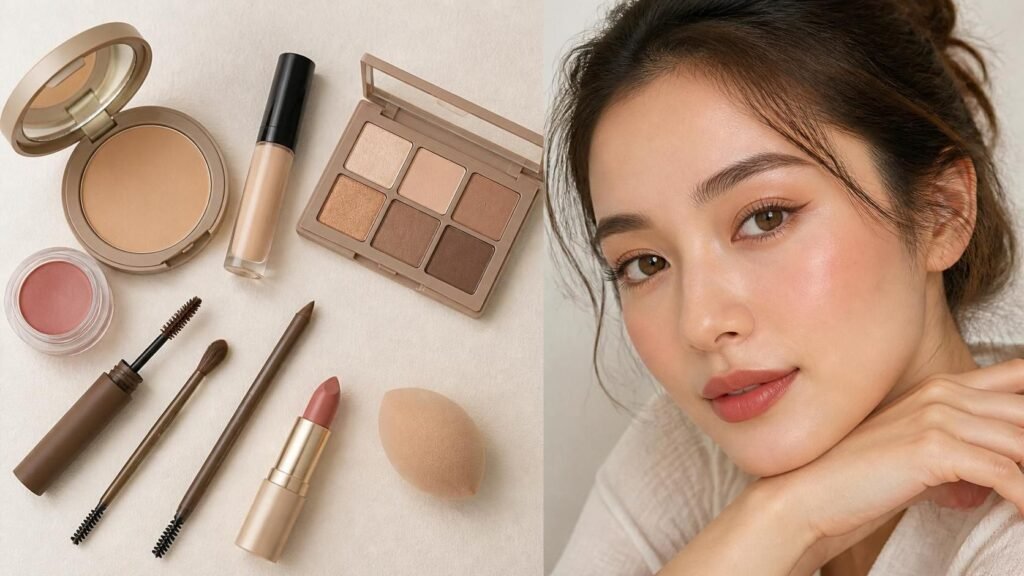
The whole point of a daily routine is to make you feel ready without making you feel overwhelmed. Getting there just takes knowing which steps actually matter and in what order.
Below are 10 simple everyday makeup routine steps chosen for real life — practical, fast, and genuinely easy to build into any morning.
1. Start With Clean, Moisturized Skin
Makeup applied to dry or congested skin never looks quite right — it clings to texture, sits unevenly, and fades faster. Starting with clean, hydrated skin creates a smooth surface that makes everything you apply afterward look significantly better.
Cleanse first to remove overnight oils and any leftover products, then follow immediately with a lightweight moisturizer while skin is still slightly damp. This base-building step takes two minutes and changes how the rest of your routine performs. Think of it as priming the canvas before you paint.
SPF habit: choose a moisturizer with built-in SPF for daytime — it replaces a separate sunscreen step and protects skin from daily UV exposure effortlessly. Skin type note: oily skin does better with a gel moisturizer that absorbs quickly; dry skin benefits from a creamier formula that stays hydrated longer under makeup. Wait time: give your moisturizer sixty seconds to absorb before moving on — applying makeup over a still-tacky moisturizer causes pilling and uneven blending.
2. Apply a Lightweight Base
Heavy foundation is not necessary for an everyday look. A tinted moisturizer, BB cream, or light-coverage foundation evens out skin tone without masking it, and it takes under a minute to apply without tools if you are short on time.
The goal with a daily base is a skin-like finish that makes you look more awake and even — not like you are wearing makeup. Less coverage worn consistently looks far more natural than heavy coverage that fades unevenly by midday. Pick a formula that matches your skin type as much as your skin tone.
Application tool: clean fingers warm the product and press it into the skin for the most natural finish — brushes and sponges give more coverage if you want it. Shade test: always swatch on your jawline in natural light, not on the inside of your wrist — the jaw sits closest to the neck and shows whether the shade actually blends seamlessly. Coverage tip: build coverage only where you need it by pressing an extra layer on uneven areas rather than applying a heavier formula all over.
3. Conceal Where It Matters
Concealer used targeted is far more effective than concealer used everywhere. Under-eye circles, blemishes, and any redness around the nose or chin are the areas that benefit most — and addressing just those spots takes less than a minute.
Pat concealer on gently rather than dragging it. Tapping the product into the skin with a fingertip or small brush blends it far more seamlessly than rubbing, which moves the coverage away from where you actually placed it. Under the eyes especially, patting rather than blending keeps the coverage intact.
Shade guide: under-eye concealer works best one shade lighter than your foundation; blemish concealer works best matching your skin tone exactly so it does not highlight the spot. Set it: a tiny dusting of translucent powder over under-eye concealer prevents it from creasing into fine lines within the first hour of wear. Less is more: one thin layer well-patted covers more effectively than two thick layers that sit on top of the skin and look cakey by afternoon.
4. Add a Natural Flush With Blush
Blush is the most underused step in a minimalist routine and the one that makes the biggest difference. A small amount of the right shade gives an instant healthy glow that no amount of base or concealer can replicate on its own.
Smile lightly and apply blush to the apples of the cheeks, blending upward toward the temples. Cream blush applied with fingers blends into the skin beautifully and looks genuinely skin-like. Powder blush on top of foundation or powder base is equally simple and blends quickly with a fluffy brush.
Shade for everyone: a soft peachy-pink reads as natural across most skin tones — it mimics the flush of actual warmth in the face rather than sitting on top of it. Placement shift: blending blush slightly higher toward the temples rather than just on the apples adds a subtle lifting effect that makes the whole face look more awake. Start light: tap off excess product before applying — it is much easier to build blush up than to remove an overdone flush once it is on.
5. Lightly Fill In Your Brows
Brows do more structural work than almost any other makeup step. Even a minimal touch of definition shapes the face, frames the eyes, and makes the rest of the makeup look more intentional — even when everything else is very simple.
You do not need perfectly sculpted arches for a daily routine. The goal is to fill in any gaps and keep the natural shape looking tidy. A brow pencil gives the most precision with the least effort. A tinted brow gel is the fastest option and works perfectly if your brows are already reasonably full.
Pencil technique: use light, hair-like strokes rather than drawing a solid line — it looks far more natural and requires no blending afterward. Gel shortcut: tinted brow gel combs, fills, and sets in one step — it is the best option when you want minimal time on this step without skipping it entirely. Shape reference: follow the natural arch of your brow rather than drawing a new shape — filling in what you already have always looks more flattering than reshaping.
6. Add a Swipe of Mascara
Mascara is the single step that makes the most visual impact per second of effort. One or two coats open the eyes, define the lashes, and make the whole face look more awake — even when the rest of the routine is almost invisible.
Start at the root of the lashes and wiggle the wand gently back and forth as you pull upward. This separates and lifts rather than clumping. One coat is enough for a natural look. Two coats add more drama while still reading as everyday appropriate.
Brown vs black: brown mascara gives a softer, more natural result that works especially well with minimal makeup — black is bolder but both are entirely valid choices for daily wear. Wand shape: a curved wand lifts and curls without a lash curler; a straight wand gives more lengthening — choose based on what your lashes naturally need. Smudge fix: if mascara transfers to your under-eye area during the day, a small dry cotton swab pressed gently against the smudge lifts it without disturbing the rest of your makeup.
7. Apply a Neutral Eyeshadow (Optional)
This step is genuinely optional — skip it on days when time is short and the routine still looks complete without it. When you have an extra minute and want slightly more definition, a single neutral shade across the lid adds dimension without looking overdone.
A soft taupe, warm brown, or champagne-toned shade applied with a finger or a fluffy brush and blended at the edges is all this step requires. No crease shading, no liner, no complexity. The point is to add the faintest suggestion of depth to the eye area so the overall look feels slightly more finished.
Shade selection: stick to matte neutrals for daytime — a very slight shimmer on the lid center is acceptable but anything obviously sparkly shifts the look away from everyday into event territory. Finger application: pressing a neutral shade onto the lid with a fingertip and blending the edges with a clean fingertip takes thirty seconds and looks very natural. Skip it freely: this step adds polish but the routine functions perfectly without it — on rushed mornings, mascara alone on the eyes is a completely valid choice.
8. Keep Lips Soft and Natural
Everyday lip looks work best when they feel comfortable and require no mid-morning mirror check. A tinted lip balm, a sheer gloss, or a neutral lipstick in a shade close to your natural lip color all deliver color without commitment and feel genuinely wearable all day.
The ideal everyday lip product should hydrate while it colors, survive a cup of coffee without completely disappearing, and suit both a relaxed and a professional setting. That description fits most tinted balms, satin-finish nudes, and sheer berry or rosy shades far better than it fits matte liquid lipstick.
Shade shortcut: the easiest way to find your ideal everyday lip shade is to look at the natural color of your lips and choose something one or two shades deeper — it always looks intentional and flattering. Balm base: apply a plain lip balm first and let it absorb for thirty seconds before adding color — it gives any lip product a smoother, more even base to sit on. Reapplication ease: choose a lip product that is comfortable enough to reapply without a mirror — gloss and tinted balm are the most forgiving options for on-the-go touch-ups.
9. Set Your Makeup Lightly
Setting is the step that determines how long everything you just did actually lasts. It does not need to be elaborate — a light dusting of translucent powder on oily areas or a few spritzes of setting spray is genuinely all it takes.
Translucent powder controls shine on the forehead, nose, and chin without adding coverage or changing the shade of your makeup. Setting spray gives a dewy, skin-like finish that helps everything stay in place without the powdery quality that some people find uncomfortable. Choose based on your skin type and the finish you prefer.
Oily skin tip: a light press of blotting powder on the T-zone rather than all over keeps shine controlled without making the rest of the face look flat or matte. Dewy finish: setting spray misted at arm’s length and allowed to dry naturally gives a fresh, just-done finish that makes makeup look more like skin and less like product. No-set option: if your skin is dry and your makeup tends to stay put naturally, skipping this step entirely is fine — not every skin type needs it.
10. Keep the Routine Consistent and Comfortable
The most effective everyday makeup routine is the one you actually do every day. That means it has to feel easy, quick enough for real mornings, and composed entirely of products you genuinely enjoy using. If any step feels like a chore, it will be the first one you skip.
Keep your everyday products in one place — a small tray, a pouch, or a corner of the bathroom counter where you can see everything at once without digging. Visible products get used. Products stored away get forgotten. The routine becomes automatic faster when the setup removes every friction point from the process.
Edit regularly: every few months, reassess which products you actually reach for — remove anything unused and replace it with something that genuinely fits into daily life better. Confidence is the finish: no product perfects a look as effectively as wearing it comfortably and moving on with your day — the goal is to feel ready, not to look flawless. Five-minute rule: if the full routine takes longer than ten minutes on a normal morning, it is too complex for everyday — identify one or two steps to simplify or combine.
Frequently Asked Questions
Q: How long should an everyday makeup routine take? For most people, five to ten minutes covers everything in a simple daily routine. The steps in this guide are each designed to take under two minutes individually. Once the routine becomes habit and you know your products well, the whole sequence often compresses to under seven minutes without rushing.
Q: What are the absolute minimum products needed for a daily makeup look? Tinted moisturizer or light foundation, concealer for problem areas, blush, brow gel, and mascara covers the core of a natural everyday look in five products. Add a tinted lip product and you have a complete routine. Everything beyond that is optional enhancement.
Q: Should I wear makeup every day even if I prefer a natural look? That is entirely a personal choice. Many people find that a minimal routine — even just moisturizer with SPF, a swipe of mascara, and a tinted balm — makes them feel more ready and present without looking heavily made up. The routine does not need to be visible to be worth doing.
Q: How do I make my makeup last longer throughout the day? Start with clean, moisturized skin, apply a primer or SPF moisturizer, and finish with either translucent powder or setting spray depending on your skin type. Touching your face frequently is the main thing that breaks down makeup throughout the day — the setting step just helps the base stay where you put it.
Q: Is foundation necessary for an everyday routine? No. A tinted moisturizer or BB cream does what most people actually need from a daily base without the weight or coverage of traditional foundation. Full foundation is worth having for events and occasions when more coverage is genuinely wanted — it does not need to be part of every morning.
Q: What should I do differently in summer vs winter for my everyday makeup? In summer, swap to lighter formulas and SPF products, use less powder, and consider waterproof mascara in humid conditions. In winter, add more hydration to the base step, lean toward cream products over powder, and consider a slightly richer lip product to combat dryness. The step sequence stays the same — just the product textures shift.
The Real Reason Most Makeup Routines Feel Overwhelming
The problem is almost never the number of steps. It is the number of products competing for the same real estate in your routine. Most people accumulate more makeup than their daily life actually calls for — dozens of foundations trialed, multiple blush shades that all roughly do the same job, eyeshadow palettes opened twice. The abundance creates decision fatigue that makes even a simple routine feel heavy before it starts.
Editing down to a small, deliberate set of products removes that friction almost immediately. When you have one foundation that works, one blush that photographs well on your skin, one mascara that reliably performs — the routine practically runs itself. The effort shifts from deciding what to use to simply using it. That is the version of a makeup routine that actually sticks.
The other thing that helps is accepting that everyday makeup is not supposed to be the most impressive version of what you can do. It is the functional version. The one that makes you feel prepared, takes minutes rather than half an hour, and holds up through a full day without needing significant repair. That goal is completely achievable with the ten steps in this guide — no technique, no artistry, and no expensive products required.
Ready in Minutes
A simple everyday makeup routine is less about the products you own and more about the sequence you have learned to trust. Once these ten steps become automatic — and they will, faster than you expect — the routine stops feeling like something you have to do and starts feeling like a small daily ritual that sets the tone for the morning.
Start with whatever feels most manageable. Even just three steps — a light base, mascara, and a tinted balm — is a real routine that produces a real result. Add steps as you feel ready, remove anything that does not fit your actual life, and resist the pressure to make it more complicated than it needs to be.
The best makeup routine is the one you repeat every day without resenting it. That version looks different for everyone — and that is exactly how it should be.
Getting ready should feel like the start of something good, not like another task to power through.
