Can You Play Volleyball With Long Nails? Risks, Tips, and Real Talk
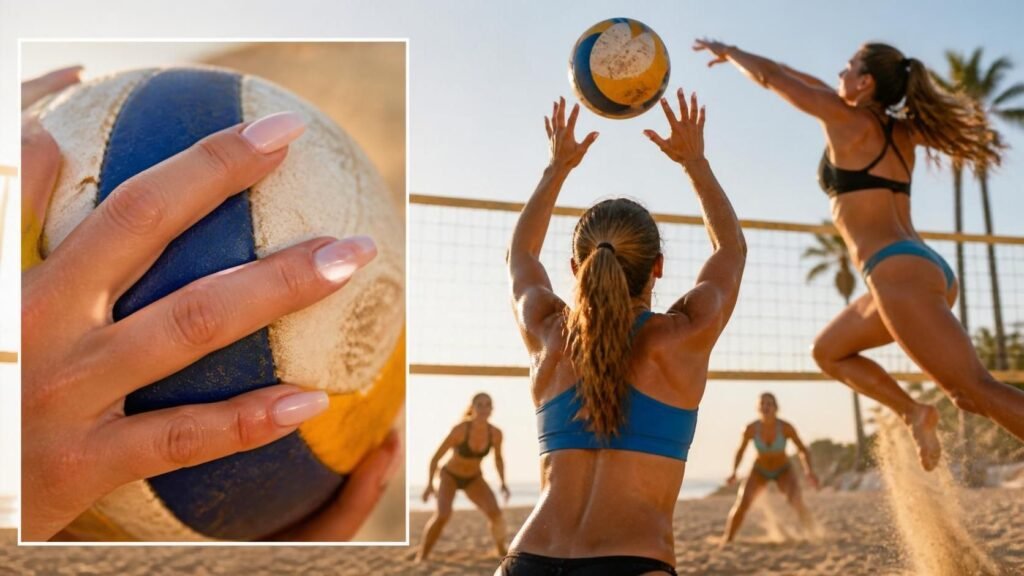
Long nails and volleyball might seem like an impossible combination. One demands delicate polish and careful hands, the other throws a high-speed ball straight at your fingertips. If you love both your manicure and the sport, this question has probably crossed your mind more than once. The honest answer is yes — you can play volleyball with long nails, but knowing the risks and preparing smartly makes all the difference. You do not have to choose between style and sport.
Below are the key things every nail-loving volleyball player should know — covering risks, nail types, protective tips, and what the pros actually do.
The Real Risks of Playing Volleyball With Long Nails
Volleyball is a fast, contact-heavy sport where your hands absorb repeated impact from serves, spikes, blocks, and sets. Long nails face genuine challenges in this environment. Understanding the risks helps you make smarter decisions before stepping on the court.
Nail breakage risk: A direct ball hit on extended fingertips can crack or completely snap a nail at the base painfully. Nail bed injuries: When a nail breaks under force, it can tear away from the nail bed, causing bleeding and soreness. Scratching teammates: Sharp or extended nail edges can unintentionally scratch other players during close plays and digs. Performance interference: Very long nails change how your fingers contact the ball, reducing precision and control significantly. Distraction factor: Worrying about your nails mid-game pulls focus away from plays and slows your reaction time on the court.
How Nail Length Changes Everything on the Court
Not every long nail carries the same level of risk. The actual length of your nails determines how much danger you are putting yourself and your manicure through during active gameplay.
Extra-long nails: Nails extending more than a few millimeters past the fingertip are the highest-risk category for volleyball play. Medium-length nails: Nails that just clear the fingertip offer a workable balance between looking stylish and staying court-safe. Short nails: Even short natural nails kept clean and polished can look chic while offering the safest experience on the court. The tipping point: As a general guideline, if your nail extends visibly past your fingertip pad, the breakage risk increases sharply. Practical test: Press your fingertips flat on a table — if nails lift off the surface, they are likely too long for safe volleyball play.
How Nail Shape Affects Safety During Play
Length is one factor, but shape plays an equally important role in how well your nails hold up through a volleyball game. Certain shapes are far more vulnerable to impact than others.
Stiletto shape: Extremely pointed tips concentrate all impact force at one sharp point, making breakage almost inevitable during play. Coffin or ballerina: The flat squared tip looks gorgeous but creates a wide surface that catches ball impact across the whole edge. Rounded shape: Distributes force more evenly around the nail edge, making it the most volleyball-friendly option for longer nails. Almond shape: A slightly tapered version of oval, almond nails are strong at the sides and reduce snagging during hand-contact plays. Square shape: Moderate-length square nails are a solid choice — clean corners slightly filed to remove sharp edges work best on court.
Which Nail Type Holds Up Best in Volleyball
The material your nails are made of — whether natural, gel, or acrylic — has a direct impact on how they respond to the pressure of volleyball play. Some types genuinely hold up better than others.
Natural nails: Short, strong natural nails are the safest option — they flex slightly with impact rather than snapping under pressure. Gel nails: Gel has a natural flexibility that allows it to absorb some impact without cracking, making it a better sport option than acrylic. Acrylic nails: Strong and rigid, acrylics do not flex on impact, which means when they break, they break hard and often painfully. Dip powder nails: Similar to acrylics in rigidity — they look great but share the same high-breakage risk under direct ball impact. Builder gel: A newer option that sits between gel and acrylic in strength and flex — more court-friendly than traditional acrylics overall.
Smart Tips for Playing Volleyball Without Wrecking Your Nails
If giving up your nails entirely is not an option, there are real, practical strategies that help minimize the risk while you play. These tips are used by athletes who refuse to let sport dictate their style choices.
Tape your fingers: Athletic finger tape wrapped around the nail and first knuckle provides support and cushions impact during play. Keep nails short to medium: The single most effective way to protect your manicure is simply not letting nails extend too far past the tip. Use strengthening base coat: A nail hardener applied before polish creates an extra layer of protection that reduces chipping and cracking. Hydrate nail beds daily: Dry, brittle nails break far more easily — cuticle oil applied regularly keeps nails flexible and resilient. Wear sports gloves: Padded or close-fit sport gloves are not traditional in volleyball but provide real physical protection when needed.
Pros and Cons of Playing Volleyball With Long Nails
Every choice comes with trade-offs, and keeping long nails for volleyball is no different. Understanding both sides helps you decide what balance works best for your specific situation and play level.
Style stays intact: You do not have to sacrifice your personal aesthetic or wait weeks for your nails to grow back after cutting them. Casual games are manageable: In low-impact, recreational settings, medium-length nails with proper prep can survive most game sessions. Gel flexibility advantage: If you wear gel nails, their natural bend gives them a real edge in surviving casual court contact effectively. Breakage risk is real: Even with precautions, a fast or unexpected ball contact can break even a well-maintained long nail instantly. Competitive play suffers: At higher skill levels, long nails affect ball-setting technique and hand positioning in ways that limit performance.
What Professional Volleyball Players Actually Do
If you have watched professional volleyball — Olympic level, collegiate, or club — you will notice something consistent across nearly every player. Their nails are short. Some are kept almost bare. This is not coincidence or lack of interest in style.




Safety first: At elite levels, a broken nail mid-game is a performance and safety liability that coaches and players simply will not accept. Ball control priority: Short nails allow fingers to spread wide and flat against the ball for maximum setting and passing accuracy and control. Team responsibility: Scratching a teammate during a tight block or dig can cause injury — professionals eliminate that risk entirely. Tournaments have rules: Some volleyball organizations and coaches formally require short nails as part of safe play standards for competition. Off-season freedom: Many professional players fully embrace long, decorated nails during breaks and off-season when court demands are gone.
Frequently Asked Questions
Can acrylic nails survive a full volleyball game? They might make it through, but acrylics are rigid and break hard under direct impact. The risk of a painful break is significantly higher than with gels.
Are gel nails safer than acrylics for playing volleyball? Yes. Gel nails have natural flexibility that allows them to absorb some impact before cracking, making them a smarter choice for active play.
Can I still spike the ball effectively with long nails? You can attempt it, but very long nails shift contact away from the palm toward the fingertips, reducing power and increasing breakage risk greatly.
How long should nails be to play volleyball safely? Short to medium length — ideally not extending more than a couple of millimeters past the fingertip — is the safest practical range for court play.
Does taping really help protect long nails during volleyball? Yes. Athletic finger tape wrapped around the nail and knuckle provides genuine physical support and reduces direct impact force on the nail plate.
Is it ever okay to play competitive volleyball with long nails? For recreational and casual play, yes with precautions. For competitive or organized volleyball, it is generally not recommended due to safety and performance factors.
The Real Reason Most Athletes Keep Their Nails Short
It is not that athletes do not care about their appearance — most absolutely do. The reason short nails dominate sports like volleyball is purely functional. Your hands are your primary tool, and anything that compromises the way they work directly affects the outcome of the game. Every ball you set, dig, or spike passes through your fingers. When nails get in the way, even slightly, the body automatically adjusts — and those small adjustments add up to real performance losses over time.
Beyond personal performance, there is a team element. Volleyball is a contact sport in a small shared space. A sharp nail can scratch a teammate’s arm or face during a block, a dive, or a tight play at the net. That is not just uncomfortable — it is a liability. Professional athletes are trained to think about their impact on the whole team, and short nails are a simple way to eliminate one unnecessary risk entirely.
The athletes who do wear nails on the court — and some do, at recreational levels — are not careless. They are strategic. They keep lengths manageable, choose flexible nail types, tape their fingers, and accept that some risk remains. That honest awareness is what separates someone who plays smart from someone who ends up with a broken nail and a sore finger ten minutes into the first set.
Serve, Set, Spike — and Still Look Good
Loving your nails and loving volleyball do not have to cancel each other out. With the right nail length, the right material, and a few smart protective habits, you can stay on the court without completely sacrificing your style. It might mean keeping nails slightly shorter during your playing season and going full glam when you are off the court — and honestly, that trade-off is worth it.
Your nails are an expression of who you are. Your game is too. Both deserve to look and feel their best. Finding the middle ground between them is not a compromise — it is just being smart about how you show up, whether that is at the net or at the nail salon.
So tape up, choose your nail shape wisely, keep a bottle of cuticle oil in your bag, and get back on the court. You have got serves to ace and a manicure to protect.
The ball is in your court — quite literally.