How to Keep Your Home Stylish and Clutter-Free (6 Steps That Actually Work)
Your home should feel like a breath of fresh air the moment you walk in. Not a source of stress, not a to-do list with walls, but a calm and beautiful space that genuinely reflects who you are. The problem is that clutter sneaks in quietly — a pile here, a drawer overflow there — until the whole place feels out of control.
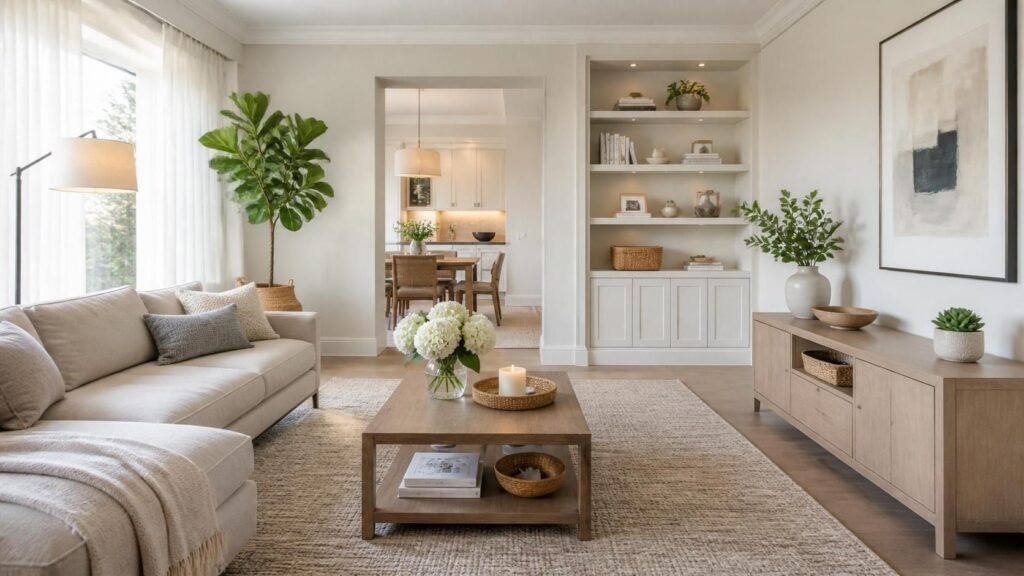
The good news is that a stylish, organized home is not reserved for people with extra time or a designer budget. It comes down to a few intentional strategies applied consistently.
Below are 6 practical steps for keeping your space stylish and clutter-free, without sacrificing personality or comfort.
Step 1: Start with a Proper Declutter Session
Before any organization system can work, the excess has to go. Decluttering is not about stripping your home down to nothing — it is about making deliberate choices about what earns its place in your space. Walking through each room with fresh eyes changes what you notice and what you are willing to let go of.
Start small: Begin with one drawer or one shelf rather than a whole room to build momentum without burning out.
Ask the right questions: If you would not buy the item again today, that is a clear signal it no longer belongs in your space.
Donate with intention: Passing items to someone who will actually use them makes letting go feel purposeful rather than wasteful.
Tackle categories, not rooms: Clearing all your books or all your clothing at once creates a more complete and lasting result.
The one-year rule: If you have not used or worn something in the past twelve months, it is almost certainly safe to release it.
Step 2: Define Your Storage Solutions
Smart storage is what separates a visually calm home from a chaotic one. Every item needs a designated home, and that home should be both functional and attractive. When storage looks good, you are far more likely to actually use it consistently.
Baskets and bins: Woven or linen baskets in living areas keep loose items contained while adding warmth and texture to shelves.
Drawer organizers: Divided inserts for cosmetics, utensils, or office supplies eliminate rummaging and keep surfaces clear.
Open shelving strategy: Style shelves with a mix of stored items and curated decor so they look intentional rather than just packed.
Hidden storage furniture: Ottomans with lids, storage benches, and lift-top coffee tables do double duty without adding visual noise.
Match materials to the room: Rattan, linen, wood, or ceramic storage pieces that complement your existing palette become part of the decor.
Step 3: Create Zones for Functionality
A home that feels chaotic usually lacks clear zones. When everything has a defined purpose and a specific area, items stop migrating across the house and piling up in random spots. Zones also make tidying faster because everything has an obvious place to return to.
Work zone: Dedicate a desk area specifically to work tasks, keeping supplies contained and mentally separating work from rest.
Relaxation zone: A reading corner or lounge spot with a small side table keeps books, remotes, and blankets organized and accessible.
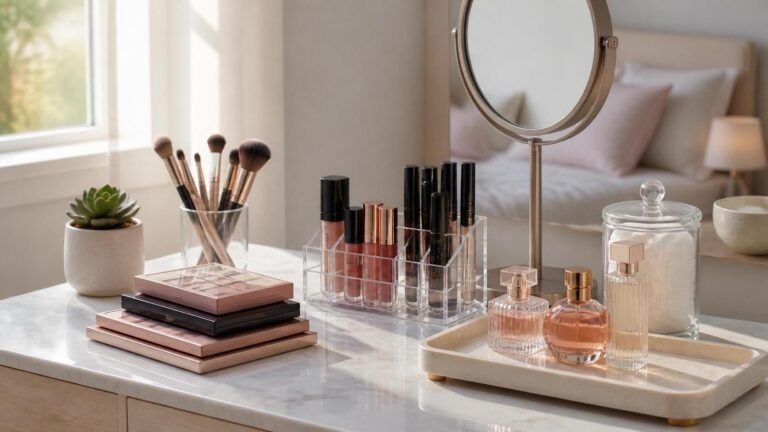
Beauty zone: A vanity tray or dedicated shelf for skincare and cosmetics keeps these items corralled and easy to find daily.
Kitchen zones: Separating prep, cooking, and storage areas within the kitchen cuts down on counter chaos and speeds up meal prep.
Label where needed: In pantries, closets, or shared spaces, clear labels help everyone in the household respect the system consistently.
Step 4: Use Minimalism and Intentional Decor
Styling a space well is less about adding things and more about choosing the right things. Every surface does not need to be filled. Every shelf does not need an item on every inch. Intentional decor creates visual breathing room and makes the pieces you love stand out more clearly.
Limit surface displays: Choose two or three meaningful or beautiful objects per surface and let negative space do the rest of the work.
Stick to a cohesive palette: A consistent color story across a room creates harmony even when materials and textures are varied.
Layer textures thoughtfully: Mixing linen, wood, ceramic, and metal adds depth and interest without requiring more objects.
Edit seasonally: Rotating decor a few times a year keeps the space feeling fresh without accumulating more permanent clutter.
Let one statement piece lead: A bold lamp, a large print, or a sculptural vase anchors a room so smaller items do not need to compete.
Step 5: Develop Daily Habits
The most beautiful organization system collapses without consistent daily habits to maintain it. Small, repeatable actions throughout the day are what keep a home looking like someone cares about it — without requiring constant deep cleaning or reorganizing sessions.




Make the bed immediately: A made bed transforms the visual energy of a bedroom in under three minutes every single morning.
Clean as you go: Wiping counters and putting things away during tasks rather than after prevents buildup before it starts.
Reset each evening: A ten-minute tidy before bed means you wake up to a calm, ordered space every day instead of yesterday’s mess.
One in, one out: When something new comes into the home, something old leaves — this keeps the overall volume of stuff from creeping up.
Put things back immediately: Returning items to their designated spots right after use is the single most effective habit for sustained tidiness.
Step 6: Regularly Reassess Your Space
A home that served you perfectly two years ago may not serve your current life at all. Needs shift, routines change, and spaces that made sense before can start working against you. Building in regular reassessments keeps your home aligned with who you actually are right now.
Seasonal reviews: Every three months, walk through each room and ask whether the current setup still supports your daily routine well.
Rotate decor intentionally: Swapping out textiles, artwork, or accent pieces with the seasons refreshes the space without spending on new items.
Revisit storage systems: What worked when you moved in may need adjusting as your habits and possessions evolve over time.
Donate as you go: Keeping a donation box in a closet makes it easy to add items as you notice them rather than waiting for a big purge.
Celebrate progress: Noticing how far your space has come is genuinely motivating — it reinforces the habits that got you there.
Frequently Asked Questions
Q: Where is the best place to start when decluttering an overwhelming space? Start with one small, contained area like a single drawer or bathroom cabinet. Finishing one zone completely builds the momentum to tackle larger spaces.
Q: How do I keep my home organized when I have a busy schedule? Daily micro-habits like a ten-minute evening reset and putting things back immediately after use maintain order without requiring dedicated cleaning sessions.
Q: Can a home feel stylish and still be very organized? Absolutely. Thoughtful storage, intentional decor, and a cohesive color palette make organization a design feature rather than something that competes with aesthetics.
Q: How often should I do a full declutter of my home? A light seasonal review every three months plus one thorough annual declutter keeps the volume of belongings manageable and the space feeling intentional.
Q: What storage products are worth investing in for a stylish home? Quality baskets, drawer organizers, and multi-function furniture like storage ottomans offer the best return — they are used daily and visible constantly.
Q: How do I stop clutter from building back up after I organize? The one-in-one-out rule and assigning every item a permanent home are the two habits that most reliably prevent clutter from returning after a clear-out.
Why a Clutter-Free Home Actually Changes How You Feel Every Day
The connection between your physical environment and your mental state is well-documented and genuinely powerful. A cluttered space creates background stress that most people do not even consciously register — it sits at the edge of awareness, quietly draining energy and focus. Clearing that clutter does not just make the room look better. It changes how you feel standing in it.
Studies in environmental psychology consistently show that people report higher levels of calm, creativity, and motivation in organized, uncluttered spaces. The brain processes a tidy room as a low-threat environment, which allows it to relax and operate with more clarity. That is why even a quick ten-minute tidy can shift your mood and your productivity in a measurable way.
Designing your home with intentionality — choosing what stays, where it lives, and how it looks — is ultimately an act of self-respect. It communicates to your own mind that your environment is worth caring for, which often spills over into how you care for yourself in other areas of life too. A beautiful, organized home is not a luxury. It is a form of daily nourishment.
The Secret to a Home That Always Looks Pinterest-Ready
The homes that stop people mid-scroll on Pinterest are not necessarily larger, more expensive, or filled with designer pieces. What they have is intentionality — every visible element appears to be chosen rather than defaulted to. That quality is achievable in any home at any budget when you apply the right principles consistently.
Cohesion is the biggest visual secret. When the colors, textures, and proportions in a room work together, the eye reads the space as calm and curated even if the individual pieces are simple or affordable. A linen basket, a wooden tray, and a ceramic vase in complementary tones create more visual harmony than a collection of mismatched statement items.
Negative space is the second secret that most people overlook. Empty space is not wasted space — it is what allows the things you do display to breathe and be seen. Filling every surface out of a fear of emptiness is the fastest way to make a beautifully decorated room look cluttered. Leaving surfaces partially bare is a design decision, not a sign that something is missing.
✨ Your Space, Elevated: The Life You Want Starts at Home
The home you want is closer than it feels right now. It does not require a complete renovation, a massive budget, or a free weekend to overhaul everything at once. It requires small, consistent choices made with intention over time — and this guide gives you exactly the framework to make them.
Start with one step. Clear one surface. Define one zone. Build one daily habit. Each small action adds to the next, and within a few weeks your space will feel noticeably lighter, calmer, and more like a place you genuinely love being in.
A stylish, clutter-free home is not a destination you arrive at once and maintain effortlessly forever. It is a practice — and the more you do it, the more natural and enjoyable it becomes. Save this guide, share it with someone who needs it, and begin today.