
Can You Use Super Glue on Nails? The Truth + Safer Alternatives
A nail pops off the night before a big event and the first thing you spot is a tube of super glue.
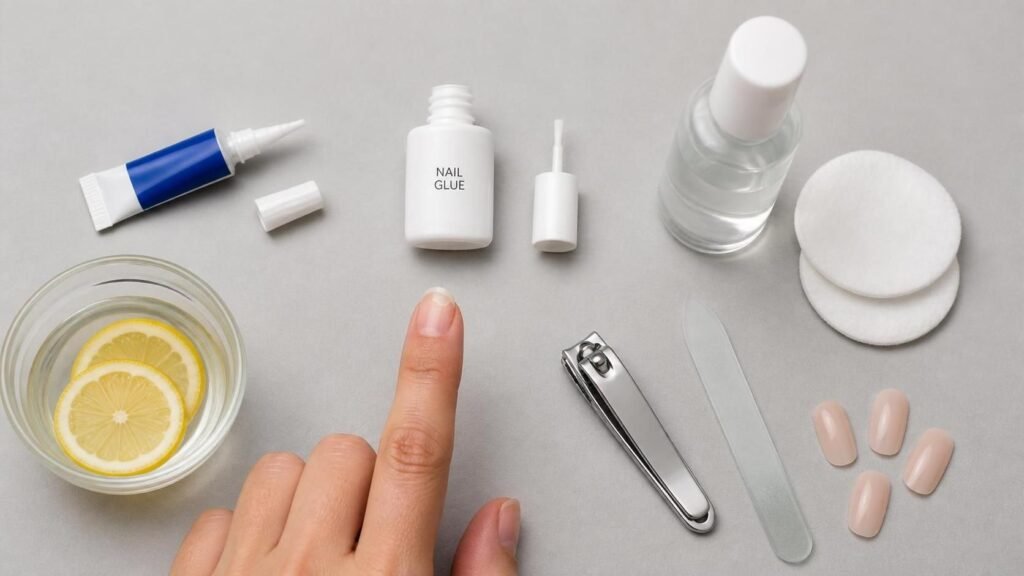
It feels like a logical fix — fast, strong, and right there in the drawer.
But super glue was not made for your body, and using it on nails comes with real risks most people do not know about.
The good news is there are safer, smarter options that work just as quickly without the damage.
Below is everything you need to know about super glue on nails — the risks, the differences, and the alternatives that actually protect your nail health.
Is Super Glue Actually Safe to Use on Nails?
The straightforward answer is no — super glue is not safe for use on nails.
It is an industrial-strength cyanoacrylate adhesive designed for bonding hard surfaces like metal, wood, and plastic.
Your nails and skin are not what its chemical formula was designed to handle.
Damage risk: The bond super glue creates is extremely aggressive and can strip layers of your natural nail during removal.
Skin risk: Even a small amount of super glue making contact with your cuticles or surrounding skin can cause burning and irritation.
Fume risk: Super glue releases chemical vapors as it cures — inhaling these at close range near your face is genuinely harmful.
Brittleness tip: The harsh formula pulls moisture from the nail plate as it dries, leaving nails dry, weakened, and prone to cracking.
The fact that it bonds things instantly does not make it safe — it actually makes the potential damage happen faster and harder to undo.
What Actually Happens When You Put Super Glue on Your Nails?
Many people find out the hard way that super glue causes more problems than it solves.
The initial hold feels satisfying, but the side effects start showing up quickly.
Understanding exactly what happens helps you make a smarter decision before you reach for that tube.
Brittleness tip: Super glue dehydrates the nail plate rapidly, making natural nails dry, fragile, and far more likely to snap or peel.
Painful removal tip: Because the bond is industrial-strength, removal almost always pulls away surface layers of your real nail underneath.
Infection tip: Moisture trapped under a fake nail held on with super glue creates the perfect environment for bacterial and fungal growth.
Injury tip: Super glue sets in seconds — if it contacts your skin or bonds fingers together, separating them can cause tearing and pain.
These are not rare worst-case scenarios — they are the predictable outcomes of using a product on your body that was never intended for it.
Nail Glue vs. Super Glue — What Makes Them Different?
Both products are cyanoacrylate-based adhesives, so people often assume they are basically the same thing.
They are not — and the difference matters significantly when it comes to your nail health.
The chemical concentrations, added ingredients, and safety standards between them are worlds apart.
Formulation tip: Nail glue uses cosmetic-grade cyanoacrylate at lower concentrations specifically designed to be safe against skin and nail tissue.
Flexibility tip: Nail glue is formulated to flex slightly with the natural movement of your nail, while super glue sets rigid and hard.
Removal tip: Nail glue is designed to dissolve safely with acetone — super glue resists removal far more aggressively, causing damage in the process.
Safety tip: Nail glue undergoes cosmetic safety testing before sale; super glue has no such testing for skin or nail contact use.
Choosing nail glue over super glue is not just a preference — it is a meaningful difference for the long-term health of your nails.
Safer Alternatives to Super Glue for Every Nail Situation
You do not need super glue to fix a nail emergency or maintain beautiful press-ons.
These four alternatives cover every scenario, from a quick last-minute fix to a long-lasting professional-style bond.
Each one is safer, gentler, and works just as reliably for nail applications.
Nail glue tip: Salon-quality nail glue is the gold standard for press-ons and broken nail repairs — dries fast, holds firmly, and removes safely.
Adhesive tab tip: Double-sided nail tabs are perfect for temporary wear — they hold well for a night or weekend and leave zero residue.
UV gel glue tip: Gel nail adhesives cured under a UV or LED lamp create a long-lasting, professional-strength bond that is still nail-safe.
Repair kit tip: Drugstore nail rescue kits include safe bonding solutions specifically designed to fix cracks and breaks without harsh chemicals.
Having even one of these options ready at home means you will never feel tempted to reach for super glue again when a nail emergency strikes.
What to Do If Super Glue Is Truly Your Only Option
There are rare moments when you genuinely have no nail glue available and an event is in one hour.
If super glue is absolutely the only thing on hand, there are ways to minimize the damage.
These are damage-reduction tips — not an endorsement — and the fix should be temporary only.
Amount tip: Use the absolute smallest dot of glue possible — a tiny amount bonds just as effectively and causes far less damage than a heavy coat.
Contact tip: Be extremely careful to keep the glue entirely off your skin and cuticles — even small contact can cause burning and bonding.
Ventilation tip: Move to an open window or outside space before applying — never use super glue in a closed room near your face.
Timeline tip: Commit to removing it properly within 24 hours using acetone — the longer it stays on, the more damage it causes to the nail.
Think of it as a bridge solution only — something to get you through the next few hours until you can replace it with a proper nail-safe product.
How to Remove Super Glue From Your Nails Without Causing More Damage
If super glue is already on your nails, the worst thing you can do is try to peel or force it off.
Forceful removal tears layers of the natural nail with it, leaving the nail plate thin, raw, and painful.
A patient, acetone-based approach is the only safe way to dissolve the bond and protect what is underneath.
Soak tip: Soak nails in warm soapy water for 10 to 15 minutes first — this softens the glue and makes the acetone work faster and more gently.
Acetone tip: Use a 100% pure acetone remover on a cotton pad held against each nail for several minutes to gradually dissolve the bond.
Patience tip: Never rush this process — allow the glue to loosen completely before gently lifting the nail edge with a cuticle stick.
Aftercare tip: Follow removal immediately with cuticle oil and a thick hand cream to restore moisture stripped by both the glue and acetone.
Taking the time to remove super glue the right way protects your nail plate from the extra layer of damage that forced removal would cause.
Frequently Asked Questions
Q1: Can super glue permanently damage my nails? Repeated use of super glue can cause lasting damage including thinning, peeling, and surface roughness of the natural nail plate. One-time use with careful removal is unlikely to cause permanent harm, but it will weaken the nail and make it more vulnerable temporarily.
Q2: Is super glue toxic if used near my skin? Super glue releases cyanoacrylate fumes during curing that can irritate eyes, nose, and throat. Direct contact with skin can cause chemical burns and bonding. It is not classified as severely toxic with brief exposure, but it is not formulated for body use and should be avoided on skin.
Q3: How long does super glue last on nails compared to nail glue? Super glue can actually hold longer initially because the bond is more aggressive — but this is part of the problem. Nail glue typically lasts one to two weeks with proper application and is designed for a controlled, removable hold that protects the nail underneath.
Q4: What is the best nail glue brand to use for press-ons? Popular salon-trusted nail glue brands include Kiss, Nailene, IBD, and Mia Secret. Look for brush-on applicators for easier, more controlled use and check that the formula is cyanoacrylate-based with cosmetic safety approval.
Q5: Can I use a tea bag and nail glue to fix a cracked nail? Yes — the tea bag method is one of the most effective DIY nail repair techniques. Cut a small piece of tea bag paper, place it over the crack with a layer of nail glue, let it dry, then buff smooth and paint over it. It reinforces the crack and keeps the nail intact.
Q6: How do I store nail glue so it does not dry out between uses? Keep the cap fully sealed after each use, store the bottle upright in a cool dry place away from direct sunlight, and keep it out of humid areas like bathrooms. A small grain of rice inside the cap can absorb moisture and extend the shelf life significantly.
The Real Cost of a Quick Fix Nobody Talks About
There is something very human about grabbing the nearest solution when something goes wrong — especially when you are running late and your nail just popped off at the worst possible moment.
But the tools sitting in your junk drawer were designed for very specific jobs, and super glue’s job was never your nails. The damage it causes is quiet at first — a little dryness here, some peeling there — and then one day you notice your natural nails are thinner and weaker than they used to be. That is the real cost of repeated quick fixes with the wrong product.
The nail care world has genuinely good, affordable, and widely available solutions for every nail emergency imaginable. Keeping a tube of proper nail glue and a pack of adhesive tabs in your beauty kit means you never have to make that compromise again.
Know Better, Do Better
Super glue on nails is one of those beauty shortcuts that costs more than it saves every single time.
Now that you know what it actually does — to your nail plate, your skin, and your long-term nail health — you have everything you need to make the better choice.
Keep nail glue on hand, try adhesive tabs for temporary fixes, and treat removal with the patience it deserves.
Your nails work hard for you every day — they deserve products that were actually made for them.
