
23 Dark Brown Hair with Ash Blonde Balayage Ideas That Look Smoky and Expensive
Dark brown hair with ash blonde balayage is that rare color combination that looks effortlessly high-end. The brunette base stays rich and grounded while cool-toned pieces lift everything without going too light.
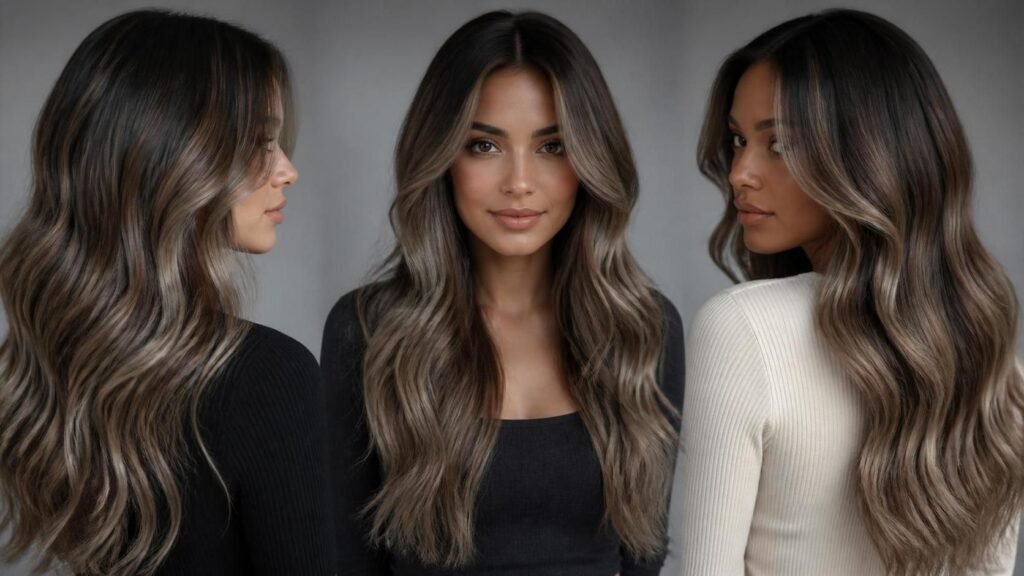
Unlike warm highlights that pull golden and brassy fast, ash blonde reads smoky, soft, and deliberately cool against dark hair.
The painted technique means no sharp regrowth lines and no awkward in-between phases as the color grows out.
Whether you want barely visible dimension or a striking contrast between deep roots and icy ends, there is a version of this color for you.
Below are 23 dark brown hair with ash blonde balayage ideas chosen for their cool-toned depth, wearability, and seriously scroll-stopping results.
1. Half-Up Claw Clip Waves with Ash Ribbons
A half-up claw clip style with loose waves is one of the best ways to show off cool-toned balayage because the color is visible at both the pinned crown section and the flowing lower lengths.
The ash blonde ribbons through the mid-lengths and ends catch the light as the waves move, while the deep brown root stays fully intact and rich beneath the clip.
Ribbon placement: Ask for ash ribbons concentrated from mid-shaft downward so the gathered crown section stays deeply dark and contrast shows clearly when hair falls. Toner choice: A cool beige or taupe toner over lighter pieces prevents them from reading yellow under warm artificial light — essential for maintaining that smoky finish. Clip styling tip: Pull the half-up section loosely so a few face-framing pieces fall forward and soften the look around the hairline naturally.
2. Long Layers with Smoky Face-Framing Pieces
Long, gently brushed layers with ash blonde concentrated around the face and ends create one of the most effortlessly sophisticated balayage results possible. The dark brown reads completely dominant from a distance while the lighter pieces add a glow that enhances the complexion up close.
This version works especially well for anyone who wants brightness without committing to regular root touch-ups.
Face-frame focus: Keeping the brightest ash pieces in the front two sections on each side ensures they frame the face without the back and crown looking over-highlighted. Brushed finish: Loosely brushing out waves rather than leaving them ringletted blends dark and ash sections for that soft, expensive-looking gradient. Low-maintenance structure: A deeper root shadow through the crown means grow-out looks intentional for four to five months between full balayage appointments.
3. Loose French Braid with Cool-Toned Ash Weave
A loosely pulled French braid is one of the most effective ways to show off cool-toned balayage placement because each strand sits visibly alongside its neighbor as the braid progresses.
The ash blonde pieces thread through the dark brown like silver ribbons, creating a woven dimensional effect that looks especially beautiful in natural light.
Braid looseness: Pull each braid section slightly apart after finishing so individual ash pieces become more visible and the whole braid looks fuller and more textured. Ash tone for braids: A silver-leaning ash toner rather than a warm beige works best for braided styles where cool tone needs to hold its own against rich dark brown. Fine hair benefit: The visible contrast of ash ribbons against dark brown inside a braid adds the impression of thickness and density that fine hair otherwise struggles to achieve.
4. Soft Layers with Ash Blonde Money Piece
A shoulder-length cut with soft layers and a defined ash blonde money piece is one of the most flattering balayage arrangements for any face shape. The lighter pieces begin near the cheekbone level and melt downward, framing the face in a way that feels bright and intentional rather than harsh.
The rest of the hair stays deeply brunette so the money piece reads as a deliberate feature rather than a random highlight.
Money piece width: A money piece spanning roughly one inch on either side of the center part frames the face cleanly without merging into surrounding sections. Cheekbone start point: Beginning the lighter color at or just below the cheekbone rather than at the scalp gives the money piece a floated, natural-looking placement that grows out gracefully. Round brush finish: Blow-drying face-framing pieces around a round brush creates that smooth inward bend at the ends that makes ash blonde money pieces look polished and intentional.
5. Root Shadow Melt to Icy Ash Ends
A deep dark root that gradually transitions into icy, near-platinum ash ends is the boldest and most striking interpretation of this color combination. The contrast is high and deliberate, with the dark brown crown melting into progressively lighter cool tones until the ends read almost silver-ash.
This look is stunning but requires the most maintenance of any option on this list to keep icy ends from shifting yellow.
Transition placement: The darkest brown should hold at least halfway down the shaft before icy lightening begins so the melt looks gradual rather than sharply divided. Toning frequency: Icy ash ends need a toning gloss every six to eight weeks to prevent platinum from warming toward yellow, especially for anyone who uses heat tools regularly. Purple shampoo routine: Using a purple or blue shampoo twice weekly on lighter lengths maintains the icy quality between toning appointments without over-depositing purple on the dark root.
6. Sleek Blunt Lob with Subtle Ash Tips
A blunt-cut lob with ash blonde concentrated subtly through the lower third is the most understated and versatile take on this color. The clean-edged cut keeps everything looking sharp and modern while soft ash tips add just enough cool-toned interest to differentiate it from a plain brunette style.
This version looks best worn straight with a glossy blowout finish where cool tips are clearly visible against the dark lengths above.
Blunt edge maintenance: Trimming the lob every seven to eight weeks keeps the edge crisp, which makes subtle ash tips look intentional rather than like faded ends. Tip placement depth: Ask for ash lightening to cover only the bottom two to three inches so the transition from dark to cool is compact and clean rather than gradual. Gloss step: A clear or lightly tinted cool gloss applied over the entire lob makes both the dark brown and ash tips look richer and more defined at every toning appointment.
7. Dimensional Medium Waves with Blended Ash Ribbons
Medium-length waves with thin, well-distributed ash ribbons throughout create a look that reads dimensional and fresh without any single piece standing out as a highlight. The wave pattern activates the color by pulling dark and ash sections apart as the hair moves.
This approach suits anyone who wants visible cool-toned dimension without anything that reads as obviously placed or foil-like.
Ribbon distribution: Spreading ash ribbons evenly throughout rather than clustering them at the front gives the impression of natural, all-over dimension when waves move. Wave activation: Medium-barrel waves between one and one-and-a-half inches show blended balayage best — tighter curls hide the blend while straight styles flatten it. Rooty blend: A soft root melt into the first few ash ribbons makes placement look like the hair grew this way rather than like a deliberate lightening session.
8. Cool Ribbon Balayage on Long Flowing Waves
Long waves with wider, smoother ash ribbon sections create a creamy, blended result that looks expensive even when the hair is completely unstyled and air-dried.
The ribbon width is slightly broader than a typical fine balayage, which gives cool-toned pieces more visual presence without creating chunky or streaky sections.
Ribbon width: Ribbons between half an inch and three-quarters of an inch blend more seamlessly into dark brown than very thin pieces, which can look like missed foil highlights. Thick hair advantage: Wider ash ribbons work especially well on thick hair where very fine pieces would disappear into the density and fail to provide visible dimension. Air-dry quality: This ribbon technique looks finished and dimensional without heat styling — ideal for anyone with a low-maintenance daily hair routine.
9. Ash Blonde Balayage on Defined Dark Curls
Cool ash balayage on dark curly hair is one of the most visually striking combinations because curls catch light differently on every coil, making each lighter section appear in a different position as the hair moves.
The key is having the colorist follow the natural curl pattern rather than sectioning the hair flat, which ensures color surfaces where it is most visible.
Curl-pattern painting: Ask your colorist to paint balayage while hair is in its natural curl state or slightly stretched, not flat-ironed — pieces surface on the curl’s outer edge where they catch the most light. Moisture priority: Ash lightening on curly hair requires extra hydration care — use a deep conditioning mask every one to two weeks to maintain curl definition and prevent dryness. Diffuser technique: Diffusing on low speed and low heat with curls cupped upward positions ash pieces on the most visible outer surface of each coil.
10. Soft Ash Balayage on Long Brunette Waves
Long dark brunette waves with a soft, widely spaced ash blonde balayage is the most approachable entry point for anyone naturally very dark or nervous about going too light. The lighter pieces sit gently through the outer layers and ends, adding dimension without disrupting the rich brunette impression.
This subtle result reads as healthy, dimensional hair rather than as an obvious color treatment.
Spacing for subtlety: Ask for wider gaps between painted sections — one to two inches of dark hair between each lighter piece — so brown remains dominant and ash reads as natural depth. First-step approach: Starting with a very soft ash application leaves room to go brighter at a future appointment without needing to correct an over-lightened result. Cool maintenance: A blue shampoo used once every ten to fourteen days prevents subtle ash pieces from warming over time, especially important on naturally very dark starting hair.
11. Curtain Bangs with Smoky Cool Balayage
Soft curtain bangs paired with long airy layers and smoky ash balayage is one of the most face-flattering and current combinations available right now. The bangs frame the face from the center out while ash pieces positioned through the front layers add brightness right where it enhances the eyes and cheekbones most.
The dark brunette root stays rich at the crown, keeping the look grounded and preventing the curtain fringe from appearing washed out.
Bang-to-balayage coordination: Ask for ash to begin slightly behind the bang line rather than within the fringe itself so curtain bangs frame the face in dark brunette while lighter pieces sit just behind. Fringe blow-dry: Blow-drying the curtain fringe forward then sweeping each side back creates the soft, voluminous split that makes this style photograph so well. Layer placement: Long airy layers through mid-lengths give ash pieces more surface area to show on, making cool-toned dimension more visible than blunt cuts allow.
12. Bold Ash Blonde Money Piece with Cool Root Blend
A bolder, chunkier ash blonde money piece creates high contrast right at the front where it has maximum visual impact. Two substantial lighter sections on either side of the center part frame the face dramatically without affecting the rest of the hair, which stays deeply brunette.
A root melt that softens the transition from dark brunette into the ash money piece prevents the look from appearing harsh or foil-like.
Chunk width: A money piece between one and one-and-a-half inches wide reads as bold and intentional — anything narrower disappears, anything wider starts blending into surrounding sections. Root melt necessity: Without a root melt, a bold money piece can look like two isolated highlights rather than cohesive balayage — ask for the base color to be feathered into money piece edges. Wave softening: Wearing loose waves rather than straight hair softens the edges of a bold money piece and makes contrast blend more naturally into darker sections on either side.
13. Textured Wavy Bob with Ash Dimension Through Mid-Lengths
A wavy bob with ash blonde painted through the mid-lengths feels modern, relaxed, and genuinely low-effort to style. The shorter length means cool-toned dimension is concentrated in a compact area that stays visible whenever the hair moves or tucks behind an ear.
This version works particularly well on medium-density hair where ash pieces add both visual dimension and the impression of more texture.
Mid-length placement: Concentrating ash through the mid-lengths of a bob rather than tips or roots creates a floated, naturally sun-kissed effect that looks especially authentic on shorter lengths. Salt spray finish: Salt spray scrunched through damp hair before air-drying gives the wavy bob effortless texture that makes balayage on short hair look lived-in rather than salon-fresh. Bob maintenance: Keeping the bob trimmed every six to seven weeks maintains the shape that makes mid-length ash dimension look deliberate rather than like a grow-out.
14. Low Bun with Cool Ash Face-Framing Strands
A gathered low bun with ash blonde pieces left loose around the face is one of the most elegant updo approaches for this color combination. The bun itself showcases the dark brunette base in a smooth, polished structure while cool face-framing strands add lightness and softness around the hairline.
The contrast between the dark twisted bun and pale ash tendrils at the sides is quietly striking.
Strand selection: Leave two to four of the lightest ash pieces loose on each side rather than pulling everything back — position them at the hairline where they frame the face most naturally. Bun texture: A slightly imperfect, loosely gathered bun rather than a tight chignon keeps the overall look relaxed and lets cool strands look intentionally effortless. Shine serum finish: Smoothing a small amount of lightweight shine serum over any flyaways on the bun surface keeps the dark brown sections looking polished while loose ash pieces stay soft.
15. Layered Blowout with Fine Soft Ash Ribbons
Long layers finished with a bouncy blowout are the ideal canvas for very fine, carefully blended ash ribbons. The movement of the blowout pulls lighter and darker sections apart as the hair lifts and falls, creating dimension that looks more complex than the actual number of colored pieces suggests.
This is the professional, polished version of dark brown with ash blonde balayage — appropriate in every environment from office to evening.
Ribbon fineness: Asking for the thinnest possible ash ribbons — almost like wisps — through long layers keeps color looking dimensional rather than highlighted, which is the essential distinction for a polished finish. Blowout direction: Blowing layers backward and forward alternately during the blowout creates cross-directional movement that separates ash and dark sections most effectively. Cool gloss timing: Book a cool-toned gloss refresh when ash ribbons start reading warmer than taupe — usually every ten to twelve weeks — to restore the smoky quality without re-lightening.
16. Glossy Waves with Deep Root Melt and Ash Ends
Deeply glossy waves with an inky root melt transitioning into cool ash ends are simultaneously one of the most striking and most wearable versions of this color. The deep root melt grounds the look and makes the grow-out seamless while the ash ends provide cool-toned brightness that feels genuinely modern.
The gloss is what ties the dark root and lighter ends into one cohesive, intentional color rather than two separate shades on the same head.
Root melt depth: Keeping the darkest brown from scalp to at least collarbone level before ash begins gives the melt enough depth to look luxurious rather than simply like a fade. Smoky toner selection: A neutral-to-cool ash toner rather than silver or platinum keeps ends looking wearable and sophisticated rather than dramatically bleached. Heat protection priority: Using a quality heat protectant before every styling session is especially important on lighter ends, which are more porous than dark root sections and warm more quickly with repeated tool use.
17. High Ponytail Showing the Full Dark-to-Ash Blend
A high ponytail is one of the simplest and most effective ways to display the full transition from dark brunette root to ash blonde ends in a single clean line. The gathered base stays dark and sleek while the lighter lengths cascade downward, showcasing the entire gradient from root to tip.
This is the style that makes the balayage itself the main event.
Crown darkness: Ensuring the crown area stays as deep and rich as possible when the ponytail is gathered means the start of the gradient is maximally dark, making ash ends look brighter by contrast. Elastic cover: Wrapping a small section of the ponytail’s darkest hair around the elastic and pinning it underneath keeps the base looking polished and eliminates the visual interruption of a visible hair tie. Length requirement: This gradient effect works best with hair at or below shoulder length when gathered — shorter ponytails compress the gradient too much for the full transition to read clearly.
18. Straight Lob with Cool Ash Face Frame and Glassy Finish
A straight-worn lightly blunt lob with a defined cool ash face frame is the cleanest and most precise interpretation of this color. Every line is deliberate — the blunt edge, the straight finish, the controlled placement of lighter pieces exactly where they frame the face best.
The glassy high-shine finish is essential because it makes both dark brown and ash blonde sections look their richest and most saturated.
Flat iron temperature: Use a flat iron set between 350 and 380 degrees rather than maximum heat on lighter ash sections to prevent thermal damage that would dull the glassy finish. Smoothing product: A lightweight smoothing cream or serum applied to towel-dried hair before blowdrying gives the straight lob the glass-like surface that makes cool-toned face framing look so polished. Trim frequency: A blunt lob worn straight requires the sharpest edge possible — trimming every six to seven weeks prevents the ends from softening into a shape that looks unintentional.
19. Long Shag with High-Contrast Ash Surface Pieces
A long shag cut — heavy with layers and choppy ends — takes on a distinctly edgy quality when the surface layers and ends are lightened to a high-contrast ash blonde. The textured cut already creates strong visual movement and the lighter outer pieces amplify every layer, making the cut’s structure look even more defined.
This is the most fashion-forward option on this list and works best on anyone comfortable with a bolder, eye-catching result.
Surface layer targeting: Ask for ash lightening to be focused on the uppermost and outermost layers of the shag so the interior stays deep and the surface lights up with cool contrast. Texture styling: Diffusing with a soft attachment on medium heat enhances natural texture and positions ash surface pieces where they catch the most light. Root balance: Keeping the root area and underlayers very dark balances the brightness of high-contrast surface pieces and prevents the shag from looking over-processed.
20. Smudged Roots to Icy Ash Balayage Lengths
A deliberate root smudge technique transitions into icy ash lengths for a look that is both striking and surprisingly wearable. The smudged root softens what would otherwise be a harsh line between dark and light, giving the icy ends a gradual, natural-looking origin point.
This version leans lighter overall than most others on this list, making it the right choice when you want a genuinely dramatic result with some grow-out grace.
Smudge technique: The root smudge should cover two to three inches of new growth using a slightly lifted brunette shade mixed with the original base, blended into lightened lengths without a visible demarcation. Icy maintenance: Icy ash requires the most attentive maintenance of any balayage shade — plan for a toning gloss every six to eight weeks and a consistent blue shampoo routine. Loose waves pairing: Wearing smudged-root icy balayage in loose waves rather than completely straight shows off the gradual root smudge most naturally and softens the high-contrast overall impression.
21. Sheer Ash Blonde Veil Balayage on Long Waves
A sheer veil balayage places an extremely fine, translucent layer of cool ash over the dark brown base so lightly that the overall color change is felt rather than obviously seen. The finish is smoky, smooth, and deeply dimensional without a single obvious lighter piece.
It is the balayage equivalent of no-makeup makeup — unmistakably elevated but genuinely difficult to pin down exactly why.
Veil application: The colorist applies very diluted lightener in a sweeping, overlapping motion over the outer surface of sections rather than painting individual pieces — the result is a color shift, not isolated highlights. Gloss essential: A smoky cool-toned gloss over the finished veil balayage locks in the dimensional quality — without it, the subtlety of the lightening can look like fading rather than intentional color. Ideal candidate: Veil balayage suits anyone who found previous highlights too obvious or who wants to try cool-toned color for the first time with the lowest possible visual commitment.
22. Smoky Ash Blonde Melt with Brushed-Out Defined Waves
A smoky ash blonde melt running through the mid-lengths with the cool tone sitting visibly brighter than the dark root gives defined waves more shape and structure than color-treated hair typically achieves. The slightly cooler and lighter mid-section creates a visual line that emphasizes the fullness and bend of each wave.
The dark roots and smoky ash mid-section work together to give the overall style a graphic, intentional quality that photographs extremely well.
Mid-section brightness: Ask for the ash melt to be one to two levels lighter through mid-lengths than through the ends so the brightest point sits in the middle where it adds the most visible dimension. Neutral-ash toner: A neutral ash toner rather than silver or pearl gives the smoked mid-section the most wearable finish — it reads cool without veering into silver-grey territory. Brushed wave technique: Curling with a wand and then brushing waves out gently with a paddle brush creates that soft, blended result that shows the smoky ash melt most clearly.
23. Taupe Ash Blonde Balayage with Soft Layers
Taupe ash is the most universally flattering version of ash blonde for dark brunettes because it sits between cool beige and grey without fully committing to either extreme. On dark brown hair with soft layers, it reads as a warm-cool neutral that looks natural in every type of light and suits every skin tone.
This is the version to choose when you want the sophistication of ash blonde balayage without the maintenance demands of an icy or very cool result.
Taupe definition: True taupe ash leans slightly beige-grey rather than yellow-gold or silvery-white — ask specifically for a taupe or mushroom-brown ash to avoid confusion with warmer or cooler shades. Layer synergy: Soft layers cut through the hair rather than blunt ends allow taupe ash pieces to move through different angles as hair falls, creating more visible dimension than a one-length cut would produce. Blue shampoo frequency: One use of blue shampoo per week is sufficient to maintain taupe ash on dark brunette hair — more frequent use risks depositing too much blue pigment and shifting taupe toward an unnatural grey-purple.
Frequently Asked Questions
How do I stop ash blonde balayage from going brassy on dark brown hair? Use a blue or purple shampoo once a week rather than every wash to neutralize warmth without over-depositing colour. Book a cool-toned toning gloss every eight to ten weeks between lightening appointments. Always use a heat protectant before styling — heat is the fastest way to shift ash toward yellow.
How long can I go between appointments with dark brown ash balayage? Most people with a deep root shadow or root melt can stretch twelve to sixteen weeks between full balayage appointments. A toning gloss visit at the six to eight week mark refreshes the ash tone without requiring any additional lightening and extends the overall life of the color significantly.
Will ash blonde balayage work on very dark or near-black brunette hair? Yes, but it typically requires a stronger lightening process or a pre-lightening step before toning to ash. The result is absolutely achievable and looks stunning — the higher the contrast between the dark base and the ash pieces, the more dramatic and dimensional the final result appears.
What is the difference between ash blonde and regular blonde balayage? Ash blonde leans cool, with beige, taupe, or silvery undertones. Regular blonde balayage typically pulls warmer toward gold or honey. Ash blonde suits those who want a smoky, muted finish rather than a sun-kissed warm glow — it also resists brassiness more effectively than warm blonde tones.
Does ash blonde balayage suit all skin tones? Cool skin tones with pink or blue undertones are classically flattered by ash blonde. However, taupe and beige-ash shades suit warm and neutral skin tones equally well because they sit between warm and cool without leaning either way. Icy or very silvery ash works best on cool complexions specifically.
What haircut shows dark brown ash blonde balayage best? Any cut with layers and movement — long layers, a lob, a wavy bob, or a shag — shows balayage at its best because the color separates visually as the hair moves. Blunt one-length cuts flatten the gradient and make the dimension less visible, particularly on straight styles.
The Real Reason This Color Combination Never Gets Old
Dark brown with ash blonde balayage has stayed consistently popular for years because it solves the most common complaint about highlights on dark hair — they go warm too fast and look high-maintenance within weeks of leaving the salon. Ash blonde addresses both problems by building in a cool tone that naturally resists brassiness and by using a placement technique that grows out cleanly.
The smoky quality of ash blonde also does something genuinely unusual in hair color: it adds light without adding warmth. For brunettes who have found that golden or honey highlights feel too bright or too summery for their taste, ash is the answer that finally makes highlights feel right.
There is also the dimension factor. A well-executed ash blonde balayage on dark brown hair gives the illusion of more volume, more texture, and more movement without a single inch being cut. That combination — effortless-looking color, low-maintenance grow-out, and the appearance of fuller healthier hair — is why this look continues to fill Pinterest boards and colorist portfolios season after season.
Yours to Keep: A Closing Thought
Dark brown hair with ash blonde balayage is one of those color choices that genuinely improves how your hair looks in every context — in natural light, under office lighting, in photos, and in the mirror on a regular Tuesday morning.
The range of options in this list means there is a version of this color that fits your lifestyle whether you want absolute minimum maintenance or a striking, high-contrast result that turns heads.
Save the looks that feel most like you, take them to a colorist who specializes in cool-toned work, and trust the process. The smoky, dimensional result is worth every step.
