
20 Shoulder Length Hairstyles for Thin Fine Hair That Actually Look Fuller
Shoulder length is genuinely one of the best hair lengths for thin and fine hair. It carries enough weight to create a full-looking outline without the length pulling everything down and flat.
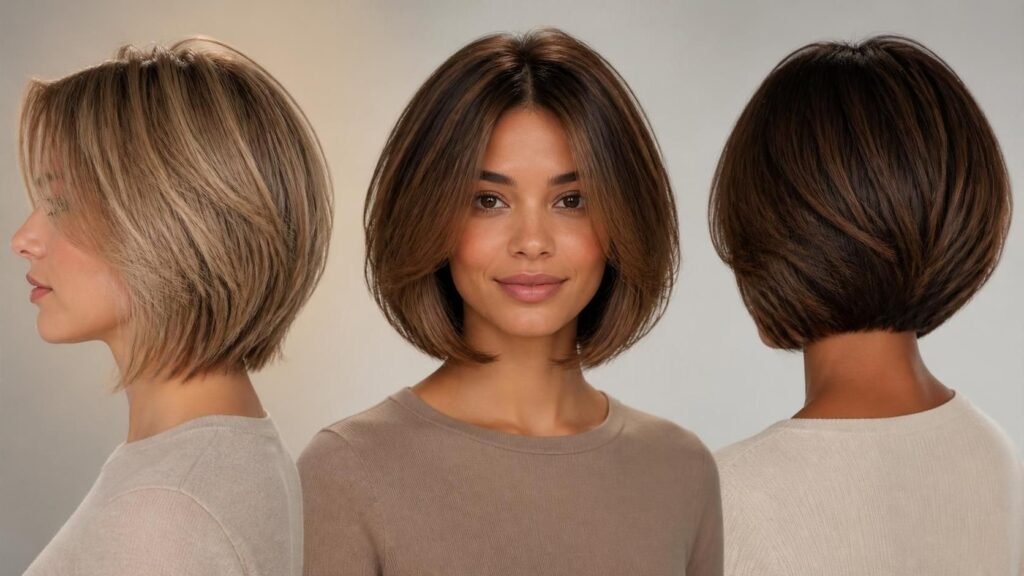
The right cut at this length can look voluminous, polished, and incredibly healthy even when the hair itself is naturally delicate.
Keeping the ends strong is the real secret — wispy or over-layered ends are what make fine hair look thinner, not shorter.
Your part and styling approach matter just as much as the cut itself when it comes to creating that full, lifted look.
Below are 20 shoulder length hairstyles for thin fine hair picked for volume, structure, and real-life wearability every single day.
1. Angled Lob for Fine Hair
A clean angled lob that dips slightly longer toward the front is one of the most reliable cuts for making fine hair look denser. The angle creates a visual fullness that a perfectly even cut sometimes misses.
A deep side part combined with a smooth blowout finish gives the whole style a thicker, more substantial outline.
Internal layering request: Ask for very light internal layers only — just enough to encourage movement without reducing the density that fine hair needs at the ends. Angle depth: A subtle one-to-two inch drop from back to front is enough to create the angled effect without making the front sections look dramatically longer than the back. Finishing tip: Blow-dry the front sections slightly forward over a round brush so the angled pieces frame the face with a clean, polished inward curve.
2. Asymmetrical Lob
An asymmetrical lob creates instant shape and visual interest through uneven length rather than heavy layering. One side sits slightly longer than the other, which adds natural movement and prevents the cut from looking too uniform or flat.
Fine hair benefits especially from this approach because the structural difference between the two sides creates volume without removing any density from the ends.
Side length difference: Keep the length variation between one and two inches — enough to create clear asymmetry without tipping into a dramatic A-line that can look costume-like. Shorter side styling: Tucking the shorter side behind the ear while leaving the longer side forward creates an instant lift effect that makes fine hair appear fuller around the crown. Blunt ends essential: Keep both sides cut bluntly rather than point-cut or razored — blunt ends on an asymmetrical lob are what make fine hair look intentionally thick rather than uneven.
3. Beachy Textured Lob
A beachy textured lob creates the illusion of more hair through gentle separation and soft bends rather than through volume products. The key difference between this and a messy wave style is that the ends stay structured and the bends sit from mid-length downward.
Fine hair handles this beautifully because the texture reads as deliberate and styled rather than limp or tangled.
Mousse application: Apply a light-hold mousse to damp hair from mid-length to ends only — keeping product off the roots prevents any heaviness that would weigh fine hair flat. Twist-dry technique: Loosely twist two-inch sections while blow-drying on a low setting to create soft, irregular bends that look beachy without the crunch of salt spray overuse. End structure: Ask your stylist to keep the ends weighty and not point-cut for this style — structured ends are what make the beachy texture look intentional on fine hair.
4. Bottleneck Bangs with Shoulder-Length Layers
Bottleneck bangs are wider at the center and taper out toward the cheekbones, which creates a soft frame around the face that makes fine hair look immediately denser near the forehead. Paired with shoulder-length layers, the fringe adds focal interest up front while the remaining length stays light and easy.
This bang shape is particularly forgiving on fine hair because the tapered sides blend naturally into the face-framing pieces without requiring any heavy maintenance.
Fringe blow-dry direction: Always blow the bottleneck fringe forward and down first to set the shape, then sweep it softly to one side for a relaxed, effortless finish. Taper point: The fringe should reach cheekbone length at its widest outer points — longer than this starts blending into curtain bang territory, shorter looks too blunt for fine hair. Layer pairing: Keep the shoulder-length layers below the collarbone so there is enough density through the mid-lengths to balance the added softness the bangs create up front.
5. Classic Collarbone-Length Lob
A classic collarbone lob is the most universally flattering shoulder length cut for fine hair. The length lands right where the hair naturally rests on the shoulders, creating a strong baseline that makes even very fine strands appear significantly denser.
The minimal layering approach keeps all the hair’s natural weight concentrated at the perimeter where it does the most work visually.
Perimeter strength: Ask for the baseline to be cut with scissors rather than a razor for maximum bluntness — a razor-cut edge on a classic lob removes the density that fine hair relies on most. Grow-out grace: This length and shape grows out neatly and predictably, meaning you can stretch trims to ten or twelve weeks without the style losing its structure. Blowout hold: A light-hold volumizing mousse applied before blowdrying gives a classic collarbone lob enough body to hold a smooth, full-looking blowout finish all day.
6. Italian Lob Inspired Collarbone Cut
An Italian lob-inspired cut has that unmistakably polished yet natural quality that comes from a slightly beveled perimeter rather than a completely flat blunt edge. The subtle rounding of the ends creates a soft, full-looking bottom line that suits fine hair beautifully.
The overall impression is one of effortless health and thickness even when the hair itself is fine and lightweight.
Beveled edge technique: A slightly inward-beveled cut — where the underneath is cut fractionally shorter than the surface — makes the ends roll under slightly and appear thicker from the outside. Side part placement: A soft side part on this cut adds lift on the heavier side and creates a gentle natural sweep that gives the Italian lob its characteristic casual elegance. Brush-through blowout: A quick brush-through blowout with a medium round brush adds just enough movement and bounce to show the beveled ends at their fullest and most polished.
7. Medium-Length Curly Cut
Fine curly hair at shoulder length can absolutely look full and healthy when the layering is thoughtful and conservative. The goal is encouraging the curls to stack naturally without creating a triangular shape that widens at the bottom and deflates at the crown.
Longer, more graduated layers that follow the curl’s natural fall keep the shape rounded and the volume distributed evenly from root to end.
Triangle prevention: Ask for longer layers through the sides and back so the curl volume stays balanced from top to bottom rather than expanding outward at the ends. Curl cream weight: Use the lightest curl cream you can find — heavy creams weigh fine curly hair flat and prevent the natural lift that makes shoulder-length curly styles look so full. Diffuse upward: Cup curls upward into the diffuser bowl rather than letting them hang during drying — this builds root lift and keeps fine curls looking full rather than stretched and flat.
8. Mid-Length Curve Cut
A mid-length curve cut uses face-framing pieces that angle inward in a gentle C-shape, creating a flattering frame that narrows the face and adds the impression of more volume right where it matters most. The ends stay weighty and the overall shape remains controlled.
Fine hair looks noticeably thicker with this cut because the inward curve creates a structured silhouette rather than hair that just falls straight and flat.
C-shape precision: The inward curve should start just below the cheekbone and sweep toward the chin — a more dramatic curve looks harsh while a gentler one reads as polished and intentional. Round brush at the front: Blow-drying the face-framing curve sections around a medium round brush locks in the C-shape and gives the pieces that smooth, intentional bend that makes the cut look salon-fresh. Weighty ends: Ask your stylist to avoid any thinning or point-cutting at the ends so the curve sections hold their shape and fine hair retains maximum density at the perimeter.
9. Mid-Length Hush Cut
A hush cut sits between a lob and a light shag — it has more texture and airiness than a classic lob but retains far more density than a full shag. The layers are airy and blended rather than choppy, with the lightest pieces concentrated around the crown and face frame.
For fine hair that consistently falls flat at the top, this cut specifically addresses crown lift without sacrificing end density.
Crown layer placement: The layers at the crown should be the shortest in the cut — typically two to three inches of lift — which is what creates the volume and texture that fine hair lacks naturally. Root spray application: Spray a lightweight root lift product directly onto the roots at the crown section before blow-drying and finger-style upward for immediate, long-lasting lift. Fringe option: A soft, wispy fringe option works beautifully with a hush cut on fine hair — the fringe adds forward weight that balances the textured, lifted crown behind it.
10. Modern Soft Wolf Cut
A modern soft wolf cut adapted for fine hair uses longer, more conservative layers than the typical shaggy version. The crown layers provide lift and that effortless lived-in quality while the perimeter retains enough weight to prevent the ends from disappearing.
The key difference between a wolf cut that works on fine hair and one that doesn’t is the absence of heavy razoring or excessive thinning at the ends.
Layer length request: Ask for the shortest layers to begin no closer than three inches from the scalp — shorter than this on fine hair removes too much crown density and the style collapses by midday. Mousse and air dry: Scrunching a volumizing mousse through damp hair and allowing it to air dry completely before breaking up the texture with fingers gives the wolf cut its best volume on fine hair. No razor thinning: Specifically request that your stylist does not use a razor or thinning shears on the ends — point-cutting with scissors is the only texture technique fine hair can support without looking wispy.
11. Modern S-Waves Lob
A lob styled into soft S-waves creates beautiful movement and the illusion of significantly more volume than the hair actually has. The S-shape works especially well on fine hair because the bends add width through the sides without requiring any additional hair.
Keeping the wave bend starting at mid-length rather than at the roots ensures the roots stay smooth and full-looking rather than kinked or separated.
One-inch iron technique: A one-inch barrel iron used on medium-length sections creates the compact S-wave shape — larger barrels produce loose waves that fall out faster on fine hair. Brush-out step: After curling all sections, brush through very lightly with a soft paddle brush to blend the waves and remove any gaps that would expose the scalp on fine hair. Texturizing spray finish: A very light mist of texturizing spray over the brushed waves adds grip so the S-wave shape holds throughout the day without product buildup weighing fine hair down.
12. Romantic Loose Waves
Romantic loose waves at shoulder length give fine hair a soft, full quality that works equally well for everyday wear and special occasions. The volume sits through the sides and mid-lengths, creating width that makes the overall silhouette look substantially fuller.
Keeping the layers minimal is what makes this style work on fine hair — the ends need enough weight to hold the wave shape rather than flopping straight after a few hours.
Minimal layer request: Ask for face-framing pieces only rather than layers throughout — face framing adds softness around the eyes without reducing the end density that holds loose waves in place. Heat protectant shine: Applying a heat protectant with a built-in shine component before curling adds a glossy finish that makes loose waves on fine hair look healthy and voluminous rather than flat. Wave direction variety: Alternate the curling direction on each section — some toward the face and some away — so the finished waves look full and multi-dimensional rather than uniform and flat.
13. Simple Shoulder-Length Cut
Sometimes the straightforward approach is the most effective one. A clean, simple shoulder-length cut with a near-blunt edge and minimal styling requirements is one of the most reliable ways to make fine hair consistently look its best.
The uncomplicated shape means the hair’s natural weight gathers at the perimeter where it creates a strong, full-looking outline without any extra effort.
Blunt-ish baseline: Ask for a clean baseline with only the very slightest softening at the corners — a completely blunt cut on fine hair can look slightly heavy while razor-soft ends look too wispy. Sleek or bent options: This simple cut works beautifully both straight and with a slight bend at the ends — the versatility means one great cut covers both low-effort and more polished styling days. Healthy ends priority: Regular trims every eight weeks keep the ends of a simple shoulder-length cut looking clean and thick — the moment ends start to thin or split, the whole style loses its full-looking quality.
14. Sleek Glass-Hair Lob
A glass-hair lob prioritizes a perfectly smooth surface and maximum shine over movement or texture. On fine hair, this approach is surprisingly effective because the high-gloss finish creates the appearance of thicker, healthier strands that light bounces off rather than passes through.
The clean, sharp baseline and reflective surface are what give this style its expensive, polished quality.
Smoothing cream layering: Apply a lightweight smoothing cream to damp hair before blowdrying and a second tiny amount to dry hair before flat-ironing to build the glassy surface in stages without heaviness. Flat iron pass speed: Move the flat iron slowly and deliberately through each section — a slow pass seals the cuticle more completely than a fast one and produces the mirror-like finish that defines glass hair. Shine mist final step: A fine mist of a lightweight hair shine spray held twelve inches from the head as the absolute final step is what takes a smooth blowout to true glass-hair territory.
15. Soft Layered Lob
A soft layered lob adds gentle movement and face-framing softness to the classic lob shape without removing any meaningful density from the ends. The layers are internal and subtle — visible as movement when the hair swings but not as obvious steps when the hair is still.
This is the version to choose if you want a lob with more personality than a blunt cut but with none of the thinning risks of heavy layering.
Internal layer placement: Ask for layers placed internally through the mid-sections only — no visible surface layers that would break up the strong outline that makes fine hair look full. Face-framing limit: Two to three face-framing pieces on each side are sufficient for a soft layered lob on fine hair — more than this starts to reduce the density where fine hair needs it most. Blowout activation: A soft layered lob on fine hair looks best blown out with a medium round brush — the brush curl activates the internal layers and gives the style its signature full, bouncy movement.
16. Soft Shoulder-Length Shag
A soft shag adapted for fine hair delivers crown lift and face-framing lightness without the heavy thinning and choppy ends that a traditional shag would use. The layers are longer and gentler than a standard shag, creating movement and texture without stripping the ends of their necessary weight.
Fine hair wearing this cut looks textured, effortless, and genuinely voluminous when styled correctly.
Long layer specification: Ask specifically for longer shag layers — shortest layers at the crown no less than three inches — so the ends retain enough density to avoid looking wispy or ragged. Mousse and air dry method: Scrunching a volumizing mousse evenly through damp hair before air drying is the best way to develop the natural texture of a soft shag without heat styling required. Thinning shears ban: A soft shag for fine hair should never be finished with thinning shears — point-cutting scissors only at the ends preserve the fine hair density that makes this cut look full rather than sparse.
17. Soft Textured Layers
Soft textured layers are blended seamlessly through the length so they create movement and separation without a visible step or line anywhere in the cut. The perimeter stays full and the overall shape retains a clean outline while the interior lifts and separates as the hair moves.
This cut solves the specific fine hair problem of feeling heavy and flat at the bottom while simultaneously looking flat at the top.
Blended layer technique: Ask for feathered, blended layers rather than point-cut or sliced layers — feathered blending keeps the transition between lengths smooth and prevents any thinning lines from showing through fine hair. Root spray and rough dry: A root volumizing spray applied before rough-drying on a medium heat setting builds foundational lift at the crown that holds all day under textured layers. Separation product: A small amount of light paste worked through fingertips and pressed lightly into the ends adds the gentle separation that makes soft textured layers look styled rather than undone.
18. Strong Blunt Baseline Lob
The strong blunt baseline is the single most effective styling trick available for thin fine hair. Keeping all the weight in the perimeter by cutting the ends in a clean, unbroken horizontal line makes even very fine hair look noticeably denser and healthier.
Nothing communicates thickness faster than a strong blunt baseline — it is why so many of the best fine hair lobs on Pinterest share this one structural element.
Baseline positioning: The blunt baseline looks strongest and most flattering when it sits between collarbone and shoulder level — too high above the collarbone starts to look like a bob, too low below the shoulder loses the structural benefit. Trim frequency: A strong blunt baseline requires trimming every eight to ten weeks to maintain the clean, unbroken edge — growing it out without trims causes the ends to split and thin, which defeats the entire purpose of the cut. Part influence: A clean center part enhances the geometric quality of a strong blunt baseline while a deep side part softens it and adds volume on the heavier side for a more relaxed interpretation.
19. Wispy Bangs with Invisible Layers
Wispy bangs add softness and forward-facing fullness right at the front of the face while invisible layers beneath the surface create movement that is felt but not seen. The exterior of the cut still looks thick and clean, but the hair behaves with far more life and bounce than a completely unlayered cut would allow.
This combination is one of the smartest technical approaches for fine hair because it adds dimension exactly where it is most visible without compromising the density anywhere else.
Wispy vs. heavy fringe: Wispy bangs on fine hair should cover about fifty to sixty percent of the forehead rather than sitting in a solid mass — the lighter coverage prevents the fringe from looking damp or flat by midday. Invisible layer placement: Invisible layers sit underneath the surface layer and should not be visible when the hair is still — ask your stylist specifically for under-layers rather than visible surface layers to maintain a thick-looking exterior. Bang blow-dry first: Always blow-dry wispy bangs before styling the rest of the hair — setting the fringe shape first means it stays in place while the remaining length is styled around it.
20. Airy Curtain Fringe Lob
Curtain fringe is one of the most face-flattering fringe options for fine hair because it creates volume right where the eye travels first — around the eyes and cheeks — while remaining light enough not to weigh down the delicate strands around the face.
Paired with a shoulder-length lob, the curtain fringe balances the clean lower line with a soft, feathered upper frame that makes the whole style look effortlessly full.
Fringe length: Curtain fringe should reach the lower lash line or slightly below at its shortest center point and blend seamlessly into the face-framing pieces at collarbone level on either side. Round brush lift: A quick sweep of a small round brush through the fringe while blow-drying gives the curtain fringe an immediate lift at the roots that makes fine hair look full right from the parting outward. Blending the sides: Ask for the curtain fringe to be blended invisibly into the face-framing pieces of the lob — a seamless transition means there is no visible line where the fringe ends and the face frame begins.
Frequently Asked Questions
Should fine hair be layered at shoulder length? Yes, but very conservatively. Light internal layers or subtle face-framing pieces are ideal — these add movement without reducing the end density that fine hair relies on to look full. Heavy layering or razored ends remove the weight that makes fine hair appear thicker, so less is genuinely more.
What shoulder-length cut makes the biggest difference for thin fine hair? A blunt or near-blunt baseline lob is consistently the most effective option. The strong perimeter keeps all the hair’s weight at the ends where it creates the fullest-looking outline. If you want more movement, add gentle waves or a soft bend rather than more layers.
How do I get crown volume that actually lasts all day? Start with a side part or flip your part while the hair is still damp. Apply a lightweight root lift spray directly to the roots at the crown, then blow-dry with a round brush lifting upward at a forty-five degree angle. Finish with a very light texturizing spray at the roots only.
How often should fine hair be trimmed at shoulder length? Every eight to ten weeks is ideal for maintaining a strong perimeter and healthy ends. Fine hair shows split and thinning ends much faster than coarser hair types, and once the ends start to look wispy, the whole cut loses its full-looking quality. Regular trims make a bigger difference than almost any product.
What products work best for fine hair at shoulder length without weighing it down? A lightweight volumizing mousse or root lift spray before blowdrying, a fine-mist texturizing spray for finish, and a pea-sized amount of lightweight shine serum on the ends are all safe choices. Avoid heavy oils at the scalp and thick creams through the lengths — anything too heavy causes fine hair to fall flat within an hour of styling.
Can fine hair look good in waves at shoulder length? Absolutely — waves are actually one of the most flattering styles for fine hair at this length because they add width through the sides and create the impression of more volume without requiring any additional hair. The key is using a volumizing mousse before styling rather than a heavy cream, and keeping the layers minimal so the ends have enough weight to hold the wave shape.
Why Shoulder Length Is the Smartest Choice Fine Hair Can Make
The relationship between length and volume is one of the most misunderstood things in fine hair care. Many people assume shorter hair automatically looks fuller, but shoulder length actually provides a specific structural advantage that neither very short nor very long hair can match. The weight of the hair at this length creates a natural density at the perimeter that shorter cuts lose and longer cuts collapse under.
Shoulder length also gives fine hair styling versatility that shorter lengths genuinely cannot offer. You can wear it sleek and glassy, add soft waves for a fuller look, pull it half-up, or experiment with fringe — all from the same base cut. That range of options means one great haircut covers many different looks and occasions without constant restyling.
The final advantage is the grow-out. A well-executed shoulder-length cut for fine hair grows out gracefully because the structural elements — the blunt baseline, the conservative layering, the face-framing pieces — all remain intact and flattering as the length increases. You get more weeks of a great hair day and fewer moments where the in-between stage looks awkward.
Worth Every Snip: A Closing Thought
The right shoulder-length cut does more for fine hair than any product on the market. A strong baseline, conservative layers, and styling that works with the hair’s natural lightness rather than against it is genuinely all it takes to look full, healthy, and put-together.
Start with one of the simpler cuts on this list if you are uncertain — the classic collarbone lob or strong blunt baseline are both forgiving, versatile, and flattering across almost every fine hair type.
Once you find the shape that works for your density, texture, and daily routine, fine hair at shoulder length stops being a compromise and starts being exactly where you want to be. Save your favorites from this list and take them along to your next salon visit — the right cut makes every day a better hair day.
