
15 Dark Caramel Balayage Ideas That Add Warmth Without Going Too Light
Dark caramel balayage is what happens when you want more from your brunette without going fully blonde. It adds warmth, depth, and that sun-kissed glow without stripping away the richness of a dark base.
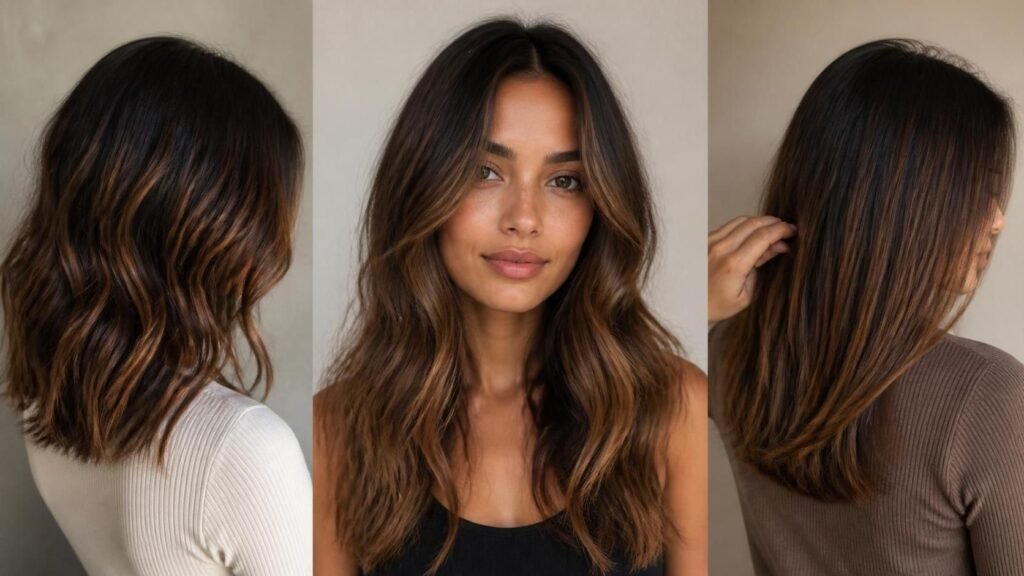
The painted technique means no harsh regrowth lines and no awkward in-between stage as it grows. You can stretch your salon visits and still look like your hair was freshly styled.
It works on waves, curls, bobs, and long layers — the color adapts to whatever shape your hair already has.
Whether you want barely visible ribbons or a full warm melt through the ends, these looks keep things modern and wearable.
Below are 15 dark caramel balayage ideas chosen for their depth, warmth, and seriously gorgeous real-life results.
1. Shoulder-Length Waves with Caramel Ribbon Highlights
Loose, flowing waves at shoulder length are one of the best canvases for dark caramel balayage. The movement of the wave creates natural highs and lows that make every ribbon of color look perfectly placed.
The dark brunette base stays rich and dominant while the caramel pieces surface on the bends, giving the whole look a lived-in, luminous quality.
Ribbon width tip: Ask for thin, irregular ribbon placement rather than uniform pieces — uneven widths look more natural and expensive than a uniform highlight pattern. Root approach: Keep the root shadow at least two to three inches deep so the caramel reads as something the hair grew into, not something painted on at the scalp. Styling suggestion: A large-barrel wand creates the gentle S-wave that shows off ribbon balayage better than a flat iron or tight curl ever could.
2. Sleek Long Layers with Fine Caramel Veiling
This is the most understated approach to dark caramel balayage and also one of the most sophisticated. The highlights are fine, widely spaced, and deliberately subtle so the overall look stays firmly brunette.
When the hair is blown out straight, you catch glimpses of warmth through the outer layer — just enough to make the color look intentional without announcing itself.
Piece spacing: Ask your colorist to leave at least half an inch of dark hair between each lighter piece for that veiled, barely-there effect that reads as natural depth. Straight finish benefit: Wearing the hair straight is actually the best way to show off fine caramel veiling — the smoothness lets each light strand sit cleanly without blending away. Toning note: A neutral-based caramel toner keeps fine pieces from reading brassy against the dark base, which is especially important on very dark brown or near-black starting hair.
3. Silky Caramel Ombré with a Deep Root
A caramel ombré that keeps the root deeply dark and transitions gradually into warm golden-brown through the mid-lengths is one of the most polished takes on this color. The shift feels gradual rather than abrupt, which is what separates a sophisticated ombré from a grown-out dye job.
The glossy finish is key — when the hair has shine, the color gradient looks intentional and expensive rather than faded.
Transition placement: The ombré should begin no higher than mid-shaft for the deepest, most seamless dark-to-caramel shift without any obvious line of demarcation. Gloss step: Finishing with a clear or tinted gloss over the caramel sections is non-negotiable — it seals the tone and gives the color that mirror-like richness in every photo. Low-maintenance win: This ombré approach grows out beautifully because the dark root is left intentionally untouched, meaning months can pass between appointments without the look suffering.
4. Defined Curls with Caramel Coil Highlights
Curly hair and balayage were made for each other. On defined coils, the color catches differently on every curl depending on how the light hits, which means dark caramel balayage looks layered and dimensional without needing many pieces at all.
The key is having the colorist paint the highlights where the curls naturally catch light rather than following a flat sectioning pattern.
Curl-specific placement: Highlights painted on the outermost surface of each curl section rather than throughout the curl’s depth prevent the color from looking heavy or spotty when curls spring back. Product pairing: A curl cream applied after coloring helps define coils so the caramel pieces surface cleanly on top rather than mixing into undefined frizz. Diffuse technique: Diffuse on low heat with the curls cupped upward into the diffuser so the caramel highlights land on the most visible outer layer of each coil.
5. Long S-Waves with a Dark Caramel Melt
Long hair with a full caramel melt through the lower half is one of the most striking and wearable versions of this color. The brunette crown stays rich and weighted while everything from mid-length to the ends takes on that warm, honeyed shift.
The long S-waves pull the colors apart so every stripe of light and dark has its own visual space, creating that dimensional effect that flat styles simply cannot replicate.
Melt transition level: For the most natural caramel melt, the warm color should begin building from around the collarbone level rather than high at the crown. Wave size matters: A medium-to-large barrel creates S-waves wide enough to separate the color layers visually — too tight a curl closes everything up and hides the dimension. Length advantage: The longer the hair, the more dramatic the dark-to-caramel journey looks — this style pays off most on hair that hits mid-back or longer.
6. Textured Curly Bob with Toasted Caramel Pieces
A short curly bob with concentrated caramel pieces through the top layer is playful, lifted, and genuinely flattering. Keeping the lighter pieces toward the crown and top surface creates the illusion of more volume while the darker lower sections keep the shape grounded.
The toasted, slightly deeper caramel tone works especially well on shorter lengths where brighter shades would feel too stark against a dark base.
Top-layer focus: Ask for highlights only through the top two layers of the bob so the neckline and inner sections stay deep and rich, preventing the short cut from looking over-highlighted. Curl mousse tip: A light-hold mousse applied to wet hair before diffusing keeps the toasted caramel pieces visible on each defined curl without weighing them flat. Color depth choice: Toasted caramel — which leans slightly brown-gold rather than bright yellow-gold — ages much better on a short curly bob than a lighter, more golden caramel would.
7. Brunette Waves with Threaded Caramel Strands
Threading caramel strands through the outer layers of a brunette wave creates contrast that feels intentional and natural at the same time. The dark base fills the spaces between each lighter strand, so the overall impression is warmth and depth rather than visible highlights.
Soft waves activate this look completely — without the movement, the threaded placement would look more like a traditional highlight rather than a seamless balayage blend.
Threading density: Aim for caramel strands on roughly one in every three to four sections of hair so dark remains clearly dominant throughout the look. Outer layer only: Keeping the lighter pieces strictly on the outer layer means they frame the face and catch the most light without disrupting the deep, rich tones underneath. Wave separation trick: After styling, use your fingers to gently separate waves rather than a brush — this pulls individual caramel strands forward so each one is distinctly visible.
8. Moody Waves with Blended Caramel Dimension
This look keeps everything muted and blended. The caramel is present but not prominent — it sits softly within the wave pattern, adding warmth and richness without lifting any section dramatically lighter than the base.
It suits anyone who wants to wear dark caramel balayage without it being noticeable at first glance, which is exactly the appeal of the moody, blended approach.
Blending technique: Ask for the caramel to be feathered and softened at both the root end and the tip end of each painted section for zero hard lines anywhere. Medium length sweet spot: Shoulder-to-collarbone length hair shows blended caramel dimension most beautifully — the wave pattern bends enough to reveal depth without stretching the gradient too far. Weather durability: Blended caramel balayage fades gracefully rather than growing out obviously, making it the lowest-maintenance option on this entire list for busy schedules.
9. Glossy Long Waves with Caramel Face-Framing Accents
Long glossy waves with caramel ribbons concentrated toward the front sections and face frame are luminous and flattering from every angle. The lighter pieces nearest the face catch reflected light and warm up skin tone in a way that deep brunette alone cannot achieve.
Keeping the back sections darker while brightening the front creates a natural gradient effect that photographs beautifully and looks intentional in person.
Face-frame placement: Ask for the brightest caramel pieces to fall on the front two sections on each side so they frame the face directly rather than blending into the back. Gloss maintenance: A clear gloss treatment every six to eight weeks over the whole length keeps the caramel ribbons looking saturated rather than dull and washed-out between appointments. Root shadow: A root shadow through the crown and back sections while leaving the face-framing pieces slightly brighter creates a natural sun-kissed contrast that feels intentional and modern.
10. Deep Auburn Waves with Warm Caramel Glow
When a brunette base leans red-brown, dark caramel balayage adds a warm golden glow that brings out the richness of the auburn tones rather than washing them out. The caramel ribbons read almost copper where they meet the reddish base, which creates a stunning multi-tonal effect.
This combination is particularly flattering on warm skin tones where golden and auburn shades interact naturally with the complexion.
Auburn base tip: Keep the base a deep red-brown rather than a true auburn so the caramel highlights add warmth without pulling the overall color too orange or overly bright. Mid-length concentration: Placing the caramel most densely through the mid-lengths on auburn hair makes the waves appear thicker and more textured visually. Toner selection: A golden-caramel toner over a red-brown base creates that warm copper-meets-honey effect — avoid ash-based toners that dull the warmth the base color naturally provides.
11. Dark Chocolate Waves with Lifted Caramel Ribbons
Dark chocolate brown hair with selective caramel ribbons through the wave pattern is one of the most classic and consistently beautiful color combinations in balayage. The contrast between near-black chocolate and warm amber-caramel is naturally striking without needing to push either shade to an extreme.
Placing the ribbons mostly through the mid-lengths keeps the crown deeply rich and the ends looking lighter and more textured.
Chocolate base depth: The darker and glossier the chocolate brown base, the more striking the caramel ribbons appear — consider a gloss treatment on the base color during the same appointment. Large-iron waves: Styling with a 1.5-inch barrel iron and brushing waves out slightly after creates the separation that shows each caramel ribbon distinctly against the dark background. Refresh schedule: Dark chocolate balayage typically needs a color refresh every four to five months — the grow-out is intentional and the blend stays clean far longer than traditional foil highlights.
12. Shoulder-Length Waves with Honey-Caramel Weave
A shoulder-length cut with honey-caramel woven through the top surface layer gives the hair a warmth and fullness that shorter cuts rarely achieve from color alone. The honey tone is slightly lighter and more golden than standard caramel, which adds an extra brightness to the ends and face frame.
The waves at this length move just enough to separate the woven pieces from the darker sections beneath them.
Honey vs. dark caramel: Honey-caramel sits at the brighter end of the dark caramel spectrum — it works best on medium brown bases where the contrast reads warm rather than bleached-looking. Weave density: A finer, more frequent weave through the top layer at shoulder length keeps the look full and bright without any individual strand looking chunky or foil-like. Brass prevention: A purple-tinted shampoo used once every ten to fourteen days keeps honey-caramel pieces from shifting orange between salon visits, especially for those who use heat tools regularly.
13. Tousled Short Bob with Caramel Tip Flicks
A short tousled bob with caramel concentrated at the tips is one of the freshest and most modern interpretations of this color on shorter lengths. The lighter ends make the bob look textured and deliberately styled even on days when minimal effort was put into it.
Scattering a few additional caramel pieces through the crown keeps the color from feeling bottom-heavy on a short cut.
Tip placement logic: Concentrating the caramel at the ends of a short bob means the color becomes visible whenever the hair moves, flicks, or catches light from behind. Texturizing product: A salt spray or texturizing foam scrunched through the tips after styling enhances the piecey quality that makes tousled balayage on a bob look so effortless. Nape consideration: Keep the nape and lower back sections deeply dark on a short bob so the overall shape reads clean and defined rather than washed out at the bottom.
14. Soft Caramel Melt on Polished Glossy Waves
A soft caramel melt that begins low and builds gradually through the lower half of polished, glossy waves is one of the most wearable versions of this color for everyday life. The transition is gentle, the tones stay within the warm brunette family, and the overall look photographs beautifully from every angle.
The glossy finish is what makes this melt look intentional — the smoother and shinier the hair, the more seamlessly the dark and caramel shades appear to flow into each other.
Melt softness: The key to a soft melt is feathering the painted sections into a fine, wispy edge at the top so the darkest and lightest areas share a transitional middle zone. Daily shine tip: A small amount of lightweight hair oil smoothed over the surface of dried waves gives the gloss that makes the caramel melt appear richer and more dimensional in natural light. Grow-out grace: A well-executed caramel melt placed from mid-shaft downward can grow out for up to six months without looking unkempt, making it the most maintenance-friendly option on this list.
15. Textured Lob with Dark Caramel Tips
A textured lob with dark caramel at the tips is casual, modern, and completely effortless-looking. The slightly choppy ends create natural movement and ensure the caramel pieces flick through the ends individually rather than blending into an even, flat line.
Keeping the root and mid-length deeply dark while brightening only the final few inches creates a simple, high-impact finish that requires very little salon time to achieve.
Tip-only placement: Ask your colorist to focus the lightening entirely on the last two to three inches of the lob so the effect reads as a clean, defined tip lightening rather than a full balayage application. Choppy end benefit: Razor-cut or point-cut ends on a lob create the texture that makes caramel tips look piecey and lived-in rather than evenly dipped or ombré-like. Loose wave styling: Styling a textured lob with loose waves rather than wearing it straight shows off the caramel tips from multiple angles as each piece moves independently.
Frequently Asked Questions
How do I ask for dark caramel balayage without it going brassy? Request a caramel shade that leans toffee or golden-brown rather than yellow or orange. Ask for a neutral or slightly cool gloss after lightening to lock the tone in place. Purple shampoo once a week between appointments helps maintain the warmth without allowing it to shift orange.
Is dark caramel balayage truly low maintenance? Yes — it is one of the lowest-maintenance color techniques available. Because the lightening starts below the root, grow-out is gradual and intentional. Most people find they only need a full balayage refresh every four to six months, with a toning gloss in between to keep the caramel looking fresh.
What hair length shows dark caramel balayage best? Any length with movement works well, but shoulder length to mid-back tends to show off the color transition most clearly. Waves and layers on these lengths naturally separate the dark and caramel sections so the full depth and dimension of the balayage is visible.
Can dark caramel balayage work on very dark or near-black hair? Yes, but it requires more lightening time and potentially a pre-lightening step before toning to caramel. The result on very dark hair is a rich, warm melt that looks naturally sun-kissed rather than heavily highlighted — it is absolutely achievable with the right colorist.
How do I keep dark caramel balayage looking glossy between appointments? Use a sulfate-free shampoo to prevent premature color fading, apply a deep conditioning mask once a week, and finish with a lightweight shine serum or hair oil on dry hair. A clear gloss treatment at the salon every eight weeks also helps maintain the reflective, rich-looking finish.
Will dark caramel balayage suit my skin tone? Warm caramel tones suit almost every skin tone because they mimic natural sun-kissed color. Warm and neutral skin tones benefit most from golden-caramel shades. Those with very cool skin tones may prefer a slightly deeper, toffee-leaning caramel so the warmth flatters without clashing.
Why Dark Caramel Balayage Keeps Coming Back Every Season
Dark caramel balayage has never really gone out of style because it solves the most common problem in hair color — how to look different without looking dramatically changed. The technique adds enough warmth and dimension to make hair feel freshly styled while keeping the overall impression firmly within the brunette family.
It also ages gracefully in a way that foil highlights and block color simply cannot. As it grows out, the warm ribbons soften rather than striping out, which means you are never stuck with an awkward in-between phase. Colorists love it because it allows genuine artistic placement, and clients love it because the results look natural even as the color fades.
The versatility of dark caramel balayage is what makes it a perennial Pinterest favorite. It works on every hair texture, every length, and every shade of brunette from warm chestnut to near-black. That kind of universal appeal is rare in hair color, and it explains why this particular technique keeps appearing on mood boards, salon menus, and trending pages year after year.
Color Worth Keeping: A Final Thought
Dark caramel balayage is the kind of color decision that pays off every single day. You wake up with hair that already looks warm, dimensional, and intentional without needing to do very much to it.
The technique rewards patience — the lighter the touch, the more natural and expensive the final result. Choosing a colorist who understands freehand painting and soft blending makes an enormous difference in how seamless and glossy the finished look appears.
Save the ideas from this list that match your hair length, texture, and how much contrast you want. Bring them to your next appointment and walk out with the kind of color that genuinely improves every look you put together.
