
The Complete Beginner’s Guide to Doing Gel Nails at Home Like a Pro
Gel nails used to be something you could only get at a salon, but that era is firmly behind us. With the right tools and a little patience, you can achieve a flawless, long-lasting gel manicure right at your kitchen table. The best part? You save a significant amount of money with every single set you do yourself.
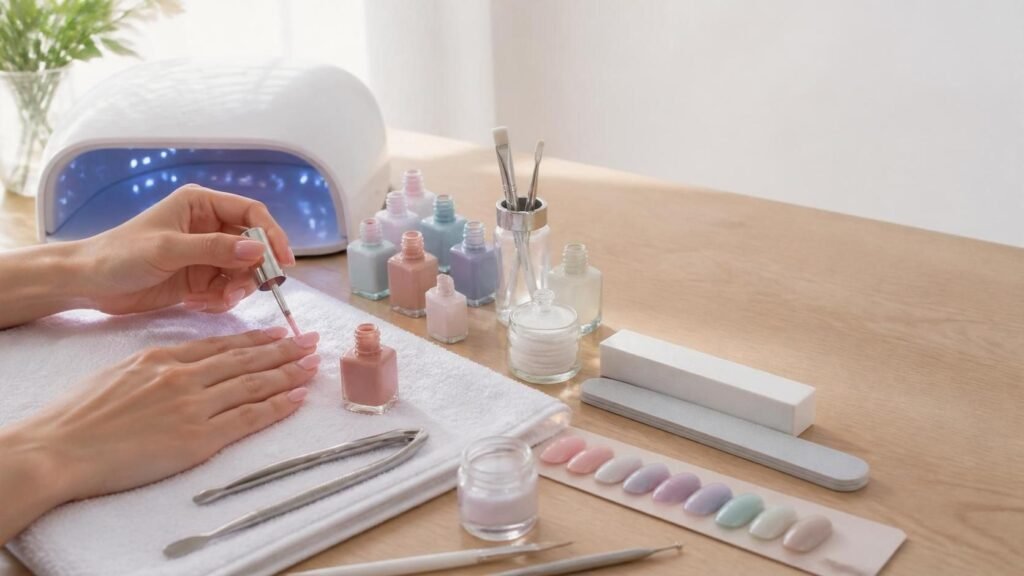
Getting started can feel overwhelming, but the process is far more approachable than most beginners expect. Once you understand the steps, it quickly becomes one of the most satisfying self-care rituals you can build into your routine.
Below are 10 essential steps and sections for doing gel nails at home, covering everything from gathering your supplies to safely removing the finished set.
1. Gather All the Right Supplies Before You Start
The single biggest mistake beginners make is starting the process without having everything they need on hand. Stopping mid-manicure to search for a missing tool is a recipe for a ruined set. Getting all your supplies organized on a clean, covered surface before you begin makes the entire experience smoother and far more enjoyable.
Here is what you need to get started: a UV or LED curing lamp, gel base coat, gel color polish in your chosen shade, gel top coat, a nail file and buffer, a cuticle pusher, lint-free wipes, isopropyl alcohol (at least 90%), and a small nail art brush for cleanup. You will also want acetone and cotton pads or foil wraps for removal later.
Lamp choice: LED lamps cure faster (30–60 seconds) and last longer than UV lamps — a worthwhile investment for beginners. Kit option: A starter gel kit with lamp, base, top, and one color costs far less than three salon visits. Quality matters: Budget gel brands chip quickly; mid-range brands like Gelish or OPI gel deliver much better results.
2. Prep Your Workspace and Protect Your Surfaces
Creating a proper workspace before you begin protects your furniture and sets you up for a calm, focused experience. Acetone and gel polish can damage surfaces quickly, so laying down an old towel or a silicone mat is a smart first move. Good lighting is essential for seeing what you are doing clearly — a bright lamp or working near a window makes a noticeable difference.
Keep everything within arm’s reach so you are not hunting for items while gel is drying. Place your curing lamp in a position where you can comfortably slide your hand in and out without knocking anything over. A tidy, well-organized workspace is the difference between a stressful experience and a genuinely relaxing one.
Surface protection: An old silicone mat or folded hand towel keeps acetone and polish off your table completely. Lighting tip: A small ring light or bright desk lamp pointed at your hands helps you apply polish with precision. Organization hack: Set supplies in order of use, left to right, so you move through the process without confusion.
3. Prepare and Shape Your Natural Nails
Nail preparation is the most important step in the entire process — and the one that most directly determines how long your gel manicure lasts. Skipping or rushing prep is the number one reason gel lifts, peels, or chips prematurely. Healthy, clean, properly shaped nails give the gel the best possible surface to bond to.
Start by removing any existing polish with acetone. Trim your nails to your desired length using clean nail clippers. Then file them into your preferred shape — square, oval, almond, round, or squoval are the most popular choices. Be consistent with each nail so the finished set looks uniform and intentional.
Filing direction: Always file in one direction only — back and forth sawing weakens the nail edge and causes splits. Shape choice: Oval and almond shapes are the most flattering for most hand types and work beautifully with gel. Nail length: Start with a shorter length for your first gel set — it is easier to work with and less prone to breakage.
4. Push Back and Care for Your Cuticles
Healthy, well-managed cuticles are essential for a gel manicure that looks professional and lasts as long as possible. Any gel polish that touches the cuticle skin will lift from that edge within days, ruining the longevity of your entire set. Taking five minutes to properly address your cuticles before application saves significant frustration later.
Apply a small amount of cuticle remover gel or oil to the base of each nail and let it sit for about a minute to soften the skin. Use a cuticle pusher to gently press the cuticles back toward the base of the nail. Remove any loosened dead skin with a cuticle nipper if needed — but never cut live cuticle skin, as this creates an entry point for bacteria.
Pusher angle: Hold the cuticle pusher at a 45-degree angle and use small, gentle circular motions rather than force. Skip cutting: Only remove dead skin with nippers — cutting live cuticles causes pain, infection risk, and regrowth issues. Frequency tip: Consistent cuticle care between manicures means less work each time you redo your gel.
5. Buff and Dehydrate the Nail Surface
Buffing the surface of your nail removes the natural shine and creates a slightly textured surface that gel polish grips far more effectively. This step alone dramatically extends the wear time of your gel manicure. Even a light once-over with the buffing side of a nail block makes a significant difference in adhesion.
After buffing, use a lint-free wipe saturated with isopropyl alcohol to thoroughly clean each nail. This step removes natural oils, residual debris, and any buffing dust from the surface. Skipping this dehydration step is one of the most common beginner errors — oils on the nail surface prevent gel from bonding properly and lead to early lifting.
Buffer grit: Use the 180-grit side of your buffer — too rough thins the nail, too smooth does not create enough texture. Alcohol percentage: Use 90% or higher isopropyl alcohol for effective dehydration; lower concentrations leave moisture behind. No touching: After dehydrating, avoid touching your nail surfaces with bare fingers — skin oils transfer instantly.
6. Apply the Gel Base Coat Correctly
The base coat is your gel manicure’s foundation — it bonds directly to the nail surface and creates the adhesive layer that everything else builds upon. A properly applied base coat is essential for preventing lifting and ensuring your color and top coat last the full two to three weeks. Rushing this step will compromise every layer that follows.
Apply a very thin, even layer of gel base coat to each nail, working from the base toward the tip. Cap the free edge of each nail by running the brush across the very tip — this seals the nail and prevents the gel from peeling from the ends. Avoid getting base coat on the skin or cuticle; if any strays, clean it off immediately with a small brush dipped in alcohol.
Thin layers: Thick base coats do not cure properly and create a soft, sticky layer that peels off prematurely. Cap the edge: Sealing the free edge on every layer — base, color, and top — is the single best way to extend wear. Curing time: Cure base coat under your LED lamp for 30–60 seconds or UV lamp for 2 minutes, per manufacturer instructions.
7. Apply Your Gel Color in Thin, Even Coats
Color application is where most beginners run into trouble, usually because they apply too much polish at once. Thick layers of gel do not cure correctly — they remain soft underneath, which leads to smudging, wrinkling, and early peeling. Two thin coats always produce a better, longer-lasting result than one thick one.
Shake or roll your gel color bottle gently before opening to ensure the formula is evenly mixed. Apply your first thin coat to all ten nails, cap the edges, then cure under the lamp before moving on to the second coat. Repeat for a second coat, cure again, and check opacity. If you need a third coat for full coverage, apply it the same way and cure.
Flood prevention: Wipe excess polish from the brush on the bottle rim so you have just enough for one clean stroke. Color opacity: Some gel shades are naturally sheer — layering three thin coats rather than two thick ones builds coverage well. Cleanup trick: Dip a small angled brush in alcohol to clean up any color that strayed onto your cuticle skin before curing.
8. Cure Your Gel Properly at Every Single Step
Curing is what transforms wet gel polish into the hard, durable finish that makes gel manicures so long-lasting. Under-curing is one of the most common beginner mistakes — it results in a soft, sticky surface that peels almost immediately. Every single layer must be fully cured before the next one is applied.
LED lamps typically cure gel polish in 30 to 60 seconds per layer. UV lamps take longer, usually two minutes per layer. Always follow the specific curing time recommended by your gel brand, as formulas vary. Ensure your entire nail fits inside the lamp — nails at the edges of the lamp get less light exposure and may cure unevenly.
Hand position: Rest your hand flat inside the lamp with fingers slightly spread so every nail gets even light exposure. Layer check: After curing, gel should feel hard and non-sticky — if it still feels soft, cure for an additional 30 seconds. Lamp wattage: A 36-watt or higher LED lamp cures most gel brands reliably; low-wattage lamps often under-cure.
9. Finish with Gel Top Coat for Maximum Shine and Durability
The top coat is your gel manicure’s protective shield — it locks in your color, adds brilliant shine, and significantly extends the overall durability of the set. Skipping the top coat leaves your color coat exposed to chips, scratches, and dulling far faster than it should. A quality top coat is worth every penny.
Apply a thin, even layer of gel top coat over all ten nails, capping the free edge as you did with every previous layer. Cure under the lamp. After curing, you will notice a slightly sticky residue on the surface — this is called the inhibition layer and is completely normal. Wipe it off with a lint-free pad soaked in isopropyl alcohol to reveal the full, gorgeous shine underneath.
Glossy vs. matte: Use a glossy top coat for high-shine results or a matte top coat for a velvety, modern finish. Wipe technique: Use one smooth stroke per nail to wipe off the inhibition layer — back and forth can dull the shine. Top coat refresh: Applying a new layer of top coat at the one-week mark extends your manicure by several more days.
10. Nail Aftercare — Making Your Gel Manicure Last
Getting a beautiful gel manicure is only half the work — how you treat your nails afterward determines how long it actually lasts. Small daily habits can keep your gel looking fresh and chip-free for two full weeks or even longer. This is the part most beginners overlook, and it makes a significant difference.
Apply cuticle oil daily around the base of each nail to keep skin hydrated and prevent lifting at the edges. Wear gloves when washing dishes, cleaning with chemicals, or doing any work that involves prolonged water or product exposure. Avoid using your nails as tools — opening cans, peeling stickers, and scratching surfaces all put stress on the gel and cause premature chipping.
Cuticle oil: Apply nourishing oil once or twice daily — it keeps skin soft, prevents lifting, and promotes nail health. Water warning: Prolonged hot water soaking causes gel to lift from the edges faster than almost anything else. Hand cream: Moisturizing hands daily with a rich hand cream keeps skin healthy and makes your manicure look polished longer.
11. How to Safely Remove Gel Nails at Home
Safe removal is just as important as safe application. Peeling or picking gel polish off your nails is the fastest way to damage the nail surface and cause thinning, peeling, and brittleness. Always soak gel off properly — your natural nails will thank you for it.
Start by gently buffing the top coat layer of each nail to break the seal, being careful not to file all the way down to your natural nail. Soak small pieces of cotton pad in pure acetone and place one on each nail, then wrap each fingertip in a small square of aluminum foil to hold the cotton in place. Leave the wraps on for 10 to 15 minutes. When you remove them, the gel should have softened and partially lifted — use a cuticle pusher to gently slide the gel off without force.
Acetone strength: Use 100% pure acetone for the most effective removal — diluted remover takes far longer to work. No peeling: Peeling gel strips off layers of your natural nail, causing thin, weak nails that break easily afterward. Post-removal care: Buff gently, wash hands, then apply generous cuticle oil and hand cream to restore moisture immediately.
12. Common Beginner Mistakes to Avoid
Every beginner makes a few mistakes with their first gel sets — and that is completely normal. The good news is that most gel problems have clear, preventable causes. Learning what to watch for from the start saves you wasted product, time, and frustration.
The most common issues beginners face include gel lifting (caused by oily nails or gel touching cuticle skin), peeling (caused by thick layers or under-curing), and bubbling (caused by applying thick coats or shaking the bottle too vigorously). Each of these problems is entirely fixable once you understand the root cause.
Lifting fix: If gel lifts within days, revisit your prep — dehydration and keeping gel off skin are the most likely culprits. Bubbling fix: Apply thinner coats and roll gel bottles gently rather than shaking to prevent air bubble formation. Peeling fix: Ensure every layer is fully cured and always cap the free edge — unsealed tips peel from the ends first.
Frequently Asked Questions
1. How long do gel nails last at home compared to the salon? With proper preparation and quality products, at-home gel nails can last just as long as salon gel — typically two to three weeks. The key is thorough nail prep, thin layers, full curing, and daily cuticle oil care.
2. Do I need a UV lamp or an LED lamp for gel nails? Both work, but LED lamps are faster (30–60 seconds versus 2 minutes for UV), more energy-efficient, and longer-lasting. Most modern gel polishes are formulated to work with both, but always check your specific brand’s recommendation.
3. Can I do gel nails at home on short nails? Absolutely. Short nails are actually ideal for beginners because they are less likely to break during the process and easier to work with. Many people find that short gel nails are lower maintenance and last even longer than longer lengths.
4. Why does my gel polish keep lifting at the cuticles? Lifting is almost always caused by one of three things: gel touching the cuticle or skin during application, insufficient dehydration of the nail surface before applying base coat, or incomplete buffing. Go back to basics in your prep and the lifting will stop.
5. How often can I do gel nails at home without damaging my nails? Most nail professionals recommend taking a one-week break between gel sets to let nails breathe and recover. Always nourish with cuticle oil and a strengthening treatment during breaks to maintain natural nail health.
6. What is the best gel nail brand for beginners? Brands like Gelish, OPI Gel Color, and Le Mini Macaron are consistently recommended for beginners because of their reliable formula, wide color range, and good adhesion. Starter kits from reputable brands include everything you need in one purchase.
Why DIY Gel Nails Have Become the Ultimate Self-Care Ritual
There is something deeply satisfying about creating your own beautiful nails from scratch. The process of sitting down, taking your time, and crafting a flawless manicure with your own hands delivers a sense of accomplishment that extends well beyond the finished result. Gel nails at home have transformed from a budget-saving workaround into a full self-care ritual that millions of people genuinely look forward to.
The financial savings are undeniable — a single gel starter kit pays for itself after just two or three uses compared to regular salon visits. But the real reward is the creative freedom and flexibility that comes with doing it yourself. You can change your color whenever you feel like it, experiment with nail art at your own pace, and build a skill that keeps getting better with every set you do.
Perfectly Polished and Proud
Gel nails at home are completely within your reach from the very first attempt. Every mistake teaches you something, every set gets a little easier, and every finished manicure is a small victory worth celebrating.
The tools are accessible, the steps are learnable, and the results are genuinely gorgeous when you follow the process properly. Invest in good quality products, take your time with prep, and never skip curing — those three habits alone will get you 90% of the way to a professional-looking finish.
Your nails deserve the same care and attention you give everything else in your beauty routine. Now go grab that gel lamp and make it happen.
