26 Short Pixie Haircuts for Thin Fine Hair That Look Fuller and Gorgeous
Fine hair and pixie cuts are actually a perfect match — most women just do not know it yet.
The right cut removes flat, wispy ends and replaces them with a clean, lifted shape that makes thin hair look intentional and full.
Short length means less weight pulling the hair down, which is exactly what fine hair needs to stay lifted and alive.
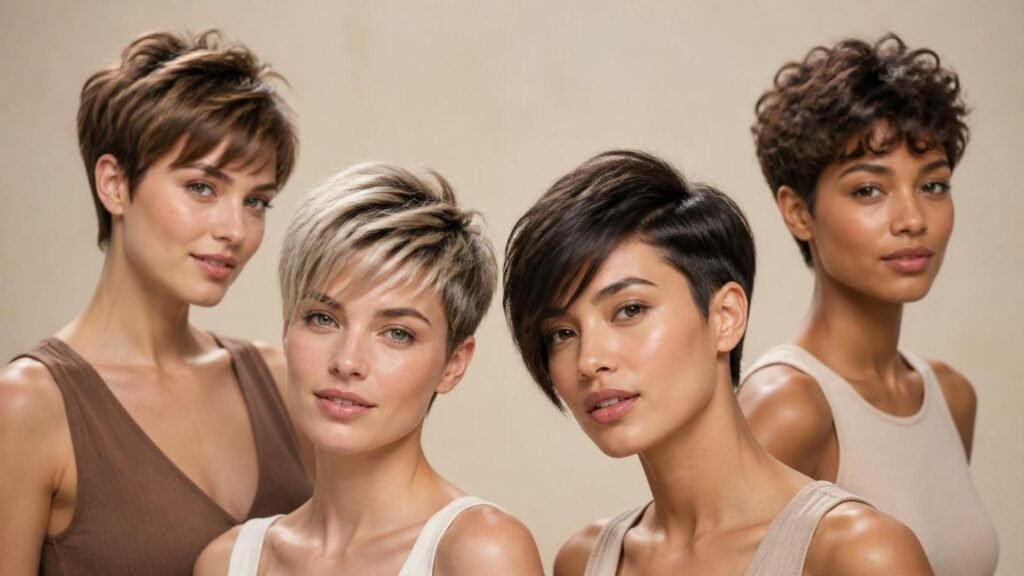
The key is choosing a cut with clean perimeter lines, light texture at the crown, and fringe or sweeping that frames the face beautifully.
Below are 26 short pixie haircuts for thin fine hair, selected for their fullness, styling ease, and genuinely flattering real-life results.
1. Soft Side-Swept Pixie Lift
A side-swept pixie with a gentle crown lift is one of the most reliably flattering cuts for fine hair.
The longer fringe sweeps softly across the forehead, adding coverage without any heaviness that would flatten thin strands.
Tidy tapered sides keep the overall shape clean and polished from every angle.
Fringe tip: Ask for a longer fringe that falls past the brow — it creates face coverage and visual fullness that short fringes cannot provide.
Crown tip: Request point-cut texture through the crown to build the light, airy lift that fine hair needs to avoid collapsing.
Taper detail: A neat taper around the ears rather than a hard fade keeps this pixie soft and feminine rather than severe.
Styling tip: A pea-size amount of volumizing mousse worked through damp roots before blow-drying is all this cut needs to hold lift all day.
2. Bleach Blonde Cropped Pixie
A bleach blonde crop proves that short and fine can look full, bold, and completely intentional.
The choppy top layers add texture and grit that trick the eye into reading the hair as denser than it actually is.
Even minimal styling effort produces a result that looks genuinely styled and fresh.
Color benefit: Bleach blonde creates a single, uniform tone that reduces the visible scalp contrast — making fine hair look noticeably fuller overall.
Choppy layer tip: Ask for micro layers through the crown using point cutting — this builds texture without removing the weight fine hair needs at the top.
Fade detail: A soft fade at the sides rather than a clipper line keeps the blonde crop looking modern and clean rather than harsh.
Product tip: A dry texture spray shaken through the crown after rough-drying gives this style grip, grit, and lasting lift with zero weight.
3. Feathered Platinum Pixie
Feathered ends give a platinum pixie an airiness that fine hair responds to beautifully.
Wispy, razor-light pieces through the fringe soften the forehead and make the entire cut feel more delicate and feminine.
Movement is built directly into the shape — so the hair looks like it flows naturally rather than sitting flat.
Feathering tip: Ask specifically for razor-cut ends rather than scissor-cut — razor feathering creates that soft, diffused finish perfect for thin strands.
Platinum advantage: Platinum tones reflect light generously, making fine hair look shinier, healthier, and more voluminous in any lighting.
Fringe style: A wispy side fringe rather than a blunt one keeps the platinum pixie looking soft and wearable rather than sharp or editorial.
Styling product: A fingertip-sized amount of light styling paste worked through dry ends pieces out the feathered tips beautifully without any stiffness.
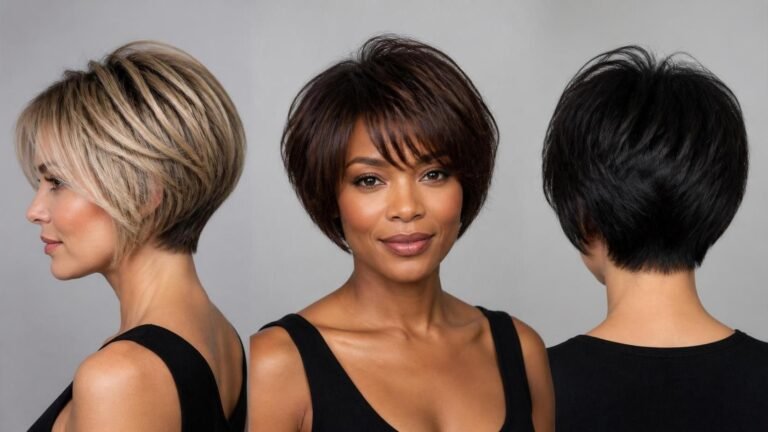
4. Brunette Tapered Pixie
A brunette tapered pixie is the definition of a clean, well-executed haircut that works harder than it looks.
The gentle volume built at the crown prevents the flat-top effect that fine brunette hair often falls into without the right cut underneath.
Stacked layering at the back adds shape and prevents the nape from looking limp or undefined.
Crown volume tip: Ask for stacked layering through the back and crown — this builds a rounded shape that holds even when fine hair wants to collapse.
Side-swept front: A side-swept top section rather than a center part creates more visual fullness at the front where fine hair often looks thinnest.
Blow-dry technique: A small round brush directed upward at the crown during blow-drying creates lift that lasts significantly longer than air-drying.
Color note: Rich brunette tones add depth and dimension to fine hair — even without color work, a good brunette gloss makes the cut look fuller.
5. Choppy Layered Pixie Texture
A choppy, layered pixie gives fine hair the one thing it needs most — the illusion of thickness through intelligent texture.
The slightly undone, imperfect finish actually works in fine hair’s favor by hiding sparse areas and making the top look busier and denser.
No smooth, flat-lying style reveals thin hair faster than controlled, intentional choppiness conceals it.
Choppy layer method: Point cutting through the crown creates the multi-directional texture that defines this look — never use thinning shears on fine hair.
Nape detail: A tapered nape rather than a blunt cut keeps the choppy pixie looking intentional and refined rather than unkempt.
Texture product: A small amount of matte clay worked through dry fingertips and pressed lightly through the crown creates the perfect undone, piecey finish.
Sparse spot trick: Choppy texture placed deliberately over sparse areas redirects the eye to movement and dimension rather than scalp visibility.
6. Warm Auburn Pixie Glow
Color is one of the most underused tools for making fine hair look fuller — and warm auburn is one of the most effective shades for it.
The rich, warm tone adds visual depth that reads as thickness, making the hair appear denser than its actual weight.
Subtle face-framing pieces and light internal layers complete the look with shine and movement.
Auburn depth tip: Warm auburn adds the impression of more hair by creating shadows and highlights within the color itself — depth reads as volume.
Face-framing detail: Ask for two or three subtle face-framing layers rather than heavy curtain bangs — too much framing weighs fine hair forward.
Gloss treatment: A glossing treatment at every color appointment keeps auburn tones vivid and the fine hair shining at its absolute best.
Internal layer tip: Light internal layers through the mid-section add movement without removing the weight fine hair relies on to look full.
7. Curly Pixie With Tapered Sides
Natural curls in a pixie cut are a gift for fine-haired women because the curl itself creates the appearance of volume.
Close-tapered sides let the curls on top claim all the space and visual attention, making the crown look significantly fuller.
A rounded crown shape keeps the curls sitting in a flattering, controlled silhouette rather than spreading outward unpredictably.
Taper height: A medium-height taper rather than a high fade keeps the curly pixie looking soft and natural rather than severe or masculine.
Crown shaping: Ask your stylist to cut the crown dry after the curl has formed — curly hair behaves very differently when wet versus dry.
Curl definition: A curl cream applied to damp sections before diffusing on low heat keeps curls defined, separated, and beautifully shaped.
Fine curly hair tip: Even fine curly hair gains visual density in a pixie because the curl structure adds three-dimensional volume that straight fine hair simply cannot replicate.
8. Textured French Crop Pixie
The French crop pixie is one of the most modern, wearable short cuts available — and it works exceptionally well on fine hair.
The structured fringe gives the front of the cut a clean, purposeful shape that immediately makes fine hair look styled and intentional.
Textured layers through the top fill in the crown so the hair reads as dense rather than sparse.
Fringe tip: Ask for a fringe that is blunt-ish but finished with tiny notch cuts at the edge — it creates texture without losing the clean, cropped line.
Taper height: A low taper at the sides rather than a hard undercut keeps the French crop pixie looking soft and contemporary rather than overly edgy.
Styling method: Finger-styling with a small amount of paste while hair is still slightly damp locks in the textured French crop shape most effectively.
Best for: Women who prefer a structured, fashion-forward look and want their pixie to read intentional and stylish rather than simply short.
9. Grown-Out Pixie With Side Part
A grown-out pixie occupies the sweet spot between pixie and bob — and for fine hair, that in-between length is genuinely ideal.
Longer layers that skim the cheekbones provide face coverage and framing that very short pixies cannot offer, adding softness while still keeping the overall shape light.
A switchable side part gives fine hair the everyday flexibility of going fuller on either side depending on the day.
Length advantage: Grown-out pixie layers between the ear and chin create movement and coverage that makes fine hair look noticeably more abundant.
Side part strategy: A deep side part immediately creates the appearance of more volume at the crown by pulling surface hair to one side.
Back graduation: Ask for soft graduation at the nape rather than a sharp blunt cut — graduation flows more naturally as a grown-out pixie grows further.
Serum tip: A lightweight, non-greasy serum applied to the ends of a grown-out pixie smooths any wispy, fine tips without adding weight or flattening the shape.
10. Micro Fringe Pixie Cut
A micro fringe makes a bold fashion statement while doing something genuinely useful for fine hair — shifting all attention to the eyes and bone structure.
When the fringe is the focus, the actual density of the hair becomes far less noticeable, which is a smart trick for women with thinner hair.
Tight sides and a slightly jagged fringe edge give this look a crisp, editorial finish that photographs exceptionally well.
Micro fringe length: The fringe should sit above the eyebrows — too long and it drags focus downward; too short and it looks unintentional.
Edge detail: A slightly jagged rather than perfectly blunt fringe edge softens the micro crop and prevents it from looking overly severe on fine hair.
Sides close tip: Keeping the sides very close in a micro fringe pixie maximizes the visual contrast between the short sides and the textured fringe above.
Styling note: A smoothing cream rather than an oil-based product keeps fine fringe lying flat and defined without appearing greasy or separated.
11. Sleek Tapered Pixie With Side Fringe
Sleek styling and a tapered sides pixie is the most polished, refined option on this entire list for fine hair.
The side fringe sweeps forward to create front coverage and visual fullness exactly where thin hair tends to look most sparse.
An airy crown layer keeps lift happening underneath the smooth surface so the hair never collapses flat.
Fringe direction: Ask for the fringe to be cut longer on one side than the other — this asymmetry creates visual interest and makes fine hair look more dimensional.
Taper cleanness: A precise, clean taper rather than a messy fade keeps this sleek pixie looking expensive and intentionally polished.
Blow-dry lift: Rough-dry the crown upward first, then smooth the surface down — this technique builds internal lift that sleek fine hair needs to stay full.
Finishing product: A tiny amount of sheen cream applied lightly through the surface gives sleek fine hair a healthy, luminous finish without any stiffness.
12. Pixie Shag With Piecey Layers
The pixie shag brings the laid-back, effortlessly cool energy of a shag haircut to a much shorter length — and fine hair loves it.
The slightly messy, multi-directional layers make the hair look thicker on purpose, filling in areas that fine hair might otherwise leave looking sparse.
Shattered ends through the crown are what give this style its signature undone texture that holds all day with minimal effort.
Shag layer tip: Ask for a longer top section with shattered ends and shorter layers beneath — this creates the volume-on-top structure that makes fine pixie shags so flattering.
Nape taper: A tapered nape rather than a buzzed or faded one keeps the shag pixie looking soft and feminine rather than closely cropped.
Dry shampoo trick: A light spray of dry shampoo at the roots before styling adds grip and texture that makes fine piecey layers hold their shape much longer.
Low-effort styling: The pixie shag looks intentional with almost no styling — finger-tousled with a tiny bit of matte paste is genuinely all this cut needs.
13. Platinum Buzz Pixie
The platinum buzz pixie is the most fearless option on this list — and for fine hair, it is surprisingly one of the most practical.
Cutting close to the scalp removes every wispy, transparent end and replaces them with a clean, uniform coverage that looks bold and strong.
Platinum tone adds a striking brightness that makes the cut feel like a powerful style choice rather than a practical one.
Buzz length: A number 3 or 4 guard rather than a full shave keeps the buzz pixie looking intentional and dimensional rather than stark.
Platinum maintenance: Purple shampoo used twice a week keeps platinum tones cool, bright, and free from the yellow brassiness that fine bleached hair can develop quickly.
Edge softness: Ask for a slightly softened edge around the ears and nape rather than a razor-sharp outline — softer edges read as more approachable and feminine.
Confidence tip: The platinum buzz is the one cut where fine hair never looks thin — the uniform length means there is no comparison between dense and sparse areas.
14. Polished Classic Pixie
The classic pixie remains the most timeless, universally flattering short cut in existence — and fine hair is arguably its best canvas.
Without heavy layers competing for space, fine hair can hold a precise classic shape cleanly and reliably.
Light graduation and a side-swept front give the cut the structure and softness that make it look genuinely expensive.
Classic shape tip: Ask for smooth graduation rather than layering — fine hair in a clean classic pixie shape looks more intentional than in a heavily textured one.
Side sweep direction: A side-swept front that covers part of the forehead adds fullness and visual weight exactly where fine hair needs it most.
Product minimum: A tiny dab of shine cream no larger than a grain of rice is genuinely all this polished cut needs — less product always looks better on fine hair.
Trim frequency: A classic pixie on fine hair looks its best when trimmed every 5 to 6 weeks — the clean outline is what makes the style work, and growing out blurs it.
15. Razor-Cut Pixie With Airy Movement
Razor cutting is the single best technique for fine hair that wants movement, softness, and lift without any heaviness.
The razor creates feathered, light ends that move freely with every head turn rather than collapsing under their own weight.
The result is a pixie that looks alive, free, and genuinely dimensional all day long.
Razor technique advantage: Razor cutting softens the ends so they disperse rather than clump — fine hair ends that spread slightly look much fuller than blunt-cut ends.
Crown razor tip: Ask for razor texture specifically through the crown sections — this is where lift matters most and where razor work creates the biggest visual difference.
Nape taper: A gentle razor taper rather than a clipper taper at the nape keeps the razor-cut pixie looking soft and consistent throughout the entire shape.
Mousse and diffuse: Mousse worked through damp hair from roots to ends, followed by a gentle finger-diffuse, shows off razor-cut movement at its most beautiful.
16. Sculpted Bixie Shape
The bixie — a hybrid sitting between a bob and a pixie — gives fine hair the volume of a bob with the lightness of a pixie.
The rounded shape adds visual fullness at the sides and back in a way that a standard short pixie cannot achieve alone.
A long side fringe swept across the face completes the look with softness and modern style.
Bixie length: The ideal bixie sits between the earlobe and the jaw — long enough for the rounded shape to show, short enough to stay lightweight for fine hair.
Stacking tip: Ask for soft stacking at the back to build the rounded bixie shape — stacking creates the illusion of significantly more hair without any actual volume.
Side fringe sweep: A longer fringe on one side blown forward and slightly under creates face-framing fullness that makes fine hair look thicker at the front.
Round brush technique: A medium round brush directed under and forward at the front during blow-drying creates the most flattering bixie shape for fine, thin hair.
17. Short Buzzed Pixie With Clean Fade
A clean fade adds sharp definition to a short buzzed pixie that makes fine hair look completely intentional and confident.
The fade creates a deliberate contrast between the shorter sides and the slightly longer top, drawing the eye upward rather than outward.
Regular maintenance trims keep this style looking its absolute best since the precision of the fade is what makes it work.
Fade height: A low fade starting just above the ear is the most flattering option for fine hair — it maintains some visual density at the sides.
Top length: Keeping the top half an inch to an inch longer than the buzzed sides gives styling flexibility and softens the overall look considerably.
Edge care: Ask for soft, feathered edges rather than razor-sharp outlines around the hairline — softer edges suit fine hair and feminine facial features better.
Trim schedule: A buzzed pixie with a clean fade needs freshening every 3 to 4 weeks to maintain the precision that makes it look so intentional.
18. Short Soft Pixie With Natural Texture
A short, soft pixie with natural texture is the no-fuss option for fine-haired women who want a great cut without complex styling.
Simple but well-executed, the gentle lift at the crown prevents fine hair from laying completely flat while tidy sides keep the shape looking deliberate.
Light texture — added through the cut itself rather than product — does all the work so the morning routine stays effortless.
Texture through cutting: Request that all texture comes from the cut rather than styling product — over-productized fine hair looks lank and heavy almost immediately.
Crown lift detail: Even a quarter-inch of extra length at the crown compared to the sides creates the lift that separates a flattering pixie from a flat one.
Quick styling: A rough-dry with fingers followed by a single fingertip touch of lightweight paste is genuinely the complete styling routine this cut needs.
Refresh spray: A spritz of water and a quick finger-tousle the next morning refreshes natural texture overnight without requiring a full restyle.
19. Side-Swept Pixie With Longer Bangs
Longer side-swept bangs on a short pixie are perhaps the single most effective tool for making fine hair look full and face-framing simultaneously.
The bangs sweep across the forehead and create visual weight at the front of the cut, instantly compensating for any thinness at the temples or crown.
A deep side part works alongside the longer bangs to multiply the fullness effect on one side of the hair.
Bang length tip: Bangs that extend past the outer corner of the eye create the most flattering coverage and face-framing for fine hair.
Point-cut ends: Ask for point-cut rather than blunt-cut ends on side-swept bangs — softer ends look far more natural and blend better with fine hair texture.
Round brush lift: A small round brush directed upward while blow-drying the bang section creates lift and sweep that fine hair holds much better when set warm.
Part flexibility: A deep side part on a longer-bang pixie can be switched from day to day, giving fine hair the visual illusion of changing volume and thickness.
20. Silver Pixie With Soft Volume
A silver pixie is a genuinely beautiful choice for fine hair — the tone itself adds luminosity and visual dimension that darker shades cannot replicate.
Soft volume built into the crown through light layering keeps fine silver hair lifted and full rather than lying flat against the scalp.
A tapered neckline finishes the style cleanly and prevents the fine ends at the nape from looking wispy or undefined.
Silver tone: True silver rather than gray keeps this pixie looking intentional and sophisticated — a toner appointment alongside the cut refines the shade beautifully.
Volume at crown: Ask for light feathered layers through the top only — over-layering fine hair anywhere other than the crown removes the weight it needs to look full.
Volumizing powder: A tap of volumizing powder at the roots before finishing the style lifts fine silver hair at the base and creates root grip that lasts all day.
Purple shampoo: Once-weekly use of a purple or silver shampoo maintains the cool silver tone and prevents fine silver hair from pulling yellow or muddy.
21. Spiky Textured Pixie
A spiky textured pixie channels all of fine hair’s energy upward — and height is one of the best illusions of fullness available.
Short, close sides keep the silhouette tight and clean while point-cut layers through the crown give individual pieces the independence to lift and separate.
The spiky finish makes fine hair look deliberately and confidently dense rather than inadvertently thin.
Spiky lift tip: Ask for the crown layers to be cut at slightly varying lengths — uniform length lays flat; varied length creates the separation that makes spikes possible.
Side taper snugness: A snug, close taper at the nape and sides maximizes the contrast with the textured crown, making the top look significantly fuller by comparison.
Two-step styling: Apply mousse to damp roots and rough-dry, then pinch and lift individual sections with matte paste while dry for the most defined, long-lasting spiky texture.
Fine hair advantage: Fine hair is actually the easiest hair type to style into spiky texture — it responds to product direction far more readily than thick or coarse hair.
22. Stacked Lob-Bob Hybrid
The stacked lob-bob hybrid is the perfect bridge for fine-haired women who want the benefits of a short cut without committing to a full pixie length.
Stacking at the back creates a rounded, built-up shape that fine hair rarely achieves naturally, making the back section look genuinely full and bouncy.
Longer face pieces at the front provide framing and balance that keep the stacked back from looking disproportionately large.
Stacking angle: Ask for a steeper stacking angle at the back for maximum volume build — gentle stacking creates less dramatic fullness than a more pronounced angle.
Back vs. front balance: The fuller stacked back needs longer front pieces to balance it — aim for front layers that reach the cheekbone or just below.
Round brush under: A medium round brush directed under and inward during blow-drying creates the most flattering rounded shape in the stacked back section.
Fine hair benefit: Stacking essentially creates structure and weight where fine hair has none — it is one of the most practical volumizing techniques available through cutting alone.
23. Tapered Blonde Pixie With Soft Fringe
A tapered blonde pixie with a soft fringe is a timeless combination that suits fine hair exceptionally well.
The clean taper at the neckline eliminates any risk of wispy, undefined ends — and that crisp outline is what makes fine hair look full and healthy.
A gentle side fringe adds softness at the front and creates coverage that the clean-tapered sides alone cannot provide.
Taper neatness: A well-executed taper rather than a fade keeps the blonde pixie looking classic and refined — fine hair benefits more from precision than from trendy clipper work.
Fringe softness: Ask for the fringe to be cut with light point cutting at the edge rather than bluntly — a softer fringe blends more naturally with fine blonde hair.
Blonde tone choice: A warm honey blonde or cool ash blonde rather than stark platinum is more forgiving on fine hair — extreme lightness can make sparse areas appear more visible.
Texture spray: A light texture spray worked through the crown after blow-drying gives fine blonde hair the airy grip it needs to hold the tapered pixie shape all day.
24. Undercut Pixie With Longer Top
An undercut pixie uses the clever technique of removing bulk underneath to make the top layer look significantly fuller by contrast.
The longer, piecey top section is essentially uncontested — nothing underneath competes with it for volume or space.
The result is fine hair that looks strikingly thick at the crown simply because the lower sections have been cleared away.
Undercut depth: A low undercut rather than a high one keeps the contrast subtle enough to look intentional rather than dramatic or disconnected.
Top length: Keep the top section at least an inch to an inch and a half long — this gives the piecey finish room to show and makes styling genuinely flexible.
Dry wax finish: A small amount of dry wax worked between palms and applied with a light lifting motion through the top creates the piecey, defined crown this cut is known for.
Grow-out strategy: The undercut pixie grows out in the most flattering direction — the top layers gain length while the undercut section stays short, naturally creating a rounded shape.
25. Vintage-Inspired Sculpted Pixie
A vintage-inspired pixie brings a sense of old-Hollywood glamour to short fine hair that modern edgy cuts sometimes miss.
The smooth, sculpted wave at the front gives fine hair a shape that reads intentional, elegant, and beautifully dressed rather than simply short.
A clean taper at the sides keeps the vintage silhouette balanced and prevents it from looking too retro or costume-like.
Wave sculpting tip: A longer fringe section that can be molded while damp and set with a light cream retains the vintage wave throughout the day without stiffness.
Classic side taper: A clean side taper rather than a fade keeps the vintage pixie looking polished and authentic to its classic inspiration.
Styling cream choice: Use a light-hold styling cream rather than gel or wax — it creates the smooth, moldable finish the vintage front wave needs without crunch or stiffness.
Best for: Women who appreciate timeless, polished aesthetics and want a pixie that feels dressed and beautiful rather than casual or undone.
26. Wispy Wavy Pixie With Soft Movement
A wispy, wavy pixie leans fully into what fine hair does naturally — move softly — and turns it into a signature style rather than a limitation.
Soft waves through the top and fringe create a light, floating quality that makes fine hair look delicate and deliberately beautiful.
The key is keeping the cut refined enough at the perimeter that the wispy softness reads as intentional style rather than sparse hair.
Wispy end tip: Ask for point-cut or razor-cut ends through every section — blunt ends on fine wavy hair look heavy and flat, destroying the airy wispy quality entirely.
Wave technique: A small barrel iron used with loose, open wraps on dry hair creates the most natural-looking soft waves that complement fine hair without overwhelming it.
Perimeter precision: Even with wispy styling, the perimeter outline should stay clean and defined — a precise edge is what separates beautiful wispy from simply thin.
Hold product: A light-hold mousse rather than spray or gel preserves the soft, natural movement of a wispy wavy pixie without making fine strands stiff or crunchy.
Frequently Asked Questions
What pixie cut is best for very thin fine hair? Tapered and side-swept pixies work best for very thin hair because they create clean, defined edges that prevent wispy ends from appearing see-through. A soft side fringe adds front coverage and makes the hair look fuller immediately. Avoid very short, close-cropped cuts unless you choose platinum or silver tones to maximize contrast.
Should I avoid layers if my hair is fine and thin? Not at all — the right kind of layers are actually essential for fine hair. Ask for airy, point-cut layers that build lift rather than heavy thinning shears that remove bulk. Thinning shears can make fine hair look stringy and even more sparse. Light, strategic layering creates the texture and movement that make fine hair look fuller.
What products work best for styling a pixie on fine hair? Volumizing mousse at the roots, dry texture spray for grip, and a small amount of matte paste for piecing out layers are the three best products for fine hair in a pixie. Avoid heavy oils, rich creams, and thick pomades — they weigh fine hair down and make it look flat and greasy almost immediately.
How often does a pixie cut need trimming when hair is fine? Every 5 to 6 weeks for most pixie styles, and every 3 to 4 weeks for buzzed or faded pixies. Fine hair relies on precise perimeter edges to look full and healthy — growing out beyond 6 weeks usually means the ends start looking wispy and the shape loses definition.
Does color help fine hair look thicker in a pixie cut? Yes — significantly. Warm tones like auburn and honey add visual depth that reads as thickness. Lighter tones like platinum and silver minimize scalp contrast. Any tone with dimension, whether through balayage, gloss, or highlights, makes fine hair look more multi-layered and substantially fuller than a flat single-process color.
Can fine hair pull off a textured or choppy pixie? Absolutely — textured and choppy pixies are among the best options for fine hair specifically because the controlled disorder makes the hair look busier and denser. The trick is using point cutting rather than thinning shears and using dry texture spray rather than heavy products to build and maintain the choppy finish.
Why the Pixie Is Actually the Most Flattering Cut for Fine Hair
There is a widespread misconception that fine hair needs length to look full — that going short will only emphasize sparseness and expose the scalp.
The reality is almost entirely the opposite. Length adds weight that pulls fine hair flat. It creates limp ends that separate and reveal the scalp through sheer translucency. The longer fine hair gets without density to support it, the thinner it appears.
A well-cut pixie removes all of that. It eliminates the fragile, wispy lengths. It replaces flat surface area with intentional shape and lift. It lets every strand contribute to the overall fullness rather than hanging separately and revealing gaps. For fine hair, short is not a compromise — it is genuinely the most flattering choice available.
Simply Radiant
The right pixie does not just make fine hair look fuller — it makes the woman wearing it look more confident, more polished, and more completely herself.
Choose the style that matches how you want to feel, not just how you want your hair to look. Textured and undone if you love low-effort mornings. Sleek and polished if precision makes you feel your best. Wavy and soft if movement and femininity are your priorities.
Bring two photos to your appointment — one of the overall shape and one of the fringe detail — and tell your stylist exactly what you want from the cut: lift, softness, coverage, or all three.
Then let a great pixie do what it was designed to do. Make every single strand count.