
20 Medium Length Haircuts With Layers That Add Beautiful Shape Without Looking Choppy
Medium length hair with layers is one of the most universally flattering combinations in hairstyling — and for good reason. The right layers add movement, remove unwanted heaviness, and give the hair a shape that feels intentional rather than just grown-out.
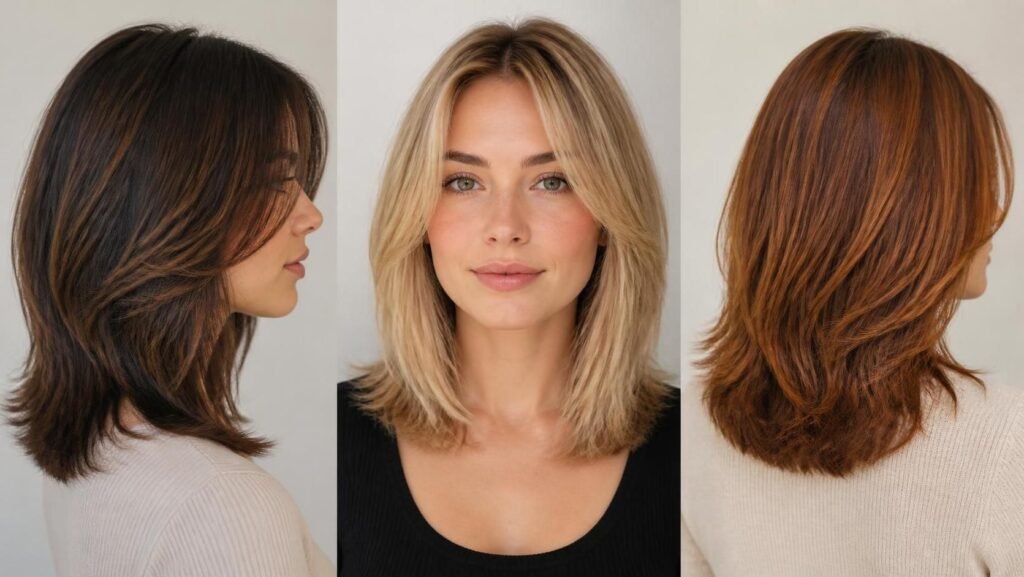
The challenge is finding the version that suits your specific hair type, whether that means keeping ends dense for fine hair, removing bulk for thick hair, or supporting natural texture for wavy and curly hair. Some of these cuts are polished and smooth.
Others are relaxed and effortless. All of them prove that medium hair does not have to be boring.
Below are 20 medium length haircuts with layers, chosen for shape, wearability, and how well they hold up in real daily life across all hair types.
1. Airy Layers for Fine Hair
Fine hair at medium length needs layers that create movement without sacrificing the visual density of the ends. This cut delivers exactly that — a light, floating quality through the mid-section while the perimeter stays full enough to look healthy.
Why airy layers suit fine hair: They lift the shape without removing end weight, so the hair moves freely without looking thin or sparse at the tips.
Layer placement: Ask for soft layers through the mid-section only — not short crown layers that would expose a thin scalp area on fine hair.
Fringe integration: A gentle fringe that blends seamlessly into the front layers keeps the face-framing soft rather than creating a heavy, separate bang section.
Product tip: A volumizing mousse worked through damp roots before blow-drying builds the airy lift that makes this cut look its best every morning.
Best for: Women with fine hair who want noticeable movement and shape without losing the fullness they need at the perimeter.
2. Blowout Layers on Medium Hair
This is the medium cut that looks genuinely polished — a smooth, lifted finish with a soft bend through the ends and clean movement through the length. The layers support the blowout shape so it holds through the day rather than collapsing by afternoon.
What makes this work: Layers that allow the round brush to create movement rather than fighting a one-weight shape that resists styling.
Round brush technique: Blow-dry each section by rolling the round brush downward and slightly inward at the ends for that signature soft bend that defines this cut.
Layer depth for this style: Ask for medium layers — not too short at the crown — so the blowout has enough length to build that full, rounded shape through the top.
Product choice: A light styling cream or blowout spray through damp hair before drying gives the finish a smooth, polished result without stiffness.
Perfect for: Women who enjoy a morning blowout routine and want a cut that rewards that effort with a consistently full, shaped look throughout the day.
3. Collarbone Layers With Curtain Bangs
The combination of collarbone length, soft layers, and curtain bangs creates one of the most balanced and face-flattering shapes in medium hairstyling. The curtain fringe opens up the forehead and draws attention to the eyes, while the layers add movement through the length.
Why curtain bangs work at this length: They blend naturally into the collarbone layers, creating a connected, cohesive front section rather than an isolated bang line.
Curtain bang shaping: Ask for bangs that are slightly longer at the outer edges than the center — this creates that signature parted, flowing shape that suits almost every face.
Layer placement for the collarbone: Keep layers focused through the lower half and face-framing sections so the top retains fullness and the shape stays balanced.
Low-effort styling: Curtain bangs at this length air-dry with a soft natural part — a thirty-second pass with a round brush is all that is needed to refine them.
Great for: Women who want a feminine, softly framed look that feels fresh and current without requiring significant daily styling effort.
4. Collarbone Lob With Invisible Layers
From the outside, this cut appears clean, smooth, and simply shaped — but hidden internal layers make it sit, move, and behave significantly better than a one-length cut would. It is the perfect choice for women who want improvement without obvious change.
What invisible layers actually do: They remove internal bulk from the upper section, letting the hair lift and move naturally while the exterior line stays completely intact.
The key instruction for your stylist: Ask specifically for invisible or internal layers through the inside of the cut — not short layers on top or point-cut ends that would be visible in the finished shape.
For thick hair specifically: Invisible layers are particularly effective on thick hair because they remove the weight that makes the hair sit heavy and flat without shortening or thinning the visible length.
Styling ease: This cut looks polished with minimal effort — a quick root-lift spray and finger-dry at the crown is genuinely sufficient most mornings.
Best for: Women who want a clean, smooth-looking cut that behaves better and moves more naturally than their current one-length style.
5. Contoured Medium Layers Around the Face
Contoured face-framing layers follow the natural curves of the cheeks and jaw, softening a dense or heavy outline without changing the overall length. The effect is a more sculpted, open-looking shape around the face.
What contouring does differently from standard layers: The layers curve specifically to follow the face shape, creating a custom frame rather than generic straight-down pieces.
Density preservation: The contouring stays focused at the front and face-framing sections — the back and bottom remain full, so the overall cut still looks substantial and healthy.
Who benefits most: Women with dense or thick hair whose shape feels heavy and shapeless around the face — the contouring immediately creates a lighter, more defined look.
Blending requirement: Ask your stylist to blend the contoured pieces smoothly into the rest of the cut so there are no visible steps between the face-framing layers and the main length.
Perfect for: Women who want their face to be the focal point of their hairstyle and who feel that their current cut is overwhelming rather than framing their features.
6. Curly Medium Layers With Rounded Shape
For curly hair at medium length, the shape of the cut matters more than almost anything else. A rounded layer structure keeps the curls balanced from crown to ends — not too wide at the sides, not too flat on top.
Why rounded shaping suits curls: It prevents the sides from expanding outward disproportionately, which is the most common shape problem in medium curly cuts.
Cutting approach: Ask your stylist to cut curly hair dry whenever possible — wet cutting cannot accurately show how each curl will spring up and where the shape will actually fall.
Product for defined curls: A curl cream applied to soaking-wet hair, scrunched upward section by section, gives this cut its cleanest definition as it dries.
Avoiding the triangle shape: The rounded layering prevents the classic triangle silhouette — wide sides, flat top — that appears on curly hair when layers are not balanced properly.
Best for: Women with curly or wavy hair who want a medium cut that holds a balanced, full silhouette without expanding outward into an uncontrolled shape.
7. Face-Framing Medium Layers
This is one of the most versatile and universally flattering approaches to medium layering. Face-framing pieces that start at the cheekbones or jaw break up a dense front section and draw the eye toward the features rather than the hair mass.
The impact of face-framing: Even two or three well-placed pieces around the front of the cut can transform a shapeless medium cut into something that looks considered and styled.
Where to start the layers: Ask for the face-framing to begin around the cheekbones or jaw — starting higher than that removes too much length and can look disconnected from the rest of the cut.
Main length preservation: The bulk of the length stays completely intact — face-framing layers are a surface-level refinement, not a structural overhaul.
For adding softness: Face-framing works especially well on cuts that feel hard or boxy — the lighter front immediately softens the entire shape and makes the face look more open.
Perfect for: Women who want to improve their current medium cut without a significant change — face-framing layers are the least committal way to add meaningful shape.
8. Lived-In Layered Lob
The lived-in lob is designed to look like the best version of hair that has not been overthought. Soft texture through the length, easy movement, and a gently undone quality that signals effortless style rather than a rigid salon finish.
What lived-in means technically: Layers that allow the hair to move and separate naturally, with no sharp precision lines or heavy blowout shaping required.
Styling for the lived-in finish: A light texturizing spray or sea salt spray worked through damp hair before air-drying activates the natural movement this cut is built around.
Layer placement: Ask for layers distributed through the length — not just at the ends — so the texture feels present throughout the cut rather than just at the tips.
Loose styling alternative: A few passes with a large-barrel curling wand on mid-lengths only creates the same relaxed, separated finish without commitment to a daily routine.
Best for: Women who want a current, effortless aesthetic and are comfortable with a slightly undone finish rather than a structured, polished shape.
9. Low-Maintenance Medium Layers
Not every layered cut should demand fifteen minutes of morning effort. This version is cut to hold its shape whether you blow-dry it, diffuse it, or simply let it air-dry — and it still looks like something you thought about.
The grow-out test: A truly low-maintenance cut should look intentional for six to eight weeks between appointments — ask your stylist to cut soft layers that transition gracefully as they grow.
Layer softness: Request layers that have no abrupt steps between lengths — the graduation should be smooth so the shape does not collapse or look awkward at the four-week mark.
End density balance: Ends should feel light enough to move freely but not so wispy that they look thin or undernourished — a solid but light perimeter is the goal.
Air-dry friendliness: A leave-in conditioner and a light smoothing cream applied to damp hair before air-drying gives this cut a consistently presentable result with zero heat.
Great for: Women with busy schedules who want a reliable, shape-holding cut that looks good on any morning regardless of how much time they have to style it.
10. Medium Layers for Thick Hair
Thick hair at medium length can feel dense, heavy, and difficult to style without the right layering approach. Well-placed medium layers remove the bulk that causes the hair to sit flat at the roots and puff outward at the ends.
Where the weight removal matters most: Ask for layers focused through the sides and lower half — this is where thick hair accumulates the most unwanted bulk and heaviness.
Keeping the shape full: The goal is lighter, not thinner — request that the ends remain strong enough to hold the outline while the interior loses its excess weight.
Avoiding over-thinning: Aggressive thinning shears or razor cutting removes too much from thick hair, creating a see-through or stringy quality — ask for blended layers instead.
Result after cutting: Thick hair with the right medium layers sits closer to the head, moves more freely, and styles significantly faster than the same hair without layering.
Perfect for: Women with naturally thick, dense hair who find their medium length feels heavy, unruly, or difficult to manage on a daily basis.
11. Medium Layers With Bottleneck Fringe
Bottleneck bangs — narrower at the center and gradually widening toward the cheekbones — are one of the most universally flattering fringe styles available. Combined with medium layers, they create a balanced, open shape that frames the upper face beautifully.
What makes bottleneck bangs special: The narrow-to-wide shape creates a natural, unfussy fringe that suits oval, round, square, and heart face shapes without looking too heavy on any of them.
Connecting fringe to layers: The outer edges of the bottleneck fringe should blend seamlessly into the front face-framing layers — there should be no abrupt line where the bang section ends.
Fringe weight for medium hair: Keep the bottleneck section light and slightly separated — a thick, solid band of fringe on a medium-length cut can overwhelm the overall shape.
Growing out gracefully: The bottleneck shape transitions better than full blunt bangs because the longer outer edges naturally merge into the face-framing as they grow.
Best for: Women who want the softening effect of a fringe without committing to a heavy, high-maintenance bang section that demands precise daily styling.
12. Medium Layers With Flipped-Out Ends
Flipped-out ends give a medium layered cut an open, expansive quality that makes the hair look fuller and more voluminous through the lower half. The outward direction at the tips creates a light, lifted finish.
What the flip adds visually: Ends that turn outward catch the light differently and create the impression of more volume and width than inward-curling or straight ends do.
Achieving the flip at home: Use a medium round brush during blow-drying, rolling the ends outward and slightly upward as you finish each section, holding for five seconds before releasing.
Alternative method: A flat iron with a slight wrist flip outward at the ends creates a clean, modern version of this finish without a round brush.
Layer requirement: The layers need to sit at a length where the ends have enough weight to hold the flip — very short layers will not have enough length to turn outward convincingly.
Great for: Women who want an easy way to add movement and a polished, open finish to a standard medium layered cut without learning a complicated styling routine.
13. Mid-Length Soft Shag
The mid-length soft shag takes the structure of a traditional shag cut and removes the drama — keeping the airy layering and light fringe while delivering a result that is genuinely wearable for everyday life.
Soft shag versus full shag: A soft shag uses gentler layering and avoids heavy razoring, so the texture is present and lively without the cut looking aggressive or high-maintenance.
Fringe style for a soft shag: A light, wispy fringe or curtain bang works best — a thick, heavy fringe fights the relaxed, airy energy the rest of this cut is built around.
Air-dry result: Scrunch a lightweight texturizing cream through damp hair and diffuse on low for the most natural, effortless version of this cut’s finish.
Layer distribution: The layers should run from the crown through the ends, with the most movement happening through the mid-lengths — not concentrated only at the tips.
Best for: Women who love the shag aesthetic but want a gentler, more manageable version that suits professional settings as easily as casual ones.
14. Natural-Texture Medium Layers
The most underrated approach to medium layering is one that simply works with what the hair already does. Natural-texture layers remove just enough weight to let the hair fall and move better — without imposing a specific style on it.
The philosophy of this cut: Instead of styling the hair into a particular shape, the layers are placed to enhance what the natural texture wants to do on its own.
Layer depth for natural texture: A light hand is essential — too many layers on naturally textured hair create frizz and unpredictability, while the right amount creates freedom and shape.
Styling for natural texture: A leave-in conditioner and a light defining cream applied to damp hair, then left to dry naturally, gives this cut its best and most authentic result.
Humidity performance: This approach actually performs better in humid conditions than heavily layered cuts — the natural texture works with the moisture rather than against it.
Perfect for: Women who are tired of fighting their natural texture and want a cut that makes their hair feel like itself — just more shaped and easier to live with.
15. Shoulder-Length Cut With Piecey Fringe
A piecey fringe at shoulder length creates a casual, relaxed front section that softens the face without the commitment of a traditional solid bang. The separated pieces make the forehead look naturally framed rather than cut off.
What piecey means: The fringe is lightly textured and separated at the tips — not a uniform, blunt wall of hair but a naturally broken-up section with movement between pieces.
Why this suits shoulder length specifically: The shorter overall cut means the front and fringe are proportionally matched — a piecey fringe that would look sparse at longer lengths looks perfectly light and intentional here.
Avoiding heaviness: Ask your stylist to keep the fringe thin and airy — too many hairs in the piecey section removes the relaxed, casual quality that makes this style appealing.
Day-two behavior: Piecey fringes often look even better on day two, when a little natural oil and texture gives the pieces their most natural, effortless separation.
Best for: Women who want the facial softening effect of a fringe but prefer something low-commitment and naturally separated over a structured, precision-cut bang.
16. Shoulder-Length Soft Layers With Middle Part
The middle part and soft layers combination at shoulder length creates one of the most symmetrical, balanced shapes in medium hairstyling. The layers add movement on both sides equally, and the middle part keeps the distribution even and clean.
Why middle part enhances soft layers: It centers the weight distribution of the layers so the shape is consistent on both sides — no heavier section pulling in one direction.
Layer weight for balance: Ask for layers that graduate smoothly from the top through the ends — no abrupt jumps in length that would create visible steps when the hair is parted cleanly in the center.
End fullness: The baseline should stay full enough to hold the straight-down line on both sides — wispy ends on a center-parted style look unfinished rather than effortless.
For straight or slightly wavy hair: This combination works particularly well on straight and lightly wavy textures where the layers create movement without disrupting the clean, symmetrical part.
Great for: Women who prefer a clean, symmetrical aesthetic and want a reliable shape that looks equally good freshly styled or simply air-dried with a centered part.
17. Side-Parted Medium Layers With Crown Lift
A side part fundamentally changes how layered medium hair sits by stacking more weight to one side of the crown — instantly creating height and lift where flat hair typically struggles most. Combined with crown-targeted layers, the result is noticeably more voluminous.
The physics of a side part: Shifting the part creates root lift on the heavier side because the hair is directed against its natural growth pattern, building immediate volume at the crown.
Crown layer placement: Ask for layers specifically through the top and crown section — this area holds the lift created by the side part so it lasts through the day.
End softness: Keep the ends soft and light enough to move without becoming limp — the contrast between a lifted crown and a soft, moving perimeter is what gives this style its elegant shape.
Changing the part for extra body: Alternating which side you part on occasionally gives the roots a rest and adds extra volume at the crown without any additional styling effort.
Perfect for: Women whose primary issue is flatness at the roots — this cut structurally addresses that problem while keeping the rest of the shape soft and manageable.
18. Softly Sculpted Medium Layers
Softly sculpted layers sit between the clean precision of a polished blowout and the loose texture of an undone shag. The layers have shape and intention — but the finish is always soft, never sharp or geometric.
What softly sculpted means: Each layer has a clear placement that contributes to the overall outline, but the transitions between layers are blended so smoothly that the cut looks entirely cohesive.
Around the face: The sculpting is most visible at the front and face-framing sections — this is where the shape is most refined and where the lightening effect is most flattering.
Texture level: Ask for a finish that is shaped and easy rather than sharp and aggressive — the whole cut should feel gentle and wearable, not like it belongs in a fashion editorial.
Styling flexibility: Softly sculpted layers look equally good straight, with a loose wave, or lightly textured — the cut works with multiple styling directions rather than demanding one specific look.
Best for: Women who want layers with clear intention and shape but find heavily textured or choppy cuts too high-maintenance or too dramatic for their everyday life.
19. Textured Shoulder-Length Cut
Adding texture to the interior of a shoulder-length cut changes the entire feel of the hair without visibly changing the outside shape. It feels lighter, more alive, and significantly easier to style — all while the silhouette remains clean and controlled.
Internal texture versus external texture: Internal layering removes weight from inside the cut so the exterior stays tidy and the visible length is preserved — the texture is felt more than seen.
For hair that feels heavy: This approach suits medium hair that sits too solid and flat — the internal texture gives the hair room to lift and separate without changing the overall impression of length or fullness.
Avoiding over-texturing: Ask your stylist to keep the outer shape fairly clean while adding texture selectively through the interior — too much external texture on shoulder-length hair can look choppy or dated.
Air-dry result: Hair with internal texture air-dries significantly better than one-weight hair — it separates naturally rather than clumping together at the nape.
Great for: Women who want a lighter, more manageable shoulder-length style but prefer the clean exterior line of a traditional cut over the visible choppiness of a textured or shag style.
20. Wavy Collarbone Cut With Internal Layers
Soft waves and collarbone length are a natural match — the length allows waves to form fully before they reach the ends, and the internal layers support the wave movement without creating an over-layered, frizzy surface.
Why internal layers are right for wavy hair: They remove weight that suppresses the wave without disrupting the surface of the cut — the waves form naturally and fully rather than being flattened by bulk.
Keeping the outside smooth: Ask for internal layers rather than short visible layers on top — surface layers on wavy hair create frizz and make the wave pattern inconsistent and unpredictable.
Wave-enhancing product: A wave cream or curl-enhancing spray worked through damp hair before diffusing or air-drying brings out the full wave pattern this cut is designed to support.
Length advantage at collarbone: The collarbone point is long enough for the wave to complete one full cycle — this is why waves look most defined and intentional at this particular length.
Perfect for: Women with naturally wavy or lightly wavy hair who want a medium cut that works with their natural movement and delivers a consistently beautiful finish with minimal daily effort.
FAQs
What is the best medium length layered haircut for fine hair? Airy layers with a soft perimeter work best. The goal is adding movement through the mid-section while keeping the ends dense enough to look full. Avoid short crown layers that expose a thin scalp area, and ask for invisible or internal layers if you want lift without visible separation.
Do layers make medium hair look thinner? Only if the layering is too aggressive or concentrated at the ends. Well-placed soft layers actually improve the shape and balance of medium hair without removing the density that makes it look healthy. The key is keeping the perimeter strong — the baseline is where visual thickness lives.
Are medium length layers good for thick hair? Absolutely. Medium layers are one of the most effective ways to make thick hair lighter, more manageable, and easier to style. Ask for blended or internal layers through the sides and lower half rather than heavy thinning shears, which can create an uneven, stringy texture on thick hair.
How do I ask my stylist for medium layers without getting too much? Be specific about what you want the layers to do. Say whether you want more movement, less bulk, face-framing, or crown lift. Show a reference photo and clarify whether you prefer a softer, blended finish or more visible texture. Telling your stylist what you do not want — heavy choppiness, short crown layers, visible steps — is just as helpful as describing what you do want.
What is the difference between a layered lob and a layered shoulder-length cut? A lob typically sits at or above the collarbone and has a slightly more compact, structured shape. A shoulder-length cut gives the hair more room to move and tends to feel softer through the lower half. Both work well with layers — the choice usually comes down to whether you prefer a neater, more defined shape or a softer, more flowing one.
How often does a medium layered cut need trimming? Every seven to ten weeks for most medium layered styles. Cuts with soft, blended layers tend to grow out more gracefully and can stretch closer to ten weeks. Cuts with more precise shaping — like contoured face-framing or blowout layers — may look their best with a trim at the six to seven week mark to keep the shape intentional.
The Overlooked Reason Medium Layered Cuts Work So Well
Medium length is often underestimated as a hair length — it gets described as the in-between option, neither here nor there. But the truth is that medium length offers something neither short nor long hair can: the ability to hold layers across multiple sections of the cut simultaneously. Short hair can only layer so much before it becomes a different shape entirely. Long hair tends to lose the effect of layers under its own weight. Medium length sits in the zone where every layering technique — from face-framing to crown lift to internal weight removal — actually shows and performs the way it is supposed to.
When the layers are chosen to match the hair type and the lifestyle, medium-length layered cuts become genuinely low-effort. The hair responds to the cut rather than fighting it, and styling becomes a matter of minutes rather than a morning event.
Your Next Chapter
Every cut in this list was chosen because it solves a real problem — flatness, heaviness, lack of shape, or the feeling that medium hair is just sitting there without doing anything interesting. The right layered medium cut should make you feel like you finally found the style your hair was meant to be.
Go through the ones that pulled your attention, notice what specifically drew you to them — the fullness, the movement, the softness around the face — and bring those observations to your appointment. A good stylist can take that information and translate it into exactly the cut your hair needs.
Medium length with the right layers is not a compromise. It might just be the most flattering thing your hair has ever done.
