
20 Hairstyles for Older Women With Fine Hair That Add Volume, Fullness, and Real Style
Fine hair does not stay the same over time. It softens at the roots, loses density at the ends, and starts to lie flatter no matter what products you use. The encouraging truth is that a better cut solves more of this than any shampoo or styling spray ever could.
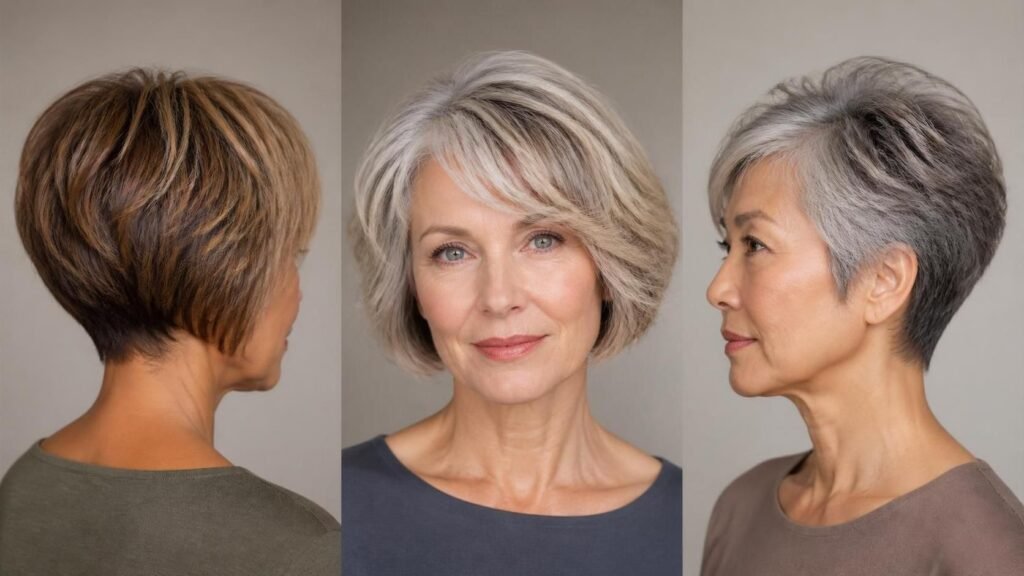
The right shape creates the illusion of thickness where the hair is thinning. The right layer placement adds lift at the crown without stripping the ends bare. And the right length means the hair never looks limp or stringy, even on the days you barely touch it.
This roundup covers the full range — short crops, classic bobs, soft shags, and mid-length lobs — all chosen specifically for older women with fine hair who want volume that actually lasts past noon.
Two things worth knowing before you choose: blunt or near-blunt ends make fine hair look significantly thicker than tapered ones. And light layering at the crown adds lift, but heavy layering throughout can backfire and make thin hair look even sparser.
Below are 20 hairstyles for older women with fine hair, picked for fullness, shape, and genuine wearability on real hair in real life.
1. Angled Bob With Side Sweep
An angled bob gives fine hair a built-in lift that a straight bob simply cannot replicate. The longer front pieces create movement and sweep around the jaw, while the stacked or angled back builds volume right where flat hair tends to disappear first.
The deep side sweep does double duty here — it softens the forehead naturally and creates the impression of more hair on the heavier side of the part. The whole effect is shapely, modern, and very flattering on most face shapes.
Ask your stylist for: Light layering at the crown only — request no aggressive thinning through the mid-lengths or ends. Volume tip: Blowdry the roots away from the face on the heavy side to amplify the sweep and boost crown lift. Face shape: Angled bobs work beautifully on round and square faces by drawing the eye downward and elongating. Maintenance: The angled shape stays sharp for about 7 to 8 weeks before needing a trim to stay defined.
2. Blunt Chin-Length Bob
The blunt bob is one of the most reliable cuts in fine hair styling, and for good reason. The solid, unbroken perimeter at the chin creates an immediate impression of thickness — the eye reads a dense, even line rather than wispy, scattered ends.
This cut works on every hair texture from stick-straight to lightly wavy, and it grows out cleanly without passing through any awkward phase. Keep the ends crisp and resist the urge to add too many layers inside.
Ask your stylist for: A clean, blunt perimeter cut with minimal internal layering — strong ends are the whole point. Styling tip: A small round brush on the front pieces during blowdrying adds a slight inward or outward flip for finish. Density illusion: The blunt line at the chin makes even the finest hair look visibly denser and more substantial. Trim schedule: Every 6 to 8 weeks keeps the blunt perimeter sharp — letting it go longer blurs the defining line.
3. Choppy Layered Bob
The choppy layered bob takes the classic bob and adds purposeful texture that lifts and separates without removing too much hair from the ends. The piecey finish gives fine hair the appearance of more volume and keeps the shape looking alive between washes.
This cut holds up better than a smooth bob on days when you do not blowdry, because the built-in texture disguises any flatness. A light mousse and a rough dry at the roots is often all it takes.
Ask your stylist for: Choppy point-cutting through the upper layers only — keep the perimeter relatively strong. Product tip: A volumizing mousse worked through damp hair before a rough root dry gives the best full-day lift. No-wash days: The textured finish means second-day hair actually looks better — the texture settles into itself. Best for: Women who want a bob with personality and movement, not just a clean, static shape.
4. Collarbone-Length Lob
The collarbone lob is the sweet spot for fine hair that wants length without the weight problem. Long hair on fine strands tends to hang limp and look sparse at the ends — the collarbone length stops that from happening by keeping the ends in the fullest zone.
Face-framing layers at the front add softness and modernity without stripping the body of the cut. Loose waves or a subtle end flip suits this length perfectly and adds movement with minimal product.
Ask your stylist for: Face-framing layers starting at the cheekbone and clean, slightly beveled ends — no heavy thinning. Wave tip: Loose waves styled with a large barrel iron show off the shape and make fine hair look much fuller. Length benefit: Collarbone length keeps ends in the thicker section of the hair shaft — below this, fine hair thins noticeably. Styling option: A slight end flip styled with a round brush gives a playful, retro-adjacent finish that photographs well.
5. Feathered Medium-Length Layers
Feathered layering is a gentle approach that brings life to medium-length fine hair without the risk that comes with heavier cutting techniques. The ends taper softly and move with you, creating natural bounce around the cheekbones and crown.
The flicked, airy finish makes the hair look lighter and springier — almost as if there is more of it — without actually removing much length or volume. Ask your stylist for gentle blowout shaping around the face to complete the look.
Ask your stylist for: Airy feathering through the ends and soft layering from the cheekbones down — no razoring. Crown tip: A slight lift through the crown section during feathering adds lasting root volume without backcombing. Movement result: Feathered ends swing and separate naturally even on minimal-effort styling days. Trim schedule: Every 7 to 9 weeks keeps feathered ends looking intentional rather than straggly.
6. French Bob With Airy Bangs
The French bob is short, confident, and cut just below the jaw — a length that gives fine hair a dense, deliberate appearance. The addition of airy bangs frames the eyes softly without adding any visual weight to the forehead.
For fine hair specifically, the key is keeping the fringe genuinely wispy and slightly separated rather than cutting it thick and blunt. A little dry shampoo pressed lightly through the bang section adds grip and keeps the pieces from clumping.
Ask your stylist for: A low-density fringe — request wispy, separated pieces rather than a full thick bang section. Fringe grip: A tiny amount of dry shampoo through the bangs prevents clumping and keeps them airy all day. Jaw framing: The below-jaw length creates a dense perimeter line that makes fine hair look instantly more substantial. Best for: Oval and heart-shaped faces where a short, defined bob with fringe is most naturally flattering.
7. Soft Grey Pixie
A soft grey pixie is one of those cuts that quietly does everything right for fine hair. The close sides make the top look proportionally fuller. The side sweep adds height and forward movement that prevents the crown from collapsing flat. And the grey tone itself catches light in a way that adds dimension.
A tapered nape and light texture through the crown keep this style easy to manage every morning. The whole routine fits into under five minutes without sacrificing a polished result.
Ask your stylist for: A tapered nape with light crown layering — side-swept length on top for styling versatility. Styling time: This cut styles in under five minutes with just a root spray and a light finger-comb through the crown. Grey tone bonus: Silver and grey hair reflects light naturally, adding visible dimension without color treatment. Best for: Women who want a low-maintenance, daily-wear cut that never looks neglected or flat.
8. Classic Silver Crop
The classic crop keeps the sides and back neat and close while leaving enough length on top to give fine hair something to work with. Styling the top forward or slightly to one side creates a fuller silhouette than letting everything lie flat.
The contrast between the close sides and the more substantial top section is what makes fine hair look denser — the eye focuses on the fuller area rather than the overall thinness. A pea-sized amount of lightweight styling cream through the crown is enough to define and hold.
Ask your stylist for: Close scissor-over-comb sides with enough length on top to style forward — clean nape finish. Silhouette trick: Styling the top slightly forward and to one side creates the fullest possible crown appearance. Product amount: Use a very small amount of styling cream — too much product weighs fine hair down and makes it look flat. Best for: Women who want maximum simplicity in their daily routine without giving up a shaped, intentional look.
9. Pixie With Longer Top
A pixie with extra length kept on top is a versatile solution for fine hair that wants options. The length gives you enough to create a soft swoop, a slight wave, or a textured finish — without the weight of a full bob dragging everything down.
The longer top also means you can tuck pieces behind the ear, change the part direction, or add a small clip for variety. Fine hair does best here with light texture products rather than anything heavy that separates the strands too aggressively.
Ask your stylist for: Extra length on the top section specifically — close or tapered sides to contrast and add volume illusion. Styling versatility: The longer top allows a swoop, a wave, or a textured lift — more options than a close crop offers. Product warning: Avoid heavy waxes on fine hair — they separate strands too much and reveal the scalp underneath. Best for: Women who like flexibility in how they style day to day without the maintenance of a full bob.
10. Textured Crown Pixie
The entire focus of this cut sits at the crown — exactly where fine hair tends to lose the fight against gravity first. Choppy, piecey layers through the top create instant lift and a fuller silhouette, while the sides stay clean and smooth as a contrast.
Root powder or a volumizing spray pressed directly into the roots before styling is the product that makes this cut work at its best. Pinching small sections of the crown lightly with fingertips after drying adds separation and visible texture.
Ask your stylist for: Concentrated choppy layering at the crown only — smooth, close sides to make the top read fuller. Root product: A root powder pressed into the scalp before styling gives grip and lasting lift with zero weight. Pinching technique: Lightly pinch small crown sections between thumb and finger after drying to define the texture. Best for: Fine hair that flattens specifically at the crown — this cut targets that problem directly and effectively.
11. Rounded Bob With Soft Volume
A rounded bob builds gentle, even volume through the sides by using the shape of the cut rather than aggressive layering or backcombing. The curve frames the cheekbones naturally and creates the impression of a fuller head of hair without requiring any tricks.
The rounded shape works especially well for fine hair because it distributes the visual weight evenly, so no single area looks sparse or thin. A light bevel at the ends and minimal internal layering protect the density you already have.
Ask your stylist for: A rounded perimeter with a light bevel at the ends — minimal internal layering to preserve density. Volume source: The rounded shape itself creates volume — no backcombing or heavy product needed to achieve the look. Cheekbone framing: The curve of the rounded bob naturally draws attention to and softens the cheekbone area. Best for: Women who want a classic, polished style that looks full and healthy with a very simple daily routine.
12. Short Layered Shag
A short shag cut delivers the texture and movement that fine hair needs to look full without the flatness problem that plagues longer styles. The choppy layers create lift at the crown and visible separation around the face — and it holds that shape significantly longer than a smooth, unlayered cut would.
The relaxed, slightly undone quality is the point. A light texturizing spray scrunched through damp hair and left to air-dry gives the most authentic version of this look without any heat tool required.
Ask your stylist for: Varied choppy layers with curtain fringe or face framing — keep the perimeter soft, not blunt. Styling method: Texturizing spray scrunched through damp hair and air-dried gives the best natural shag texture. Hold throughout the day: The layered structure maintains shape and lift much longer than a smooth cut on fine hair. Best for: Women with fine hair who want a modern, low-effort cut with genuine personality and movement.
13. Shoulder-Length Lob With Long Layers
Shoulder length is achievable for fine hair when the layers are handled correctly — meaning blended gently, started lower rather than high, and kept slightly stronger at the ends. The result is a lob that looks soft and full rather than thin and stringy.
The long layers add swing and movement, especially around the front where the face framing softens the cheekbones. The ends need to stay thick enough to give the length visual density, so ask specifically for minimal thinning at the perimeter.
Ask your stylist for: Blended long layers starting at the collarbone — stronger ends with no thinning shears at the perimeter. Fine hair rule: The lower the layer starts, the more density the ends retain — high layers on fine hair look sparse quickly. Face framing: Longer face-framing pieces at the front add softness and modernity without removing body from the cut. Styling: Loose waves through a large barrel iron make this length look dramatically fuller and more intentional.
14. Side-Part Bob With Clean Lines
A side part is one of the most effective styling tools for fine hair because it shifts the hair’s visual weight entirely to one side, making the heavier side look genuinely thicker. In a clean-lined bob, the effect is amplified by the sharp, defined perimeter.
The solid line at the ends reads as dense and healthy to the eye, even when individual strands are fine. A round brush blowdry directed up and over from the roots adds the volume that makes this cut look its absolute best.
Ask your stylist for: A clean, even perimeter with minimal internal layering — the line density is the whole point of this cut. Part placement: A deep side part shifts all visual weight to one side, making fine hair look noticeably thicker. Root direction: Blowdrying roots upward and away from the face before smoothing the lengths adds long-lasting lift. Best for: Women who prefer a polished, composed look with clean lines over a textured or undone finish.
15. Sleek Short Bob
The sleek short bob is the sharpest, most intentional option in this list. The blunt perimeter is everything — it keeps the ends from looking see-through and creates a dense, defined edge that signals healthy, well-cared-for hair.
A lightweight smoothing serum used sparingly through the mid-lengths and ends gives the sleek finish without weighing the roots down. Keep the part clean and the ends precisely cut for the most polished result.
Ask your stylist for: A precise blunt cut with a strong, even perimeter — zero thinning shears anywhere in this cut. Product rule: Use a lightweight serum only on the mid-lengths and ends — never at the roots, which need to stay lifted. Polished finish: A clean part line and sharp ends give this bob a high-end, professional appearance with minimal effort. Best for: Women who want a seriously chic, put-together look that never looks undone regardless of how quickly it was styled.
16. Soft Cropped Pixie
The soft cropped pixie is the low-effort option that never looks neglected. The sides sit close and clean, the top holds just enough length to add lift and styling versatility, and the whole cut dries in minutes. For fine hair, the close sides are the feature — they make the top look proportionally much fuller.
A small amount of lightweight styling cream through the crown separates the texture just enough without weighing anything down. This cut is genuinely simple to maintain and works on every hair texture from straight to lightly wavy.
Ask your stylist for: Soft, close sides with a slightly longer top section — tapered nape for a clean, refined finish. Cream amount: Use only a pea-sized amount of lightweight cream — fine hair needs less product than you think. Drying time: This cut dries in minutes, making it ideal for anyone who wants to reduce their morning routine significantly. Best for: Women who want a tidy, wearable shape that looks intentional with the absolute minimum daily effort.
17. Soft Layered Bob
The soft layered bob is the middle ground between a choppy bob and a completely smooth one. The internal layering adds just enough movement and body around the face without creating the wispy, sparse ends that fine hair dreads. The finish is slightly tousled rather than stiff.
Light internal layering is the instruction to give your stylist — the key word is light. The goal is body and swing, not a dramatically textured or heavily feathered result. Keep the ends relatively strong to maintain density.
Ask your stylist for: Light internal layers only, blended gently — stronger perimeter ends to preserve density. Finish style: A slightly tousled, not perfectly smooth finish reads as more voluminous and more modern on fine hair. Movement zone: The layering through the interior adds swing and movement without disturbing the weight line at the ends. Best for: Women who want body and softness around the face without committing to a choppy or heavily textured result.
18. Stacked Bob With Subtle Graduation
The stacked bob uses architectural shape to create volume rather than relying on products or backcombing. The graduated layers at the back stack over each other and build height and fullness right where fine hair tends to fall flat first — at the nape and crown area.
Keeping the front slightly longer than the back balances the silhouette beautifully and prevents the cut from looking too severe. A quick blowdry with a root spray is usually all this style needs to look complete.
Ask your stylist for: A subtle graduation at the back with a longer front — clean nape finish to make the stack look sharp. Volume mechanics: The graduated stack builds actual physical volume into the shape — no product tricks required. Balance tip: The slightly longer front softens the stacked back and keeps the overall silhouette from looking too angular. Maintenance: Trim every 6 to 7 weeks to keep the stacked graduation tight and the volume-building effect intact.
19. Textured Crop With Piecey Top
This cut puts its energy where fine hair needs it most — at the very top of the head. The piecey layers through the crown add visible lift and a modern edge that stops the style from looking flat or overly conservative.
Root powder pressed into the scalp before styling is the best product to pair with this cut. It adds grip and lasting height with none of the weight. Pinching small sections of the top with fingertips after drying defines each piece without stiffening the overall look.
Ask your stylist for: Piecey choppy layers concentrated at the crown — clean, close sides to make the top appear fuller. Root powder: Press root powder directly into the scalp before styling for grip and lift that lasts all day. Texture definition: Pinch small crown sections with dry fingertips after styling to separate pieces and add dimension. Modern edge: The piecey top reads as intentional and current — this cut never looks dated or overly safe.
20. Wispy Modern Shag
The wispy modern shag is the most romantic option in this list — soft, face-framing, and full of movement that catches light and creates depth around the eyes and cheekbones. The fringe blends into the layers so naturally that it reads as part of the overall texture rather than a separate styled element.
For fine hair, the key is keeping the wispy pieces controlled with a light mousse rather than leaving them completely product-free, which can make them look scraggly. Gentle scrunching on damp hair and a diffuse or air-dry finish gives the best result.
Ask your stylist for: A wispy, blended fringe that transitions into the shag layers — no hard line between bangs and sides. Product control: A light mousse scrunched through damp hair keeps wispy pieces defined without crunch or stiffness. Drying method: Air-dry or diffuse on low heat to let the wispy pieces settle naturally into the shag texture. Best for: Women who want softness, romance, and movement in their cut rather than a sharp or structured shape.
Frequently Asked Questions
What haircut genuinely makes fine hair look thicker? Blunt or near-blunt cuts create the strongest illusion of thickness because the solid perimeter line reads as dense to the eye. A chin-length blunt bob, a sleek short bob, or a lob with thicker ends are the most effective options. Avoid over-layering, which scatters the ends and makes thinning more visible.
Should older women with fine hair get layers at all? Yes, but carefully. Light layers at the crown and through the face framing add lift and movement without sacrificing density. The problem comes from heavy layering or aggressive thinning throughout the entire cut, which strips away the little volume fine hair has. If a stylist reaches for thinning shears everywhere, ask them to stop.
How do I build volume in fine hair without teasing or backcombing? Focus on the roots. A volumizing mousse or root spray applied to damp hair before blowdrying the crown upward builds lasting lift without damage. Dry shampoo pressed into the roots on day two refreshes both volume and grip. A root powder is a particularly underused tool for fine hair — it adds texture and hold with no product weight.
Which length is best for older women with fine hair? Chin to collarbone length is generally the most flattering range. Below the collarbone, fine hair tends to look stringy and sparse at the ends. Above the chin, it can look too sparse overall unless the cut has a strong, defined shape like a pixie or crop. The collarbone lob and chin bob both hit the sweet spot.
What products should I avoid on fine hair? Heavy waxes, thick creams, and any product applied heavily to the roots. These weigh fine hair down and make it cling to the scalp, which emphasizes thinning rather than concealing it. Stick to lightweight mousses, volumizing sprays, dry shampoos, and root powders — always applied through the mid-lengths and roots, never piled on the ends.
Can fine hair look good worn down, or is it better pinned up? Fine hair can absolutely look full and beautiful worn down — the right cut is what makes the difference. The styles in this list are all designed to be worn down. The cut itself is doing the volume work, which means you do not need to rely on updos or pins to hide the thinness.
Why the Right Cut Matters More Than Any Product for Fine Hair
Most fine hair routines focus on what goes into the hair — the serums, the volumizing sprays, the dry shampoos. And those products help. But no product can compensate for a cut that works against fine hair by removing too much from the ends or placing layers in the wrong spot.
The shapes in this list are chosen specifically because they build visual fullness into the structure of the cut itself. When the cut is right, even basic styling gives a full, healthy-looking result. When the cut is wrong, no amount of product will fix it permanently — the flatness comes back within hours.
What to Tell Your Stylist About Fine Hair
Walking into an appointment and saying “I have fine hair” is a starting point, but it leaves a lot open to interpretation. The details that matter are: where does the hair go flat first, how much length you want to keep, how much time you spend styling on a regular morning, and whether you prefer smooth and polished or textured and tousled.
Add those specifics and bring two or three images from this list that genuinely appeal to you. Point out what you like about each one — is it the ends, the crown volume, the fringe, the overall shape? A stylist who understands exactly what you are working with and what result you want will give you a dramatically better outcome than one who guesses.
Standing Tall — Final Thoughts
Fine hair does not have to mean flat hair. The twenty styles in this list prove that the right cut — the right length, the right layer placement, the right perimeter finish — can make fine hair look full, shaped, and genuinely healthy without a complicated routine.
Start with the length that fits your daily life. If you want ease, go shorter. If you want versatility, the collarbone lob is always a safe and rewarding choice. If you are ready for something bold and low-maintenance, a pixie or textured crop might be the most freeing decision you make this year.
Save the two or three options that feel most like you — not the most dramatic, not necessarily the safest — and take them to your next appointment with specific notes about what you love. That is how fine hair stops being a limitation and starts being just your hair, looking its best.
