
Can You Do Nails Without a License? Everything You Need to Know Before You Start
You love nails. You are good at them. Maybe people keep telling you that you should charge for your work. So the question naturally comes up — do you actually need a license to start doing nails professionally? It is a fair question, especially when you see so many nail creators thriving on social media, selling custom press-ons online, and building entire brands around their nail skills.
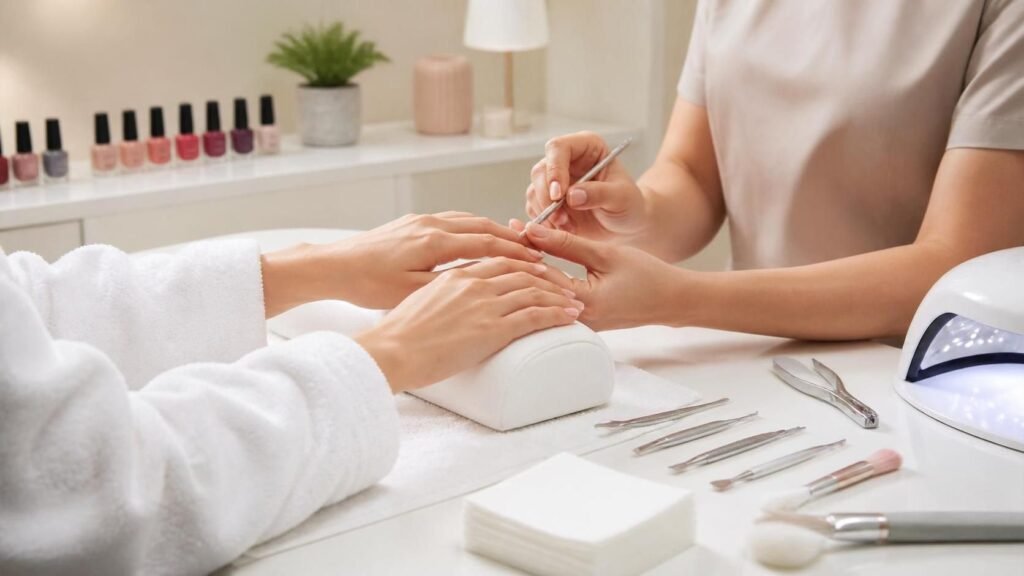
The rules around this topic are more nuanced than most people realize, and the answer genuinely depends on what you plan to do and where you plan to do it. Below is a clear, honest breakdown of everything you should know before you start — from what is legally allowed to smarter alternatives that let you build a nail business your own way.
Can You Legally Do Nails Without a License?
The straightforward answer is no — not if you plan to charge clients for in-person nail services. Most states in the US and many countries worldwide have regulations requiring nail technicians to hold an active license before they can legally perform nail services on paying clients. These rules exist to protect the public from unsanitary practices, chemical misuse, and injury.
That said, the legal boundary is very specifically about charging for services performed on other people. There are real and legitimate paths to working in the nail world without a license — they just look a little different from the traditional salon route.
Know your state first: Licensing requirements vary significantly by location — some states require 300 hours of training, others require 600 or more.
The rule is about payment: Practicing on friends and family for free typically falls outside the legal requirement for licensing in most places.
Online is different: Digital nail content, tutorials, and product sales operate under different rules than in-person service businesses entirely.
Always verify locally: Regulations change, so checking with your state’s cosmetology board directly is always the safest first step.
Ignorance is not a defense: Not knowing the rules in your area does not protect you from fines or penalties if you are found operating without proper credentials.
When You Do Not Need a License
There is more creative freedom here than most people assume. A license is specifically required when you perform nail services on other people in exchange for payment. Several popular and genuinely profitable paths in the nail world fall entirely outside that requirement.
Practicing on yourself is always permitted with no restrictions anywhere. Working on willing family members or close friends without any form of payment is generally acceptable in most places. Creating and selling press-on nails as a physical product operates as a product business, not a service business, and does not require cosmetology certification. Building a nail content brand through tutorials, reviews, and educational videos on social platforms requires no licensing at all.
Self-practice is unlimited: Everything you do on your own nails is yours to explore freely — no certification required, ever.
Friends and family rule: As long as no money changes hands, practicing your skills on people close to you is widely accepted and encouraged.
Press-on nail business: Selling custom handmade press-ons on Etsy, Shopify, or social platforms is classified as product retail, not nail service.
Content creation path: Building a following through nail tutorials, time-lapses, and product reviews is a fully legitimate unlicensed career direction.
Affiliate and brand work: Partnering with nail product brands as an ambassador or affiliate earns income through promotion rather than service — no license needed.
When You Do Need a License
If your goal is to build a career performing nail services directly on clients — whether in a salon, your own studio, or as a mobile technician — a license is not optional. This is the line where legal requirements apply firmly and consistently across virtually every regulated region.
Working in any established salon or nail bar requires a valid license as a baseline condition of employment. Opening your own nail business from home, in a rented suite, or in a commercial space and charging clients for services puts you firmly in licensed territory. Traveling to clients as a mobile nail technician does not exempt you from licensing — the service being performed is what triggers the requirement, not the location where it happens.
Salon employment: Every reputable salon is required by law to hire only licensed technicians — a license is the entry ticket to this career path.
Home nail studio: Running a paid nail service from your home studio is legally the same as operating a salon and requires proper licensing.
Mobile nail services: Visiting clients at their homes or offices to perform nail services still legally requires you to hold an active license.
Suite rental: Renting a chair or private suite in a beauty suite building absolutely requires a license before you can begin seeing clients.
Pop-up events: Offering nail services at markets, events, or pop-ups for payment also falls under the licensed service requirement in most regions.
Why Licensing Actually Matters in the Nail Industry
It is easy to view licensing as a bureaucratic hurdle, but the reality is that it provides meaningful protection for everyone involved. Nail services involve chemicals, tools, and direct skin contact — all of which carry real risk when handled without proper training.
Sanitation is the most critical area that licensing addresses. Improperly sterilized tools are a direct pathway to fungal infections, bacterial spread, and serious skin conditions. Training covers exactly how to prevent these outcomes. Chemical safety training teaches nail technicians how to handle acrylics, gels, and removers without causing respiratory damage, skin sensitization, or burns. Professional credibility is the business benefit — clients are more willing to pay premium prices and return consistently when they know their technician is certified and accountable.
Infection prevention: Proper sanitation training directly protects clients from fungal infections and bacterial transmission through shared tools.
Chemical handling knowledge: Nail products contain strong compounds — knowing how to use them safely protects both the technician and the client long-term.
Higher earning potential: Licensed nail technicians command significantly higher rates and attract a more consistent, loyal client base.
Career flexibility: A license unlocks employment opportunities in salons, spas, resorts, cruise ships, and high-end beauty establishments worldwide.
Insurance access: Most professional liability insurance policies require a valid license — without one, you have no financial protection if something goes wrong.
What Happens If You Do Nails Without a License?
The consequences of offering paid nail services without a license are real, documented, and worth understanding before you make any decisions. Authorities do investigate unlicensed operations, especially when complaints are filed by clients or competitors.
Financial penalties are the most immediate consequence. Fines for operating without a cosmetology license range from hundreds to thousands of dollars depending on the state and the circumstances. Beyond fines, your business can be legally ordered to shut down, and in some cases the incident goes on record in a way that makes obtaining a license later more complicated. Without a license, you cannot access professional liability insurance, which means any injury, allergic reaction, or damage that occurs during a service leaves you personally and financially exposed.
Fines and citations: Operating unlicensed can result in immediate fines ranging from several hundred to several thousand dollars depending on location.
Forced business closure: Authorities can legally order you to cease all nail services until proper licensing is obtained and verified.
No insurance coverage: Without a license, professional liability insurance is unavailable — any client injury becomes entirely your personal financial responsibility.
Future licensing complications: Having a documented history of unlicensed practice can create barriers or delays when you later attempt to obtain official certification.
Reputation damage: Clients who discover you are unlicensed may lose trust, leave negative reviews, and share that information publicly — damaging your brand permanently.
How to Start Doing Nails the Right Way
If professional nail services are your career goal, the licensed path is genuinely worth the investment of time and money. The process is more accessible than many people assume, and the doors it opens are significantly wider than working outside the system.
Research begins with your specific state or country’s cosmetology board website, which lists the exact hour requirements, approved schools, exam details, and fees. Most nail technician programs require between 200 and 600 training hours depending on the location. Courses cover sanitation protocols, nail anatomy, product chemistry, application techniques, nail art, and business basics. The licensing exam typically includes both a written knowledge test and a practical skills assessment. Once licensed, registering your business properly and obtaining liability insurance are the final steps before opening your doors to paying clients.
Research first: Visit your state cosmetology board’s official website to find exact hour requirements, approved schools, and exam procedures.
Choose the right program: Look for nail tech programs specifically — they are shorter and more focused than full cosmetology programs if nails are your only interest.
Budget realistically: Program costs range widely, but financial aid, payment plans, and scholarships are available at many accredited nail schools.
Prepare for the exam: The licensing exam has both written and practical components — practice both consistently in the weeks leading up to your test date.
Get insured immediately: The moment your license is active, securing professional liability insurance should be the very first business step you take.
Alternatives If You Do Not Want a License
The licensed route is not the only way to build something meaningful in the nail world. If certification does not fit your current goals, timeline, or lifestyle, there are genuinely viable business models that let you earn from your nail skills and passion without stepping into licensed territory.
Custom press-on nail businesses have exploded in popularity and profitability. Talented creators build significant income selling handcrafted sets in unique designs through online platforms. Nail content creation on YouTube, TikTok, and Instagram generates revenue through ads, brand partnerships, and platform monetization programs. Teaching nail art through digital products — online courses, e-books, tutorial subscriptions — is another route that converts skill into income without requiring a license. Brand affiliate programs allow you to earn commissions promoting nail products to your audience without touching a single client’s hands.
Press-on nail shop: Launch a custom press-on business on Etsy or Shopify selling unique designs — no license required, unlimited creative freedom.
Content creation career: Build a nail-focused social media presence with tutorials and reviews — income comes through brand deals and platform monetization.
Online teaching: Package your nail art knowledge into courses, e-books, or membership content and sell it to aspiring nail artists worldwide.
Brand ambassador work: Partner with nail brands to promote their products in exchange for commissions, free products, and paid collaboration fees.
Nail blog or newsletter: A dedicated nail content platform monetized through affiliate links, ads, and sponsored content is a fully legitimate unlicensed business model.
Frequently Asked Questions
Q: Can I do nails from home without a license? You can practice on yourself and friends at home for free without a license. Charging clients for home nail services requires a license in most states and countries.
Q: Do I need a license to sell press-on nails online? No. Selling custom press-on nails is classified as selling a product rather than performing a service, so no cosmetology license is required anywhere.
Q: What happens if I charge for nails without a license? You risk fines, forced business closure, loss of future licensing eligibility, inability to get insurance, and long-term damage to your professional reputation.
Q: How long does it take to get a nail technician license? Most nail tech programs require between 200 and 600 hours of training depending on your state, which typically translates to a few months of full-time or part-time study.
Q: Can I do nails without a license if I only charge friends? Technically, accepting payment from anyone — including friends — for nail services triggers the legal requirement for a license in most regulated regions.
Q: Is a nail tech license different from a cosmetology license? Yes. A nail technician license is specifically for nail services and requires fewer training hours. A cosmetology license covers a broader range of beauty services and takes longer to obtain.
The Real Cost of Skipping the License — And Why It Is Not Worth It
There is a version of this decision that seems appealing in the short term. You are skilled, your work looks professional, and getting paying clients feels within reach without waiting for a license. The immediate income is tempting. But the math of operating without a license rarely adds up when you account for what is actually at stake.
A single client complaint filed with local authorities can trigger an investigation that results in fines that dwarf any money earned from unlicensed work. Beyond the financial risk, operating without insurance means that one adverse reaction — an allergic response to a gel product, an accidental cut, a nail infection — becomes a personal liability with no professional safety net. These are not theoretical risks. They are documented realities that unlicensed operators encounter regularly.
The nail industry is built on trust. Clients share before and after photos, tag their technicians, and recommend them through word of mouth. That entire ecosystem depends on credibility — and a license is one of the clearest signals of credibility in this space. Building a client base on an unlicensed foundation means one exposure event can collapse everything you built, leaving no path to legally continue. The licensed route takes more time upfront, but it builds something real and protected.
How the Nail Industry Has Changed for Independent Creators
The nail world looks dramatically different today than it did a decade ago. Social media has created entirely new categories of nail professional that did not exist before — the nail content creator, the press-on nail entrepreneur, the digital nail educator. These paths are thriving, and they demonstrate that passion for nails can absolutely translate into a sustainable income without the traditional salon career structure.
What makes this moment particularly exciting is that the two paths — licensed professional and creative entrepreneur — are not mutually exclusive. Many of the most successful nail creators hold licenses and run digital businesses simultaneously. The license gives them the freedom to take on clients when they choose while the content and product side generates passive and scalable income streams. This combined approach is increasingly how ambitious people in the nail world are building serious careers.
Understanding where the legal lines are drawn is not about limiting your ambitions — it is about building in the right direction from the start. Whether you pursue a license, launch a press-on shop, grow a content channel, or combine all three, knowing the rules gives you the clarity to move forward with confidence rather than uncertainty.
💅 Your Path, Your Polish: Build the Nail Career You Actually Want
The nail world is bigger than any single career path, and there is genuinely room for your specific version of success in it. Whether that means getting your license and building a full client roster, launching a press-on nail shop that ships globally, or growing a content brand that teaches thousands of people — all of it is possible when you start with the right information.
Do not let the licensing question stop you from taking any action at all. If the licensed route fits your goals, start researching programs today. If the creative entrepreneur path excites you more, begin building your press-on portfolio or your first piece of nail content this week. Both directions lead somewhere meaningful when you are consistent and intentional.
The most important thing is to start from an honest, informed place — knowing what the rules are, choosing the path that fits your real life, and building something you are genuinely proud of. Your nail passion is real. Now make it official in whatever way makes the most sense for you.
