
19 Layered Bob Hairstyles for Thin Fine Hair That Create Real, Lasting Volume
Fine hair and a layered bob are a surprisingly powerful match — when the layering is done right. The challenge is that too many layers make the ends look sparse and stringy, while too few leave the shape flat and heavy by noon.
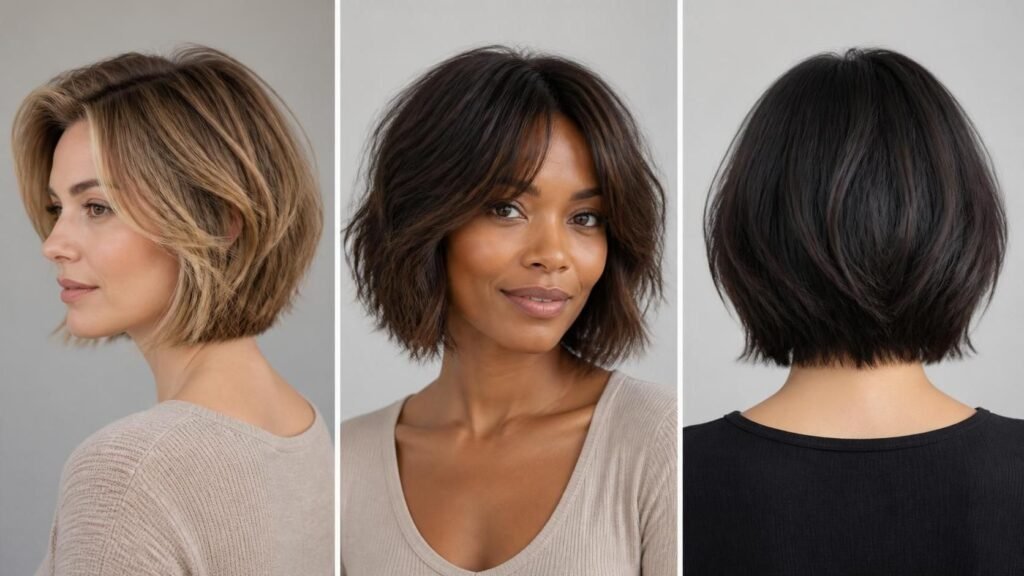
The sweet spot is a cut that builds lift at the crown, keeps the perimeter looking dense, and adds just enough internal movement to stop fine hair from clinging together. Some versions of this cut are sleek and polished. Others are airy and effortless. All of them work better on fine hair than you might expect.
Below are 19 layered bob hairstyles for thin fine hair, chosen for volume, shape, and genuine daily wearability.
1. Airy Layered Bob With Wispy Bangs
This bob creates volume through lightness rather than bulk. Feathery layers through the mid-section let the hair sit away from the scalp, while wispy bangs add face shape without pulling too much density to the front.
Why wispy bangs work here: They keep the front section from looking flat without removing enough hair to create a sparse-looking fringe.
Layer placement: Ask for the lightest layering from the crown downward — keeping the perimeter intact so the ends never look see-through.
Bang weight tip: Request piecey, lightly separated bangs — not a thick solid fringe that demands daily blow-drying to behave on fine hair.
Styling product: A volumizing mousse worked through damp roots before blow-drying builds the airiness this style depends on.
Best for: Women who want movement and a soft, floaty finish without giving up the density at the ends.
2. Blunt Layered Bob With Hidden Interior Layers
From the outside this bob looks completely clean and solid — exactly what fine hair needs for a full-looking baseline. The hidden interior layers do the quiet work of lifting the crown and creating movement that is felt, not seen.
The genius of hidden layers: They remove internal bulk from the upper section only, letting the top lift while the outer perimeter stays visually dense.
What to ask for: A crisp, blunt outline with soft internal layering through the crown — no point-cutting along the baseline at all.
Crown lift benefit: The interior layers allow the hair to sit up at the roots rather than lying flat against the scalp throughout the day.
Styling ease: This cut looks polished with or without heat — a quick root-lift spray and finger-dry at the crown is genuinely all it needs.
Perfect for: Women who want obvious fullness and a clean, structured shape without any visible choppiness in the cut.
3. Chin-Length Layered Bob With Soft Ends
Chin length is a strategic choice for fine hair. It is short enough that gravity does not pull the hair down and flat, but long enough to frame the face softly and create the impression of fuller sides.
Why chin length specifically helps: At this length, fine hair holds its shape throughout the day instead of collapsing under its own weight by afternoon.
Ends technique: Ask for soft, lightly point-cut ends rather than strongly choppy separation — the goal is a gentle finish, not obvious texture.
Layer depth: Light layering near the bottom third only — the top and crown section should stay as full and connected as possible.
Face-framing effect: The chin-length line naturally draws attention to the jaw and cheekbones, which frames the face beautifully on its own.
Upkeep schedule: This length needs a trim every five to six weeks to prevent the ends from splitting and the soft finish from becoming ragged.
4. Collarbone Bob With Long Light Layers
For women who want to keep some length while still adding shape, the collarbone bob with long, barely-there layers is the most forgiving option. It feels like a gentle evolution rather than a dramatic cut.
Why long layers suit fine hair at this length: They create the suggestion of movement without actually removing enough weight to make the ends look thin or sparse.
Barely-there layering: Ask your stylist for layers so long and subtle that they are almost invisible — just enough to stop the weight from sitting in one flat line.
Length advantage: The collarbone length allows fine hair to move freely when you turn your head, giving it that swingy, full quality that shorter cuts sometimes lack.
Styling with a round brush: A round brush through the ends while blow-drying creates a soft inward or outward bend that adds visible fullness along the baseline.
Great for: Women making a gradual transition from longer hair who want more shape without committing to a short bob immediately.
5. French Layered Bob With Wispy Texture
The French bob aesthetic — slightly undone, airy, effortlessly chic — is one of the most flattering directions you can take fine hair. The wispy texture keeps everything light, and the shorter length naturally builds bounce that longer fine hair struggles to maintain.
The undone quality as a strategy: Soft, separated texture on fine hair reads as fullness and movement rather than lack of density.
What to request: Soft layering through the mid-section, airy separated ends, and a thin fringe that feels relaxed — not a solid wall of bang.
Air-dry friendly: This cut is designed to look great with minimal effort — scrunch a little texturizing cream through damp hair and let it do the work.
Fringe maintenance: Trim the wispy fringe every three to four weeks so it stays light and separated rather than growing into a heavy curtain.
Best for: Women who love a relaxed, Parisian-inspired look and prefer minimal daily styling over a structured blowout routine.
6. Inverted Bob With Soft Feathered Layers
An inverted bob — shorter at the back, longer in the front — gives fine hair a structured silhouette that looks intentional from every angle. The feathered layers through the sides soften the shape so it never feels severe.
What the inversion does for fine hair: The stacked back section creates visual fullness where fine hair often sits the flattest — directly at the nape and crown.
Angle choice: Request a gentle, gradual inversion rather than a dramatic one — a soft angle gives fine hair structure without looking overly architectural or hard to maintain.
Feathered layer benefit: Feathering softens the perimeter of the inverted shape so the ends move freely rather than cutting across in a stiff, blunt line.
Grow-out consideration: Ask your stylist how this shape grows out — a well-designed inverted bob should still look intentional for four to six weeks between cuts.
Perfect for: Women who want a polished, structural cut that adds body at the back without requiring significant daily styling effort.
7. Jaw-Length Bob With Crown Layers
Jaw length is where fine hair often looks its sharpest. The weight sits right at the jawline, framing the lower face beautifully, while crown layers add the lift that this length would otherwise lack.
Why crown layers are the priority here: Fine hair at jaw length tends to sit flat at the roots — crown-specific layers are the most effective way to build lasting height.
Shape maintenance: The sides and baseline stay clean and close to the jaw so the cut looks polished and full — the crown layers provide lift without disrupting the perimeter.
What to ask for: Subtle crown elevation through layering, a clean outline at the jaw, and nothing too choppy through the sides.
Root lift technique: Blow-dry the crown section first with a round brush, rolling upward and holding for ten seconds before releasing — this sets the lift before the rest dries.
Great for: Women whose primary complaint is flat roots — this cut directly addresses that issue while keeping the rest of the shape neat and structured.
8. Layered Bob With Curtain Bangs
Curtain bangs transform a layered bob into something that feels softer and more face-framing without any complicated styling. They blend naturally into the sides, which keeps the front section looking full rather than divided.
Why curtain bangs are ideal for fine hair: They spread across the forehead rather than sitting as a dense block, so they never steal significant density from the front hairline.
Blending technique: The curtain bang should transition seamlessly into the face-framing layers — there should be no obvious line where the bang ends and the side begins.
Part options: A gentle center or slightly off-center part gives curtain bangs their characteristic open, flowing shape on fine hair.
Low-effort styling: Pull each side of the curtain bang outward while blow-drying with a round brush — the whole process takes under a minute and looks polished all day.
Best for: Women who want added facial framing and a softer front to their layered bob without committing to a full traditional fringe.
9. Layered Bob With Tucked-Under Ends
The tucked-under finish — where the ends curl slightly inward toward the neck — gives fine hair a rounded, fuller-looking silhouette that flat or flipped-out ends simply cannot achieve.
What the inward curl does visually: It makes the baseline appear denser and more substantial than it actually is — an excellent illusion for fine hair.
Achieving it at home: Wrap the ends of each section around a round brush while blow-drying, rolling inward, and holding for several seconds until the shape sets.
Layer placement: Soft layers through the mid-section give the ends enough movement to hold the tucked-under shape throughout the day.
Neat and polished effect: This finish suits professional settings beautifully — it looks deliberate and styled without requiring a complicated routine.
Perfect for: Women who prefer a smooth, rounded finish over a textured or undone aesthetic and want their fine hair to look consistently put-together.
10. Minimal Layered Bob
Sometimes the most effective cut is also the most restrained one. A minimal layered bob adds just enough internal movement to prevent fine hair from hanging flat without introducing any obvious texture or choppy separation.
When minimal layering is the right call: If your hair is very fine or very thin, even modest layering can look dramatic — minimal layers give you shape without the risk.
What minimal actually means: One or two light layers through the interior of the crown section — the baseline and sides remain fully intact and blunt.
Clean perimeter importance: A strong, clean baseline is essential here — without it, minimal layers on fine hair can look thin rather than sculpted.
Daily maintenance: This is one of the most low-maintenance options in this list — a root-lift spray and a quick blow-dry is all this cut needs each morning.
Best for: Women who want subtle improvement over a completely flat bob without any visible texture, separation, or obvious layering in the finished cut.
11. Rounded Layered Bob
A rounded bob uses the shape of the cut itself to create the illusion of fullness. Instead of falling straight down, the hair curves gently around the head — which makes even sparse fine hair appear to have more body and volume.
Why the rounded shape works: The curved perimeter catches the light differently than a flat or inverted shape, creating visual depth that reads as fullness.
Layer subtlety: Ask for gentle, subtle layering through the sides — the roundness should come from the shape of the cut, not from aggressive internal texturizing.
Styling for roundness: Blow-dry the sides with a round brush, rolling outward slightly at the ends, to maintain the curved shape the cut was designed for.
Face-framing bonus: The soft rounded line frames the jawline and cheeks gently, making this shape universally flattering across face shapes.
Great for: Women who want a reliable, flattering bob that looks fuller from every angle without requiring significant daily styling effort.
12. Shaggy Layered Bob With Soft Volume
The shaggy bob on fine hair is all about calibration. Done correctly, the layering creates gorgeous movement and visible fullness. Done too aggressively, it creates sparse ends and a cut that looks thin within weeks.
The fine-hair shag rule: Keep the layers airy and the separation soft — aggressive razoring or too many close layers will remove the density fine hair cannot spare.
Crown layering focus: Most of the layering should happen at the crown and upper section — the mid-lengths and ends should stay relatively full.
Tousled finish technique: Scrunch a light texturizing spray through damp hair and diffuse on low — this builds the soft volume without weighing the layers down.
What airy separation means: The pieces through the ends should look naturally separated, not sharply cut apart — the difference is between lively and sparse.
Best for: Women who want more movement and personality in their bob and are comfortable with a slightly relaxed, textured aesthetic rather than a polished finish.
13. Side-Swept Layered Bob
A deep side sweep is one of the fastest ways to make fine hair look fuller because it moves more hair across the front and crown simultaneously. Layers through the swept section prevent it from sitting heavy and flat.
The volume illusion: Shifting the part to one side stacks the hair diagonally across the crown, which creates immediate visual fullness where fine hair is typically the flattest.
Layer placement for the sweep: Ask for soft layering that lifts around the crown on the heavier side of the part, where the most hair is sitting.
Cheekbone framing: When the layers through the swept side are positioned to graze the cheekbones, they frame the face beautifully and add softness to the front.
Changing your part: Alternating the part direction periodically gives the roots a break from lying in one position and adds extra volume at the crown naturally.
Great for: Women who want the most volume possible from a bob without adding any visible texture or choppy ends to their overall look.
14. Sleek Layered Bob
A sleek bob on fine hair proves that volume does not always have to mean texture. The key is keeping the layering minimal enough that the smooth finish has actual body — not just shine.
The sleek-fine hair balance: A mostly blunt cut with one or two interior layers gives the smooth style enough body to look intentional rather than flat and limp.
Product discipline: Apply a light serum to the ends only — any product near the roots will immediately collapse the volume that the interior layers work to build.
Blow-dry method: Dry the roots in the opposite direction of the natural fall first, then smooth everything downward last — this creates root body while maintaining the sleek surface.
Shine without weight: A glossing spray misted lightly over the finished style adds luminosity without adding product weight that would flatten fine hair.
Perfect for: Women who prefer a polished, refined aesthetic and are willing to spend a few minutes blow-drying to achieve the body and smoothness this style requires.
15. Soft Choppy Bob
Soft choppiness through the ends of a bob adds movement and visual separation that makes fine hair look significantly thicker in motion. The word soft is doing important work here — this is not aggressive or sharp.
What soft choppiness means technically: Point-cutting through the ends to create natural-looking separation — not razoring or strong notching that removes too much weight.
Why this suits fine hair: Lightly broken-up ends catch the light slightly differently across each section, creating the perception of more hair than there actually is.
Avoid: Sharp razored pieces or heavily notched ends — both remove too much weight from fine hair and leave the tips looking thin and transparent.
Styling simplicity: A light texturizing spray scrunched through damp ends before air-drying activates the soft choppy movement without any heat styling needed.
Best for: Women who want an easy, casual-looking bob with natural movement that still stays balanced and full-looking rather than edgy or overly deconstructed.
16. Stacked Layered Bob
A stacked bob builds fullness specifically at the back of the head — the area where fine hair is often the most visibly thin and flat. The stacked layers create a rounded, elevated shape that makes the hair look fuller from behind and from the sides simultaneously.
Why stacking targets the right problem: Most fine hair lies flattest at the nape and back crown — stacking concentrates the layering exactly where it is needed most.
Subtle versus dramatic stacking: Request a subtle, blended stack rather than a sharp, dramatic one — a softer approach looks more modern and grows out more gracefully.
Front softness: The front of the stacked bob should stay longer and softer — the contrast between the fuller back and the softer front is what gives this style its shape.
Maintain the stack: The stacked section needs a trim every four to five weeks to stay rounded and defined — this is one of the higher-maintenance bobs in this list.
Great for: Women who struggle most with flat hair at the back and crown and want a cut specifically designed to address that area with visible, lasting structure.
17. Textured Layered Bob With a Deep Side Part
A deep side part combined with textured layers is one of the most effective volume-building combinations available to fine hair. The part creates immediate lift at the crown, and the layers prevent the texture from collapsing throughout the day.
Why a deep side part builds volume: The sharp part angle forces the roots to stand away from the scalp on the heavier side rather than lying flat in a central position.
Texture level for fine hair: Ask for loose, separated texture — not overly choppy or tightly razored — so the layers look full and natural rather than thin and over-cut.
Crown layering interaction: The crown layers work with the deep part to build height at exactly the point where fine hair typically loses lift first.
Part switching for extra body: Switching the part to the opposite side occasionally gives the roots a lift in a new direction and refreshes the volume without any styling products.
Best for: Women whose flat crown is their main styling frustration — this cut directly and immediately addresses root flatness with a structural solution.
18. Tousled Layered Bob
The tousled bob is the most relaxed, lived-in look on this list — and that slight imperfection is precisely what makes fine hair look fuller. A perfectly smooth bob can highlight thinness, while a gently tousled one creates the appearance of density through movement.
The tousled effect as a volume strategy: Soft, piecey texture tricks the eye into seeing more hair by creating visual separation throughout the cut.
What to ask for: Soft layers and lightly piecey ends that can be activated quickly — the tousled finish should look effortless, not effortful.
Quickest styling method: Scrunch a light texturizing or salt spray through slightly damp hair, then let it air-dry or diffuse briefly on low heat.
Avoiding the messy line: There is a clear difference between tousled and unkempt — regular trims every five to six weeks keep the tousled bob looking intentional and well-shaped.
Perfect for: Women who prefer a casual, natural aesthetic and want a wash-and-go style that consistently makes their fine hair appear fuller with minimal morning effort.
19. Wavy Layered Bob
Soft waves added to a layered bob give fine hair more width, dimension, and movement than a straight version of the same cut ever could. The layers support the wave pattern so the hair does not collapse between washes.
Why waves help fine hair: The wave creates bends in the hair shaft that add physical width and visual texture — both of which read as volume and fullness.
Layer calibration for waves: The layers need to be soft and long enough to support the wave without over-thinning the ends — ask for layers that preserve density at the tips.
Creating waves without damage: Use a large-barrel waving iron on low to medium heat, or braid damp hair overnight and unravel in the morning for a heat-free wave.
Wave-hold product: A light wave-enhancing spray or curl cream through damp hair before drying helps fine hair hold the wave pattern longer throughout the day.
Best for: Women who want maximum visual fullness and movement from their bob and are happy to spend a few extra minutes creating or maintaining a soft wave finish.
FAQs
How many layers are too many for thin fine hair? When the ends start to look transparent or sparse, the layering has gone too far. For most fine hair, one to three light internal layers through the crown section is ideal. Keep the perimeter strong and blunt — the baseline is where visual density lives, and point-cutting it heavily removes the fullness fine hair needs most.
Should I go blunt or layered if my hair is very fine? Both work — the key is which problem you are trying to solve. A blunt bob maximizes perimeter density and makes the ends look thick. A lightly layered bob adds crown lift and movement. The best approach for very fine hair is often a blunt baseline with only minimal hidden interior layers, giving you both benefits without sacrificing density.
Which layered bob style is easiest to maintain for fine hair? The minimal layered bob, the rounded bob, and the sleek layered bob are the lowest-maintenance options. They require simple blow-drying, do not need precise product application to look intentional, and grow out cleanly without losing their shape quickly. The stacked and inverted bobs are the most demanding and need more frequent trims to stay crisp.
What products work best for a layered bob on fine hair? A volumizing mousse at the roots, a lightweight leave-in conditioner through the mid-lengths, and a light texturizing spray for finish are the core three. Avoid heavy creams, oils, or butter products anywhere near the roots — they flatten fine hair instantly. Dry shampoo at the roots between washes refreshes volume without washing and restyling.
How often does a layered bob need trimming on fine hair? Every five to seven weeks for most layered bobs. Fine hair develops split ends faster than thicker hair, and split ends reduce the fullness of the cut noticeably. Stacked and inverted versions may need a trim every four weeks to maintain their shape. A quick dusting of the ends at each appointment is better than waiting for noticeable damage.
Can a layered bob work on very thin hair with visible scalp? Yes, with careful styling choices. Opt for a blunt or mostly-blunt version with minimal interior layering. Avoid anything too choppy, heavily textured, or stacked very tightly — these expose the scalp more than soft, smooth shapes do. A tinted dry shampoo or root powder in a shade that matches your hair color also helps reduce scalp visibility between washes.
What Nobody Tells You About Fine Hair and Bob Cuts
The most common mistake women with fine hair make at the salon is asking for too much layering because they want more volume. More layers actually create less volume on fine hair — they remove the weight that makes the ends look full and thick. The styles that consistently look the best on fine hair are the ones that build lift through structure and shape rather than through aggressive texturizing.
Think about where your hair is flattest — whether it is the crown, the sides, or the nape — and choose a bob style that specifically addresses that area. The stacked bob targets the nape. The jaw-length bob with crown layers targets the roots. The A-line and rounded shapes target the sides. Matching the cut to your specific concern is what takes fine hair from flat and frustrating to genuinely full-looking.
Yours to Keep
The right layered bob for fine hair is not just the one that looks beautiful in a photo. It is the one that works with your density, suits your daily routine, and holds its shape past Tuesday afternoon. Every style in this list was chosen with that real-life standard in mind.
Take screenshots of two or three that keep pulling your attention back. Look at where the layers sit, how full the ends appear, and whether the overall shape feels manageable for the way you actually live in your hair. Then bring those details to your stylist. The more specific you are, the better the result.
Fine hair deserves a cut that makes it feel like an asset — not a limitation. These 19 styles prove that it genuinely can be.
