
What to Tell Your Stylist for a Pixie Cut: The Perfect Script for Women Over 50
Saying “I want a pixie cut” at the salon feels simple — until you sit down and realize there are a hundred different versions of short. A pixie that looks stunning on a magazine model might fall completely flat on your texture, your hairline, or your crown. The details matter more than the length itself. Your hair density, growth patterns, and how it behaves on a regular Tuesday morning will all shape the outcome.
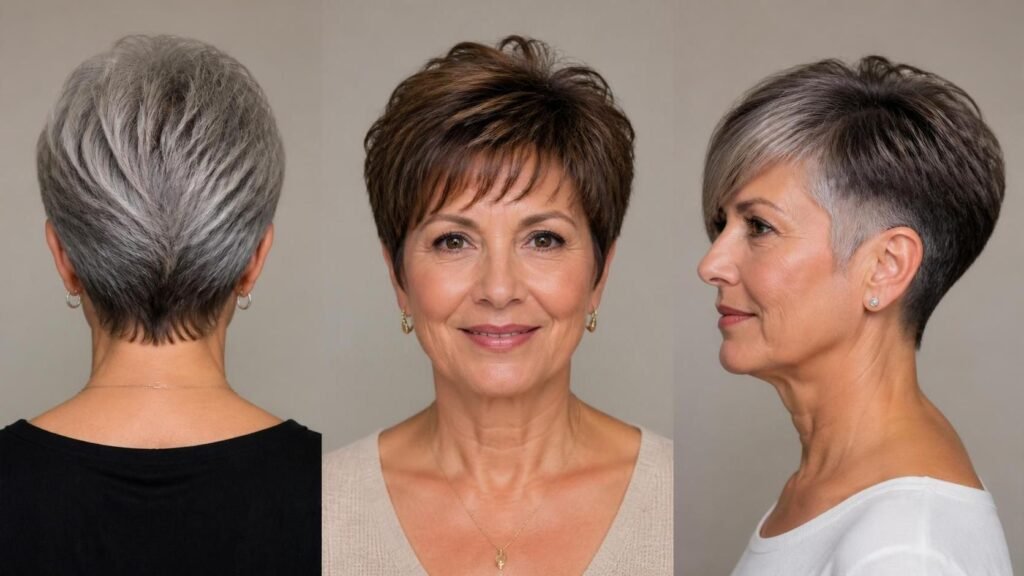
Here is exactly what to say so your stylist understands your vision from the first sentence. No guessing, no awkward pauses, no walking out with a cut that does not feel like you.
Below are 8 key steps for the ultimate pixie cut consultation, written for women over 50 who want a style that is flattering, low-maintenance, and genuinely wearable every day.
Step 1: Bring the Right Reference Photos
Photos are your most powerful tool in the consultation chair. They eliminate the gap between what you imagine and what your stylist hears.
What to bring: Two to three images showing front, side, and back angles of a pixie you love.
What to avoid: Photos with heavy filters, dramatic studio lighting, very different hair textures, or images from wig styles when your natural hair has a different density.
If you love a wig-inspired pixie: Tell your stylist you want the overall shape and silhouette — not that you expect your hair to behave exactly like the photo. Honesty here saves both of you time.
The one line to say when you show your photos: “I love the balance and shape in this photo. I want something similar, tailored to my actual hairline and density.”
This single sentence sets a realistic, respectful tone for the whole appointment.
Step 2: Lock In Your Non-Negotiables
Walking in with a clear list of two or three must-haves keeps the consultation focused. Too many rules can overwhelm the conversation, but having none at all can lead to surprises you did not want.
Common non-negotiables women over 50 bring to the chair:
No shaved sides: Keeping soft, natural sides that blend without harsh clipper lines.
Temple coverage: Gentle styling that works with a receding or delicate hairline at the temples.
Crown volume: Requesting lift and shape at the top so the hair does not fall flat throughout the day.
Soft edges: Choosing a natural perimeter rather than a sharp geometric line-up at the nape or forehead.
Air-dry friendly: Making sure the cut holds its shape without requiring heat tools every single morning.
Pick the two or three that matter most to you and lead with those.
Step 3: Use This Exact Consultation Script
This is the part most women skip — and it is the most important. Reading a short script in the chair might feel awkward, but it covers everything a stylist needs to hear before picking up the scissors.
Your script: “I want a pixie that looks soft and feminine, not severe. I need lift at the crown so it does not sit flat on my head. Please leave my hairline natural and avoid pushing it back or over-edging it. My hair is not super thick, so I would prefer minimal thinning to keep the ends looking full. I want the sides neat but not bald, the top long enough to work with light product, and the whole cut easy enough to wear on air-dry days.”
Feel free to adjust the wording so it sounds like you. The key points — crown lift, natural hairline, no heavy thinning, air-dry-friendly — are what most people forget to say until after the cut is done.
Step 4: Share Your Hair Facts Honestly
Your stylist works with what you give them. Sharing the specific quirks of your hair is not complaining — it is smart planning that leads to a better result.
Facts worth mentioning before the first snip:
Fine strands: Let them know so the ends are kept full and not over-thinned.
A flat crown: Give your stylist a heads-up so they can plan layering or blow-dry direction to build lift there.
Delicate edges: If your temples are fragile or thinning, say so before any clipper comes near that area.
Strong shrinkage: If your hair pulls up significantly when dry, tell them not to go too short — the cut will end up much shorter than it looks wet.
Glasses or hearing aids: These details affect how the sides and ears should be shaped for daily comfort.
Step 5: Ask These Questions Before the Cut Begins
These four questions take under two minutes and can completely change how happy you are when you leave the salon.
How will you create volume at the crown? You want to hear a real plan — layering placement, crown shaping, or a specific blow-dry direction. A vague answer is a red flag.
Will you be using thinning shears on the top? If your hair is fine or already showing some thinning, heavy thinning shears can make it look sparse. A little texture is fine — a lot is not.
What will the grow-out look like in four to six weeks? A well-designed pixie keeps its shape as it grows. If the answer is unclear, the shape may collapse quickly between appointments.
How much styling will this cut need on a regular day? If the honest answer is “heat every morning,” you need to know that now. Not later, standing in your bathroom with a dryer wondering what went wrong.
Step 6: Choose the Shape That Fits Your Face
You do not need to become an expert on face shapes, but a few simple guidelines can help guide the conversation with your stylist.
Round faces: Ask for height at the crown, a slightly longer top, and a soft side-swept fringe. Avoid a completely flat top with wide sides — it will emphasize roundness.
Long faces: A soft fringe or side fringe works beautifully. A little width at the sides balances length. Skip adding too much height on top.
Strong cheekbones: A tapered side that lets the cheekbone show through is usually a stunning choice. Soft texture on top keeps it from looking severe.
Wanting to soften the jawline: Consider a longer pixie-bob shape. Pieces that fall near the cheek or jaw area frame the face gently and add a feminine touch.
Step 7: Choose Your Neckline and Side Detail
The neckline and sideburn shape are where a pixie can look polished or choppy — and most people never think to discuss them before the cut.
Tapered nape: This option grows out gracefully and has a softer, more feminine finish. It is the best choice if you want low maintenance between appointments.
Squared nape: Sharper and more structured, but it needs more frequent upkeep to stay looking crisp. Choose this only if you enjoy regular touch-ups.
Sideburns: Softly defined sideburns add a polished, put-together look without feeling harsh. Very sharp sideburns can read as severe — unless that edge is exactly the vibe you want.
Step 8: Build a Simple Styling Routine That Actually Works
A great pixie cut should not require a complicated morning routine. A few well-chosen products and a light touch are all you need.
Your everyday routine: Start with a lightweight leave-in conditioner. Work a small amount of mousse or foam through the hair for soft hold. Use your fingers to lift and shape while blow-drying, or let it air-dry and mold the pieces by hand. Finish with just a tiny dab of paste on the top pieces to separate them and add texture.
Mistakes to skip entirely:
Heavy oils on fine hair: They weigh the hair down and kill the volume you worked to build.
Over-brushing the crown: Brushing flattens the top and removes the lift that makes the cut look its best.
Edge control that stiffens: Hard, crunchy products around the hairline can emphasize a delicate perimeter instead of softening it.
FAQs
How do I make sure my pixie looks feminine and not too harsh? Ask for soft perimeter edges, a little length on the top, and a gentle fringe if you want one. Request that your stylist avoids sharp geometric lines unless that edginess is specifically what you are after.
Can I get a pixie if my edges are thinning at the temples? Absolutely. The key is the approach. Ask for soft, natural coverage at the temples, no pushed-back edging, and a natural hairline. A longer pixie-bob with a front that grazes the cheek area can also help you feel more covered and confident.
How often does a pixie cut need to be trimmed? Most pixie shapes look and feel best with a fresh trim every four to six weeks. If you prefer a very crisp, defined look, you may want to go in every three to four weeks instead.
What if my stylist cuts it too short the first time? Speak up mid-cut. It is always easier to take more off than to add it back. Also, bringing photos of the length you want before the cut starts reduces this risk significantly.
Is a pixie cut high-maintenance for women over 50? It depends on the shape. A tapered, softly layered pixie can actually be one of the most low-maintenance styles out there. The key is requesting a cut that works with your natural texture — not against it.
Should I go to a specialist for a pixie cut? A stylist who has experience with short cuts on mature hair is a real advantage. You can ask a potential stylist directly whether they have worked with clients who have fine or thinning hair. Their answer will tell you a lot.
The Confidence That Comes With a Pixie Cut
There is something quietly powerful about choosing a pixie cut after 50. It signals that you are done dressing your hair for anyone but yourself.
A well-executed pixie is not just a short cut — it is a frame for your face that brings attention to your eyes, your cheekbones, and your expression. Women with pixies often describe feeling lighter, more polished, and more effortlessly themselves. The cut strips away the distraction of long hair and lets your features lead.
The consultation script in this article exists because that confidence should start in the salon chair, not arrive as a surprise two weeks after a cut you were not sure about. Walking in prepared means walking out with something you actually love.
Words That Carry Weight
The right words at a hair consultation are genuinely powerful. They are the difference between a pixie that fits your life and one you spend months growing out.
Save this article. Screenshot the script. Read it in the chair or just use it as a checklist before you go. Your stylist wants to give you a great result — and a little clear communication makes that so much easier for everyone.
You deserve a pixie cut that feels like yours from the very first day. Go get it.
