29 Lob Hairstyles for Fine Hair That Look Fuller
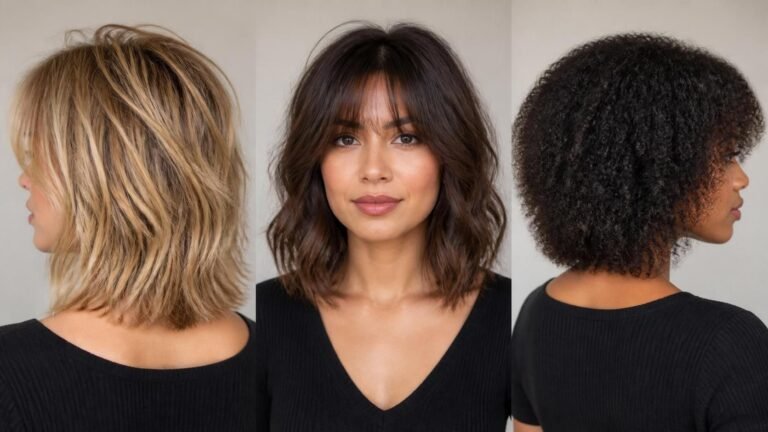
Fine hair and a lob are a natural match — most women with thin strands just haven’t found the right version yet. The lob length sits in a zone where hair has enough weight to hold shape but not so much that the ends go limp and wispy. Getting it right comes down to three things: where the layers sit, how the ends are finished, and how the front frames your face.
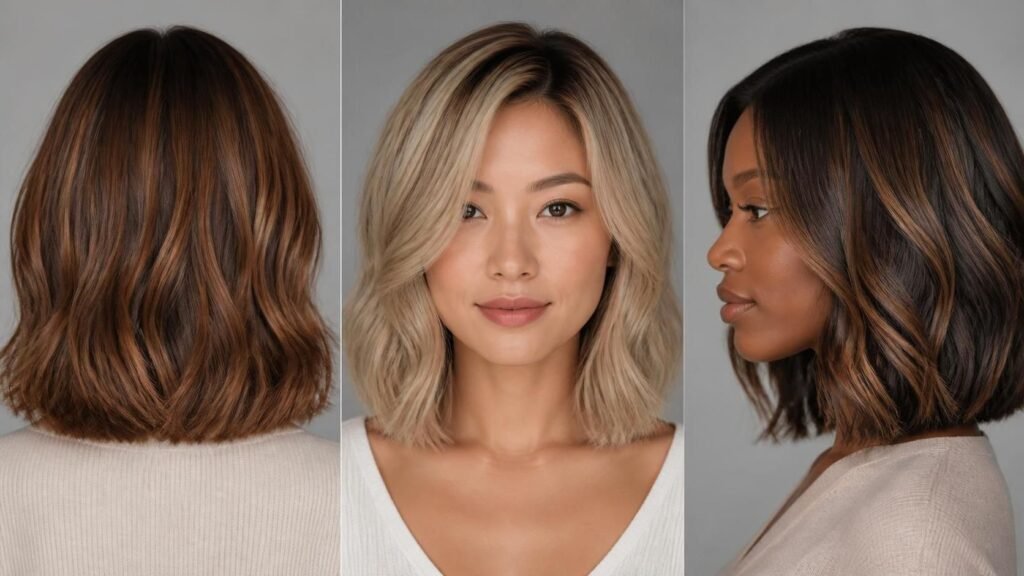
Too many layers through the bottom half leaves fine hair looking sparse. Too blunt with no surface texture and it falls flat by noon. The styles in this list thread that needle. Some are sleek and structured. Others are relaxed and textured. A few lean on bangs for extra face-framing fullness.
Every lob here is chosen because it works with fine hair’s natural behavior rather than fighting it. No high-maintenance styling required. No cuts that look great in the salon chair and fall apart on a Tuesday.
Before you pick your favorite, note that the most flattering lobs for fine hair tend to keep weight at the perimeter, place layers through the crown and mid-lengths only, and include some kind of face-framing element up front.
Below are 29 lob hairstyles for fine hair, picked for real volume, natural movement, and everyday wearability.
1. Asymmetrical Lob With Highlights
An asymmetrical lob has one side sitting slightly longer than the other, and that subtle difference creates quiet movement through the whole cut. The eye follows the angle rather than staring at flat, sparse ends. Soft highlights placed through the front pieces add depth that reads as thickness.
Ask for: a gentle length difference of about an inch between sides with light internal highlights at the face frame. Style tip: blow-dry the longer side forward and under slightly with a round brush to emphasize the asymmetry and add volume. Best for: fine hair that wants dimension and movement without committing to a dramatic or high-maintenance cut.
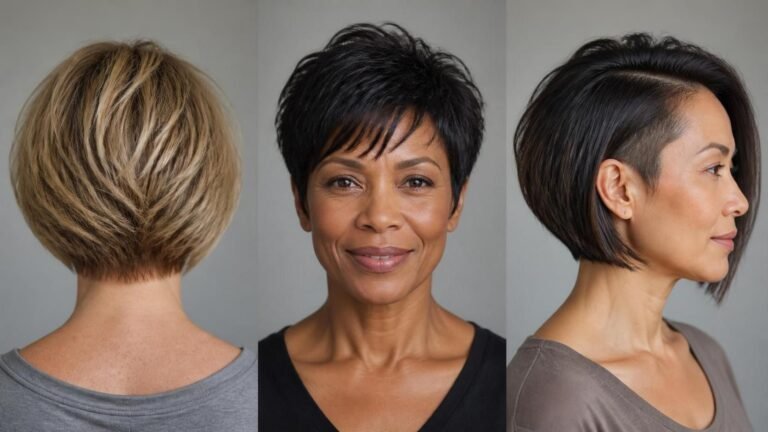
2. Bold Inverted Lob With One Side Shaved
This is a strong statement cut that actually works in fine hair’s favor. The shaved side removes weight and bulk entirely. The longer, angled front keeps the overall look balanced and intentional. The contrast between the two sides creates visual interest that draws attention away from any thinness.
Ask for: a sharp inverted lob on the longer side with a close, clean shave or undercut on the other side. Style tip: use a light shine serum through the longer side and blow-dry smooth for a polished finish that contrasts the shaved section. Great for: women ready for a bold, low-maintenance cut that completely eliminates the problem of flat or wispy fine hair.
3. Soft Textured Lob With Natural Movement
This lob leans on natural movement rather than precision layering. The ends are uneven and soft rather than blunt, which lets fine hair fall the way it wants to. The result is relaxed and wearable without looking unstyled or neglected.
Ask for: subtle point cutting through the ends for natural softness, with no heavy layering or thinning shears through the body. Style tip: apply a small amount of texture cream to damp ends, scrunch lightly, and air-dry for a naturally finished look. Best for: fine hair that tends to look stiff or over-styled and wants a cut that looks good with minimal daily effort.
4. Choppy Lob for a Textured Look
Short, irregular layers through this lob build texture that lifts the crown and breaks up the length. The intentionally uneven finish keeps fine hair from reading as flat. It looks slightly undone in the best way — the kind of cut that improves throughout the day as it loosens.
Ask for: irregular surface layers cut with point cutting or a razor for texture, with the perimeter left with some weight. Style tip: rough-dry the roots upward first for volume, then scrunch a dry texture spray through the lengths for separation. Works well for: fine hair that looks better with some roughness and texture than with a smooth, precise finish.
5. Lightly Choppy Lob With Soft Edges
This version dials the choppiness back just slightly. The ends are light and airy rather than sharply textured, which gives fine hair softness without thinning it out. Worn slightly tousled, the natural texture fills in and does most of the work on its own.
Ask for: gentle point cutting at the ends for lightness without going fully choppy — a subtle, lived-in finish rather than a sharp one. Style tip: use a small amount of lightweight mousse and let hair air-dry or diffuse for a natural, soft texture. Perfect for: fine hair that wants movement and lightness but is not quite ready for a fully textured or shaggy look.
6. Classic Layered Lob
The classic layered lob is the most requested lob style for a reason. Gentle layers through the mid-lengths and ends build movement without stripping the perimeter. The overall shape stays balanced and clean, which suits fine hair well because it holds its form without needing constant restyling.
Ask for: soft layers starting below the chin and blending gradually toward the ends, with no thinning through the perimeter. Style tip: use a volumizing mousse before blow-drying and direct airflow upward at the crown for a lift that holds through the day. Great for: fine hair at almost any age that wants a reliable, classic shape with movement and easy daily maintenance.
7. Classic Straight Lob
A clean one-length lob with minimal layering is one of the most underrated styles for fine hair. The even cut keeps all the weight at the perimeter, making the ends look noticeably denser and healthier. Worn smooth, it is understated, polished, and very easy to maintain.
Ask for: a one-length or near-blunt cut with only minimal surface softening — no heavy layering through the ends. Style tip: blow-dry with a paddle brush or round brush for a smooth, dense finish, then add a light shine spray for polish. Best for: fine hair that responds better to a clean, weighted perimeter than to layering and texture.
8. Half-Up Half-Down Lob With Double High Knots
Two small high knots at the crown with the rest of the hair left loose is a styling move that creates genuine lift. The knots build volume at the top, and the loose lengths stay relaxed and soft around the face and shoulders. It is playful, effortless, and very Pinterest-friendly.
Ask for: a lob with enough length and slight internal layers to support being worn in an easy half-up style. Style tip: loosen the knots slightly after tying them to create a fuller, more relaxed look rather than a tight, flat effect. Works well for: fine hair that wants a quick, lifted style option without relying on heat tools or heavy product.
9. Half-Up Lob
Pulling just the top section back into a small clip or twist immediately creates crown lift. The rest of the lob falls naturally around the face, keeping the style relaxed and unfussy. It is one of the simplest ways to add the appearance of volume to a fine lob on a busy day.
Ask for: a lob with soft internal layers through the top section so the half-up portion lifts rather than lying flat when pinned. Style tip: tease the crown section very lightly before pinning back, then smooth the top layer over for natural-looking lift. Best for: fine hair that needs a fast, no-heat styling option that looks put together from the front.
10. Layered Lob With Blunt Bangs
Blunt bangs bring a strong structural element to a soft layered lob. The dense fringe creates visual weight across the forehead while the layers through the rest of the cut stay light. The combination frames the face clearly and keeps the whole style from looking heavy on fine hair.
Ask for: a straight blunt fringe cut at or just above the brow with light blended layers through the lob body. Style tip: keep the bangs trimmed every 3 to 4 weeks so they stay crisp, and use a small round brush for a polished blowout finish. Great for: fine hair that wants a defined, structured front without adding weight or bulk through the mid-lengths and ends.
11. Layered Lob With Volume
This lob uses strategic layering through the crown and upper sections specifically to build lift. The layers are placed where volume is most needed rather than distributed evenly, which preserves density through the ends. It is a smart construction for fine hair that collapses easily.
Ask for: concentrated layers through the top section from the crown downward, leaving the perimeter mostly full and intact. Style tip: apply root-lift foam before blow-drying and use a round brush at the crown to direct the top section upward. Best for: fine hair that falls flat at the top and needs the cut itself to provide lift rather than relying on products alone.
12. Soft Layered Lob
Soft layering through this lob preserves the weight at the perimeter while allowing the top to breathe and move. The layers are blended enough that there are no visible lines or dropped sections. It is a low-maintenance shape that wears well between trims and suits fine hair beautifully.
Ask for: seamless, blended layers placed mostly through the surface and crown, with the ends left relatively full. Style tip: finger-dry the roots upward for volume, then smooth the lengths with a round brush for a polished everyday finish. Works well for: fine hair that wants the softness of layers without the risk of over-thinning or wispy ends.
13. Classic Balanced Lob
This clean, even lob sits right at the shoulders with minimal layering. The balanced shape makes it easy to wear straight, with waves, or half-up. Fine hair benefits from this kind of no-fuss structure because the simplicity prevents any one section from looking thinner than the rest.
Ask for: a one-length or very minimally layered lob cut to sit evenly at shoulder level with a clean, blunt-ish finish. Style tip: use a volumizing spray at the roots and blow-dry with a large round brush for a smooth, slightly lifted finish. Great for: fine hair that wants a versatile everyday style that looks good with almost any part, finish, or styling approach.
14. Lob With Bottleneck Bangs
Bottleneck bangs are wider at the top and narrow toward the center of the forehead before opening out toward the cheekbones. This shape frames the upper face softly without sitting heavy. Paired with a lob, it creates a natural-looking face frame that does not overwhelm fine hair.
Ask for: a bottleneck fringe shape that is feathered at the edges and blends naturally into the face-framing lob pieces. Style tip: blow-dry the bangs forward with a small round brush, then split gently with fingertips for a soft, airy finish. Best for: fine hair that wants an interesting fringe option with an easy grow-out and no commitment to a full heavy bang.
15. Lob With Long Framing Bangs
Long framing bangs are the most versatile bang option for fine hair. They are long enough to be tucked back, parted to either side, or worn forward. They create a soft face frame that adds fullness around the cheeks without adding any actual weight.
Ask for: long framing pieces starting around the temples that blend seamlessly into the rest of the lob without any hard lines. Style tip: wrap the framing pieces around a large barrel iron away from the face for a subtle wave that adds fullness on both sides. Works well for: fine hair that wants flexibility — the long framing pieces function as both bangs and face-framing layers.
16. Lob With Side-Parted Bangs
A deep side part with bangs falling naturally across the forehead creates instant lift at the root. The asymmetry gives the appearance of more volume on the parted side, which is exactly what fine hair needs. The rest of the lob stays balanced and clean.
Ask for: a side-parted fringe that falls naturally without being cut too bluntly — soft and slightly graduated at the edges. Style tip: blow-dry the roots in the opposite direction of the part first, then flip it back for natural-looking root lift. Best for: fine hair that tends to go flat at the crown and needs a styling trick built directly into the haircut’s structure.
17. Lob With Side-Swept Long Bangs
Side-swept long bangs glide softly across the forehead and blend into the lob length on one side. They create a relaxed diagonal line that softens the face without demanding precise daily styling. This is a very wearable option for fine hair at almost any age.
Ask for: long bangs that are cut to sweep naturally to one side and connect smoothly to the cheekbone-length framing pieces. Style tip: blow-dry using a small round brush directing the bangs to the side, then finish with a light-hold spray to keep them in place. Great for: fine hair that wants coverage and face-framing softness without the upkeep of a short, precise fringe.
18. Lob With Straight Bangs
Straight bangs on a lob are a bold contrast that actually flatters fine hair. The dense fringe creates a horizontal line that draws the eye upward and gives the face strong definition. Meanwhile the rest of the lob stays soft and relaxed, so the overall balance is right.
Ask for: a straight fringe cut to land between the brow and mid-forehead, with the edges just barely softened rather than fully blunt. Style tip: blow-dry the bangs downward with a paddle brush for a smooth, flat finish, then add a touch of shine serum for polish. Best for: fine hair that wants a sharp, modern style with a front element that creates structure and density across the forehead.
19. Lob With Wispy Bangs
Wispy bangs are the lightest fringe option and a natural fit for fine hair. The feathered ends let light through and keep the forehead from feeling covered or heavy. They frame the face gently and grow out smoothly, making them an easy commitment.
Ask for: a wispy fringe that is point-cut at the ends for lightness and sits around the mid-forehead or brow level. Style tip: apply a tiny amount of texture spray through the fringe and use your fingertips to separate and arrange the pieces. Works well for: fine hair that wants a fringe but is concerned about heaviness — wispy bangs add framing without any weight.
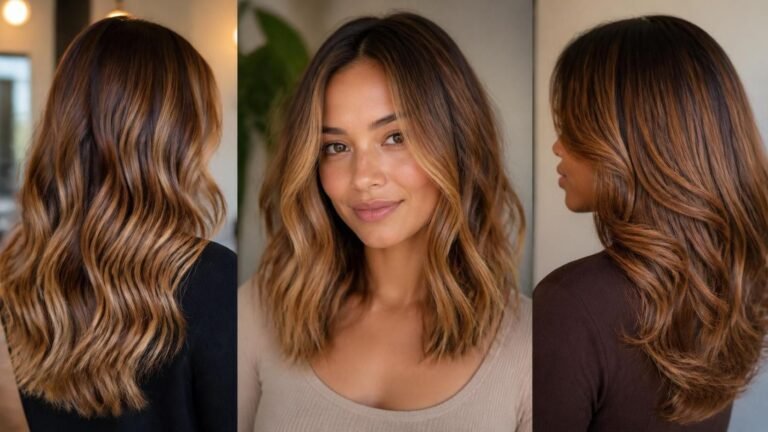
20. Messy Lob With Loose Waves
Loose waves are one of the most effective tools for adding visible body to a fine lob. The movement between waves creates spaces that look full even when individual strands are thin. The slightly messy finish means the style does not have to be perfect to look good.
Ask for: a lob with light internal softness that supports wave movement without over-layering the ends. Style tip: use a one-inch barrel iron in alternating directions, then shake the waves loose with a light-hold spray for natural texture. Best for: fine hair that responds well to wave and movement and wants a daily style that gets better as it relaxes throughout the day.
21. Messy Voluminous Lob With Subtle Waves
This lob is less about precision and more about letting the hair move. Subtle waves through the mid-lengths build body without a structured wave pattern. The slightly undone finish is what gives it volume — the waves scatter light and create the appearance of more hair.
Ask for: a lob with enough internal softness to hold a natural wave and a finish that is left intentionally imperfect. Style tip: scrunch a lightweight mousse through damp hair, air-dry or diffuse, then shake the roots with fingertips to loosen and lift. Great for: fine hair that does not want to spend time styling but still wants a lob that looks full and lived-in by midday.
22. Shaggy Lob With Choppy Layers
Choppy layers through a shaggy lob build lift and texture throughout rather than concentrating it in one spot. The irregular finish means no section lies flat for too long. Fine hair looks fuller because the eye reads the overall movement rather than any individual strand.
Ask for: choppy layers through the body of the lob with some face-framing pieces and a perimeter that keeps enough weight to look full. Style tip: rough-dry the roots for volume and scrunch a dry texture spray through the lengths for easy separation and lift. Best for: fine hair that wants a relaxed, high-movement style with built-in texture that requires very little daily effort.
23. Shaggy Lob With Curtain Bangs
Curtain bangs on a shaggy lob create one of the most flattering combinations for fine hair. The bangs frame the face from both sides, the shaggy layers add movement and body through the length, and the two elements together make the whole style look fuller and more dimensional.
Ask for: curtain bangs that split at the center and blend naturally into the face-framing lob pieces on each side. Style tip: blow-dry the bangs forward and then sweep them apart with fingertips for a relaxed split rather than a stiff part. Works well for: fine hair that wants a soft, romantic style with face framing on both sides and easy grow-out.
24. Shaggy Lob With Textured Curtain Bangs
Adding extra texture through the curtain bangs gives this shaggy lob an even more relaxed, undone quality. The irregular layers through the fringe let it fall naturally around the face without looking styled or overly shaped. It is an effortless look that suits fine hair with natural movement.
Ask for: textured curtain bangs with irregular ends that blend into light shaggy layers through the rest of the lob. Style tip: use a small amount of sea salt spray through the bangs and scrunch lightly for natural separation and airy texture. Best for: fine hair with some natural wave or bend that wants a style that looks more intentional the less precisely it is done.
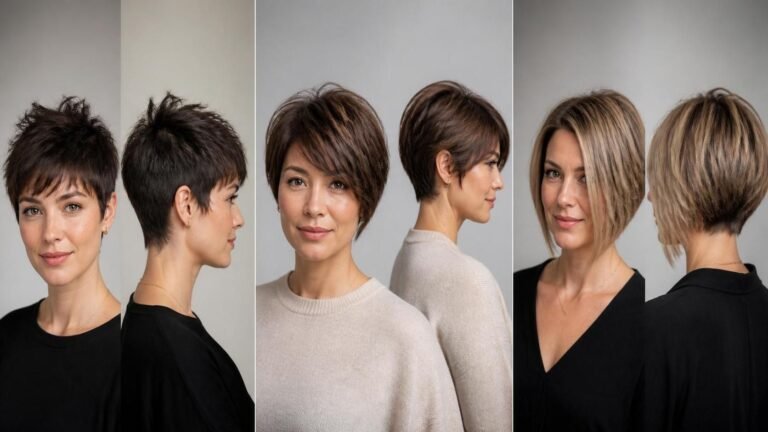
25. Sleek A-Line Lob
An A-line lob is shorter at the back and longer through the front, which creates a clean diagonal silhouette. Worn smooth and straight, it gives fine hair a polished, purposeful look. The longer front pieces keep the style feeling feminine and face-framing.
Ask for: a clean A-line shape with a clearly shorter nape and front pieces that extend to the collarbone or just past it. Style tip: use a heat protectant and flat-iron in smooth, downward passes for a glossy, dense finish that makes fine hair look thicker. Great for: fine hair that wants a sleek, professional style with a clean geometric shape that always looks intentional.
26. Sleek and Straight Lob With Wispy Blunt Bangs
Straight blunt bangs that are slightly wispy at the edges split the difference between sharp and soft. The lob underneath stays smooth and controlled. For fine hair, this combination creates a defined front element without any heaviness, which keeps the overall style light and wearable.
Ask for: a blunt fringe with just a touch of point cutting at the very ends so the edge is defined but not harsh. Style tip: blow-dry the bangs straight down with a paddle brush and use a fine-tooth comb to keep them smooth and aligned. Best for: fine hair that wants a structured front element but finds fully blunt bangs too heavy or high-maintenance.
27. Sleek Straight Lob With Blunt Ends
A fully blunt straight lob is one of the most reliable styles for making fine hair look denser. The clean, even perimeter traps weight at the ends and prevents the wispy, see-through finish that fine hair often has at length. It is simple, timeless, and always looks intentional.
Ask for: a clean one-length cut with a crisp, blunt perimeter and absolutely no thinning shears used through the ends. Style tip: finish with a small amount of smoothing cream and a shine spray to enhance the density and health of the blunt ends. Best for: fine hair that wants maximum perimeter density and a no-fuss style that looks polished with a quick blow-dry.
28. Soft Angled Lob
A soft angled lob has a slight graduation rather than a dramatic slope — the back sits just a touch shorter than the front. This gentle angle gives the silhouette some shape and movement while keeping the overall style flattering and easy. Fine hair looks structured without feeling rigid.
Ask for: a subtle angle through the cut with a small length difference between the nape and front pieces — soft graduation, not a sharp A-line. Style tip: blow-dry the crown upward and the front pieces slightly forward for a shape that lifts at the top and frames the face. Great for: fine hair that wants some structure and shape in the cut but finds a dramatic angle too stark or difficult to maintain.
29. Soft Layered Lob
This final lob is all about following the hair’s natural fall rather than forcing it into a specific shape. Soft layers sit through the surface and allow the hair to move however it naturally wants to. For fine hair, this means less fighting with the style and more days where it just works on its own.
Ask for: light, seamless layers placed following the natural fall of the hair, with the ends left full and the perimeter intact. Style tip: finger-dry while lifting the roots for volume, then let the lengths air-dry for a soft, natural finish that looks effortless. Best for: fine hair that wants a genuinely low-effort lob that looks just as good air-dried as it does after a quick blowout.
FAQs About Lob Hairstyles for Fine Hair
What lob cut makes fine hair look the thickest? A blunt or near-blunt lob without heavy layering almost always looks the fullest on fine hair. The clean, dense perimeter makes the ends appear thicker and healthier. If you want some movement, ask for light surface layers through the crown only, leaving the bottom section mostly intact.
How many layers should fine hair have in a lob? Very few, and placed strategically. Layers work best when they sit through the top section and crown to build lift, and stop well before the perimeter. Once layers reach the ends of fine hair, the strands look sparse and see-through. Less is consistently more with fine hair layering.
What is the best lob length for fine hair? The collarbone to just-below-shoulder length is the most flattering zone for fine hair. Long enough to feel feminine and hold weight, short enough that the ends do not go limp or wispy. Hair that falls past the chest usually gets too heavy for fine strands to carry at the ends.
Should I get bangs with a lob if I have fine hair? Bangs can add a lot of fullness to a fine-hair lob, especially curtain bangs, wispy bangs, and long framing pieces. The fringe creates a face-framing element that adds visual density and covers sparse areas at the hairline. Avoid heavy blunt bangs if your fine hair is very flat — they can look limp between trims.
How do I keep a lob looking full on fine hair all day? Start with a root-lift mousse or volumizing foam before blow-drying. Direct the crown section upward with a round brush. Use a deep side part or flip your part midway through the day to refresh root lift. Dry shampoo or texture spray at the roots keeps volume going on day two without washing.
How often should I trim a lob if my hair is fine? Every 8 to 10 weeks keeps a lob on fine hair looking healthy and full. Fine hair splits and breaks faster than thick hair, and split ends travel upward quickly. Staying on a regular trim schedule maintains the perimeter density that makes fine hair look so much thicker at lob length.
Why the Lob Is the Most Forgiving Length for Fine Hair
There is a reason the lob comes up in almost every conversation about fine hair cuts. It sits in a length zone that is genuinely kind to thin strands. Long enough to have weight and hold shape. Short enough that the ends do not go limp or transparent.
At lob length, fine hair has a natural bounce it does not have when it grows past the chest. The perimeter carries some density, the roots get enough natural lift to look volumized, and the face framing sits right where it needs to be. Whether you wear it sleek, wavy, or textured, a lob at the right length almost always looks intentional on fine hair.
The other advantage is versatility. You can wear a lob straight for a polished look, add waves for a fuller finish, pull the top half up on a lazy day, or try a new fringe option without committing to a full cut. For fine hair, having styling options that all work is a genuine luxury.
The Length That Finally Gets It Right
Finding a haircut for fine hair that actually delivers is not about chasing volume tricks or learning complex styling routines. It is about choosing the right starting point — a cut that does the work for you.
Every lob in this list was chosen because it respects fine hair’s natural limitations and works with them. Clean ends, smart layering, thoughtful framing. None of them demand a full vanity of products or an hour of morning styling to look good.
Pick the one that matches your face shape, your lifestyle, and the amount of effort you realistically want to put in. Bring a clear photo to your stylist and tell them what you want the cut to do — more volume at the crown, fuller ends, better face framing. That conversation alone gets you most of the way there.
Fine hair at lob length, done right, does not look like fine hair at all.