
12 Weekend Activities That Will Make You Actually Look Forward to Monday
Most weekends follow the same quiet script — sleep in, scroll endlessly, blink, and suddenly it’s Sunday night again. The week ahead already feels heavy before it even begins. Sound familiar? The good news is that two days is more than enough time to genuinely shift how you feel, think, and show up. Small intentional choices packed into a single weekend can change your entire mental landscape. You don’t need a vacation or a dramatic life overhaul. You just need a better plan for 48 hours. Below are 12 weekend activities picked for their real-life impact, ease, and power to make Monday feel like something worth walking into.
1. Give Yourself a Real Digital Detox

Screens are everywhere and constant connectivity has a cost most people underestimate. Spending a chunk of your weekend completely offline — no scrolling, no notifications, no passive consumption — gives your nervous system the genuine rest it rarely gets during the week.
It feels uncomfortable for about twenty minutes and then suddenly spacious in the best possible way. Your thoughts become clearer. Your surroundings become more interesting. You remember what it felt like to be bored and then genuinely creative.
Start small if going fully offline feels scary: Even a four-hour phone-free window on Saturday morning creates noticeable mental breathing room.
Put your phone in a drawer — not just face down: Out of sight genuinely means out of mind in ways that “do not disturb” mode never quite achieves.
Replace screen time with something tactile: Reading a physical book, cooking a real recipe, or going for a walk fills the space beautifully.
Tell people in advance you’ll be offline: A quick heads-up on Friday removes the anxiety of leaving messages unanswered.
Notice how you feel when you return online: The contrast you feel coming back is your clearest signal of how much the detox was needed.
2. Sit Down and Reflect on Your Week

Life moves fast and most people sprint from one week straight into the next without ever pausing to process what actually happened. Reflection isn’t just a journaling trend — it’s one of the most practical tools available for growing through experience instead of just going through it.
A Saturday morning with a quiet cup of tea and ten minutes of honest writing can surface patterns, frustrations, and wins you didn’t even realize were there. That awareness is how things actually change.
Write about one highlight and one low point from the week: Just two specific entries create more insight than a vague general summary of how things went.
Ask yourself what you would do differently: Future-self thinking during reflection turns journaling from venting into genuine learning.
Keep your reflection journal by your bed: Easy access means it actually gets used rather than sitting in a drawer with good intentions.
Don’t edit or judge what comes out: The most useful reflections are messy and honest, not polished and presentable.
Even five minutes of reflection creates meaningful clarity: You don’t need an hour-long journaling practice — a short honest check-in is enough.
3. Wake Up Early on at Least One Day
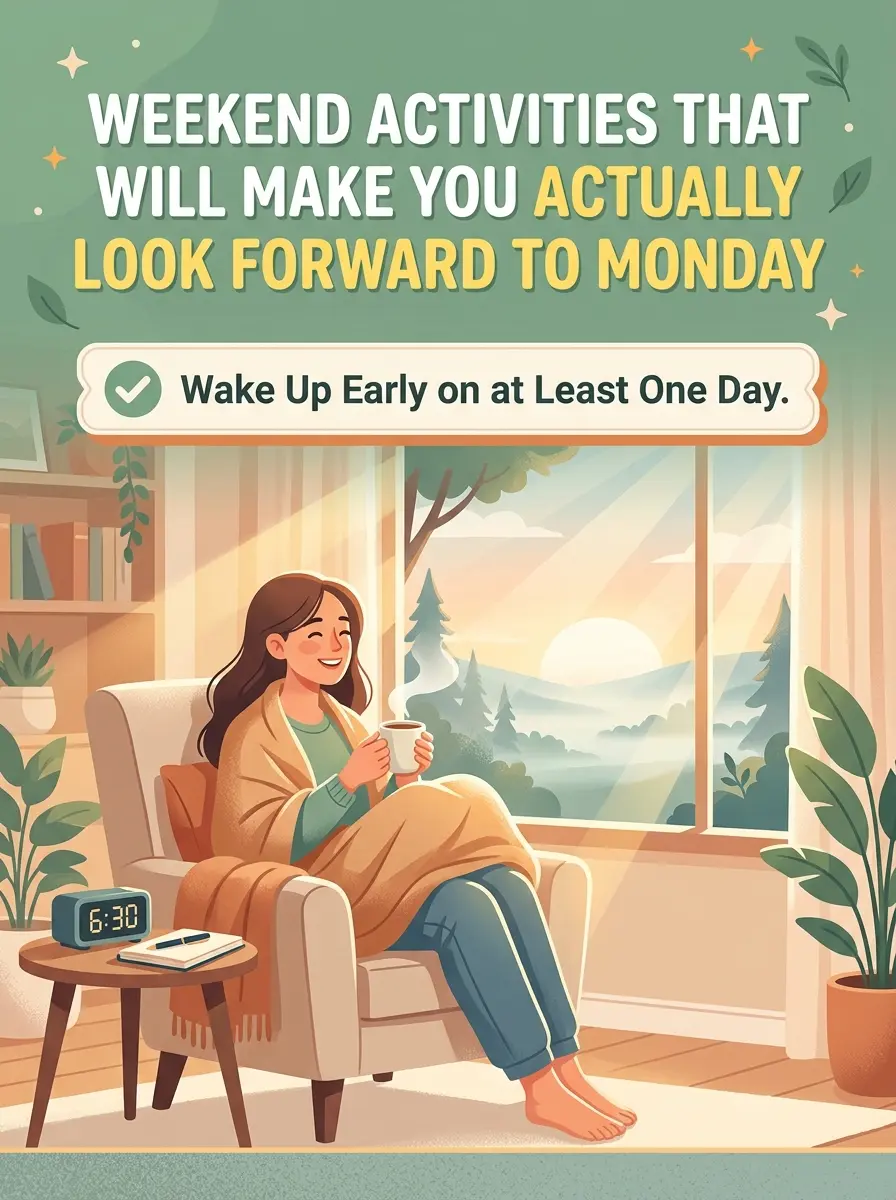
Weekend mornings are one of the most underused resources in modern life. The quiet hours before the rest of the world wakes up have a different quality to them — slower, softer, full of possibility. Sleeping until noon feels like a reward, but it often leaves you feeling groggy, rushed, and like the day was already half-gone before it started.
Setting an alarm even an hour earlier than usual on one weekend morning gives you time that genuinely belongs to you. No obligations, no noise, no demands. Just space.
Make your early morning immediately pleasurable: A good coffee, a favorite playlist, or a seat near a window removes any resentment about the alarm.
Use the morning hours for your most nourishing activity: Read, stretch, journal, cook a proper breakfast — give those quiet hours something worth waking up for.
Avoid checking your phone for the first hour: Starting the morning in your own headspace rather than someone else’s timeline is the whole point.
Let yourself enjoy the sunrise at least once: There’s a mood-lifting quality to early natural light that’s genuinely hard to replicate later in the day.
Consistency matters more than perfection: One early morning weekend per month creates more benefit than fighting yourself every single Saturday.
4. Build a Self-Care Day You Actually Enjoy

Self-care has been overcomplicated into a performance. Real self-care is simply doing something that restores you — and only you know what that actually is. It might be a long bath, a slow skincare routine, a nap without guilt, cooking a meal you love, or watching a film in the middle of the afternoon with no apology.
The point isn’t the activity itself. It’s the intention behind it — choosing yourself, deliberately, for a few hours, because you are worth that kind of attention.
Plan your self-care in advance so it actually happens: Leaving it to “whenever I feel like it” usually means it gets pushed until Sunday night when you’re already depleted.
Make your environment part of the experience: Candles, fresh sheets, a tidy space, and your favorite playlist make any self-care ritual feel ten times more restorative.
Include something for your body, mind, and mood: A physical activity, something mentally restful, and something that simply brings you joy covers the full spectrum.
Protect your self-care window from interruptions: Tell people you’re unavailable and actually mean it for a few hours.
Don’t save self-care only for when you’re burned out: Regular small doses prevent the depletion that requires a full recovery weekend.
5. Plan and Organize the Week Ahead

One of the biggest sources of Monday anxiety is the formless dread of not knowing what’s coming. Spending even thirty intentional minutes on Sunday organizing the week ahead transforms that dread into something manageable. When you can see your week laid out clearly, it stops being a wall and starts being a path.
This doesn’t have to be a rigid schedule. It can be a simple list of priorities, a few key appointments noted, and a clear intention for each day.
Use a format you genuinely enjoy: A bullet journal, a printed planner, a digital app, or even a sticky note on the fridge all work equally well if you’ll actually use them.
Identify your top three priorities for the week: Having too many “most important” items creates the same overwhelm as having no plan at all.
Batch similar tasks together on the same day: Grouping errands, calls, or creative work reduces the mental friction of constantly switching contexts.
Plan one thing each day you’ll genuinely look forward to: A good lunch, a phone call with a friend, a favorite evening activity — anchor points make the week feel livable.
Review your plan Sunday evening rather than Monday morning: Starting Monday already oriented rather than scrambling to get organized is a game-changer.
6. Share a Slow Meal with Someone You Love

In a world of quick lunches eaten alone at desks and dinners in front of screens, a genuinely unhurried shared meal feels almost radical. Cooking together, sitting down without devices, and talking about things that actually matter — not just logistics — is one of the simplest and most nourishing ways to invest in a relationship.
It doesn’t need to be elaborate. Pancakes on a Saturday morning or a simple Sunday roast with someone who matters to you can be the most meaningful part of the whole weekend.
Cook the meal together rather than just eating together: The process of making food side by side is its own form of connection and conversation.
Put phones away for the duration of the meal: Genuine presence at the table creates the kind of connection that scattered half-attention never does.
Ask real questions: Go beyond “how was your week” — ask about dreams, worries, memories, or things they’re excited about.
Make the table feel intentional: A small bunch of flowers, cloth napkins, or candles signals that this time together is worth honoring.
Let the meal last longer than it needs to: Linger over coffee, stay at the table, keep the conversation going — unhurried time together is the point.
7. Declutter One Space in Your Home

Your environment has a direct impact on your mental state, whether you notice it or not. Clutter creates low-level noise in your brain — a constant background hum of unfinished business, decisions not made, things that need dealing with. Clearing even one small area of your home removes that hum and creates a pocket of calm you can actually feel.
You don’t need to overhaul the entire house. One drawer, one shelf, one corner is enough to create a genuine sense of progress and clarity.
Start with the smallest cluttered space you can see: A single nightstand or kitchen counter is a manageable, completable project that builds momentum.
Use a music playlist to make it enjoyable: An upbeat playlist turns decluttering from a chore into something that actually has momentum and energy.
Sort everything into three piles: Keep, donate, discard. Making the decision once and committing to it prevents endless re-sorting.
Don’t declutter and then re-fill the space: Clear surfaces and empty drawers are the reward — resist the urge to immediately replace what you removed.
Donate the keep pile within 48 hours: Bagged donations that sit in your hallway for two weeks defeat the purpose of the whole exercise.




8. Practice Active Gratitude
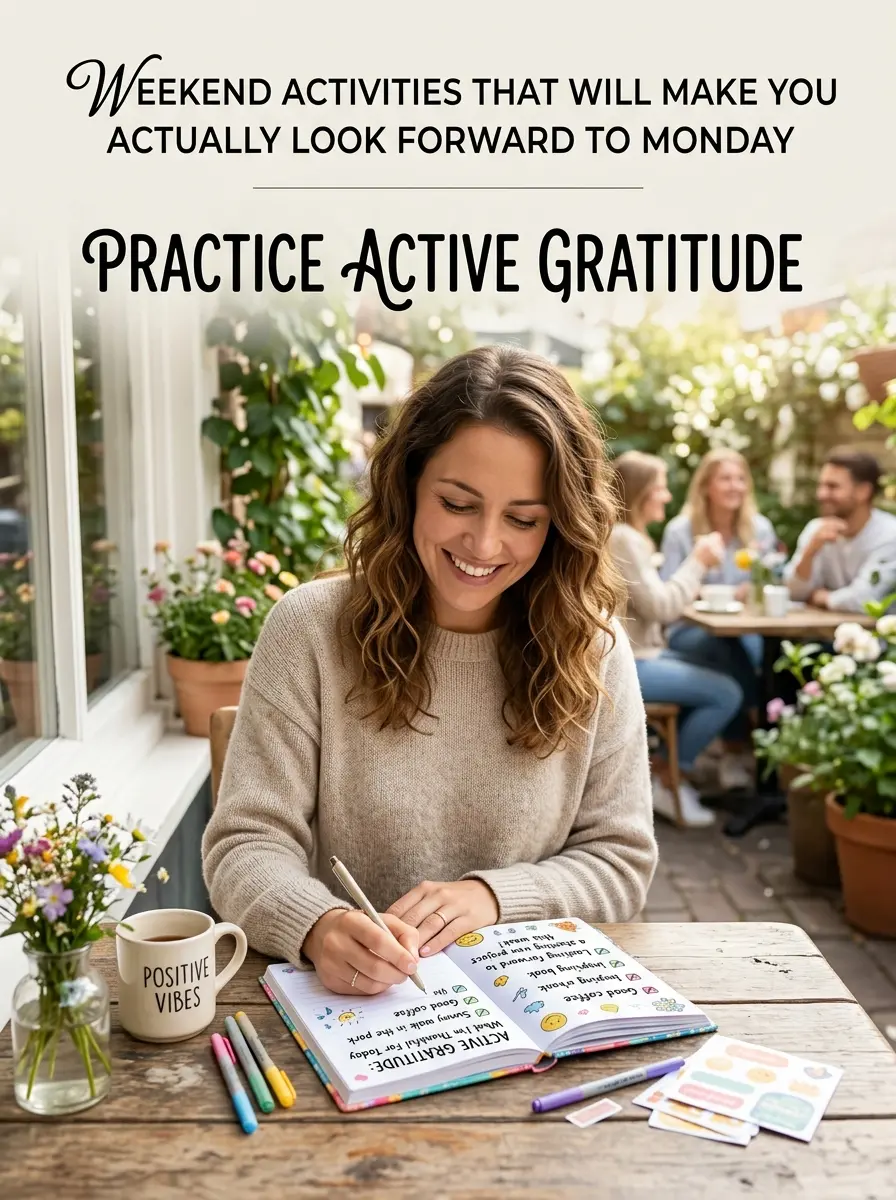
Gratitude is one of the most researched and consistently effective tools for improving wellbeing, and it costs nothing. The practice isn’t about denying what’s hard or forcing positivity. It’s about training your attention to also notice what is going right, what exists to appreciate, and what would be missed if it were gone.
A few minutes spent in genuine appreciation — not a rushed checkbox exercise but real, specific noticing — shifts your mental baseline in ways that accumulate over time.
Write three specific things you’re grateful for each morning: Specific entries like “the way sunlight came through the window” matter more than vague ones like “my health.”
Include small ordinary things alongside the big ones: Gratitude for a warm drink, a comfortable chair, or a funny moment creates as much shift as gratitude for major life events.
Try verbal gratitude with someone you care about: Telling a person specifically what you appreciate about them is one of the most powerful and underused forms of this practice.
Notice resistance to the practice on hard days: Those are exactly the days it matters most — not to bypass difficulty but to find the small real things that coexist with it.
Keep a dedicated gratitude journal rather than mixing it with general notes: The separate space makes it feel more intentional and easier to revisit on difficult days.
9. Get Outside and Give Yourself a Mini Escape

You don’t need a flight or a hotel booking to experience the mental reset of a true change of scene. A few hours spent somewhere different from your usual environment — a park you haven’t visited, a nearby town, a trail, a botanical garden, a beach — can create the same psychological shift as a much longer trip.
The key is genuine presence. Leave your earbuds at home for part of it. Look up. Notice the details of where you are. Let yourself actually arrive somewhere rather than just moving your body while your mind stays online.
Plan a destination that’s new to you even if it’s close: Novelty is the ingredient that makes a short outing feel genuinely restorative rather than just like a walk.
Pack something small to make it feel like a real outing: A good snack, a physical book, or a camera transforms a walk into an experience.
Go without a rigid agenda: Leave room to take a different path, stay longer somewhere interesting, or follow genuine curiosity.
Bring one other person or go alone intentionally: Both have value — company makes it social, solitude makes it reflective. Choose what you actually need.
Leave your phone in your bag for stretches of the outing: Experiencing a place rather than documenting it creates memories that actually stick.
10. Invest Time in a Meaningful Connection

The quality of your relationships has more impact on your long-term happiness than almost any other factor — and relationships require actual time and attention to stay alive. A weekend is a perfect opportunity to reach out to someone you’ve been meaning to connect with, to have a real conversation instead of just exchanging updates, or to show up for someone who might need it.
This isn’t about networking in a transactional way. It’s about tending the human connections that actually matter to your life.
Reach out to one person you haven’t spoken to in a while: A short voice note or a coffee invitation takes two minutes and can restart a meaningful friendship.
Have a conversation with no agenda other than genuine interest: Ask about their life. Listen more than you speak. Be actually present in the exchange.
Attend a local gathering or community event: New environments put you in proximity with people you’d never otherwise meet — and proximity is where connections begin.
Be specific when you reach out: “Let’s catch up sometime” rarely happens. “Are you free Saturday afternoon?” almost always does.
Invest in the friendships that energize rather than drain you: Meaningful connection time is finite — spend it with people who leave you feeling better than before.
11. Volunteer or Do Something for Someone Else
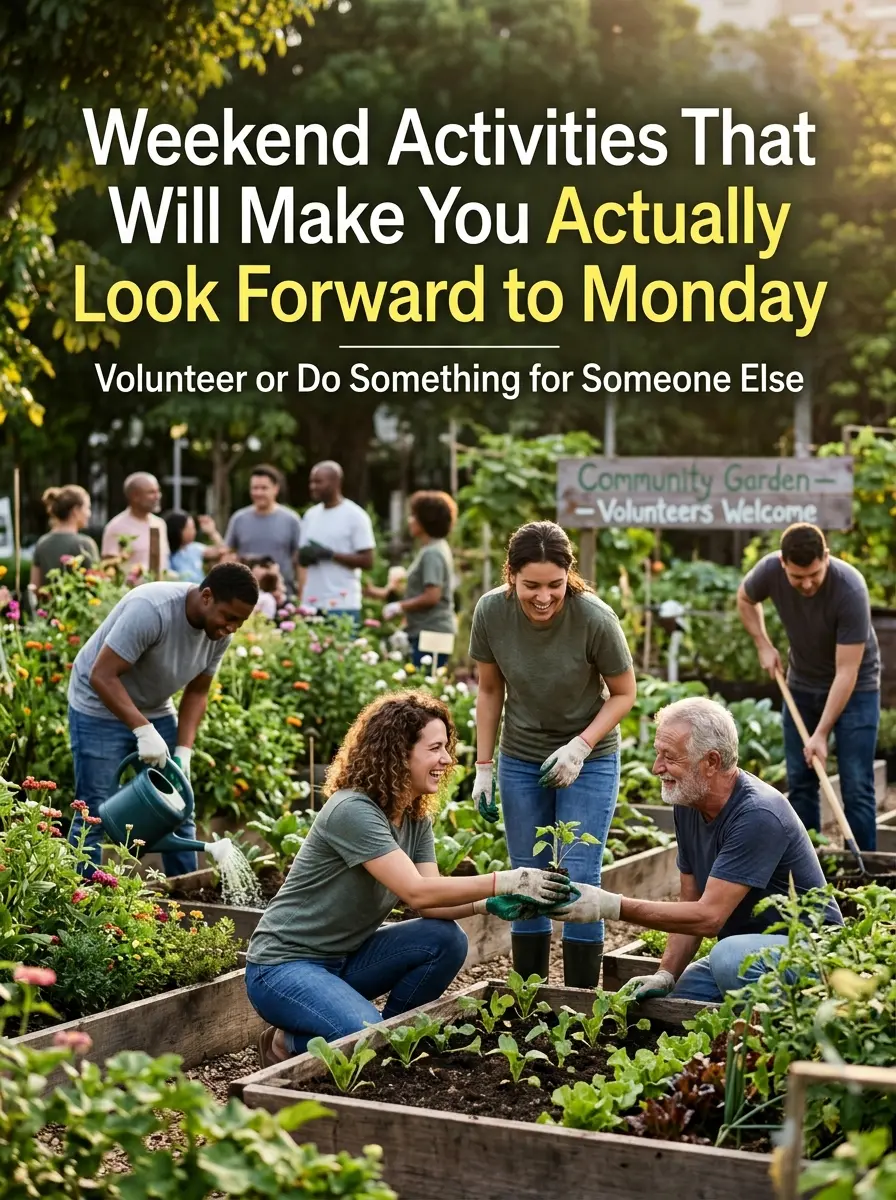
There’s a well-documented psychological phenomenon that researchers call the “helper’s high” — the genuine mood lift that comes from contributing to someone else’s wellbeing. Spending a portion of your weekend giving your time, skills, or presence to a cause or a person outside yourself is one of the fastest ways to shift a low mood, gain perspective, and feel meaningfully useful.
It doesn’t have to be a formal volunteering commitment. Helping a neighbor, cooking a meal for someone going through something hard, or picking up litter in your local park all count.
Find a local organization that aligns with something you care about: Choosing a cause you genuinely believe in makes the experience more sustaining over time.
Bring a friend along if you’re volunteering somewhere new: Having company makes showing up easier and the experience more enjoyable.
Let yourself receive the good feeling without guilt: The mood lift from helping is a feature, not a selfish motivation — it’s part of what makes generosity sustainable.
Start small if formal volunteering feels like too much commitment: One morning, one afternoon, one small act of service is a genuine contribution.
Notice the perspective shift that comes from stepping outside your own concerns: This alone — the simple widening of your view — is reason enough.
12. Start a Simple Meditation Practice
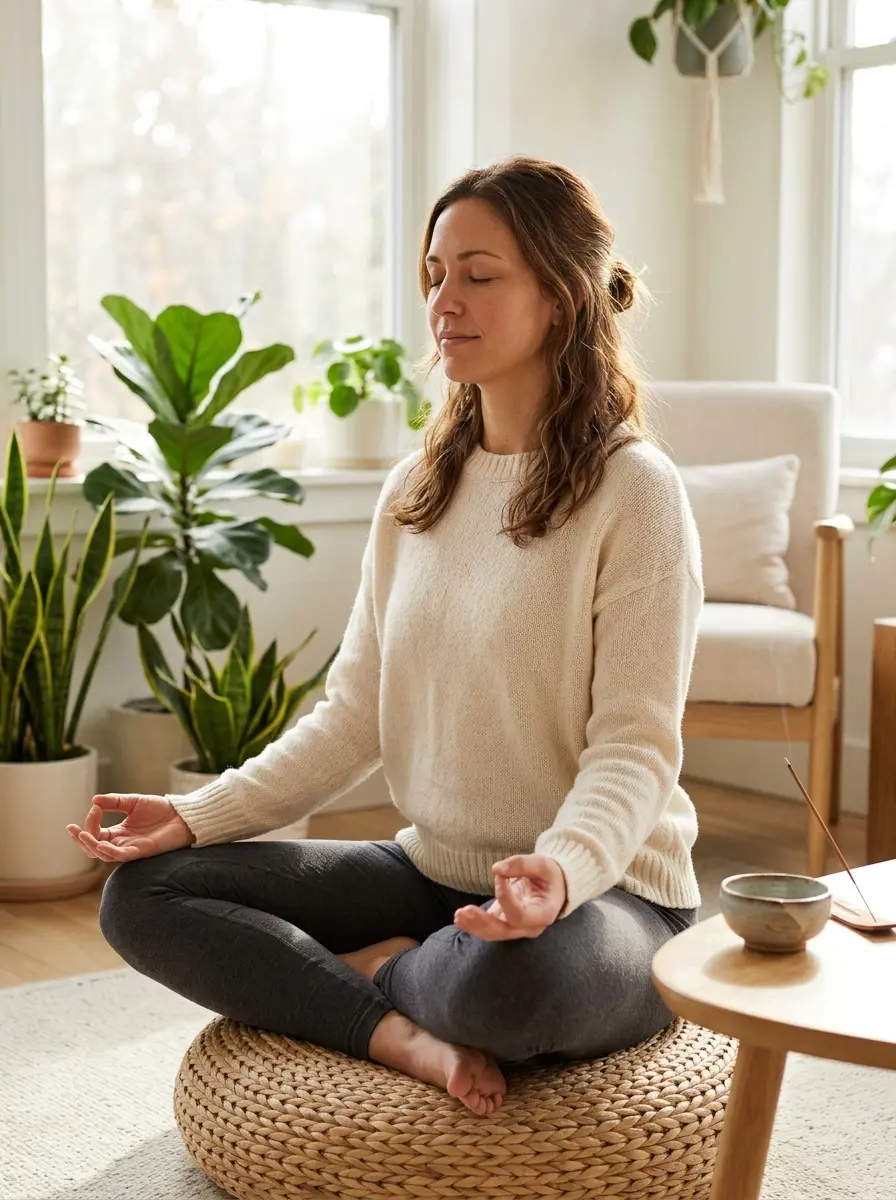
Meditation has moved well beyond wellness trend territory — the evidence for its impact on stress, focus, sleep quality, and emotional regulation is substantial and growing. And the barrier to starting is genuinely low. You don’t need cushions, incense, or an hour of silence. You need five minutes, a comfortable seat, and a willingness to breathe on purpose.
The hardest part isn’t the sitting. It’s overcoming the feeling that you’re doing it wrong. You’re not. Noticing that your mind wandered and gently bringing it back is the practice — that’s the whole point, done correctly.
Start with just five minutes using a guided app: Headspace, Calm, or Insight Timer all have beginner sessions that remove every barrier to starting.
Meditate at the same time each day to build the habit: Attaching it to an existing anchor — morning coffee, before bed — makes it easier to remember and sustain.
Don’t judge the quality of a session by how quiet your mind was: A meditation where your mind wandered a hundred times and you returned it a hundred times is a very good meditation.
Try a body scan if breath-focused meditation feels frustrating: Moving attention slowly through different parts of the body is often easier for beginners than focusing on breath alone.
Give yourself two weeks before evaluating whether it’s working: The benefits of meditation are cumulative and often subtle — they reveal themselves over time, not in a single session.
Frequently Asked Questions About Meaningful Weekend Activities
Q1. How many of these activities should I try in one weekend? You don’t need to do all twelve at once. Choosing two or three that resonate most with where you are right now will create far more impact than rushing through all of them. Quality and intention matter far more than quantity when it comes to a restorative weekend.
Q2. What if my weekends are already full of obligations? Even a single hour carved out intentionally on a Saturday morning counts. You don’t need a free 48-hour block. Most of these activities take between twenty minutes and two hours — look for small pockets of time that already exist in your weekend rather than trying to clear the whole schedule.
Q3. Can I do these activities if I have children or family commitments? Many of these work beautifully alongside family life — the shared meal, the gratitude practice, the declutter session, and even the early morning can involve or coexist with family. The self-care and digital detox components may require some creative scheduling, but even small windows of protected time make a meaningful difference.
Q4. Which of these activities has the quickest noticeable impact? The digital detox and gratitude practice tend to create the most immediate and noticeable mental shift. Most people feel a difference within hours of being offline, and gratitude journaling often produces a mood lift the same morning it’s practiced.
Q5. How do I stop the Sunday night dread even after a good weekend? The planning activity in tip five directly addresses this. Spending thirty minutes on Sunday evening organizing the week ahead converts formless anxiety into structured clarity. Knowing what’s coming — and having a plan for it — is one of the most effective antidotes to Sunday dread.
Q6. Do I need to spend money on any of these activities? Not on most of them. The digital detox, reflection journaling, early rising, gratitude practice, decluttering, cooking a shared meal, going outside, and meditating all cost nothing. Self-care and volunteering may involve small optional costs, but both are equally effective done simply and inexpensively.
The Weekend Reset Culture That’s Quietly Changing How People Live
There’s a growing movement of people who treat their weekends not as passive recovery time from the week — but as active investment time for the life they want. They’re not doing more and achieving more in the hustle sense. They’re doing things that matter more, with more presence, and feeling the difference by Sunday evening.
What these people have figured out is that the quality of your weekend directly shapes the quality of your mindset going into the week. A weekend spent genuinely resting, connecting, creating, or contributing produces a Monday that feels different from one spent numbed out on a screen until the alarm goes off again.
You don’t need to adopt all twelve habits at once. You just need to start choosing your weekends a little more deliberately — and watching what shifts.
Glowing Up From the Inside Out
The most profound changes in a person’s life rarely come from dramatic single events. They come from small consistent choices, made repeatedly, in the ordinary hours of ordinary days. Your weekend is full of those hours — more than forty of them, twice a week, every week of your life.
That’s not nothing. That’s a significant amount of time that can either drift by passively or be pointed deliberately toward something that actually fills you up. Even picking one or two activities from this list and doing them with full intention this weekend is a step in a genuinely different direction.
Save this, share it with someone who needs a weekend reset, and then — most importantly — actually use it. Monday is coming regardless. You might as well meet it on your terms.
Your Glow-Up Weekend Starts Now
You already know which of these twelve resonated the most. That pull you felt reading it — that small yes — is the one to start with. Don’t overthink it. Don’t wait for the perfect free weekend to appear on your calendar.
This weekend is the one. Two days. Twelve ideas. One version of Monday that feels genuinely different from the last.
