
18 Shoulder Length Hairstyles With Bangs for Thin Fine Hair That Actually Add Volume
Fine hair at shoulder length is one of the trickiest styling situations to navigate. The length is beautiful in theory, but without the right cut it can look limp and flat by midday. The good news is that bangs change everything.
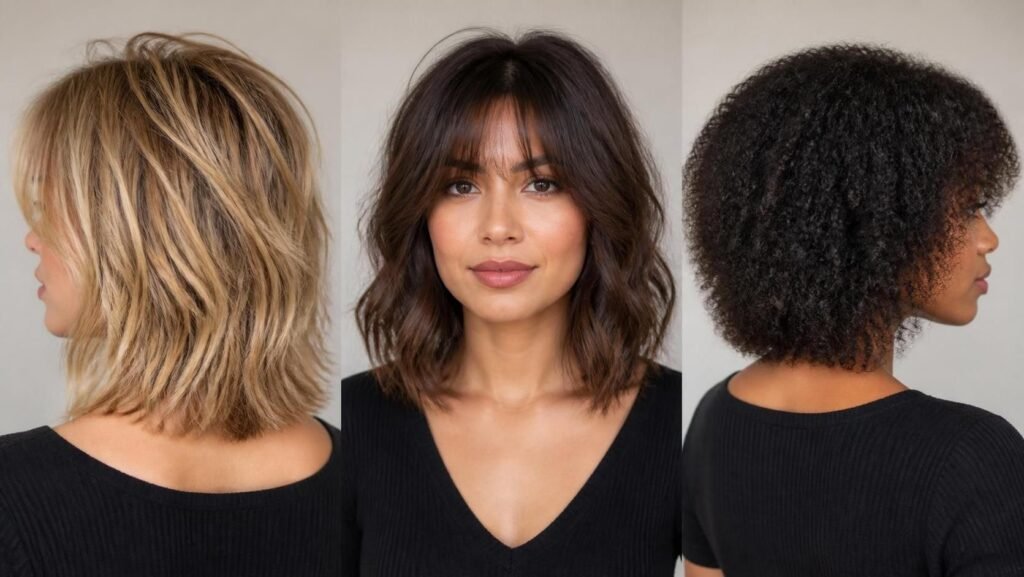
Adding a fringe gives your face immediate shape and makes the whole cut look more polished and intentional. The key for fine hair is balancing a full-looking perimeter with just enough layering to create movement — not so much that the ends go transparent. If you air-dry most days, softer blended bangs are your friend. If you enjoy a blowout, fuller curtain shapes or forward fringes work beautifully.
Below are 18 shoulder length hairstyles with bangs for thin fine hair, chosen for volume, wearability, and realistic daily styling.
1. Soft A-Line Lob With Side Bangs
The A-line lob is a clever choice for fine hair because the longer front pieces create the illusion of more density right where it matters most — around the face. Side bangs add softness without feeling heavy or demanding.
Why the A-line shape helps: The front-longer-than-back angle creates the impression of more hair where it frames the face beautifully.
Bang weight tip: Keep side bangs on the lighter side — too thick and they look separate from the rest of the cut on fine strands.
Perimeter advice: Ask for a clean, strong baseline so the ends look dense rather than scraggly or see-through.
Layering rule: Request face-framing layers only — avoid layering heavily through the back or the length will look thin.
Styling ease: A round brush and low heat through the ends gives this cut the movement and swing it needs to look its best.
2. Bouncy Blowout Lob With Curtain Fringe
This style was practically built for women who love a good blowout. The curtain fringe parts naturally in the middle and flows into the sides so seamlessly that it never creates an awkward line across the forehead.
What makes curtain bangs work on fine hair: They blend into the sides rather than sitting separately, so they never steal density from the front.
Blowout technique: Use a medium round brush through the top section, rolling upward and outward at the ends for that signature bouncy finish.
Layer placement: Ask for long layers through the upper section — they give the blowout its movement without thinning the overall length.
Product tip: A volumizing mousse applied at the roots before blow-drying makes the lift last significantly longer throughout the day.
For curtain bang styling: Dry the fringe while directing each side outward and slightly downward for that soft, parted finish.
3. Blunt Lob With Airy Wispy Bangs
The blunt lob is one of the most reliable tricks in the fine-hair playbook. A strong, even perimeter makes thin ends look fuller and healthier than a heavily layered cut ever could.
Why blunt beats layered for fine hair: A solid baseline keeps all the hair at one visual density instead of letting it thin out into wispy points at the ends.
Wispy bang benefit: Airy bangs add face shape without taking meaningful density away from the front section of your hair.
What to ask for: A clean blunt perimeter at shoulder length with minimal internal layers and lightly feathered bang tips only.
Avoiding the helmet effect: A tiny amount of internal layering through the crown prevents the blunt cut from looking too solid or heavy on top.
Best for: Women who want a polished, put-together look with minimal daily effort and maximum visual thickness.
4. Shoulder Lob With Bottleneck Bangs
Bottleneck bangs are one of the most flattering bang styles for any face shape because they start narrowly at the center part and gradually widen toward the cheekbones. They add definition around the eyes without creating a heavy forehead-spanning fringe.
The flattering geometry: The narrow-to-wide shape frames the upper face in a way that draws attention to the eyes naturally.
For fine hair specifically: The moderate width means you are not pulling too much hair into the bang section — the rest of the lob stays full.
Texturizing caution: Ask for light texturizing through the fringe only — over-texturizing fine bangs makes them look sparse and stringy.
How they grow out: Bottleneck bangs transition gracefully as they grow because the sides are already blended into the face-framing layers.
Pairing tip: A shoulder lob with a clean baseline completes this style — the strong perimeter and soft fringe balance each other perfectly.
5. Textured Lob With Choppy Ends and Soft Bangs
For women who want movement and a relaxed vibe without sacrificing fullness, a lightly textured lob with choppy point-cut ends hits the sweet spot. The soft bangs keep the overall feel youthful and fresh.
How choppy ends create movement: Point cutting through the ends builds separation that makes the hair appear fuller and more alive in motion.
What to avoid: A razor-heavy cut that removes too much weight — this is disastrous for fine hair and leads to see-through ends.
The right technique: Ask your stylist for point-cut ends and subtle internal layers — not a full-on shag or razor-heavy cut.
Soft bang choice: A soft, slightly blended fringe pairs best here — something too thick or blunt fights the relaxed energy of the rest of the cut.
Styling approach: A texturizing spray or sea salt spray through damp hair before air-drying gives this cut its ideal effortless finish.
6. Collarbone Lob With Face-Framing Layers and Fringe
The collarbone length gives you the feeling of longer hair while still being short enough to hold shape and volume throughout the day. Face-framing layers and a blended fringe make this one of the most flattering options on fine hair.
Why collarbone length works: It is long enough to feel feminine and flowy but short enough that fine hair does not get weighed down by its own length.
Layer placement tip: Ask for layers beginning at the cheekbone — not higher — so the crown retains fullness and density.
Fringe blending: The fringe should connect smoothly into the face-framing pieces so the front of the cut reads as one cohesive shape.
Ends finish: Request a soft bend or slight bevel through the ends rather than a rigid blunt cut — it keeps the longer length from looking flat.
For added body: Blow-dry in sections with a paddle brush, rolling the ends inward or outward alternately to build fullness throughout.
7. Classic Collarbone-Length Cut With Light Bangs
Sometimes the most wearable look is also the simplest one. This clean collarbone cut with light bangs works because it does not fight the hair — it just makes it look healthier and more intentional.
The logic of this cut: A strong baseline at collarbone length holds its shape and prevents the hair from collapsing or clinging together during the day.
Light bang style: Bangs here are lightly separated and airy — not a solid wall of fringe that demands daily blow-drying to behave.
Internal layering minimum: Ask for just a small amount of internal layering — enough to prevent a flat, heavy top without thinning the perimeter.
Healthy-hair illusion: A clean, even baseline makes fine hair look well-conditioned and full — this is the cut that photographs beautifully.
Great for: Women who want a reliable, easy everyday look that consistently makes thin hair appear thicker and healthier.
8. Invisible Layers Lob With Wispy Fringe
Invisible layers are the secret weapon for women who want volume without visible choppy pieces. They lift the crown and add internal movement while the exterior stays smooth and full-looking.
What invisible layers actually do: They remove internal weight from the mid-section, letting the crown lift upward while the ends remain dense and visually thick.
Why they suit fine hair: Because the outer perimeter stays intact, there are no thin or see-through ends — just quiet, well-placed internal movement.
Wispy fringe role: A feathery, light fringe keeps the face soft without removing enough hair from the front to create sparse-looking bangs.
What to ask for: Invisible or internal layers with a clean, full perimeter — the stylist should never point-cut the baseline heavily.
Day-two styling: A light volumizing spray at the roots plus a quick scrunch refreshes the invisible layer movement without a full restyle.
9. Light Wispy Bangs With a Rounded Shoulder Lob
Wispy bangs are one of the most practical choices for fine hair because they are light enough not to go greasy by midday. Paired with a gently rounded lob, they create a soft, full-looking front section.
Why wispy works on oily fine hair: Fewer hairs in the fringe means less oil transfer — wispy bangs stay fresh noticeably longer than thick blunt ones.
The rounded lob shape: A slight roundness through the perimeter makes the sides appear fuller and gives the cut more visual weight around the face.
Ends finishing detail: Ask for a slight bevel or subtle inward curl at the ends — this prevents shoulder-length fine hair from flipping outward awkwardly.
Bang maintenance: Trim wispy bangs every three to four weeks to keep them from growing out too long and losing their feathery, airy quality.
Styling time: A thirty-second blow-dry of the bangs while directing them slightly downward is all this style needs each morning.
10. Soft Shoulder-Length Lob With Blended Bangs
This style earns its place because it looks considered and polished even when the styling effort is minimal. Blended bangs that transition into the sides give the whole front of the cut a fuller, more structured appearance.
Why blended bangs suit fine hair: They avoid creating a harsh separation between the fringe and the rest of the hair — the entire front reads as one dense, cohesive section.
Top layering approach: A softly layered upper section gives the crown lift and prevents the blended bang area from looking flat against the forehead.
Perimeter density: Keep the ends blunt enough that they hold density — the baseline is what makes blended bangs look intentional rather than overgrown.
Best styling method: Blow-dry the top section with a round brush, lifting at the roots, then let the blended bangs fall naturally into place.
Perfect for: Women who want a style that looks like they tried without actually requiring much time in front of the mirror.
11. Natural Texture Lob With Soft Fringe
For women who air-dry most days, a cut that works with the hair’s natural bend rather than against it is worth its weight in gold. A soft fringe makes the front look fuller and reduces the forehead-heavy look that air-drying without bangs can create.
Working with natural texture: Subtle mid-length layers allow the hair’s natural wave or bend to form as it dries — no heat required for a great result.
Fringe and air-drying: A soft, lightly textured fringe dries with a natural slight bend that actually looks intentional when paired with a texture-friendly lob.
Ends detail: Slightly textured tips through the baseline help the hair dry with shape rather than settling into a limp, flat line.
Product for air-drying: A curl-enhancing cream or texture spray worked through damp hair before air-drying activates the natural movement in fine hair beautifully.
Who this suits: Women with a natural wave pattern in their fine hair who want a wash-and-go style that consistently looks good.
12. Razor-Soft Feathered Lob With Wispy Bangs
Feathered ends give fine hair a floaty, lightweight quality that makes it look fuller in motion. The wispy bangs keep the front of the face soft and help disguise flat roots on second-day hair.
What feathering does differently from regular layering: It softens the very tips of the hair so they move freely and separate naturally — creating the appearance of more volume throughout.
Where to feather and where not to: Ask for feathering focused at the cheekbones and through the ends — not through the crown, where fine hair needs every strand to maintain volume.
Wispy bang benefit: On day two hair, wispy bangs cover the forehead and draw the eye away from flat-looking roots — they are incredibly practical for fine hair.
Razor caution: Ask your stylist to use a razor lightly and strategically — heavy razoring across fine hair thins it out to the point of looking sparse.
Styling the feathered ends: A tiny amount of glossing serum through just the tips after blow-drying brings the feathered movement to life beautifully.
13. Warm Toned Lob With Light Bangs
A warm hair color — think honey, caramel, or rich golden tones — makes fine hair look visually thicker before a single styling product is applied. The right tone adds depth and dimension that mimics the appearance of fuller strands.
Why warm tones help fine hair: Multi-tonal warm color creates light and shadow through the hair, which reads as thickness and volume to the eye.
Light bang pairing: Soft, separated light bangs complement the warm tone without creating a harsh contrast at the forehead.
Cut structure: A collarbone lob with soft layers and a smooth rounded baseline is the ideal canvas for a warm tonal color to show its full effect.
Color maintenance: Use a color-protecting shampoo and avoid over-washing to keep warm tones from fading quickly into brassiness.
Styling for color payoff: Air-drying or diffusing preserves tone better than high-heat flat ironing, which can mute warm dimensions over time.
14. Shag-Lite Shoulder Cut With Airy Curtain Bangs
A shag-lite is the gentler version of the full shag — it borrows the volume-building layering concept without going so heavy that fine hair looks over-cut and thin. Airy curtain bangs make this feel soft and completely wearable.
What shag-lite means: Light crown layering and face-framing that starts at the cheekbones — none of the aggressive razoring or heavy internal removal of a true shag cut.
Why it works on fine hair: The minimal layering creates just enough movement at the crown to build visible volume without thinning the ends.
Curtain bang fit: Airy curtain bangs blend into the shag-lite face framing effortlessly, making the whole front section look fuller and more dimensional.
Avoid: Full shag layering or heavy razoring — on fine hair this creates see-through sections and removes the density the cut needs to look intentional.
Best for: Women who want the shag aesthetic — movement, volume, softness — without committing to a high-maintenance or dramatic cut.
15. Airy Blunt Shoulder Lob With Fringe
Blunt and airy sounds like a contradiction, but this cut delivers both. The perimeter stays clean and dense while tiny internal layers keep the crown lifted and free — the fringe pulls it all together at the front.
The blunt-airy balance: A strong perimeter makes the ends look full while just a few internal layers prevent the top section from sitting completely flat.
Fringe as the anchor: The fringe adds the front-of-the-face shaping that a basic blunt lob lacks — it is the detail that elevates this from simple to polished.
Internal layers kept minimal: Ask for just enough layering to avoid a helmet shape — one or two internal layers through the crown is genuinely sufficient for most fine hair.
Perimeter strength: Request that the baseline remains solid — no heavy point cutting along the bottom edge that would remove the visual density of the blunt finish.
Perfect for: Women who want the clean, thick-looking effect of a blunt cut without the flatness that sometimes comes with zero layering.
16. Shoulder Lob With Soft Face-Framing and Bangs
This is one of those cuts that looks more styled than it actually is. The face-framing pieces lift the front and direct the eye toward the face, while the bangs add enough front structure to make the whole look appear pulled together.
Why face-framing matters for fine hair: Pieces that fall around the face give the cut dimension and prevent the sides from looking flat and shapeless.
Layering placement: Keep the layering focused entirely around the face — from the cheekbone down — so the back and baseline maintain their density.
Bang style for this cut: A soft, slightly blended fringe that merges into the face-framing layers works best — it keeps everything connected and cohesive.
The low-effort benefit: Because the face-framing does most of the visual work, the rest of the cut can be minimal — making this genuinely easy to style daily.
Great for: Women who want a reliable everyday cut that consistently photographs well and makes thin hair look healthy and intentional.
17. Side-Swept Bangs With a Full Shoulder Lob
Side-swept bangs are the perfect commitment-free fringe option. They give you forehead coverage and face shape without locking you into a full bang section that demands daily styling — and they make fine hair look noticeably thicker at the front.
Why side-swept suits fine hair: The swept angle naturally creates layered visual density at the front, making the hairline area look fuller without adding bulk.
Parting the style correctly: A slight side part through the top section is the key to making side-swept bangs sit naturally and flow into the rest of the cut.
Crown lift with a side part: Ask for soft layering near the crown on the heavier side of the part — it builds lift where flat roots tend to happen first.
Growing out gracefully: Side-swept bangs transition smoothly as they grow because the angled direction means they blend into the side sections naturally.
Commitment level: This is one of the easiest bang styles to maintain — a quick pass with a round brush in the morning is genuinely all it takes.
18. Sleek Straight Lob With Soft Bangs
A sleek, straight lob is for women who love a polished, smooth finish. On fine hair, the key is keeping the layering minimal so the straight style has enough body to look intentional rather than flat.
Making sleek work on fine hair: A mostly blunt cut with very minimal layering gives the straight finish enough density to look smooth and full rather than limp.
Soft bang necessity: Without bangs, a sleek straight lob on fine hair can look severe — soft bangs break up the forehead and give the face a gentle frame.
Product discipline: Use a light serum on the ends only — any product near the roots will immediately flatten fine hair and remove the body the cut works to create.
Blow-dry technique: Dry the roots in the opposite direction of the natural fall, then smooth everything downward last — this builds root volume while keeping the surface sleek.
Best for: Women who like a clean, sophisticated look and are willing to spend a few minutes blow-drying to get the body and smoothness this style needs.
FAQs
Which bang style is easiest to manage on thin fine hair? Curtain bangs and wispy bangs are the two most manageable options for fine hair. Curtain bangs blend into the sides naturally and do not need precise daily styling. Wispy bangs stay lighter and fresher longer, which is a real advantage if your hair gets oily quickly near the forehead.
Should I get layers if my hair is thin and fine? Yes, but keep them strategic and minimal. Too many layers on fine hair creates see-through ends and reduces the visual density you need. Ask for internal or invisible layers that lift the crown without thinning the perimeter. If you want the most thickness, keep the baseline blunt and limit layering to the top section only.
Why do my bangs separate and look stringy so quickly? It is almost always a product and oil issue rather than a cutting problem. Avoid applying conditioner near the forehead and keep any heavy creams away from the front roots entirely. Blow-dry the bangs first, before the rest of the hair, and use a tiny amount of dry shampoo at the bang roots to absorb oil and maintain fluffy texture.
What is the best perimeter cut for fine hair at shoulder length? A blunt or mostly blunt baseline is the most reliable choice. A solid perimeter makes fine hair look dense and healthy at the ends. Point cutting along the baseline removes too much visual weight and can make the tips look sparse — save any texturizing for the fringe or face-framing only.
How often do I need to trim a shoulder lob with bangs if my hair is fine? Bangs need a trim every three to five weeks to stay in shape. The lob itself should be trimmed every six to eight weeks — fine hair develops split ends faster than thicker hair, and split ends travel up the shaft quickly, so staying on schedule protects the fullness of the cut.
Can fine hair pull off full blunt bangs? It depends entirely on your hairline density and daily styling habits. If you have enough hair at the front hairline and you enjoy blow-drying in the morning, blunt bangs can look striking and polished on fine hair. If your hairline is sparse or you prefer air-drying, softer wispy or curtain bangs will always look better and require far less effort to maintain.
The Small Detail That Changes Everything About Fine Hair
Most women with fine hair focus entirely on volume products and root sprays — and those things help. But the single biggest difference between fine hair that looks thin and fine hair that looks full is almost always the perimeter cut.
A strong, clean baseline keeps all the visual density in one place. It tells the eye the hair is thick and healthy before any product is applied. Pair that baseline with a well-chosen bang style that suits your lifestyle, and fine hair at shoulder length becomes one of the most flattering looks you can wear.
Begin Again
Shoulder-length hair with bangs is genuinely one of the most versatile combinations for fine hair — it works across face shapes, ages, and styling habits. The styles in this list prove that fine hair does not mean limited options. It just means making slightly smarter choices about where the weight lives and what the perimeter looks like.
Take your time, save the ones that feel most like you, and bring them to your next appointment with a clear idea of your daily styling routine. Your stylist can do incredible things when they understand how you actually live in your hair. The right cut is closer than you think.
