
27 Honey Golden Blonde and Caramel Balayage Ideas on Dark Brown Hair You’ll Love

Choosing a honey golden blonde and caramel balayage colour sounds simple until you are in the chair trying to describe it. Too much warmth and it turns brassy, too little and the whole thing looks flat in daylight.
The sweet spot is dimension you can actually see — depth at the roots, lighter ribbons where the light hits, and a grow-out that does not announce itself after three weeks.
The good news is that balayage and soft highlights are forgiving by design, and most of these ideas can be adjusted up or down in warmth to suit your skin tone and your real-life maintenance habits.
The secret to getting it right
- Depth first: keep the base dark enough that the lighter pieces have something to play against.
- Light where it lands: face-framing and mid-length pieces do more than an all-over lighten.
- Warmth on purpose: decide warm, cool or neutral before the colour goes on, not after.
- Plan the grow-out: a softer blend at the roots buys you weeks between appointments.
1. Honey-Gold Ribbons on Dark Waves
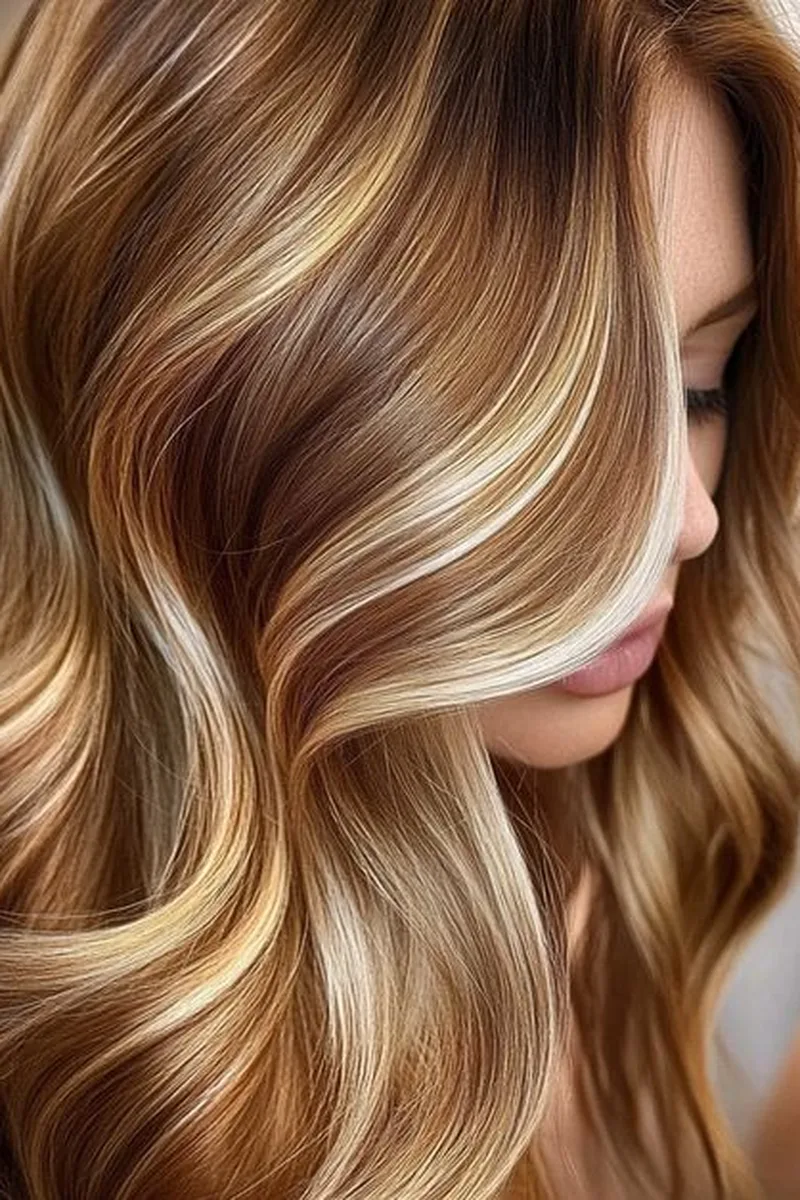
Honey-Gold Ribbons on Dark Waves sounds specific, and that is exactly the point — the detail is what makes it memorable. In real life it is softer than it sounds on paper, which is why it suits so many people.
The formula:
- Start with the base — the cut, colour or shape that Honey-Gold Ribbons on Dark Waves is built on.
- Add the detail that defines it, kept lighter and more visible where it catches the light.
- Finish softly, so the edges blend instead of stopping in a hard line.
Maintenance tip: Ask for a softer version first; you can always go bolder next time, but you cannot un-bold a first attempt in one sitting.
2. Underlayer Caramel Balayage Waves
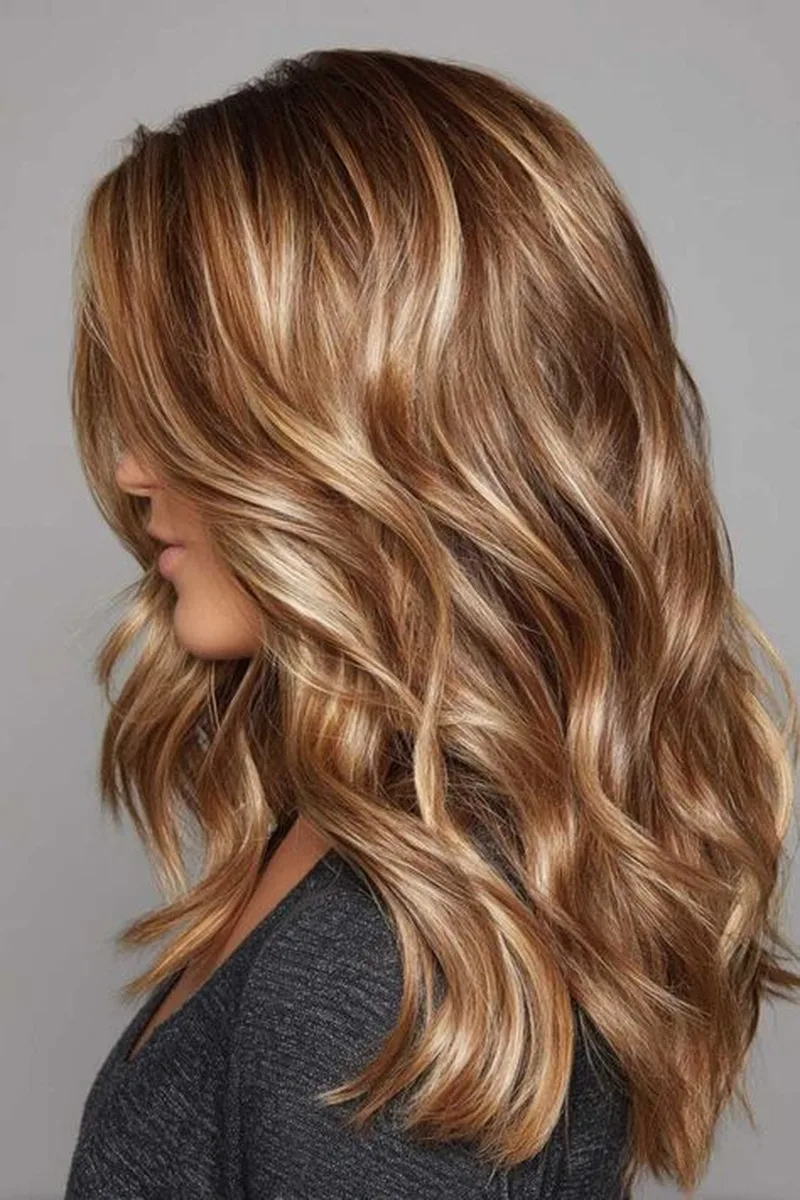
Start with Underlayer Caramel Balayage Waves if you want a change that people notice without being able to name it. It is also surprisingly forgiving — a little imperfection in the finish actually makes it look more natural.
Wear it with the rest of your look kept calm — simple clothes, clean skin, one piece of jewellery — and Underlayer Caramel Balayage Waves becomes the focal point without competing for attention.
Styling idea: A little regular upkeep beats a big rescue appointment: small, frequent touch-ups keep this looking fresh far longer than waiting until it falls apart.
3. Bronde Ribbon Balayage Waves
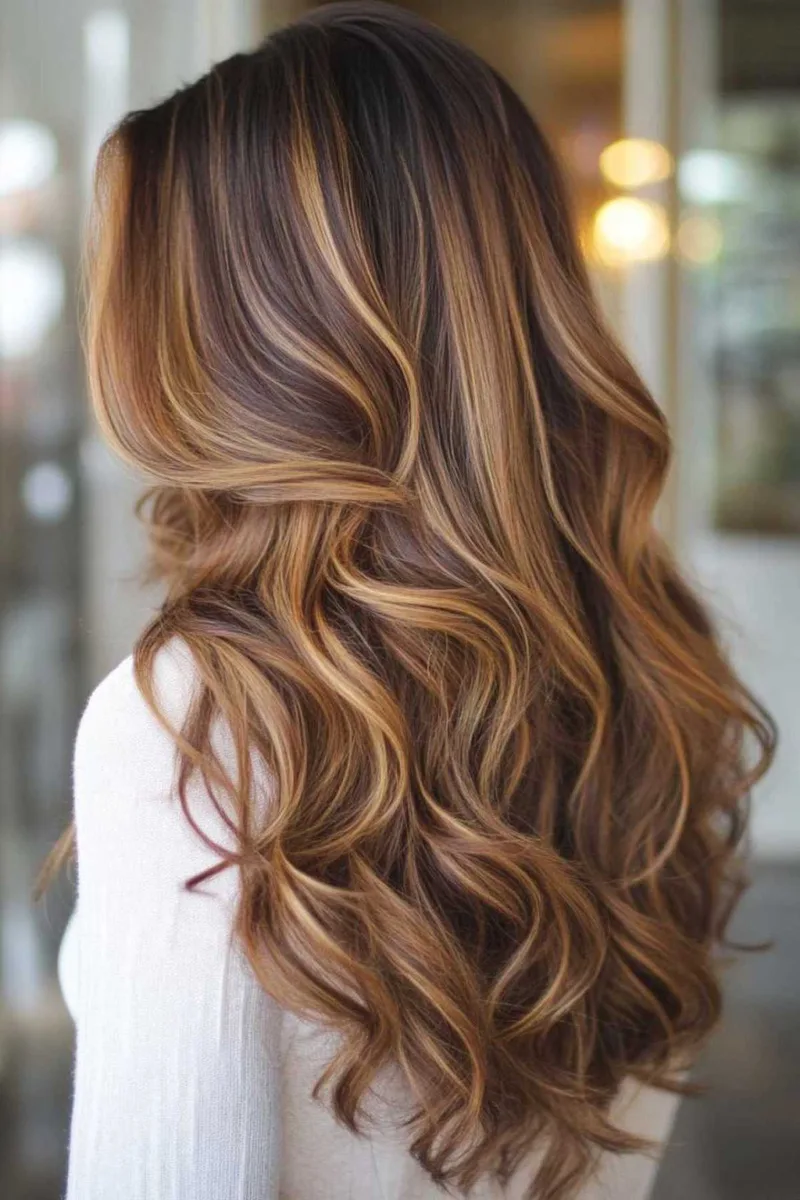
If you have ever scrolled past Bronde Ribbon Balayage Waves and thought, that is lovely but not for me, look again. Think of it as a low-drama update: noticeable, flattering, and easy to live with for weeks.
How to get it:
- Show a photo of Bronde Ribbon Balayage Waves in the light you live in — daylight, not just salon light.
- Talk through the base first, then the detail, then the finish, in that order.
- Agree on the grow-out or wear plan before anything is cut, coloured or painted.
Maintenance tip: Bring a photo of your own hair or nails on a good day too — it tells your stylist more than a celebrity picture ever will.
4. Soft Honey Pinstripes on Brunette
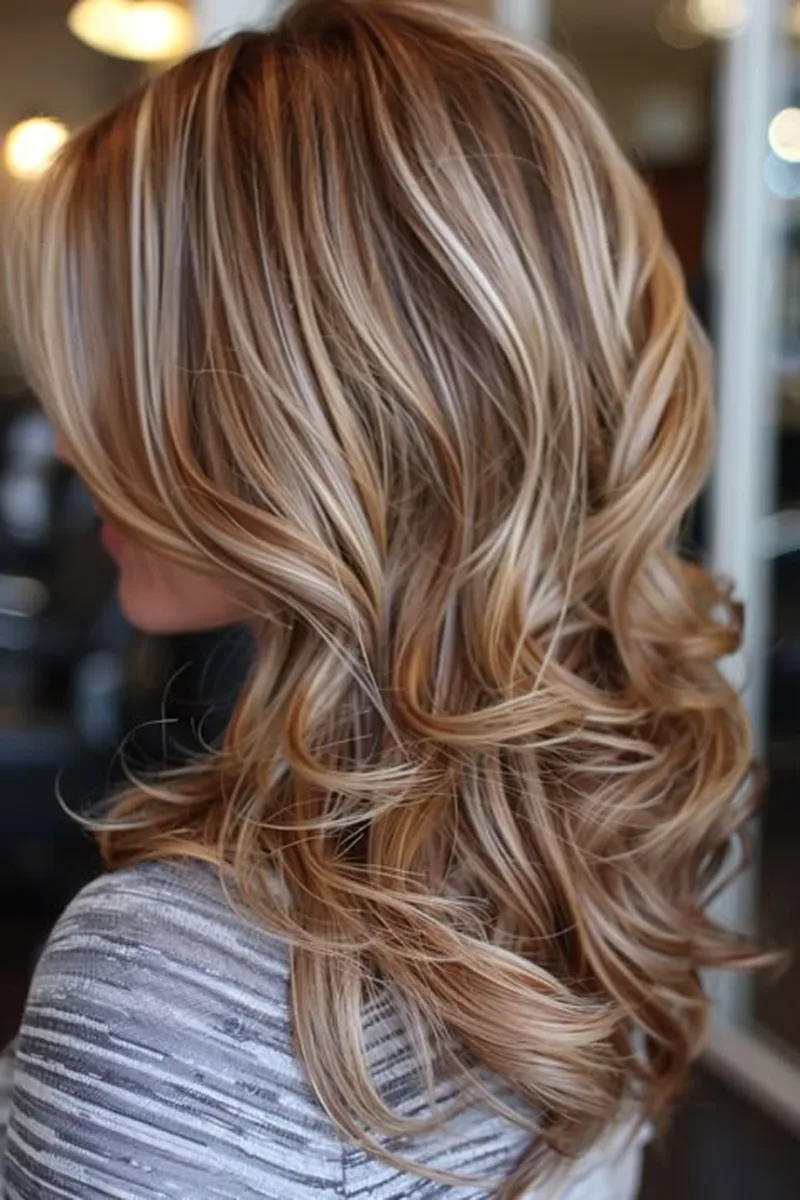
If you have ever scrolled past Soft Honey Pinstripes on Brunette and thought, that is lovely but not for me, look again. In real life it is softer than it sounds on paper, which is why it suits so many people.
Why it works:
- It adds dimension without adding fuss, so it suits busy weeks as well as special occasions.
- It flatters more than one face shape, texture or skin tone because the effect is blended, not blocky.
- It grows out gracefully, which is the real test of any good idea.
Accessory idea: Keep accessories minimal and let the honey golden blonde and caramel balayage lead — a simple earring, a clean neckline or a bare nail bed nearby keeps the focus where it belongs.
5. Caramel Balayage Ribbons on Long Waves
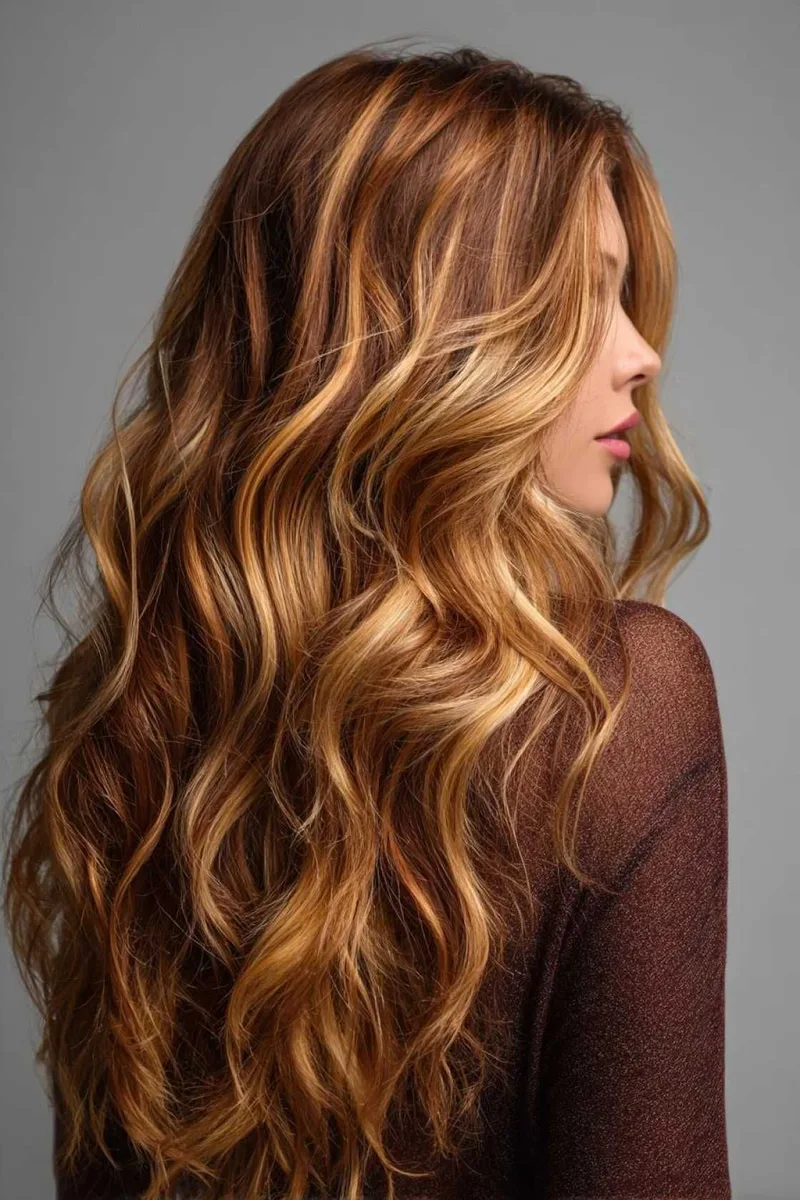
If you have ever scrolled past Caramel Balayage Ribbons on Long Waves and thought, that is lovely but not for me, look again. It is also surprisingly forgiving — a little imperfection in the finish actually makes it look more natural.
Colour note: The most flattering version of Caramel Balayage Ribbons on Long Waves is usually one shade softer than the inspiration photo — salon light is kinder than bathroom light, and softer wears longer.
Maintenance tip: If you are torn between two versions, choose the one you can maintain with the products and time you actually have, not the ones you wish you had.
Wear it when you want to look put-together without looking overdone — that is exactly the kind of day Caramel Balayage Ribbons on Long Waves was made for.
6. Honey Face-Framing Balayage
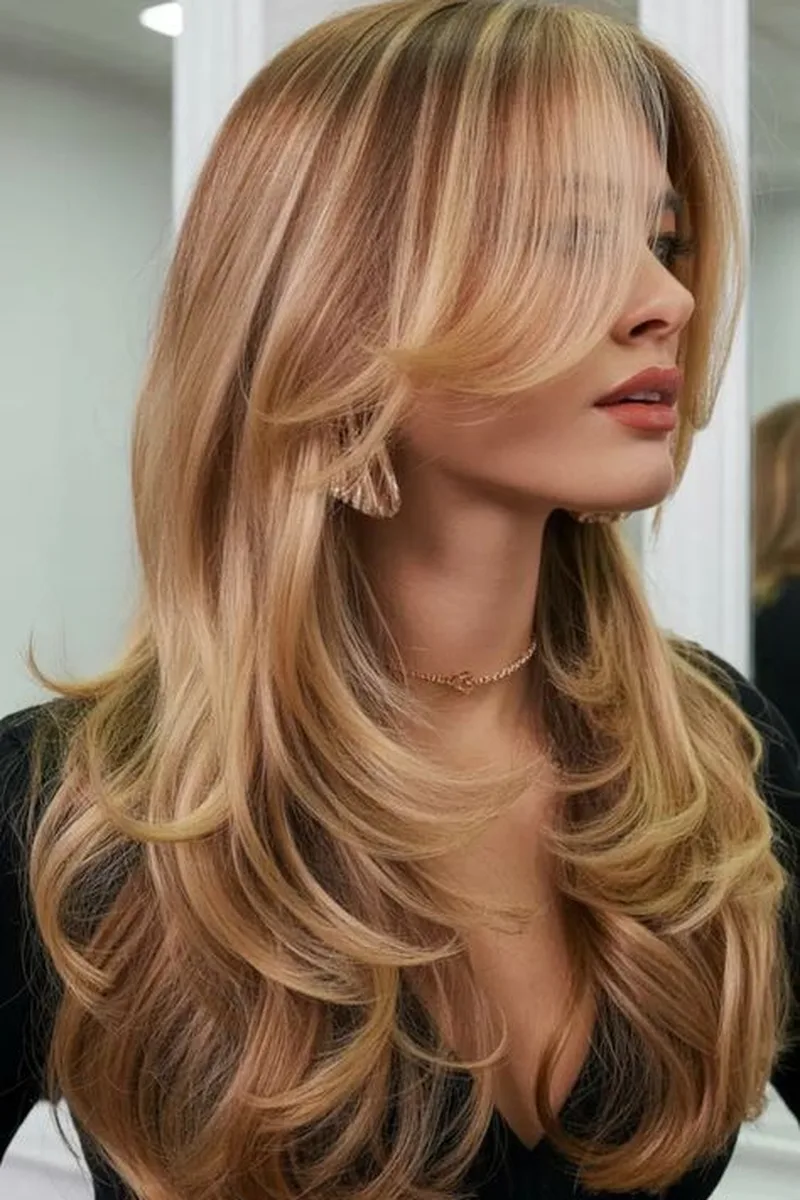
Honey Face-Framing Balayage sounds specific, and that is exactly the point — the detail is what makes it memorable. Think of it as a low-drama update: noticeable, flattering, and easy to live with for weeks.
Try this:
- Wear Honey Face-Framing Balayage for a full week before judging it — most good ideas settle and soften after day one.
- Photograph it in daylight on day one and day seven, so you can see how it really wears.
- Note what you loved and what annoyed you, and take that list to your next appointment.
Styling idea: Small notes like that are how a good stylist turns a good idea into your idea.
7. Sleek Caramel Melt on Dark Brown
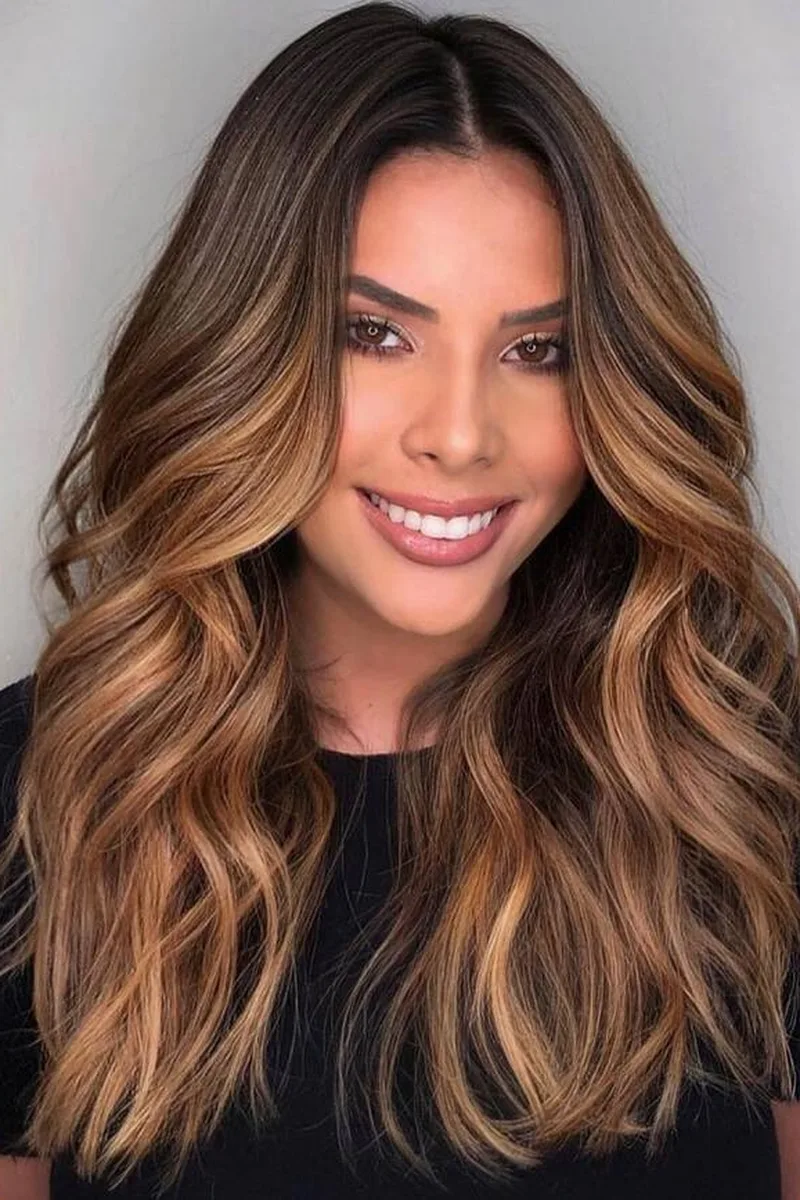
Sleek Caramel Melt on Dark Brown sounds specific, and that is exactly the point — the detail is what makes it memorable. In real life it is softer than it sounds on paper, which is why it suits so many people.
Why it works: Sleek Caramel Melt on Dark Brown balances contrast and softness, so it flatters in daylight and in photos, and it does not rely on perfect styling to read as finished.
Colour note: Keep the tones in one family — warm with warm, cool with cool — so the look reads as deliberate rather than accidental.
8. Caramel Contour Highlights on Dark Brunette
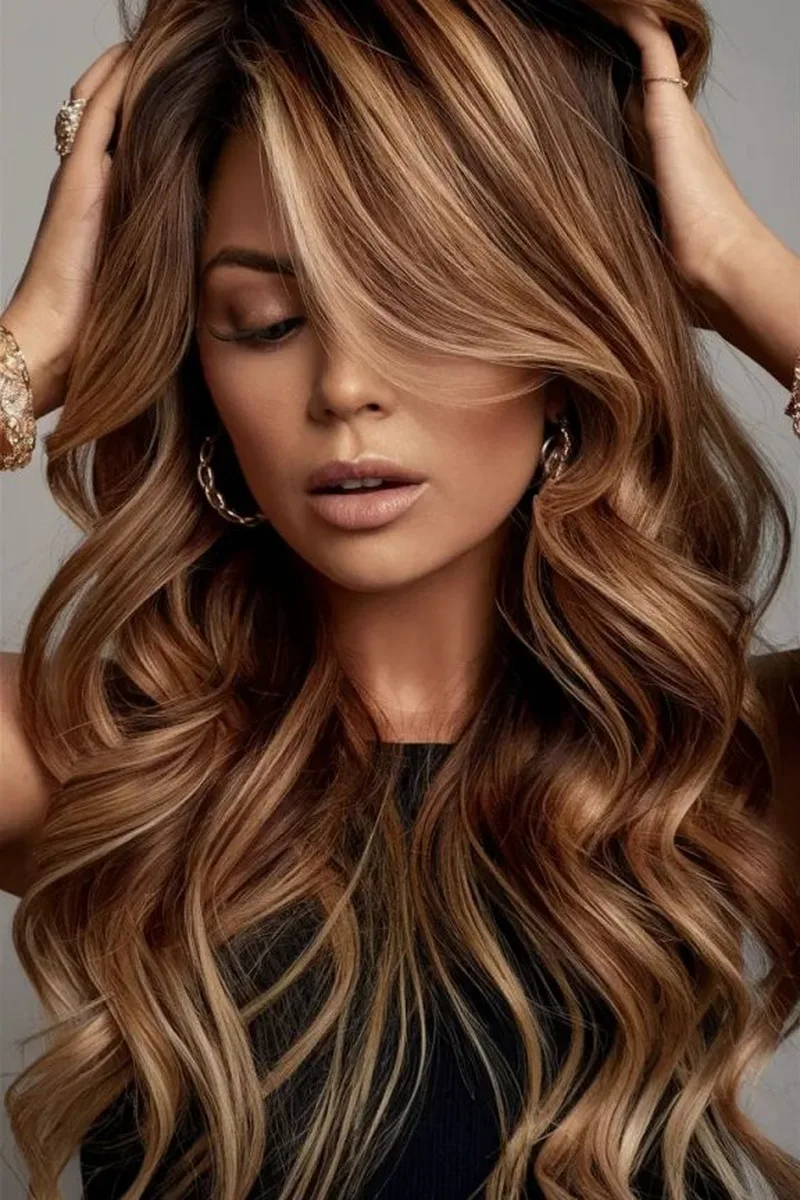
Caramel Contour Highlights on Dark Brunette sounds specific, and that is exactly the point — the detail is what makes it memorable. It is also surprisingly forgiving — a little imperfection in the finish actually makes it look more natural.
The formula:
- Start with the base — the cut, colour or shape that Caramel Contour Highlights on Dark Brunette is built on.
- Add the detail that defines it, kept lighter and more visible where it catches the light.
- Finish softly, so the edges blend instead of stopping in a hard line.
Maintenance tip: Ask for a softer version first; you can always go bolder next time, but you cannot un-bold a first attempt in one sitting.
9. Honey Money Pieces on Dark Brown
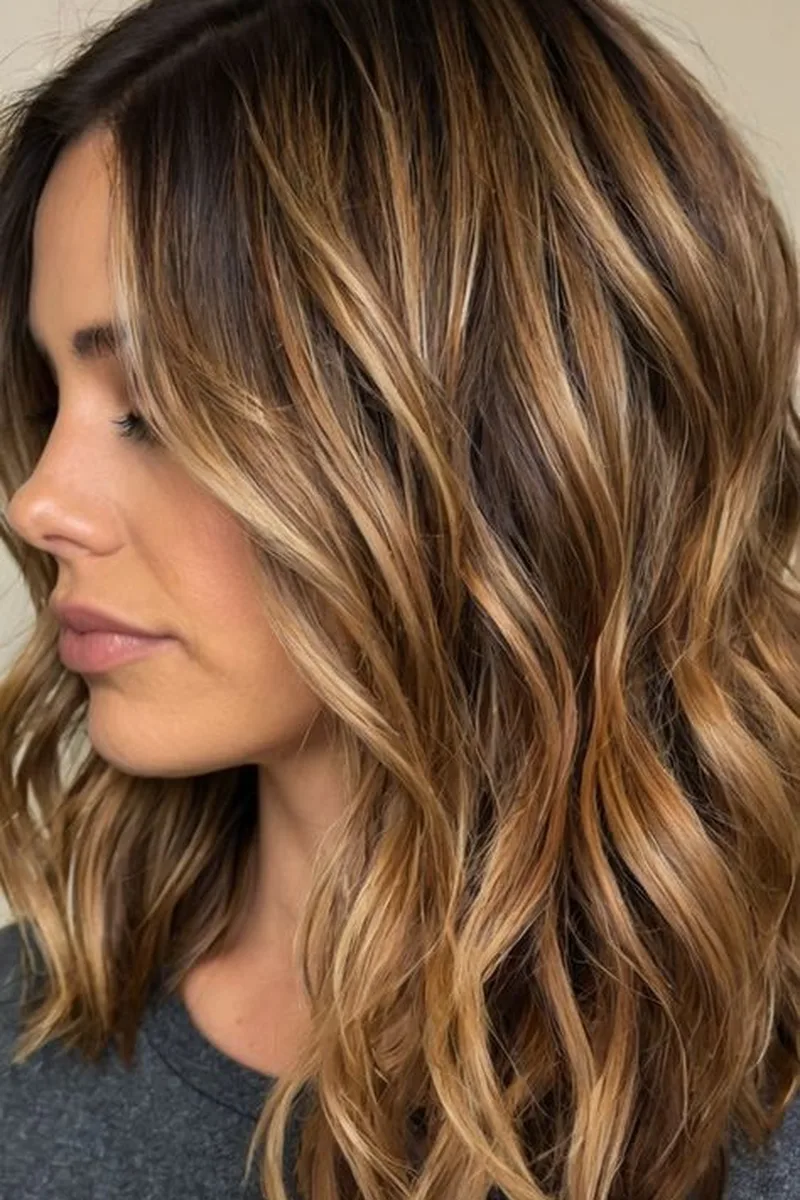
Start with Honey Money Pieces on Dark Brown if you want a change that people notice without being able to name it. Think of it as a low-drama update: noticeable, flattering, and easy to live with for weeks.
Wear it with the rest of your look kept calm — simple clothes, clean skin, one piece of jewellery — and Honey Money Pieces on Dark Brown becomes the focal point without competing for attention.
Styling idea: A little regular upkeep beats a big rescue appointment: small, frequent touch-ups keep this looking fresh far longer than waiting until it falls apart.
10. Rooty Caramel Balayage with Loose Texture
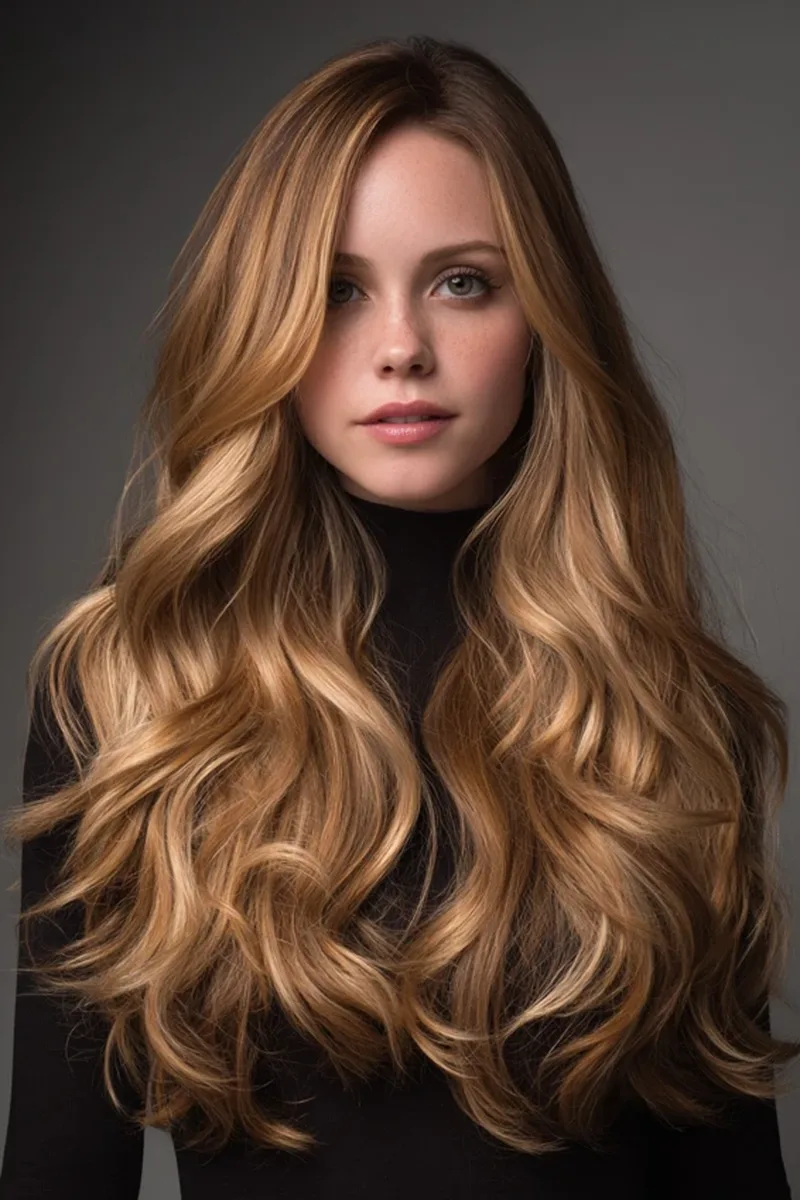
Rooty Caramel Balayage with Loose Texture sounds specific, and that is exactly the point — the detail is what makes it memorable. In real life it is softer than it sounds on paper, which is why it suits so many people.
How to get it:
- Show a photo of Rooty Caramel Balayage with Loose Texture in the light you live in — daylight, not just salon light.
- Talk through the base first, then the detail, then the finish, in that order.
- Agree on the grow-out or wear plan before anything is cut, coloured or painted.
Maintenance tip: Bring a photo of your own hair or nails on a good day too — it tells your stylist more than a celebrity picture ever will.
Wear it when you want to look put-together without looking overdone — that is exactly the kind of day Rooty Caramel Balayage with Loose Texture was made for.
11. Golden-Glow Balayage Ends
This one is all about Golden-Glow Balayage Ends — and it earns its place because it looks expensive without trying too hard. It is also surprisingly forgiving — a little imperfection in the finish actually makes it look more natural.
Why it works:
- It adds dimension without adding fuss, so it suits busy weeks as well as special occasions.
- It flatters more than one face shape, texture or skin tone because the effect is blended, not blocky.
- It grows out gracefully, which is the real test of any good idea.
Accessory idea: Keep accessories minimal and let the honey golden blonde and caramel balayage lead — a simple earring, a clean neckline or a bare nail bed nearby keeps the focus where it belongs.
12. Deep Brunette with Caramel Ribbons
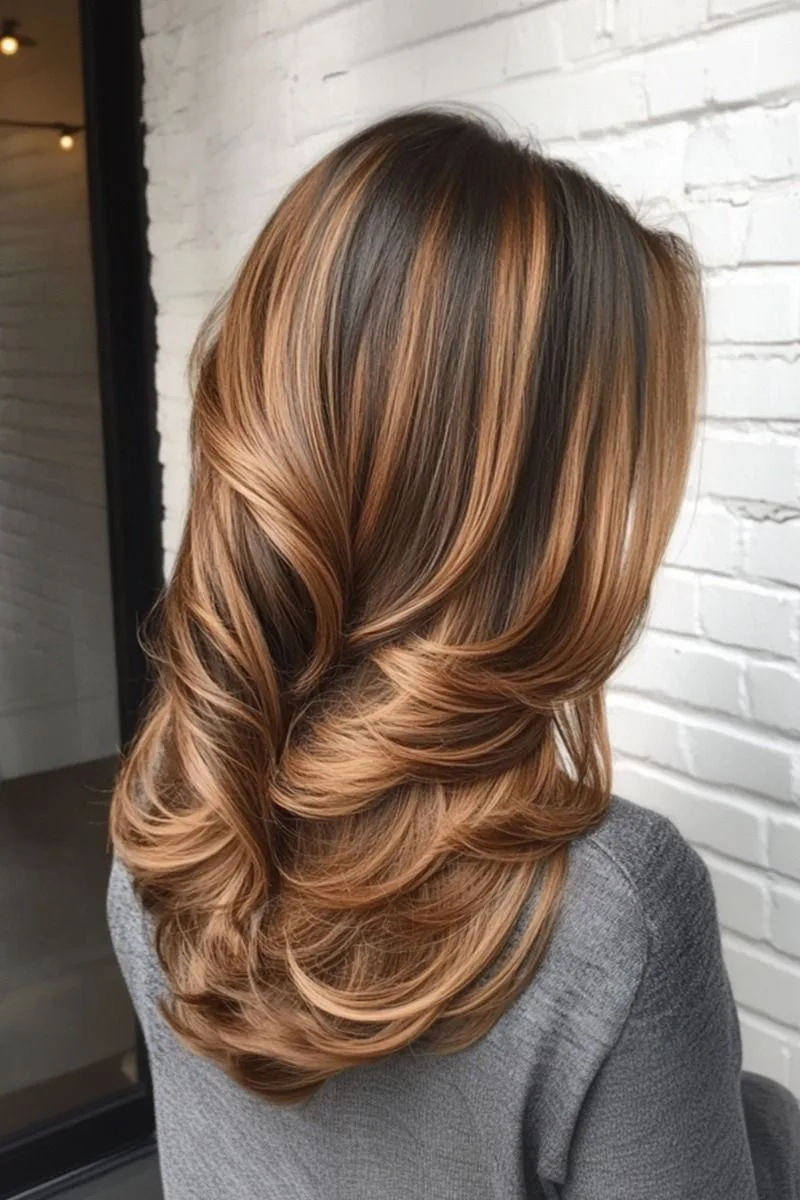
There is a quiet confidence to Deep Brunette with Caramel Ribbons that photographs beautifully and wears even better. Think of it as a low-drama update: noticeable, flattering, and easy to live with for weeks.
Colour note: The most flattering version of Deep Brunette with Caramel Ribbons is usually one shade softer than the inspiration photo — salon light is kinder than bathroom light, and softer wears longer.
Maintenance tip: If you are torn between two versions, choose the one you can maintain with the products and time you actually have, not the ones you wish you had.
13. Side-Swept Honey Face Frame
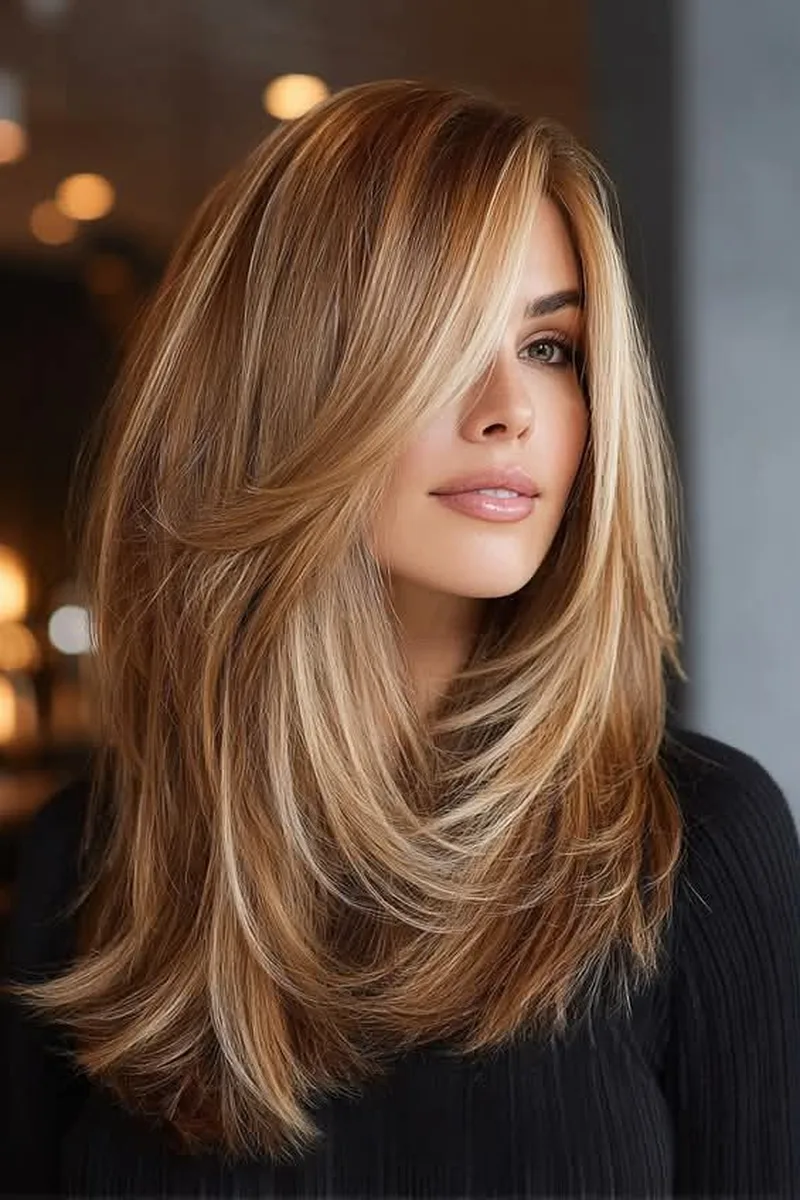
There is a quiet confidence to Side-Swept Honey Face Frame that photographs beautifully and wears even better. In real life it is softer than it sounds on paper, which is why it suits so many people.
Try this:
- Wear Side-Swept Honey Face Frame for a full week before judging it — most good ideas settle and soften after day one.
- Photograph it in daylight on day one and day seven, so you can see how it really wears.
- Note what you loved and what annoyed you, and take that list to your next appointment.
Styling idea: Small notes like that are how a good stylist turns a good idea into your idea.
14. Curtain Bangs with Warm Contour Highlights
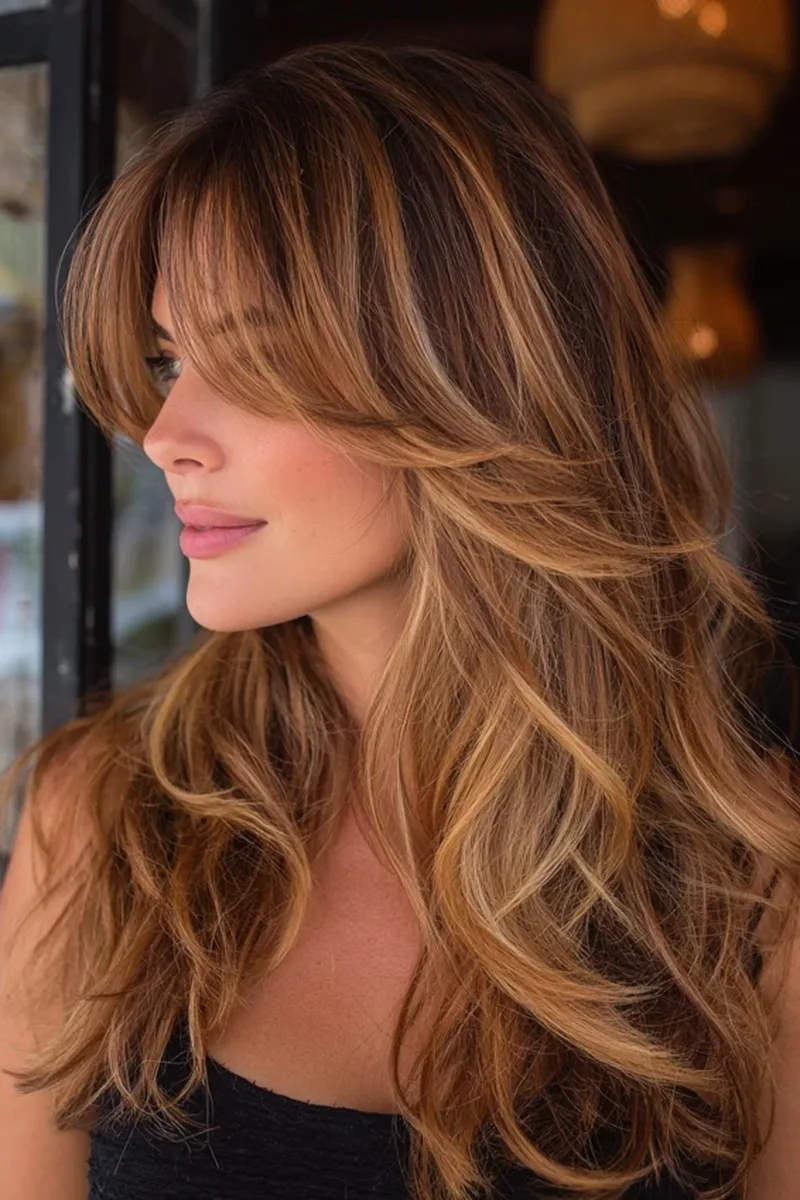
Here is the thing about Curtain Bangs with Warm Contour Highlights: it works because it lets the honey golden blonde and caramel balayage do the talking. It is also surprisingly forgiving — a little imperfection in the finish actually makes it look more natural.
Why it works: Curtain Bangs with Warm Contour Highlights balances contrast and softness, so it flatters in daylight and in photos, and it does not rely on perfect styling to read as finished.
Colour note: Keep the tones in one family — warm with warm, cool with cool — so the look reads as deliberate rather than accidental.
At a glance: a few favourites from this list
| Idea | Best for | Upkeep |
|---|---|---|
| Deep Brunette with Caramel Ribbons | Special occasions | Low |
| Side-Swept Honey Face Frame | Everyday polish | Medium |
| Curtain Bangs with Warm Contour Highlights | Special occasions | Medium |
| Soft Caramel Swirl Balayage | Everyday polish | Low |
15. Soft Caramel Swirl Balayage
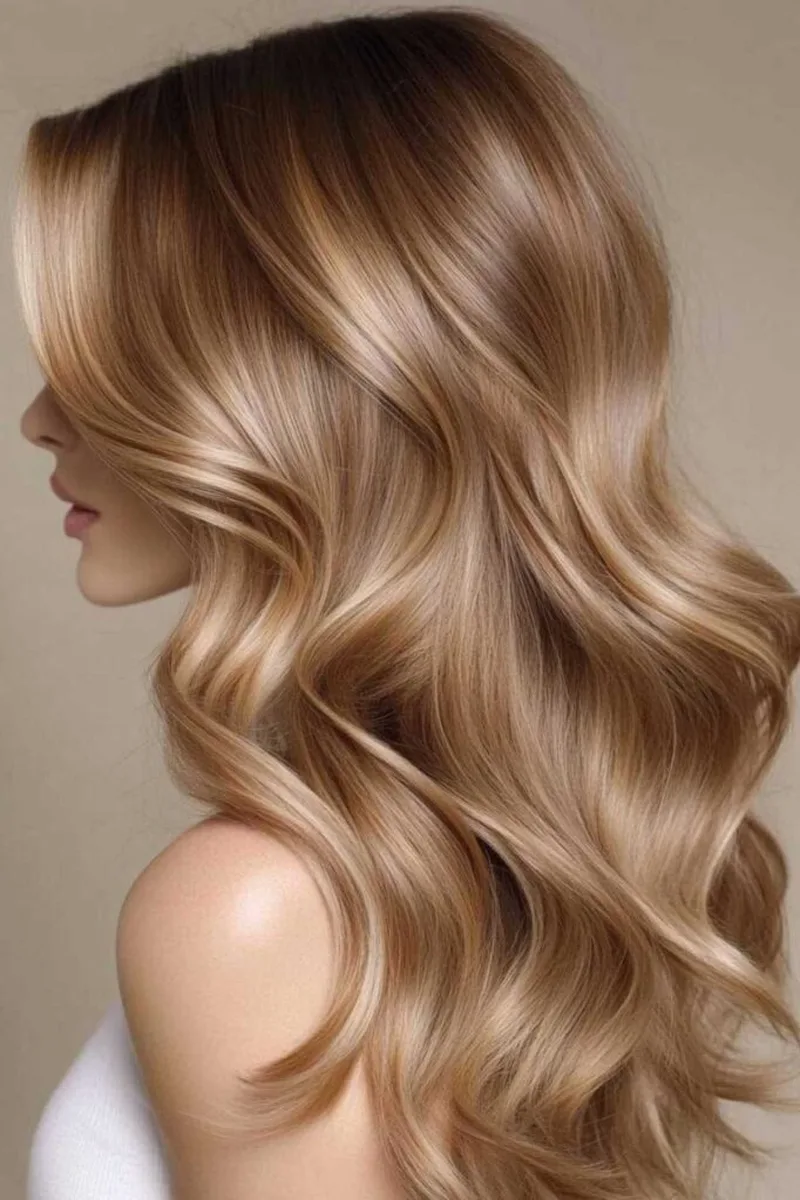
This one is all about Soft Caramel Swirl Balayage — and it earns its place because it looks expensive without trying too hard. Think of it as a low-drama update: noticeable, flattering, and easy to live with for weeks.
The formula:
- Start with the base — the cut, colour or shape that Soft Caramel Swirl Balayage is built on.
- Add the detail that defines it, kept lighter and more visible where it catches the light.
- Finish softly, so the edges blend instead of stopping in a hard line.
Maintenance tip: Ask for a softer version first; you can always go bolder next time, but you cannot un-bold a first attempt in one sitting.
Wear it when you want to look put-together without looking overdone — that is exactly the kind of day Soft Caramel Swirl Balayage was made for.
16. Golden Caramel Waves with Brighter Tips
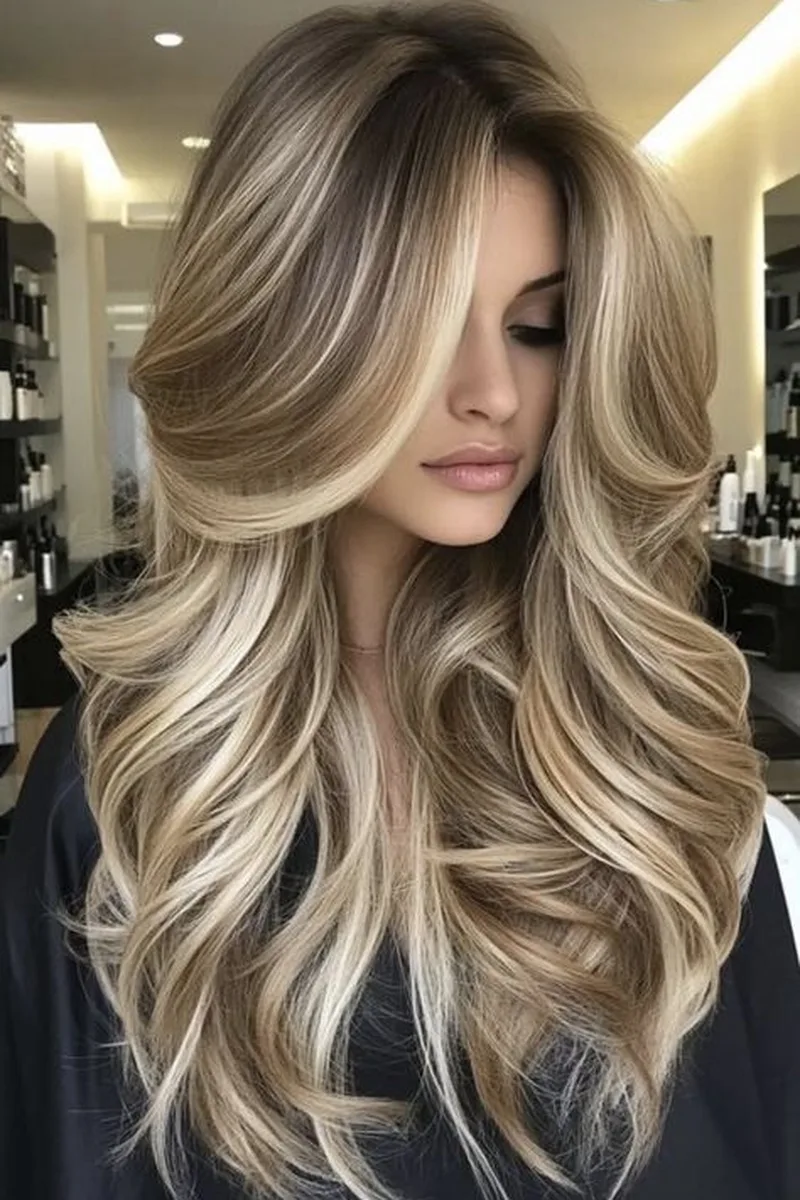
If you have ever scrolled past Golden Caramel Waves with Brighter Tips and thought, that is lovely but not for me, look again. In real life it is softer than it sounds on paper, which is why it suits so many people.
Wear it with the rest of your look kept calm — simple clothes, clean skin, one piece of jewellery — and Golden Caramel Waves with Brighter Tips becomes the focal point without competing for attention.
Styling idea: A little regular upkeep beats a big rescue appointment: small, frequent touch-ups keep this looking fresh far longer than waiting until it falls apart.
17. Glossy Dark Brunette with Fine Warm Lights
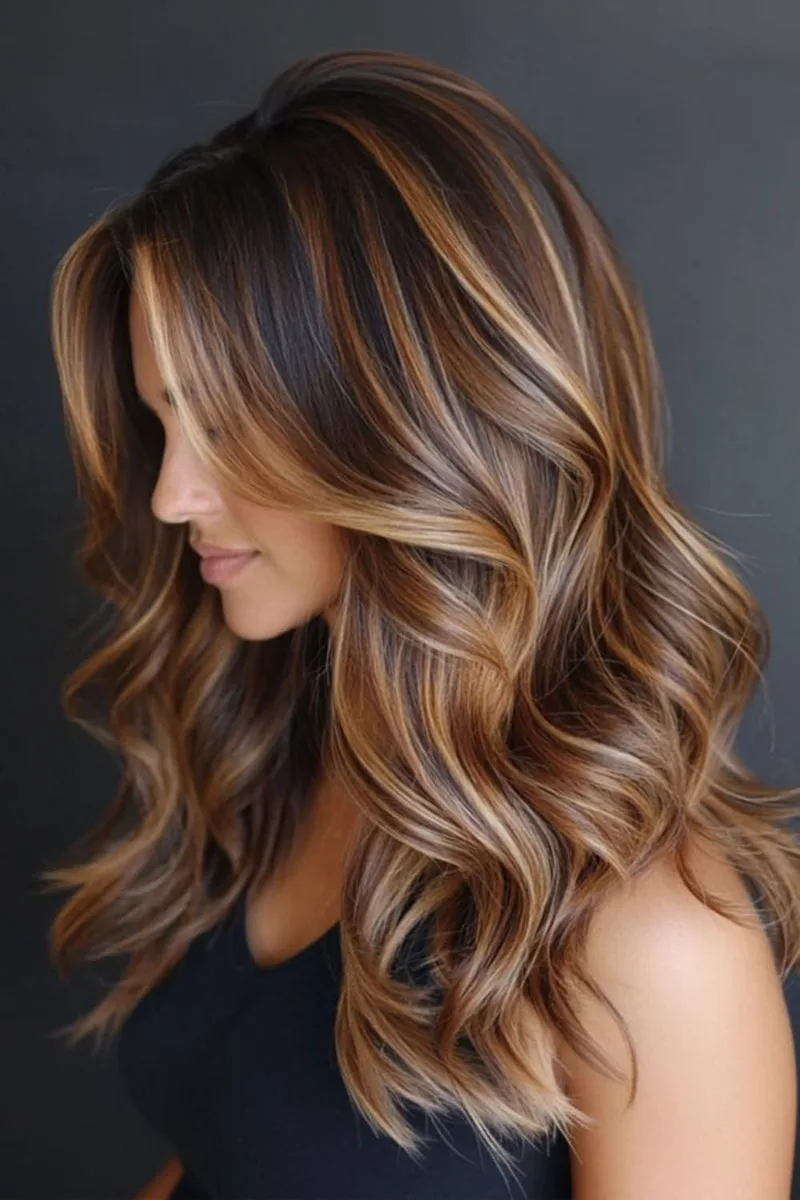
Start with Glossy Dark Brunette with Fine Warm Lights if you want a change that people notice without being able to name it. It is also surprisingly forgiving — a little imperfection in the finish actually makes it look more natural.
How to get it:
- Show a photo of Glossy Dark Brunette with Fine Warm Lights in the light you live in — daylight, not just salon light.
- Talk through the base first, then the detail, then the finish, in that order.
- Agree on the grow-out or wear plan before anything is cut, coloured or painted.
Maintenance tip: Bring a photo of your own hair or nails on a good day too — it tells your stylist more than a celebrity picture ever will.
18. Deep Dark Brown Base with Toasty Highlights
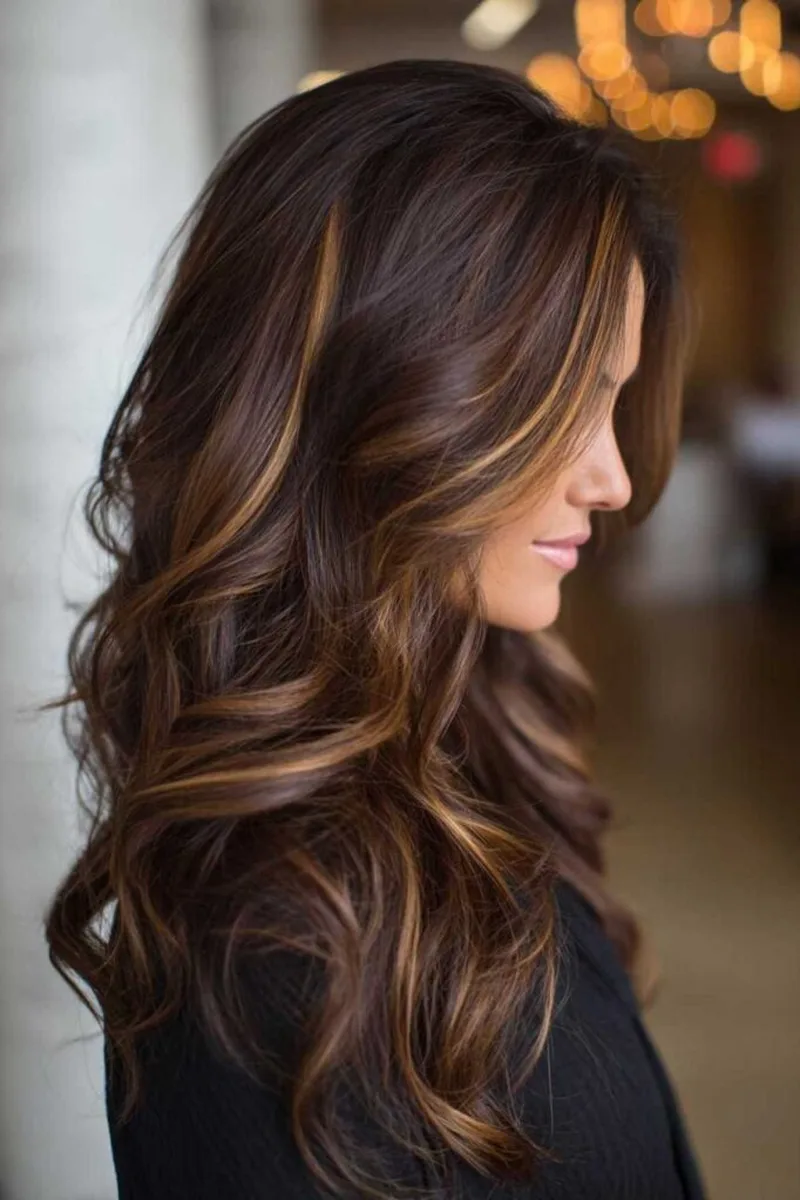
If you have ever scrolled past Deep Dark Brown Base with Toasty Highlights and thought, that is lovely but not for me, look again. Think of it as a low-drama update: noticeable, flattering, and easy to live with for weeks.
Why it works:
- It adds dimension without adding fuss, so it suits busy weeks as well as special occasions.
- It flatters more than one face shape, texture or skin tone because the effect is blended, not blocky.
- It grows out gracefully, which is the real test of any good idea.
Accessory idea: Keep accessories minimal and let the honey golden blonde and caramel balayage lead — a simple earring, a clean neckline or a bare nail bed nearby keeps the focus where it belongs.
19. Honey Money Piece on Soft Waves
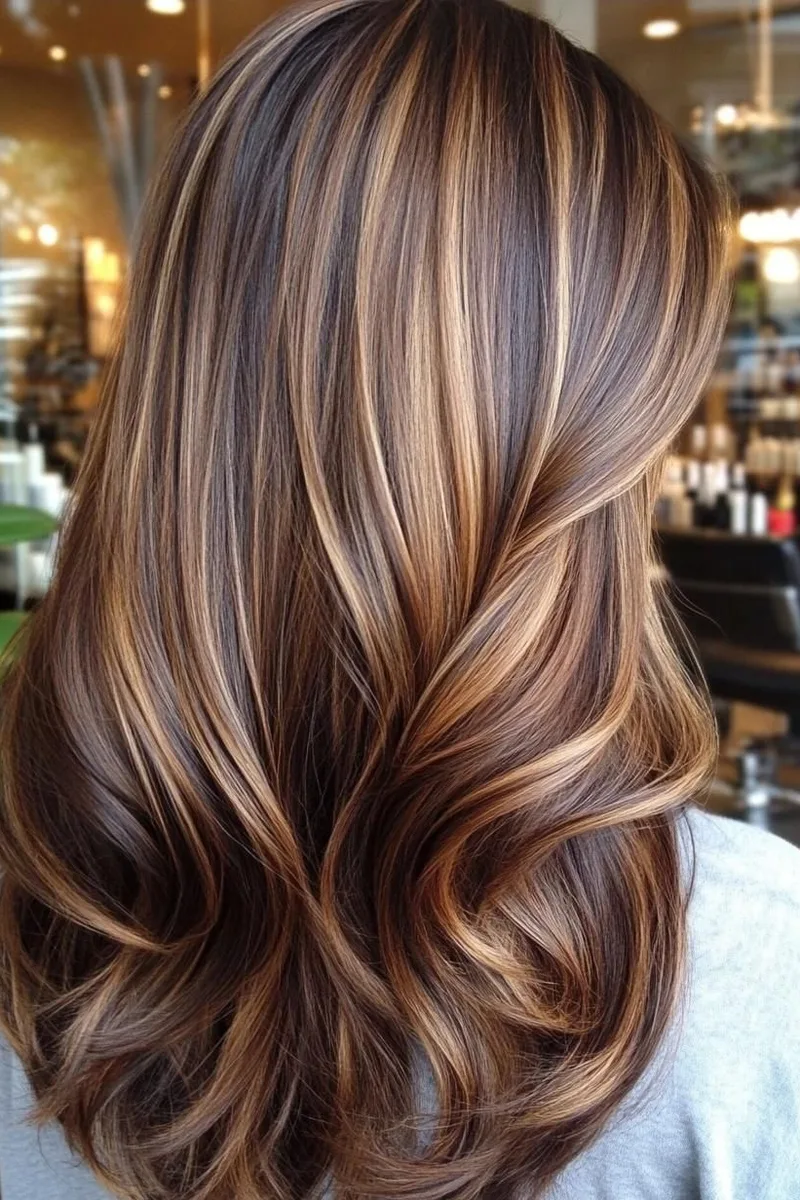
Here is the thing about Honey Money Piece on Soft Waves: it works because it lets the honey golden blonde and caramel balayage do the talking. In real life it is softer than it sounds on paper, which is why it suits so many people.
Colour note: The most flattering version of Honey Money Piece on Soft Waves is usually one shade softer than the inspiration photo — salon light is kinder than bathroom light, and softer wears longer.
Maintenance tip: If you are torn between two versions, choose the one you can maintain with the products and time you actually have, not the ones you wish you had.
20. Feathered Caramel Balayage Blend
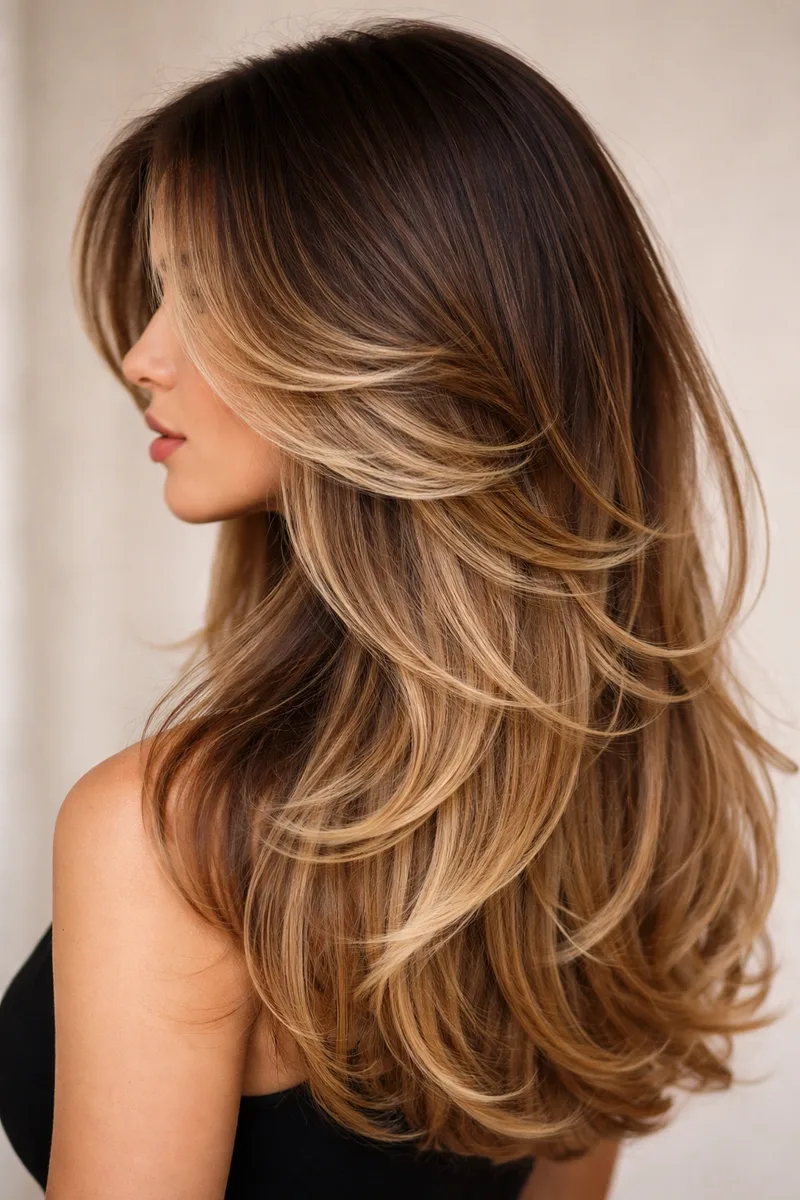
There is a quiet confidence to Feathered Caramel Balayage Blend that photographs beautifully and wears even better. It is also surprisingly forgiving — a little imperfection in the finish actually makes it look more natural.
Try this:
- Wear Feathered Caramel Balayage Blend for a full week before judging it — most good ideas settle and soften after day one.
- Photograph it in daylight on day one and day seven, so you can see how it really wears.
- Note what you loved and what annoyed you, and take that list to your next appointment.
Styling idea: Small notes like that are how a good stylist turns a good idea into your idea.
Wear it when you want to look put-together without looking overdone — that is exactly the kind of day Feathered Caramel Balayage Blend was made for.
21. Long Cascading Layers with Caramel Sweep
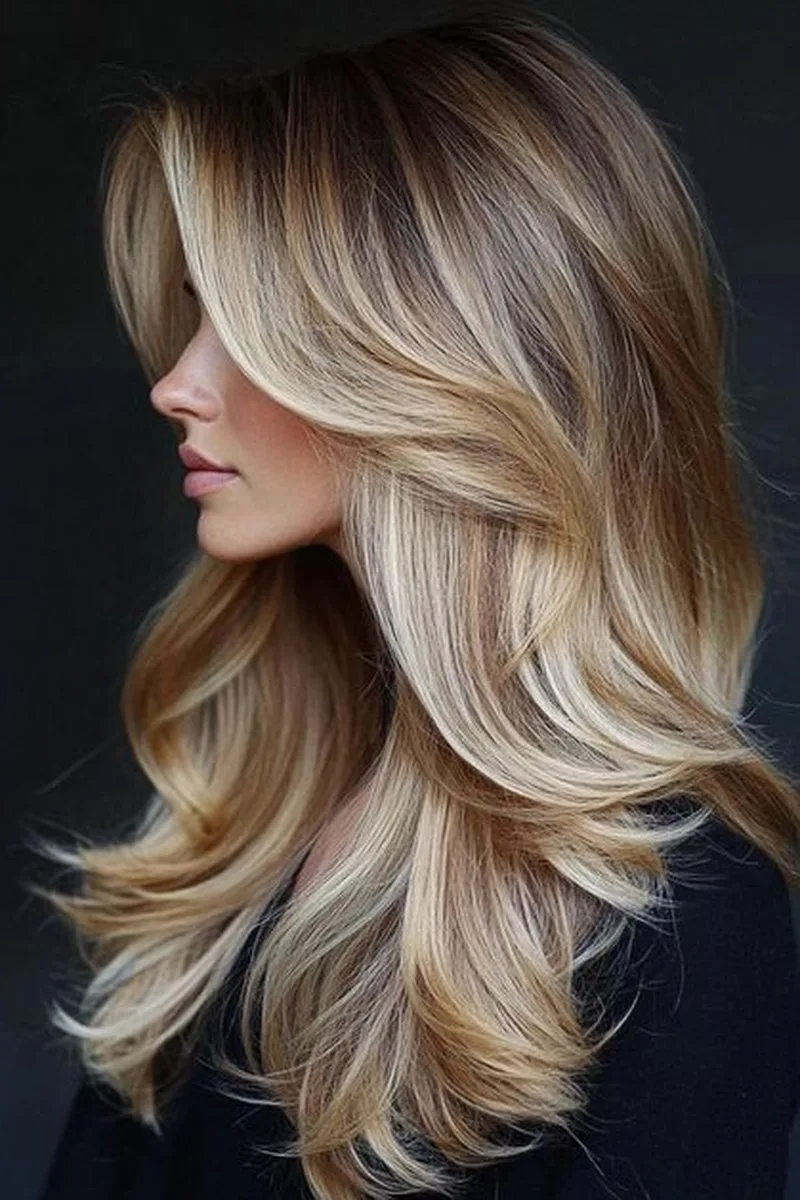
If you have ever scrolled past Long Cascading Layers with Caramel Sweep and thought, that is lovely but not for me, look again. Think of it as a low-drama update: noticeable, flattering, and easy to live with for weeks.
Why it works: Long Cascading Layers with Caramel Sweep balances contrast and softness, so it flatters in daylight and in photos, and it does not rely on perfect styling to read as finished.
Colour note: Keep the tones in one family — warm with warm, cool with cool — so the look reads as deliberate rather than accidental.
22. Honey Caramel Ribbon Waves
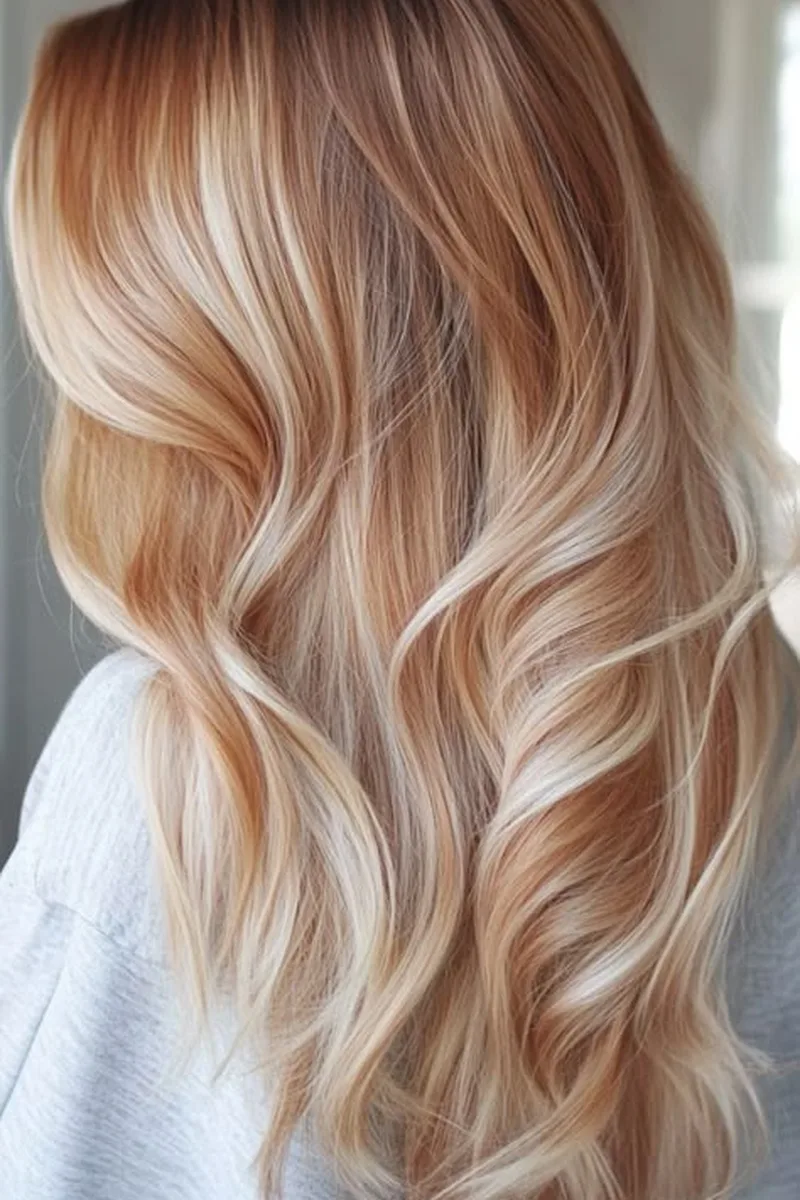
This one is all about Honey Caramel Ribbon Waves — and it earns its place because it looks expensive without trying too hard. In real life it is softer than it sounds on paper, which is why it suits so many people.
The formula:
- Start with the base — the cut, colour or shape that Honey Caramel Ribbon Waves is built on.
- Add the detail that defines it, kept lighter and more visible where it catches the light.
- Finish softly, so the edges blend instead of stopping in a hard line.
Maintenance tip: Ask for a softer version first; you can always go bolder next time, but you cannot un-bold a first attempt in one sitting.
23. Soft Honey-Gold Accents for Shaggy Waves
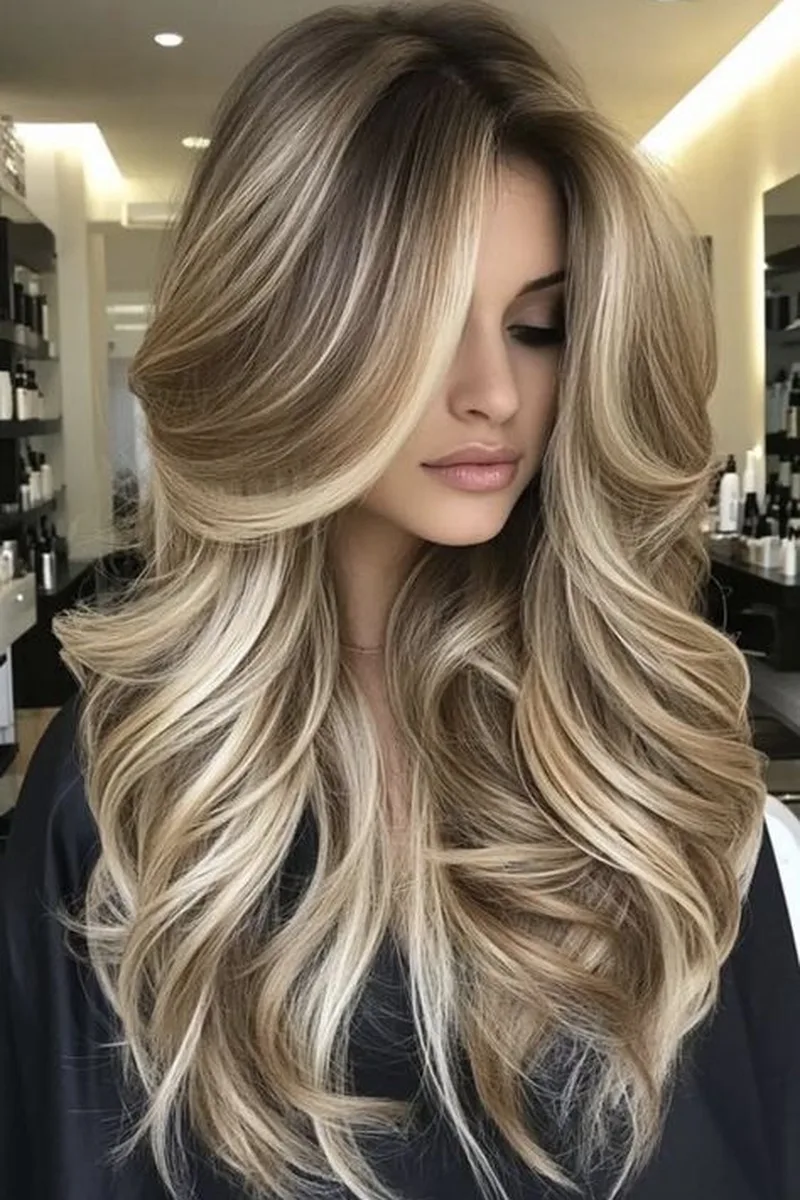
Soft Honey-Gold Accents for Shaggy Waves sounds specific, and that is exactly the point — the detail is what makes it memorable. It is also surprisingly forgiving — a little imperfection in the finish actually makes it look more natural.
Wear it with the rest of your look kept calm — simple clothes, clean skin, one piece of jewellery — and Soft Honey-Gold Accents for Shaggy Waves becomes the focal point without competing for attention.
Styling idea: A little regular upkeep beats a big rescue appointment: small, frequent touch-ups keep this looking fresh far longer than waiting until it falls apart.
24. Warm Caramel Balayage Ribbons on Glossy Waves
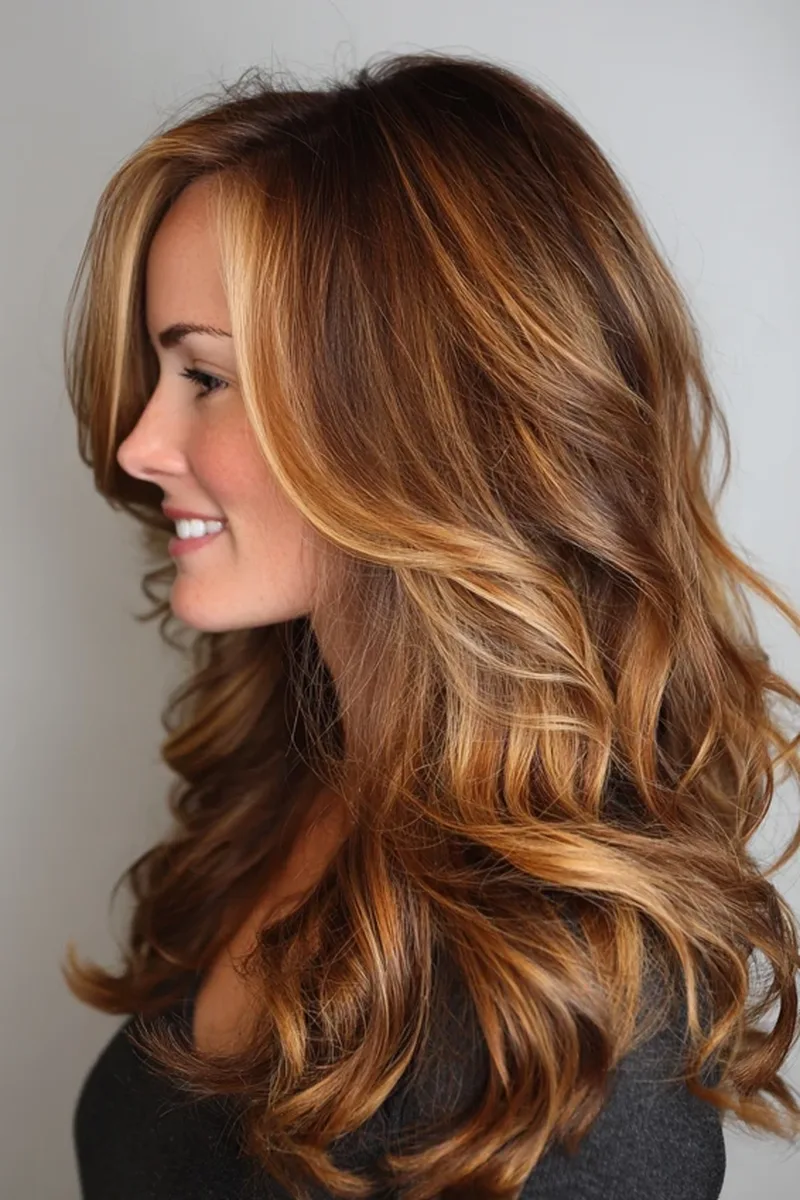
Warm Caramel Balayage Ribbons on Glossy Waves sounds specific, and that is exactly the point — the detail is what makes it memorable. Think of it as a low-drama update: noticeable, flattering, and easy to live with for weeks.
How to get it:
- Show a photo of Warm Caramel Balayage Ribbons on Glossy Waves in the light you live in — daylight, not just salon light.
- Talk through the base first, then the detail, then the finish, in that order.
- Agree on the grow-out or wear plan before anything is cut, coloured or painted.
Maintenance tip: Bring a photo of your own hair or nails on a good day too — it tells your stylist more than a celebrity picture ever will.
25. Warm Caramel Balayage with Lived-In Texture
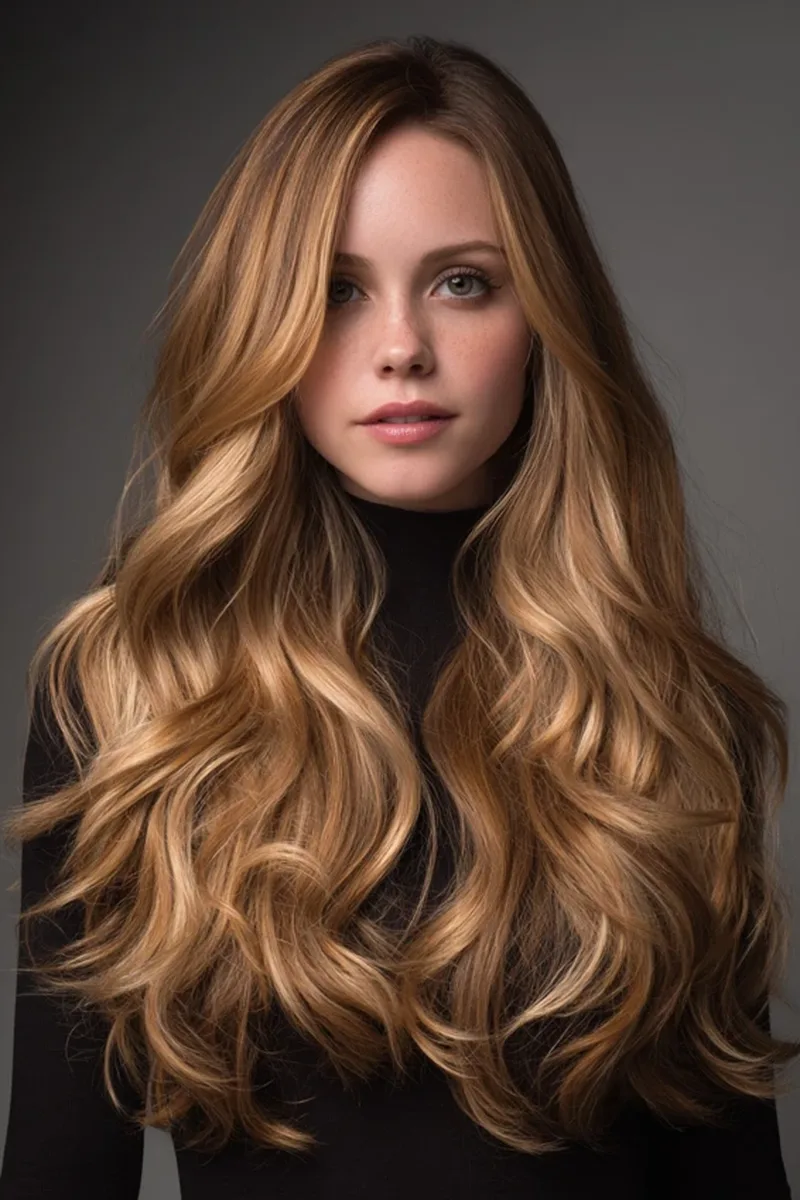
Here is the thing about Warm Caramel Balayage with Lived-In Texture: it works because it lets the honey golden blonde and caramel balayage do the talking. In real life it is softer than it sounds on paper, which is why it suits so many people.
Why it works:
- It adds dimension without adding fuss, so it suits busy weeks as well as special occasions.
- It flatters more than one face shape, texture or skin tone because the effect is blended, not blocky.
- It grows out gracefully, which is the real test of any good idea.
Accessory idea: Keep accessories minimal and let the honey golden blonde and caramel balayage lead — a simple earring, a clean neckline or a bare nail bed nearby keeps the focus where it belongs.
Wear it when you want to look put-together without looking overdone — that is exactly the kind of day Warm Caramel Balayage with Lived-In Texture was made for.
26. Waves with Caramel Highlights on Dark Brunette
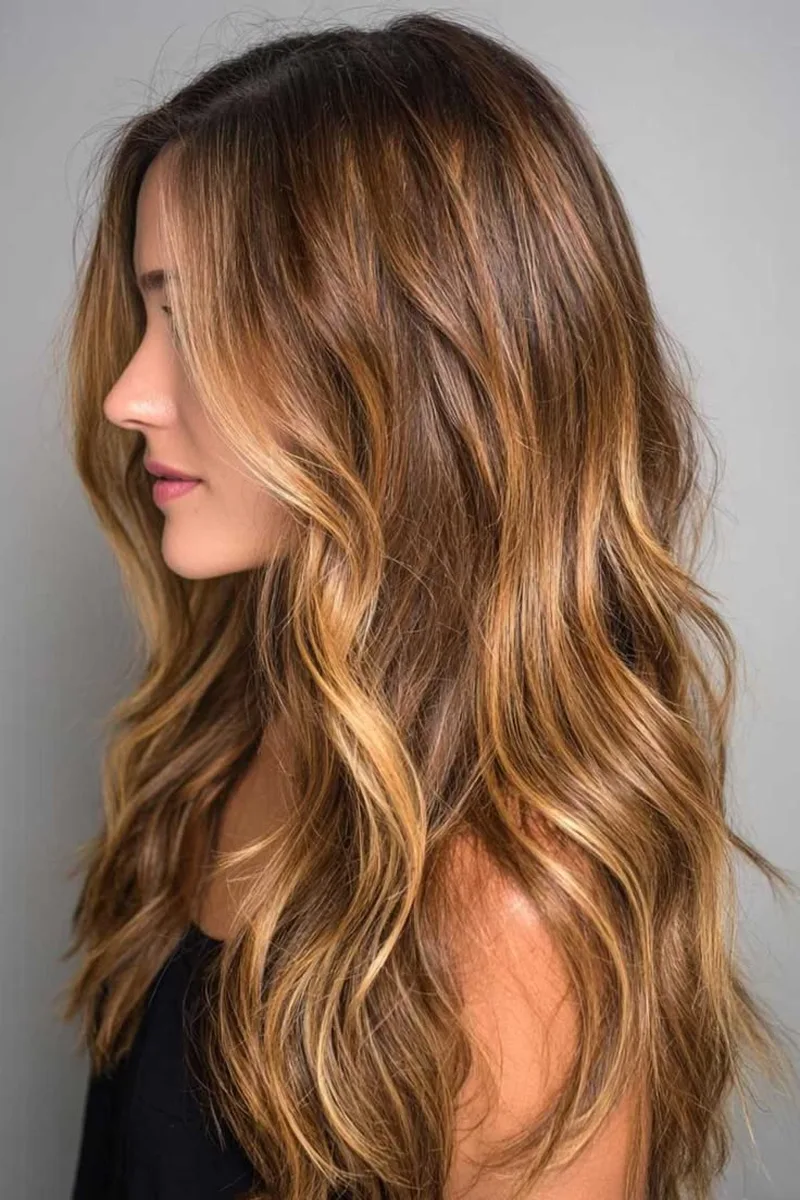
This one is all about Waves with Caramel Highlights on Dark Brunette — and it earns its place because it looks expensive without trying too hard. It is also surprisingly forgiving — a little imperfection in the finish actually makes it look more natural.
Colour note: The most flattering version of Waves with Caramel Highlights on Dark Brunette is usually one shade softer than the inspiration photo — salon light is kinder than bathroom light, and softer wears longer.
Maintenance tip: If you are torn between two versions, choose the one you can maintain with the products and time you actually have, not the ones you wish you had.
27. Glossy Brunette with Caramel Ends
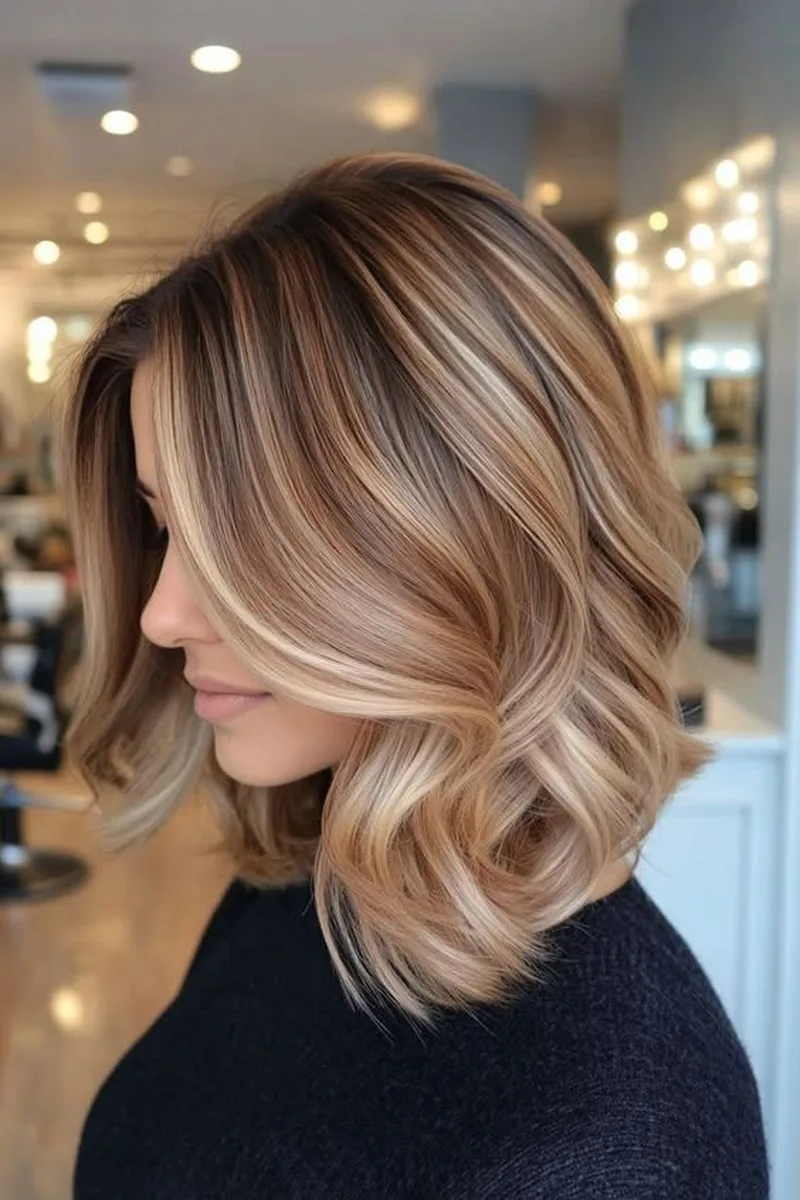
This one is all about Glossy Brunette with Caramel Ends — and it earns its place because it looks expensive without trying too hard. Think of it as a low-drama update: noticeable, flattering, and easy to live with for weeks.
Try this:
- Wear Glossy Brunette with Caramel Ends for a full week before judging it — most good ideas settle and soften after day one.
- Photograph it in daylight on day one and day seven, so you can see how it really wears.
- Note what you loved and what annoyed you, and take that list to your next appointment.
Styling idea: Small notes like that are how a good stylist turns a good idea into your idea.
Quick picks: start here
| If you want | Try | Why it works |
|---|---|---|
| A safe first step | Honey-Gold Ribbons on Dark Waves | Soft, blended and easy to grow out |
| The most noticeable change | Curtain Bangs with Warm Contour Highlights | Clear detail, still wearable |
| Something for a special day | Glossy Brunette with Caramel Ends | Polished finish, photographs well |
If you take one thing from this list, let it be this: the best honey golden blonde and caramel balayage idea is not the boldest one, it is the one you will still love in three weeks. Pick the version that fits your routine, show your stylist a daylight photo, and give it a week to settle before you judge it. That is how a good idea becomes a signature.
