
20 Shaggy Hairstyles for Women Over 50 With Thin Fine Hair
After 50, fine hair has a tendency to sit flat, lose density at the crown, and look tired even on a good day. A shag cut is one of the most reliable fixes for that. When the layers are placed well, the whole style lifts. The crown gets body. The ends get movement. And the face gets a little more definition without any extra effort.
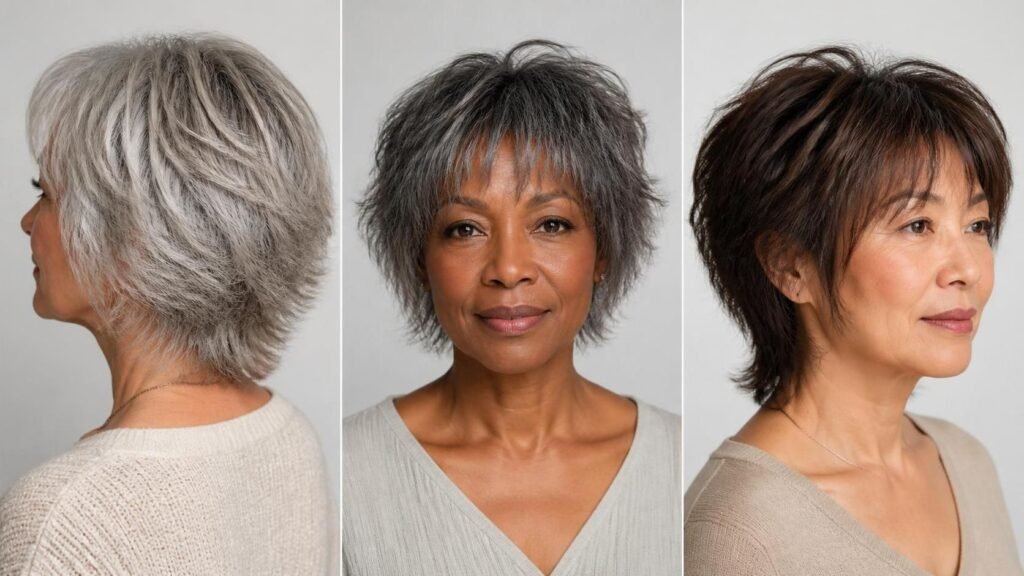
The difference between a shag that works and one that doesn’t usually comes down to layer placement. Light, blended layers that start around the crown add lift without stripping weight from the ends. Too much layering through the bottom half makes fine hair look sparse rather than textured.
You can wear a shag at almost any length. Short shags give instant volume with minimal styling. Collarbone-length shags are a great middle ground because they still look full. Longer shags work too, especially when face-framing pieces start at cheekbone level.
When you visit your stylist, talk about what you want your hair to do, not just what you want it to look like. Ask for crown lift, soft blended texture, and ends that stay full. If you want bangs, curtain or side-swept styles blend into a shag naturally and grow out without looking awkward.
Below are 20 shaggy hairstyles for women over 50 with thin fine hair, picked for volume, softness, and real-life wearability.
1. Airy Layers Around Cheekbones
Layers placed right at cheekbone level create an instant lift that makes the whole face look fresher. The ends stay soft and light rather than blunt or heavy. This is a very wearable style that does not need much to look put together.
Ask for: soft shag layers from the cheekbones down with subtle crown texture for easy volume. Style tip: scrunch a dime-size amount of mousse into damp roots before blow-drying upward for lift that lasts. Best for: fine hair that needs facial definition without adding bulk or weight anywhere.
2. Bixie Shag Haircut
The bixie shag is shorter than a lob but longer than a pixie, and that sweet spot is genuinely flattering for thin fine hair. The shorter back keeps the neckline clean and light. The longer top section has enough length to move and flip without feeling flat.
Ask for: a slightly shorter back with more length through the top and a piecey, airy finish. Style tip: use a pea-size amount of texturizing paste through the top section to keep pieces separated and lifted. Great for: women who like wash-and-go ease but still want a shape that looks intentional.
3. Bottleneck Bangs Shag
Bottleneck bangs are wider at the top and narrow toward the ends, creating a fringe that softens the forehead without sitting heavy on the face. They blend into the layers naturally. On days when you want a more open look, they sweep to the side with almost no effort.
Ask for: bottleneck-shaped bangs that taper softly and connect to the face-framing layers. Style tip: blow-dry the bangs forward first, then use your fingers to push them gently to one side for a soft sweep. Works well for: fine hair that wants a gentle, face-framing shape without committing to a heavy full fringe.
4. Choppy Crop Shag
A choppy crop shag is short, textured, and deliberately undone in a way that reads as cool rather than messy. The top section has lift and the sides stay airy so the overall shape feels light. This one actually looks better on second-day hair.
Ask for: disconnected top layers with lighter, shorter sides and a textured, piecey finish. Style tip: work a small amount of texturizing paste between your fingertips and press it through the crown for separation. Best for: women who want a bold, low-effort style that holds its shape without daily restyling.
5. Collarbone-Length Shaggy Lob
The collarbone shag is one of the most flattering lengths for fine hair over 50. It is long enough to feel feminine but short enough that the ends stay full rather than wispy. It looks just as good air-dried as it does blown out.
Ask for: soft shag layers starting at the crown with face-framing pieces that sit near the cheekbones. Style tip: apply a root-lift spray before blow-drying and use a round brush through the crown section for lasting volume. Holds well: on fine hair because the collarbone length keeps enough weight in the cut to prevent the ends from deflating.
6. Curly Shag With Curly Fringe
This curly shag is all about letting the natural texture do the work. The layered cut helps curls stack in a round, bouncy shape rather than spreading wide at the bottom. The curly fringe blends right into the layers so it never looks like an afterthought.
Ask for: layers that encourage upward curl movement and a fringe that matches the texture of the rest of the cut. Style tip: apply curl cream to soaking-wet hair, scrunch from ends to roots, then diffuse on low heat and medium airflow. Avoid: blow-drying straight if your natural curl has any wave — the texture is exactly what makes this cut work.
7. Feathered Shag Blowout
Feathered layers with a polished blowout give fine hair a swingy, airy quality that feels put-together without being stiff. The ends flip gently away from the face, which is a flattering direction for women over 50. This one looks like you tried, even if you didn’t.
Ask for: low feathered layers that taper softly and keep the outer silhouette swingy rather than heavy. Style tip: use a round brush and light mousse from root to mid-length, then direct the ends outward as you finish each section. Finishes well: with a small amount of shine serum on the mid-lengths to keep the feathered ends looking healthy.
8. Kitty Cut Shag
The kitty cut shag sits right in the middle of polished and textured. It is not overly messy and not too smooth. Face-framing pieces fall naturally, and the ends can tuck inward or flip out depending on how you style it that day.
Ask for: soft blended layers through the crown with gentle face framing and ends that land just past the jaw. Style tip: use a medium barrel curling iron on the ends only, alternating the direction for a natural, unset wave. Perfect for: women who want a shag with movement but prefer something a little cleaner than a full choppy texture cut.
9. Modern Shag With Face-Framing Layers
Face-framing layers are one of the most effective tools in a shag cut for women over 50. They pull focus toward the eyes and cheekbones, creating definition without any makeup or extra styling. The rest of the cut stays light and airy so nothing looks overdone.
Ask for: visible face-framing layers starting around the cheekbones with seamless blending into the rest of the shag. Style tip: wrap the face-framing pieces around a small curling iron and direct them away from the face for extra lift. Great for: fine hair that looks flat across the face and needs a structural boost without adding bulk.
10. Modern Shag With Long Layers
If you love the idea of a shag but are not ready to go short, long layers are the answer. They add texture and movement without removing length. The layers start higher to build crown volume and taper into soft, light ends that still look full.
Ask for: long layers beginning around the crown that blend gradually toward the ends without over-thinning. Style tip: rough-dry at the roots first for volume, then smooth the lengths with a round brush for a polished shag finish. Easy to style: with loose waves, a quick blowout, or even air-dried for an effortless, textured look.
11. Pixie Shag With Wispy Fringe
This pixie shag is short, lifted, and full of personality. The crown sits high and the edges stay light, so the cut never reads as flat or severe. The wispy fringe softens the forehead and blends into the top section rather than sitting as a separate element.
Ask for: a full crown with tapered, light sides and a wispy fringe that connects to the top layers. Style tip: apply a tiny amount of light styling cream through the crown and use your fingertips to separate and lift individual pieces. Works best: on women who want maximum volume in a very short, wash-and-go friendly length.
12. Rachel-Inspired Shag Layers
The Rachel-inspired shag borrows the iconic C-shaped layers and bouncy face framing from the original but updates them with a softer, more modern finish. The cut lifts the cheek area and gives the whole style a light, swingy quality that looks great in motion.
Ask for: C-shaped layers that curve toward the face with a strong longest length through the back and perimeter. Style tip: blow-dry using a round brush, rolling the front sections forward and outward at the ends for that classic flip. Avoid: heavy thinning at the ends, which softens the bounce and makes fine hair look less full from the sides.
13. Razor-Cut Shag Bob
A razor cut gives the ends a soft, broken finish that looks effortlessly modern. This shag bob combines that airy perimeter with enough layering to keep the top lifted. The result is a style that moves freely and catches light well, both great for fine hair.
Ask for: razor-finished ends through the perimeter only, with scissors-cut layers through the crown for structure. Style tip: scrunch a salt spray or texture spray through the ends on damp hair and let it air-dry for a natural finish. Best for: women with fine straight hair who want texture and movement without committing to a wave or curl.
14. Shag With Curtain Bangs
Curtain bangs make a shag feel noticeably softer and more flattering around the eyes and cheekbones. They part naturally in the center and fall on either side of the forehead. The grow-out phase is easy because they blend right back into the layers.
Ask for: curtain bangs that graze the cheekbones and connect seamlessly to the face-framing layers on each side. Style tip: blow-dry the bangs forward and then use your fingers to split them gently down the center for a relaxed part. Style options: part down the middle for a balanced look or sweep both sides to one for a softer, asymmetric feel.
15. Shaggy Bob With Blunt-ish Ends
This shaggy bob keeps most of the texture through the top while leaving the ends a little blunter than a typical shag. That extra weight at the perimeter makes fine hair look denser. You get the movement of a shag without the wispy, see-through finish at the ends.
Ask for: concentrated layering through the crown and upper sections with a semi-blunt finish at the perimeter. Style tip: use a volumizing mousse from roots to mid-length and blow-dry upward to build lift through the top. Best for: fine hair that loses density quickly and needs the ends to look full and substantial, not airy.
16. Shaggy Bob With Side-Swept Bangs
Side-swept bangs are one of the easiest ways to soften a haircut, and they pair naturally with a shaggy bob. The fringe draws attention to the eyes and creates a gentle diagonal line across the forehead that flatters most face shapes.
Ask for: a side-swept fringe that blends into the shag layers and sits just above or at the brow line. Style tip: blow-dry the bangs to the side with a small round brush, then finish with a light-hold spray to keep them in place. Works well for: women who want movement at the crown combined with a polished, face-framing fringe.
17. Soft Shag With Root Smudge
A root smudge adds depth at the base that makes layers look fuller and more defined. It also softens the line between your natural root and any color, making grow-out far less noticeable between appointments. The soft shag and the smudge together create a style that reads as expensive and intentional.
Ask for: a soft root smudge in a tone close to your natural color, applied to the first inch or two of growth. Style tip: use a light shine serum through the mid-lengths to make the color depth and dimension really stand out. Refresh: a root smudge typically lasts 6 to 8 weeks, making it one of the lowest-maintenance color options available.
18. Soft Shaggy Bob Haircut
The soft shaggy bob is texture without drama. The layers are blended and seamless, so the cut moves and breathes without looking choppy or deliberately undone. It is the kind of cut that looks naturally effortless, which is exactly what most women are going for.
Ask for: seamless, blended layers with no hard lines and a soft overall shape that works for straight to wavy hair. Style tip: use a lightweight volumizing foam, rough-dry from roots down, then finish with a large round brush for smoothness. Works for: almost any texture, but especially for straight or gently wavy fine hair that needs body without frizz.
19. Textured Shob Haircut
The shob sits between a shag and a bob, which makes it a surprisingly practical length for fine hair over 50. It is short enough to hold volume but long enough to avoid that heavy, helmet feeling. The ends stay light and the crown stays lifted.
Ask for: a shob-length cut with textured layers through the top and a clean, slightly airy finish at the ends. Style tip: dry the roots upward first, then smooth the lengths with a round brush for a shape that looks full but neat. Great for: fine hair that wants shape and volume without the commitment of going fully short.
20. Wavy Shag Haircut
A wavy shag is all about embracing natural bend and letting the texture do the work. The layers prevent waves from clumping into one heavy shape and encourage them to move individually, which makes the whole style look fuller and more dimensional.
Ask for: layers placed throughout the cut to separate and lift the natural wave pattern rather than flatten it. Style tip: scrunch a light mousse through damp hair from ends to roots, air-dry, then shake out gently at the roots for volume. Finish: with a small amount of flexible-hold spray to keep the waves defined without making them stiff or crunchy.
FAQs About Shaggy Hairstyles for Women Over 50
Do shaggy haircuts actually work for thin fine hair? Yes, when the layers are done correctly. The key is keeping layers light and starting them at the crown rather than through the ends. Too many layers through the lower half makes fine hair look see-through. Ask your stylist for blended, seamless layering and always protect the perimeter.
What is the most flattering shag length for women over 50? The collarbone-length shag tends to be the most universally flattering. It has enough length to feel feminine but enough structure to keep fine hair from looking sparse at the ends. That said, short shags and bixie cuts work well too if you prefer lower-maintenance styling.
How do I ask my stylist for a shag that adds volume? Skip the style name and describe what you want instead. Say you need crown lift, soft blended layers, and ends that stay full. Mention that you have fine hair and want to avoid heavy thinning near the perimeter. Bringing a photo or two of your favorite ideas from this list also helps a lot.
What products work best for styling a shag on fine hair? Root-lift mousse or volumizing foam applied before blow-drying builds the most lasting lift. Dry texture spray works well on second or third-day hair. Avoid heavy oils or thick creams near the roots, which flatten fine hair fast. A light flexible-hold spray at the finish keeps the style in place without stiffness.
How often should I trim a shag if my hair is fine? Every 6 to 8 weeks keeps a shag looking its best on fine hair. Fine hair splits and frays faster than thicker hair, and split ends make the style look ragged quickly. Regular trims maintain the layer shape and keep the texture intentional rather than worn out.
Can I wear a shag without heat styling? Absolutely. Many shag styles look great air-dried, especially wavy or curly versions. Apply a mousse or curl cream to damp hair, scrunch it upward, then shake the roots once it is fully dry. For straight fine hair, a little dry texture spray and some finger-lifting at the roots gives a similar effect without any heat.
What Your Hairdresser Actually Needs to Hear
Walking into a salon and saying “I want a shag” can mean a hundred different things depending on who is cutting your hair. Being specific about your hair texture and your daily routine makes a much bigger difference than knowing the right name for a cut.
Tell your stylist you have fine hair, that you want crown volume, and that you need the ends to stay full rather than wispy. Mention whether you blow-dry daily or prefer to air-dry. Say whether you are comfortable with bangs or want to avoid them. These details point a good stylist toward exactly the right version of a shag for your hair type and your life.
If you are bringing photos, bring two or three that show different things you like. One for the layer placement. One for the length. One for the fringe if you want one. That combination gives your stylist the full picture and takes the guesswork out of the appointment entirely.
Cut Your Way to Confidence
There is something that changes when your hair actually works with you instead of against you. A good shag does that. It takes fine, flat hair and gives it shape, body, and movement without demanding a complicated routine or expensive products.
Every style in this list was chosen because it respects what fine hair needs after 50. The right layer placement. Enough weight at the ends. Volume where it counts. None of them require a full styling setup to look good on a regular morning.
Find the style that fits your face shape, your hair texture, and the amount of time you realistically want to spend. Take the name and a photo to your stylist, be clear about what you want to keep and what you want to change, and trust the process.
The right shag cut is out there. And once you find yours, you will wonder why you waited this long.
