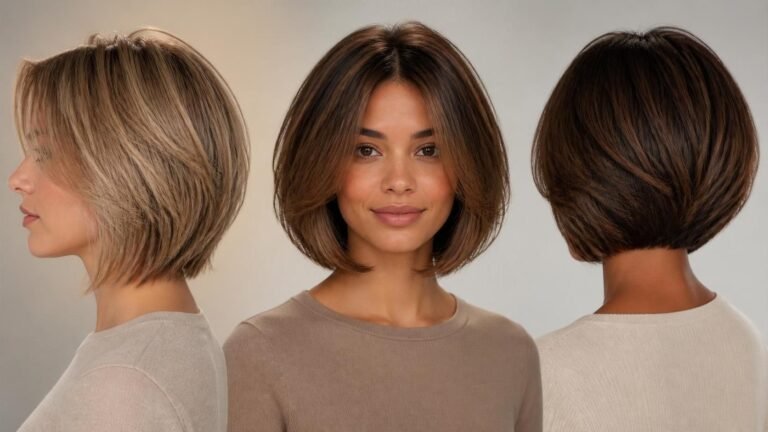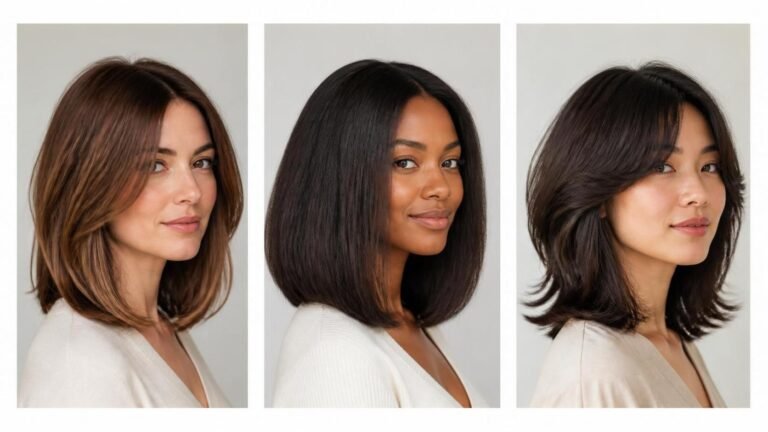
20 Medium Length Haircuts With Layers That Add Movement, Shape, and Real Style
Medium length hair sits in the most versatile sweet spot of any haircut category. It is long enough to wear down, short enough to stay manageable, and the perfect canvas for layering that genuinely transforms how hair moves and sits. Whether your hair feels too flat, too heavy, or just a little shapeless, the right layers can fix all three problems at once.
Layers at this length work differently depending on where they are placed and how they are cut. Some create sweeping movement through the lower half. Others lighten the crown or soften the outline around the face. A few are completely invisible from the outside but change the way the hair behaves entirely. The result in every case is hair that feels more alive and more like a deliberate style choice.
Below are 20 medium length haircuts with layers that add shape, movement, and genuine visual interest — without ever feeling too choppy, too heavy, or too high maintenance.
1. Airy Layers for Fine Hair
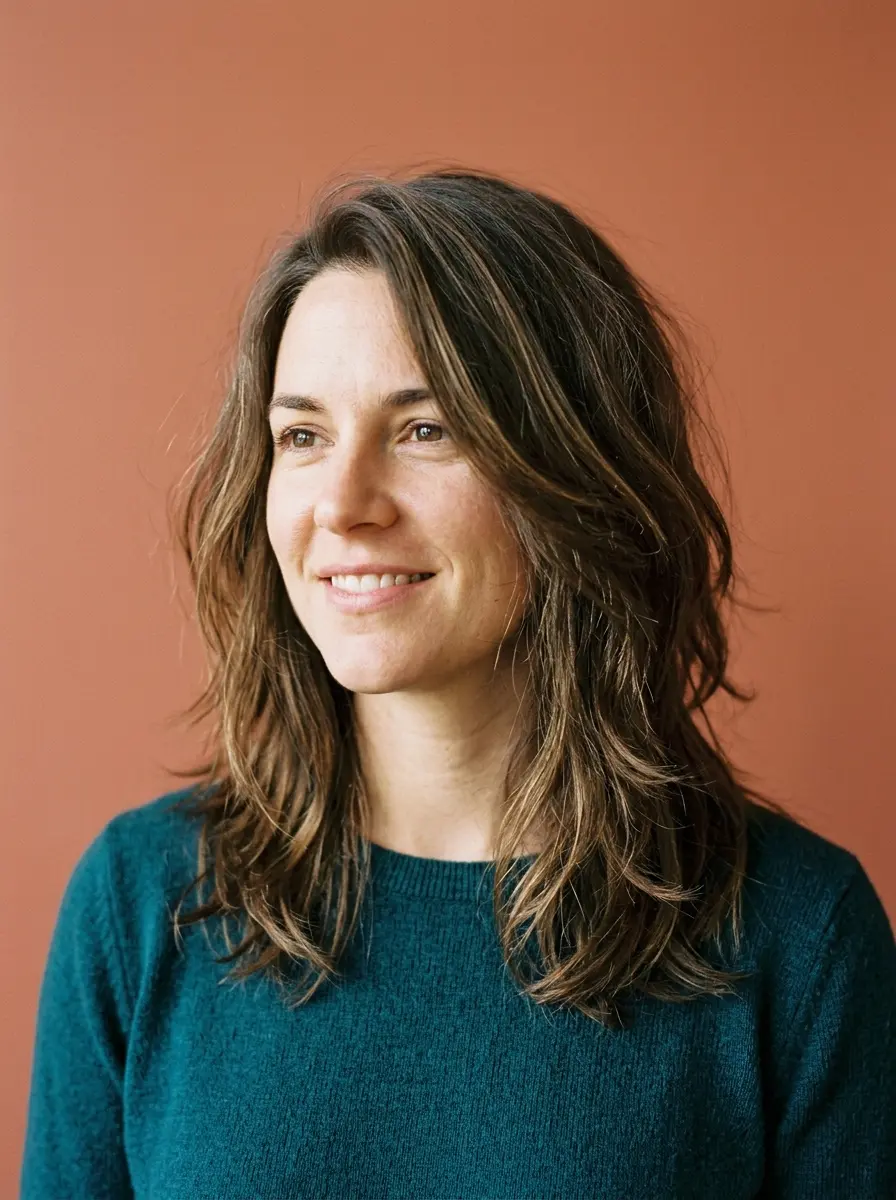
Fine hair needs a very specific kind of layering — light enough to create movement, but restrained enough to keep the ends from looking thin and wispy. This cut gets that balance exactly right.
Airy layers and fine hair: Soft, minimal layering through the mid-lengths and ends creates movement without removing the density that fine hair desperately needs at its perimeter.
Blended fringe detail: A gentle fringe that dissolves seamlessly into the front layers frames the face without adding visual weight that would flatten fine strands at the front of the cut.
Styling tip: Apply a light volumizing mousse at the roots before blow-drying section by section, focusing the round brush at the crown for lift that lasts through the day.
Salon instruction: Ask for soft medium layers through the sides and ends with a blended fringe that connects naturally — avoid any aggressive thinning that would strip the ends of their remaining fullness.
2. Blowout Layers on Medium Hair
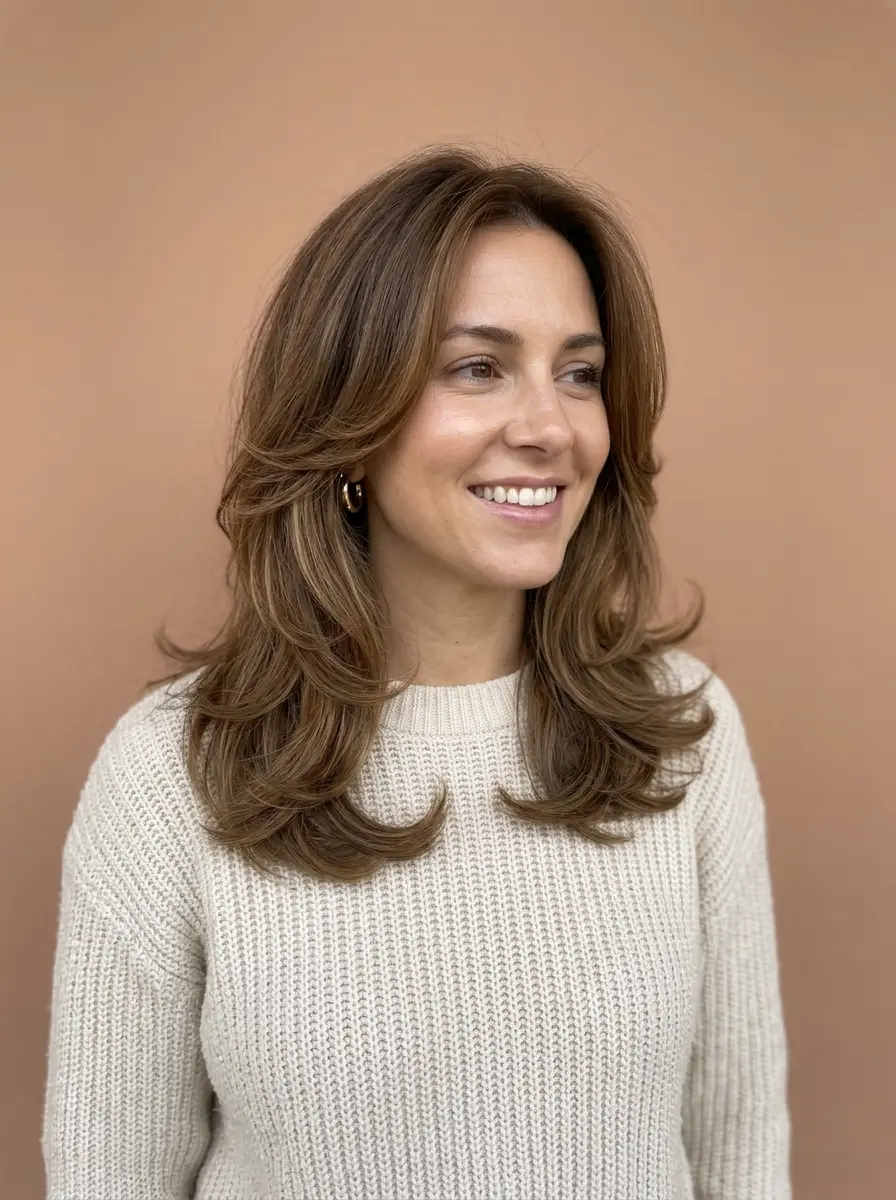
This cut is designed to look its absolute best fresh out of a blowout, and the layers are positioned specifically to enhance that polished, bouncy result. It is classic, refined, and genuinely flattering.
Layers built for blowouts: Strategically placed medium layers through the lower half allow the hair to hold a soft bend and swinging movement that blunt, unlayered hair simply cannot replicate.
Crown lift without teasing: The light layering through the top of this cut builds a natural dome shape at the crown that holds well after blow-drying with no backcombing required.
Styling tip: Use a medium round brush while blow-drying, rolling the ends under or outward on the last pass, then finish with a light styling cream through the mid-lengths for definition.
Salon instruction: Ask for medium layers with enough length to hold a smooth blowout shape, keeping the surface blended and the ends strong enough to hold a clean bend without frizzing.
3. Collarbone Layers With Curtain Bangs
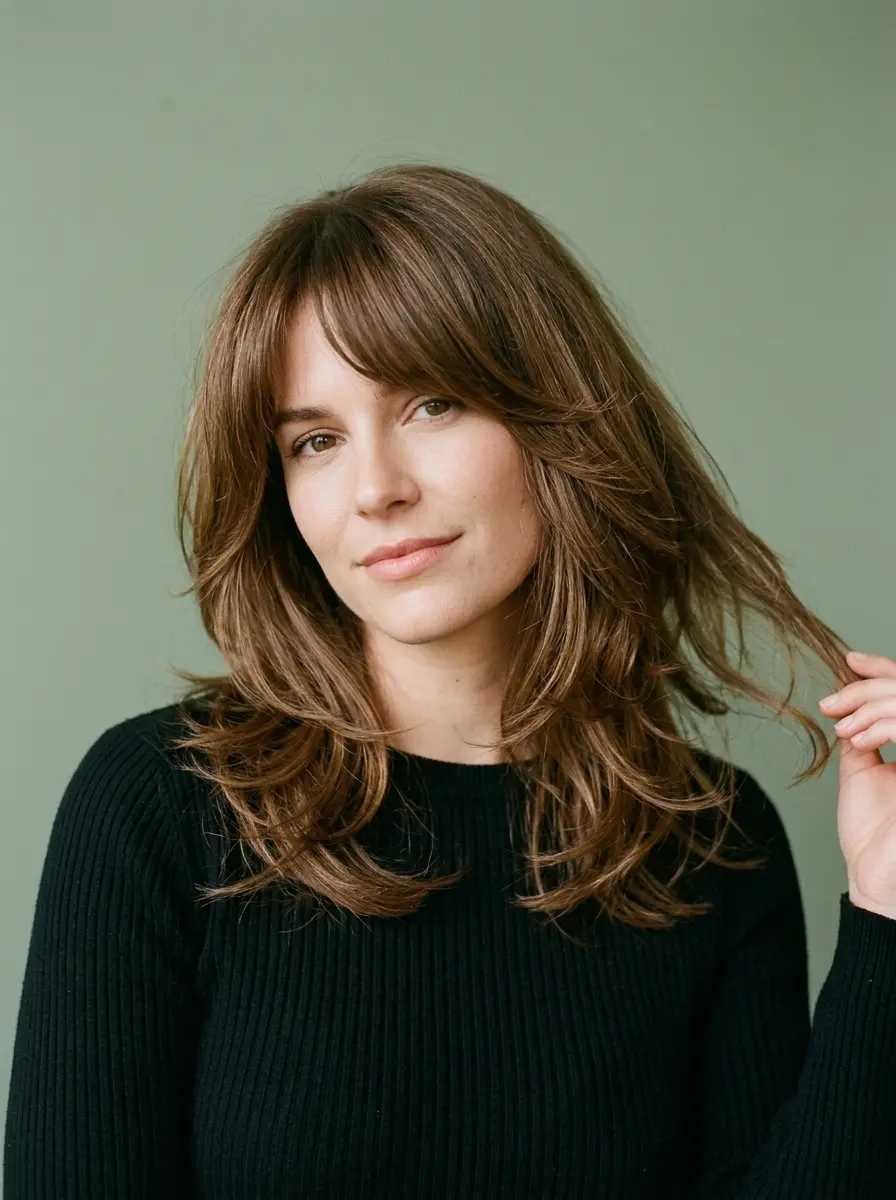
Curtain bangs and collarbone layers are one of the most popular combinations in medium-length hairstyling right now — and for very good reason. Together they create a soft, face-opening effect that photographs beautifully.
Curtain bangs and face shape: Bangs that part in the center and sweep to each side create an open, symmetrical framing effect that flatters almost every face shape without adding visual heaviness.
Length and layering at collarbone: Stopping the length at the collarbone gives the layering structure enough room to create real movement while keeping the shape compact and easy to manage daily.
Styling tip: Blow-dry the curtain bangs with a round brush, sweeping each side outward as you work, then use a light-hold spray to set the shape without making the bangs stiff or flat.
Salon instruction: Ask for collarbone length hair with curtain bangs that blend gently into the front layers, keeping the bangs longer at the outer edges so they fall softly rather than sitting heavy across the forehead.
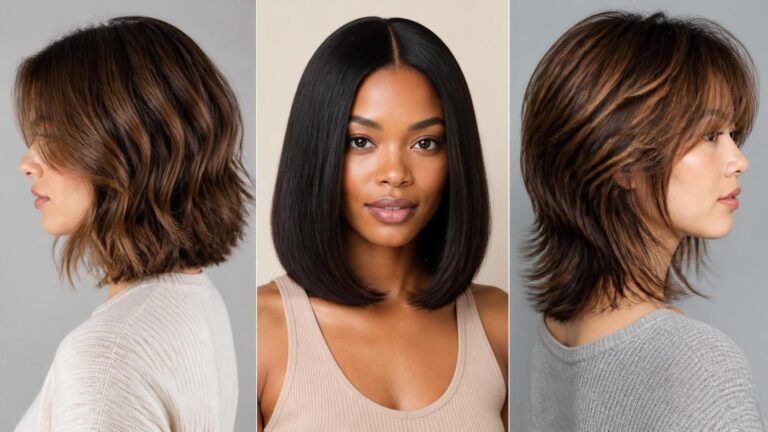
4. Collarbone Lob With Invisible Layers
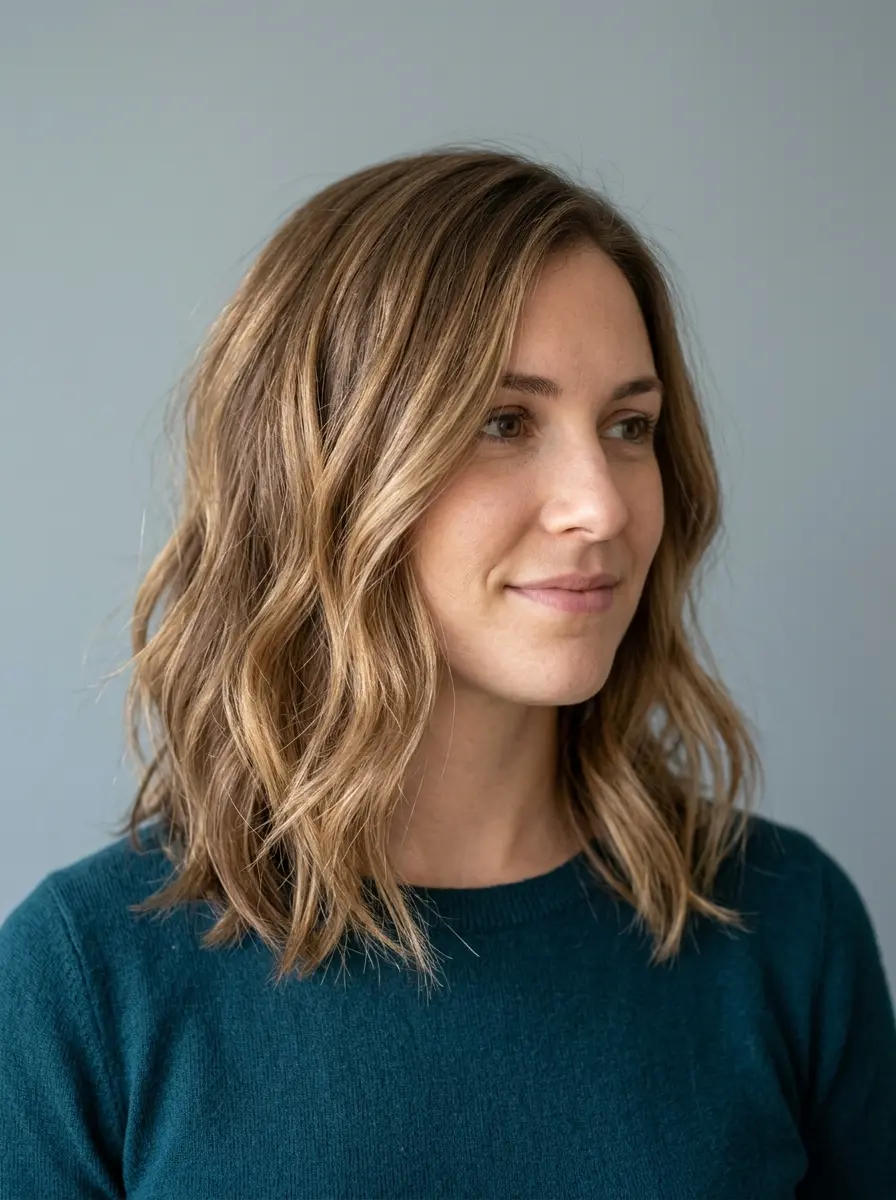
Sometimes the most effective haircut change is the one nobody else can immediately see. This lob uses hidden interior layers to reduce weight and improve movement while the outer surface stays completely smooth and clean.
Invisible layers and what they do: Internal layers cut beneath the surface remove bulk and weight without creating any visible steps or choppy sections in the finished silhouette.
Surface smoothness preserved: Because the outer line stays intact, this cut photographs as a sleek, clean lob while secretly behaving like a layered cut with excellent natural movement.
Styling tip: This cut air-dries beautifully on naturally straight or wavy hair — simply apply a smoothing serum through damp mid-lengths and let gravity do the rest for a clean, effortless finish.
Salon instruction: Ask specifically for a collarbone lob with internal layers worked through the inside sections rather than short layers on top, keeping the exterior line smooth and the ends full.
5. Contoured Medium Layers Around the Face
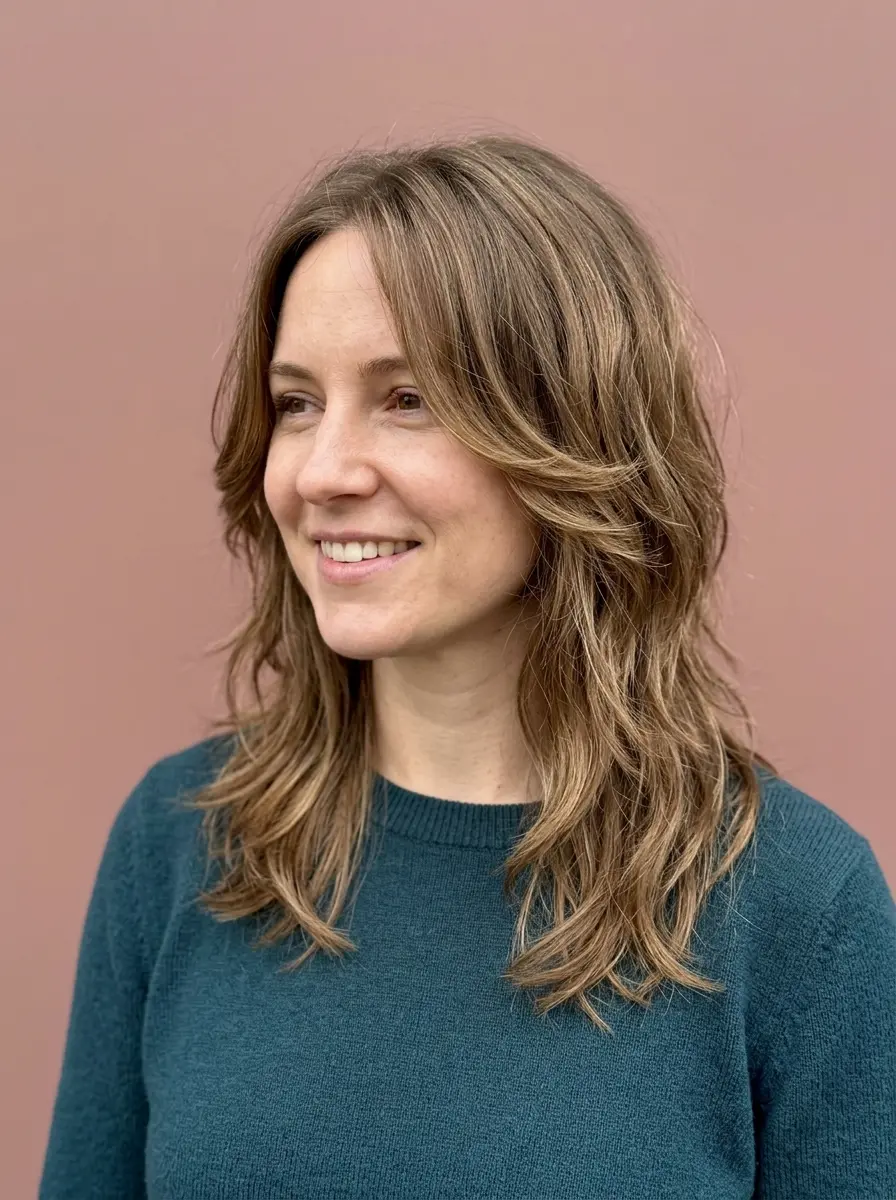
Face-contouring layers are one of the most skillful and flattering techniques a stylist can apply to medium-length hair. The layers are cut specifically to curve around the cheeks and jaw, creating a natural, sculpted frame.
Contouring versus standard face-framing: Unlike straight face-framing pieces, contoured layers follow the natural curve of the face and jaw, creating a more organic and specifically flattering frame around the features.
Softer front, steady back: Lightening the outline at the front while keeping fullness through the lower sections creates a beautiful visual balance between a soft-looking front and a well-structured overall shape.
Styling tip: Use a round brush to blow-dry the front sections with a gentle inward or outward curve as the layers fall forward, which enhances the contouring effect the cut is designed to create.
Salon instruction: Ask for medium layers that contour around the cheekbones and jaw with soft feathering at the front, while preserving enough fullness through the back and sides to keep the shape looking balanced and steady.
6. Curly Medium Layers With Rounded Shape
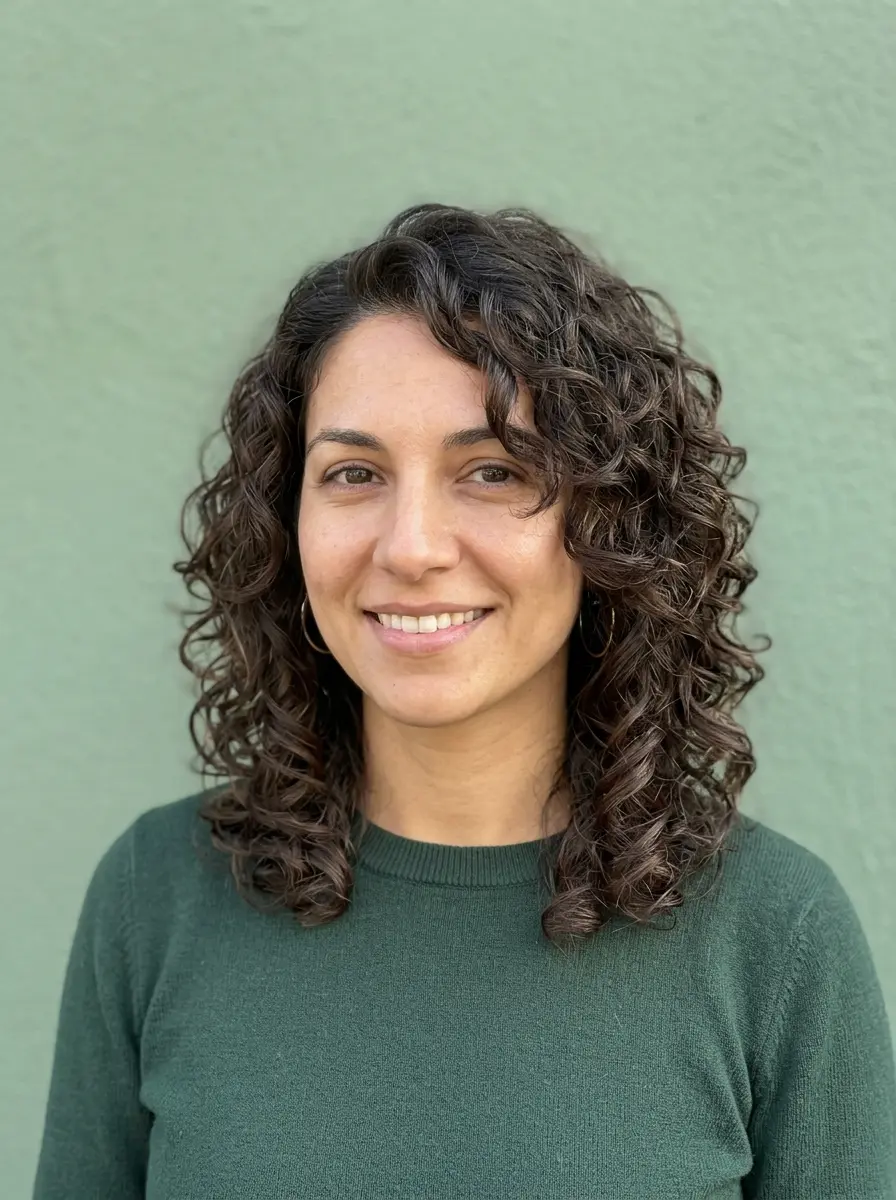
Curly hair at medium length needs its own specific approach to layering, and this rounded shape delivers exactly that. The goal is balanced volume — full and lively, but never too wide or bottom-heavy.
Rounded shape for curly balance: Cutting curly medium hair into a deliberate rounded silhouette prevents the common problem of a wide, triangular shape that makes curly hair look unbalanced and harder to manage.
Curl definition with movement: The layers in this cut help individual curls define themselves and separate naturally, giving the overall shape a lively, textured quality without the frizzy, shapeless result of unlayered curly cuts.
Styling tip: Apply a curl-enhancing cream or a lightweight gel through soaking-wet hair, then scrunch upward and either diffuse or air-dry completely before touching — this locks in definition beautifully.
Salon instruction: Ask for curly medium layers cut into a rounded shape, specifically requesting that the stylist cut each curl in its natural state so the final shape sits correctly when dry and fully formed.
7. Face-Framing Medium Layers
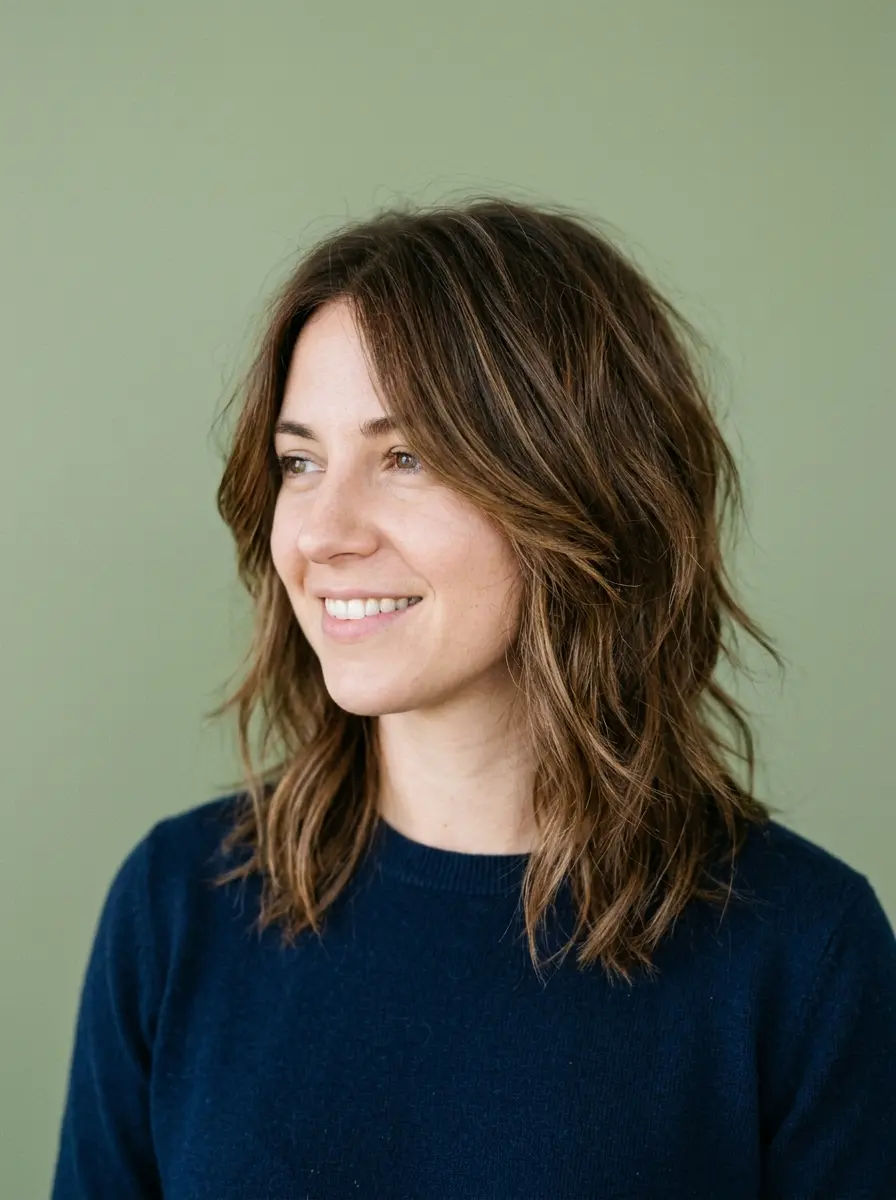
Face-framing layers are the single most requested layering technique for medium hair, and they remain popular because they deliver a consistently beautiful result with minimal risk to the overall length.
Why face-framing works universally: Lighter pieces around the face redirect visual attention toward the features and away from the bulk of the hair, creating an instantly more open and flattering overall appearance.
Main length stays intact: This technique changes only the front section of the cut, meaning the overall length and fullness of the style is completely preserved while the silhouette gains significantly more shape and softness.
Styling tip: Wrap just the face-framing pieces around a small curling iron and direct them slightly inward toward the cheeks for a soft, embracing frame that photographs beautifully from every angle.
Salon instruction: Ask for face-framing layers starting at the cheekbones or jaw that blend naturally into the rest of the cut, keeping the front noticeably lighter without creating a harsh line between the framing pieces and the body of the hair.
8. Lived-In Layered Lob
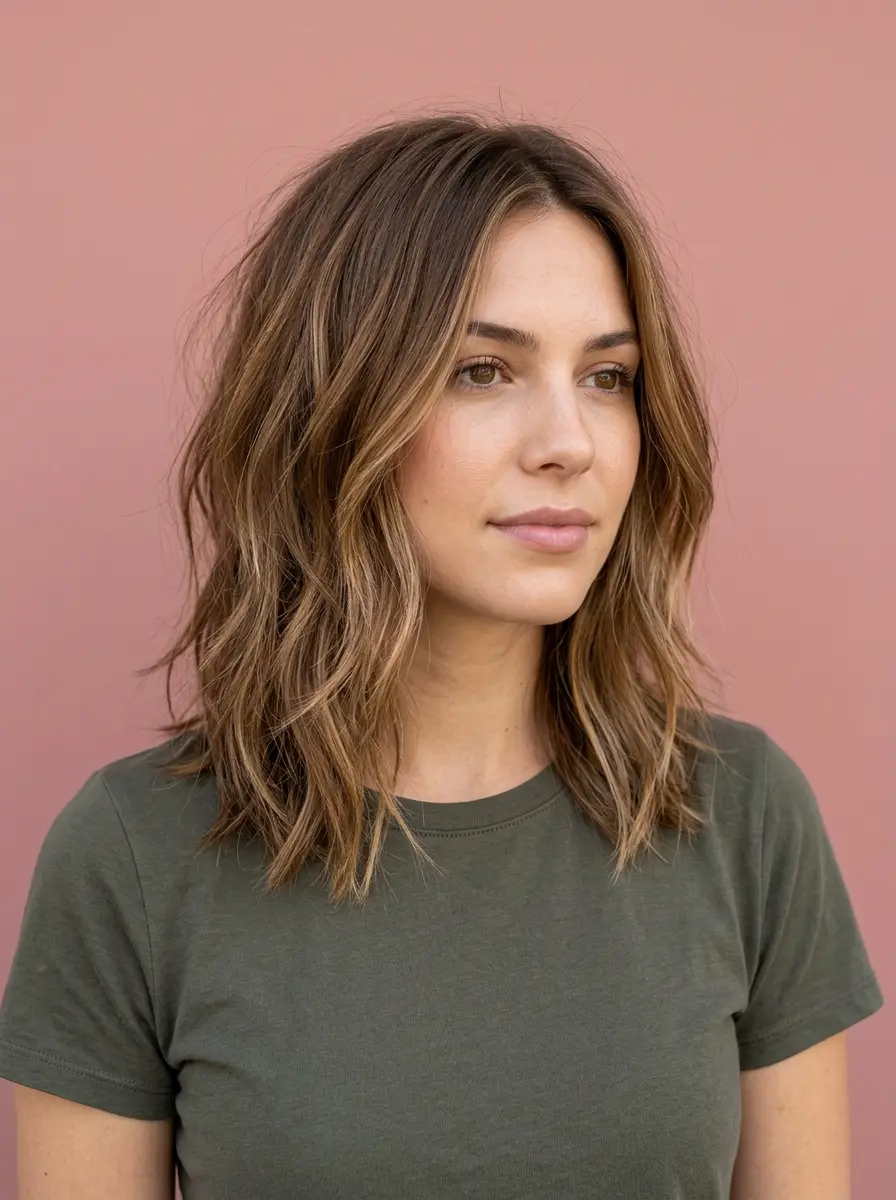
The lived-in lob has become one of the most coveted medium-length styles because it looks like great hair that happens to fall perfectly rather than something that required significant effort. That effortless quality is the whole point.
Relaxed texture as the goal: Rather than a sharp, polished finish, the lived-in lob is styled for gentle softness — a little texture, a little movement, and the sense that the hair is doing exactly what it wants to do.
Layers preventing solidity: Medium layers through the length break up the visual density of the lob so it never sits as a heavy, uniform block of hair that looks stiff or overly styled.
Styling tip: Work a small amount of texturizing spray through the lengths before using a large-barrel curling iron loosely on the lower sections, then shake out with your fingers for a naturally undone result.
Salon instruction: Ask for a layered lob with a soft, blended finish rather than a sharp, polished line, explaining that you want the cut to look easy and current rather than rigidly structured.
9. Low-Maintenance Medium Layers
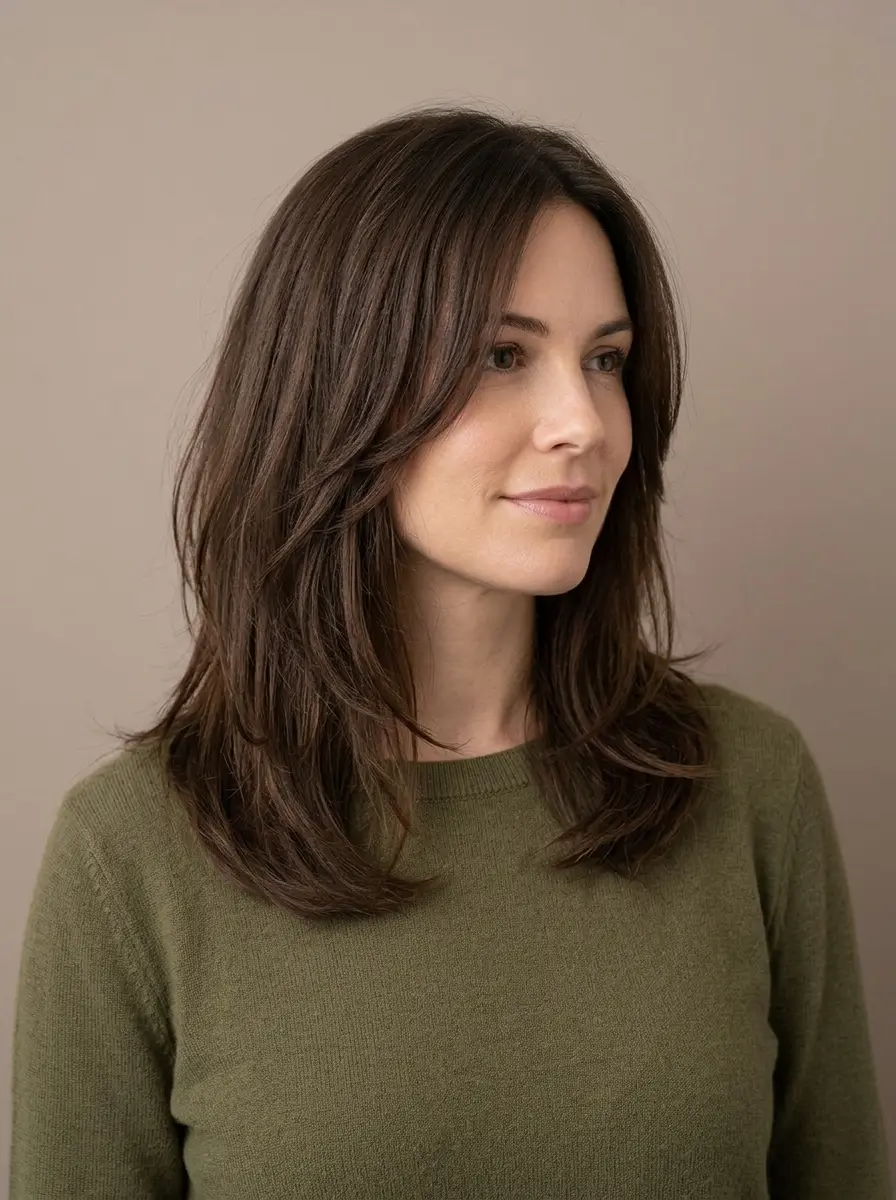
Not every great haircut requires effort to look good. This cut is specifically designed to grow out gracefully, behave well on air-dry days, and look intentional with genuinely minimal daily styling input.
Soft grow-out built into the cut: Layers that are blended gradually rather than cut in hard steps transition beautifully as the hair grows, staying flattering for significantly longer between salon visits.
Light ends without sparseness: The ends in this cut are thinned just enough to reduce heaviness while keeping enough density to hold the shape cleanly, so air-drying leaves the hair looking shaped rather than flat or shapeless.
Styling tip: On air-dry days, apply a light leave-in conditioner through the mid-lengths and ends while damp, then scrunch gently and let the natural texture take over without touching the hair until fully dry.
Salon instruction: Ask for soft medium layers without any hard steps between the lengths, keeping the ends light but not wispy so the shape holds on both blowout days and natural air-dry days equally well.
10. Medium Layers for Thick Hair
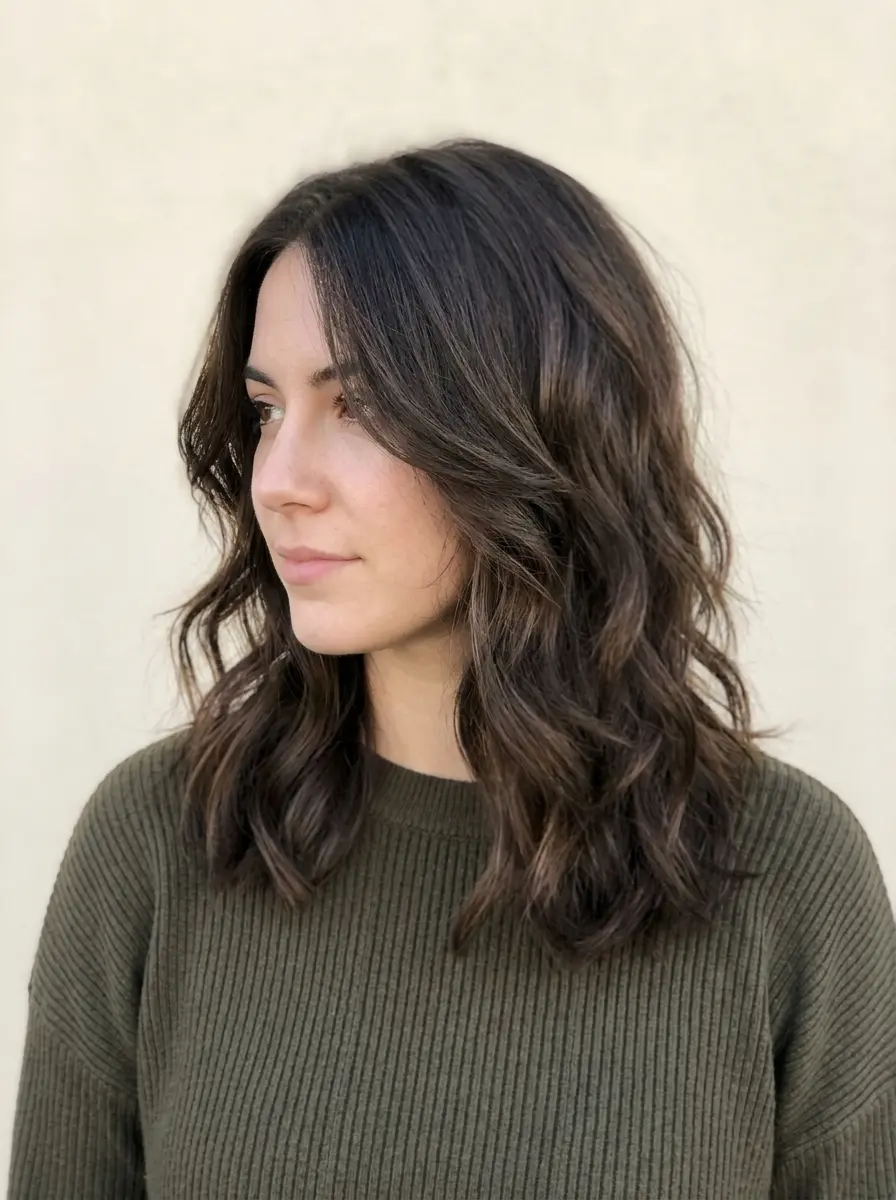
Thick hair at medium length can become very heavy and difficult to manage without the right layering strategy. This cut tackles weight without sacrificing the beautiful fullness that thick hair naturally provides.
Taking out weight strategically: Removing bulk through the sides and lower sections lets thick hair sit closer to the head in a more controlled, flattering way without the puffed-out shape that unthinned thickness creates.
Ends remain strong and full: Unlike aggressive thinning that strips the ends and makes thick hair look frizzy and textured, this approach uses longer internal layers that reduce weight while keeping the outer surface looking smooth and intentional.
Styling tip: A lightweight smoothing lotion applied to damp hair before blow-drying helps control thick strands without adding heaviness, allowing the layers to show their full benefit in the finished shape.
Salon instruction: Ask for medium layers through the sides and lower half specifically to remove weight and improve movement, making clear that you want the ends kept strong enough to hold a clean outline rather than thinned out to individual pieces.
11. Medium Layers With Bottleneck Fringe
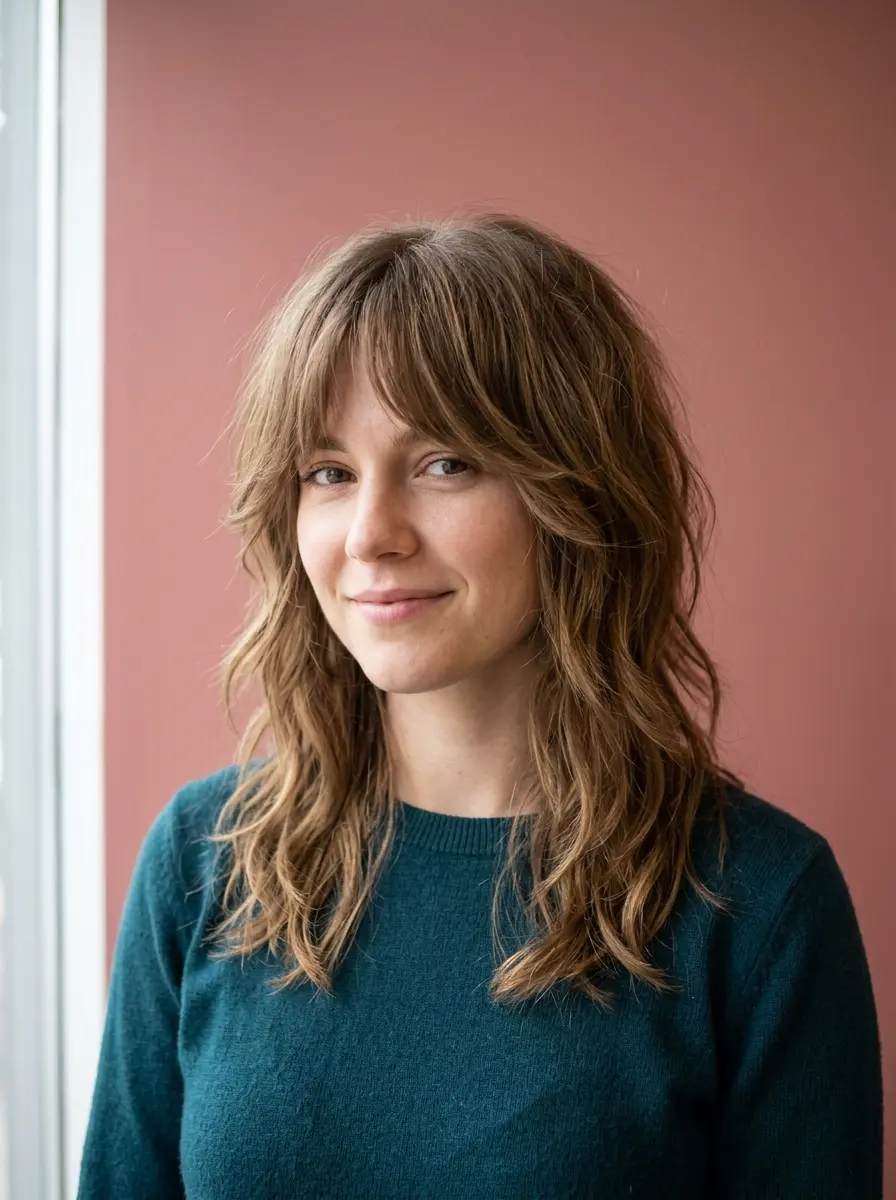
The bottleneck fringe is one of the most wearable fringe styles available because its shorter center and longer edges create a soft, face-opening effect that sits nothing like a heavy blunt fringe.
Bottleneck shape and face opening: The natural arc of this fringe — shorter at the center of the forehead and longer at the sides — creates a soft window effect that draws the eye upward and opens the face rather than cutting across it.
Connection to the rest of the cut: When the bottleneck fringe blends naturally into the front layers of the medium cut, the whole style reads as one connected, cohesive shape rather than a fringe sitting separately on top.
Styling tip: Blow-dry the center of the fringe downward while directing the outer edges slightly to each side with a small round brush — this sets the arc shape that makes the bottleneck fringe look its most flattering.
Salon instruction: Ask for a bottleneck fringe that is noticeably shorter through the middle and extends longer toward the sides, blending smoothly into the front face-framing layers of the cut for a seamless, integrated result.
12. Medium Layers With Flipped-Out Ends
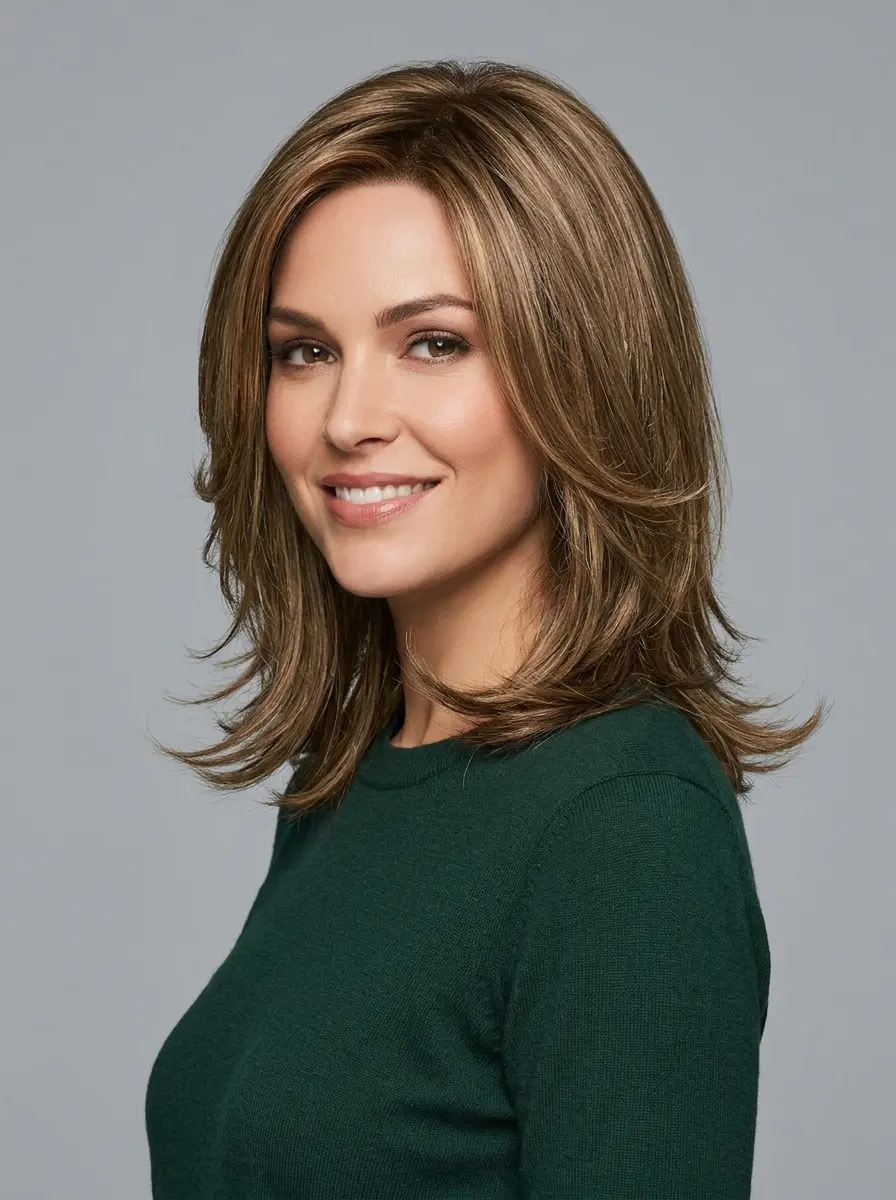
Flipped ends add a playful, energetic quality to medium-length layered hair that rolled-under or straight-falling ends simply cannot replicate. It is a small detail that changes the entire personality of the cut.

Flipped ends and visual openness: When the ends of a medium layered cut flip outward slightly, the overall silhouette widens at the bottom in a way that feels light, airy, and distinctly more dynamic than a close, flat finish.
Movement without length: The flip adds visible movement and dimension to the cut without requiring extra length, making it a particularly smart choice for medium hair that wants to feel more expressive and current.
Styling tip: Use a round brush or a flat iron with a slight outward twist at the ends while blow-drying, then mist with a flexible-hold spray to preserve the flip through the full day without it drooping.
Salon instruction: Ask for medium layers specifically suited to a flipped-out finish, making sure the ends are kept light enough to hold the outward direction easily without becoming too fine or thin at the tips.
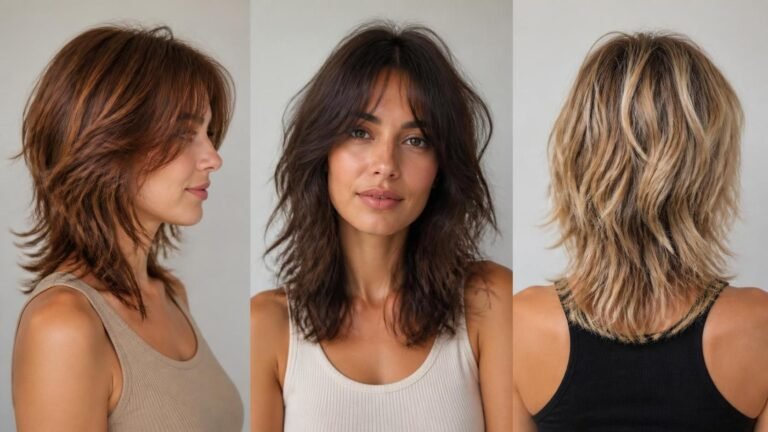
13. Mid-Length Soft Shag
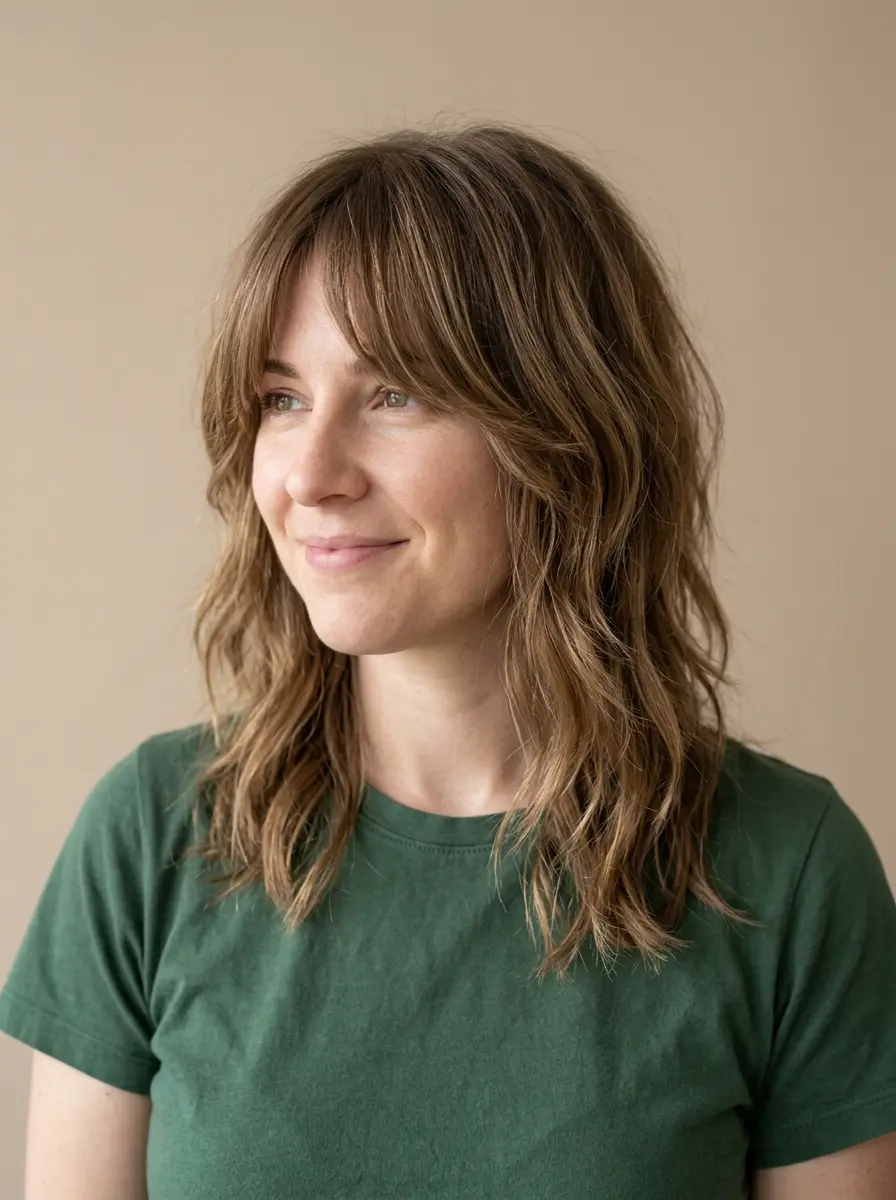
The soft shag is one of the most genuinely versatile medium-length cuts available because it works across hair types and styling preferences without ever looking overdone. The softness is everything in this version.
Soft over choppy: A soft shag uses airy, blended layers rather than aggressive chopping, which creates a relaxed, lived-in texture that works for everyday wear without ever appearing messy or unkempt.
Light fringe inclusion: A gentle fringe that connects to the rest of the shag’s layering adds facial softness and a slightly retro quality that feels both current and genuinely appealing in an unforced way.
Styling tip: Scrunch a curl cream or light mousse through damp hair and diffuse on low heat for a naturally textured finish, or simply air-dry and rake through with fingers for an effortlessly undone result.
Salon instruction: Ask for a mid-length shag with soft, airy layers and a light fringe, being explicit that you want a blended, easy finish rather than a heavily choppy or aggressively textured shape through the ends.
14. Natural-Texture Medium Layers
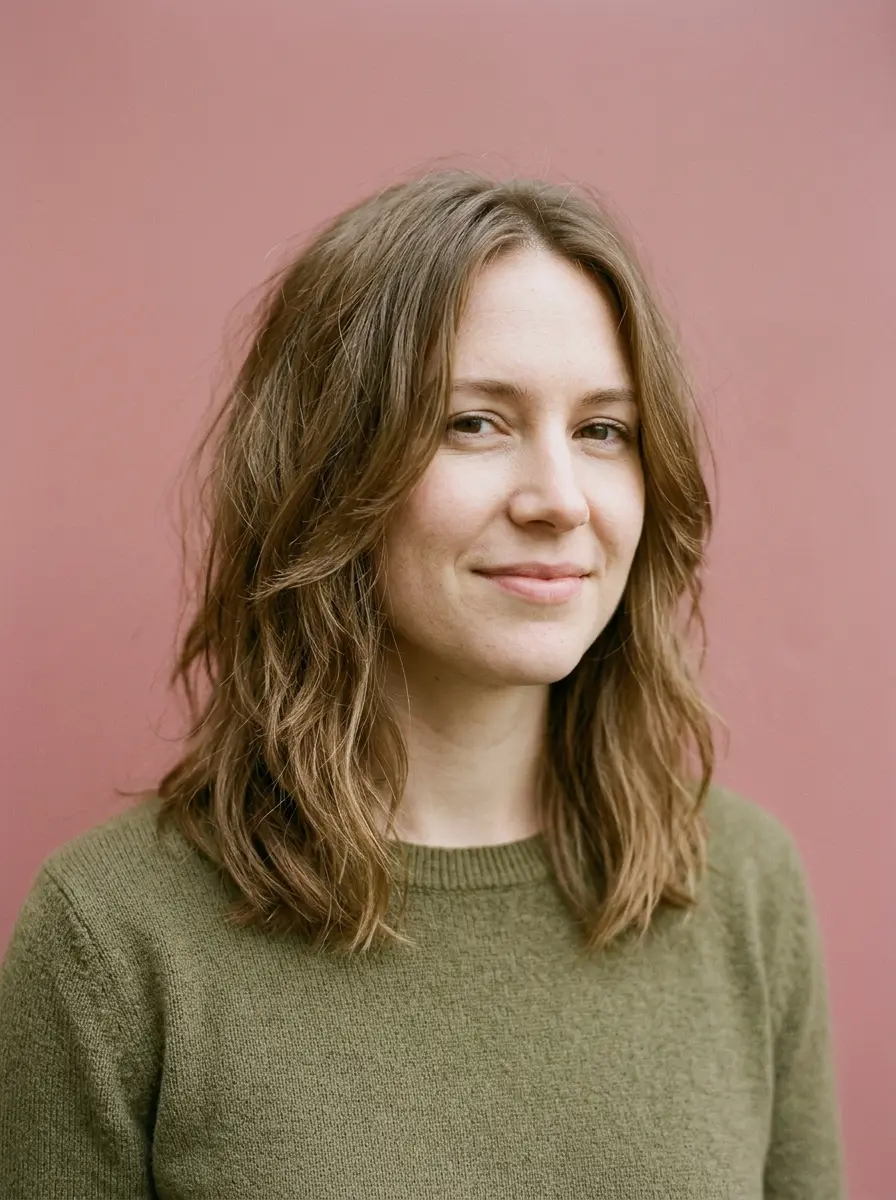
This cut is for anyone who has spent time fighting their natural hair texture and is ready to stop. The layers are designed to support what the hair actually does rather than forcing it into a shape it resists.
Working with texture, not against it: Layers placed specifically to support the hair’s natural behavior — whether straight, wavy, or somewhere between — allow the hair to fall into its best version of itself without constant product or heat manipulation.
Weight removal for better shape: Removing just enough weight through the right sections helps the natural texture express itself more clearly, giving the cut more shape and definition with genuinely less effort required.
Styling tip: After washing, apply a leave-in conditioner, scrunch lightly to encourage the natural texture, and let the hair air-dry without touching it — the layering will do the rest of the shaping work automatically.
Salon instruction: Ask for medium layers designed to support your specific natural texture, explaining that the goal is for the hair to look its best when dried naturally rather than styled with heat or product.
15. Shoulder-Length Cut With Piecey Fringe
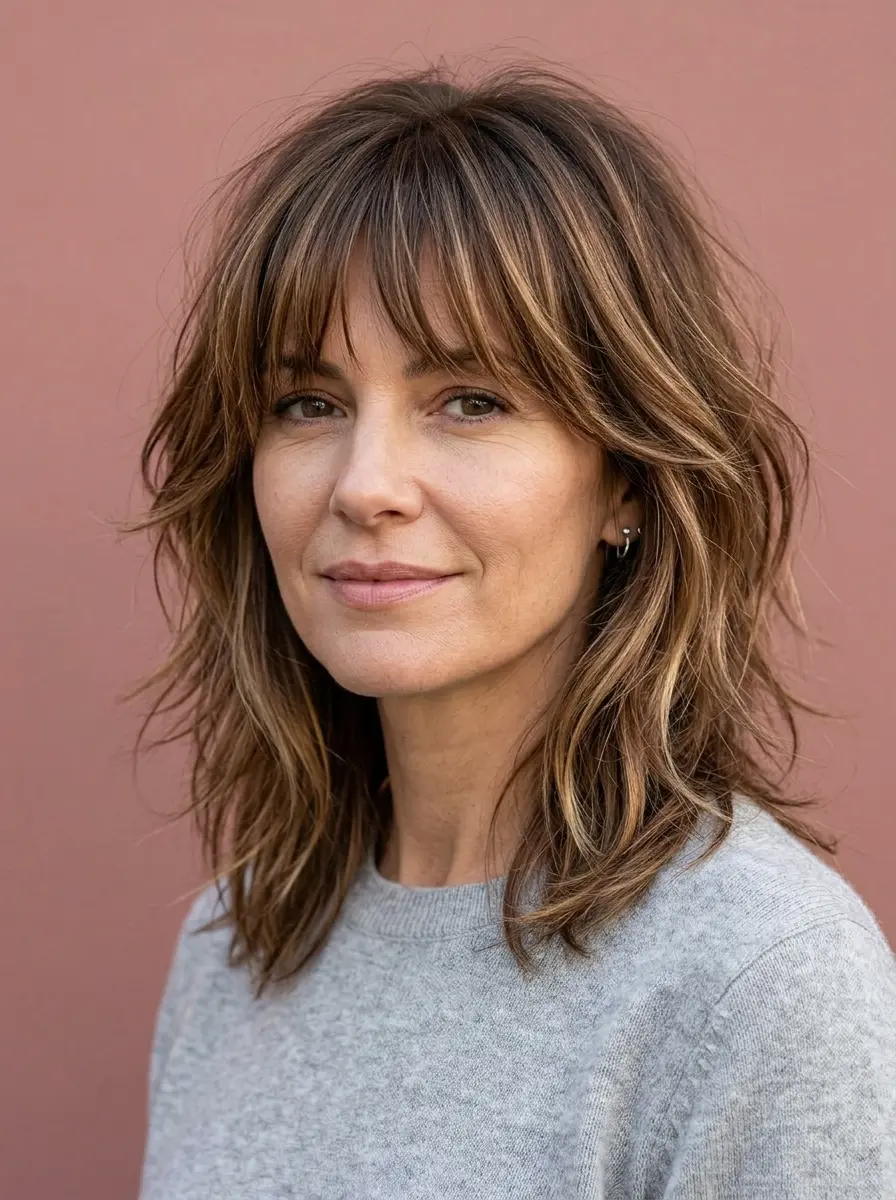
A piecey fringe gives a shoulder-length layered cut a relaxed, casual quality that a smooth, uniform fringe never quite achieves. It is softer, more current, and significantly easier to manage through the grow-out phase.
Piecey versus solid fringe: A fringe cut with light separation between individual pieces falls softly across the forehead without the heavy, wall-like effect of a dense blunt fringe that can overwhelm finer features.
Front lightness and body balance: The piecey fringe keeps the front of the cut feeling open and easy while the rest of the shoulder-length layers provide enough body and structure to keep the overall shape looking balanced.
Styling tip: Work a tiny amount of light pomade between fingertips and drag lightly through the fringe after blow-drying to enhance the natural separation and prevent the pieces from clumping into an unintentional solid fringe.
Salon instruction: Ask for a shoulder-length cut with a piecey fringe that is not cut too thick across the forehead, keeping the separation natural and the edges blended into the front layers for a soft, easy result.
16. Shoulder-Length Soft Layers With Middle Part
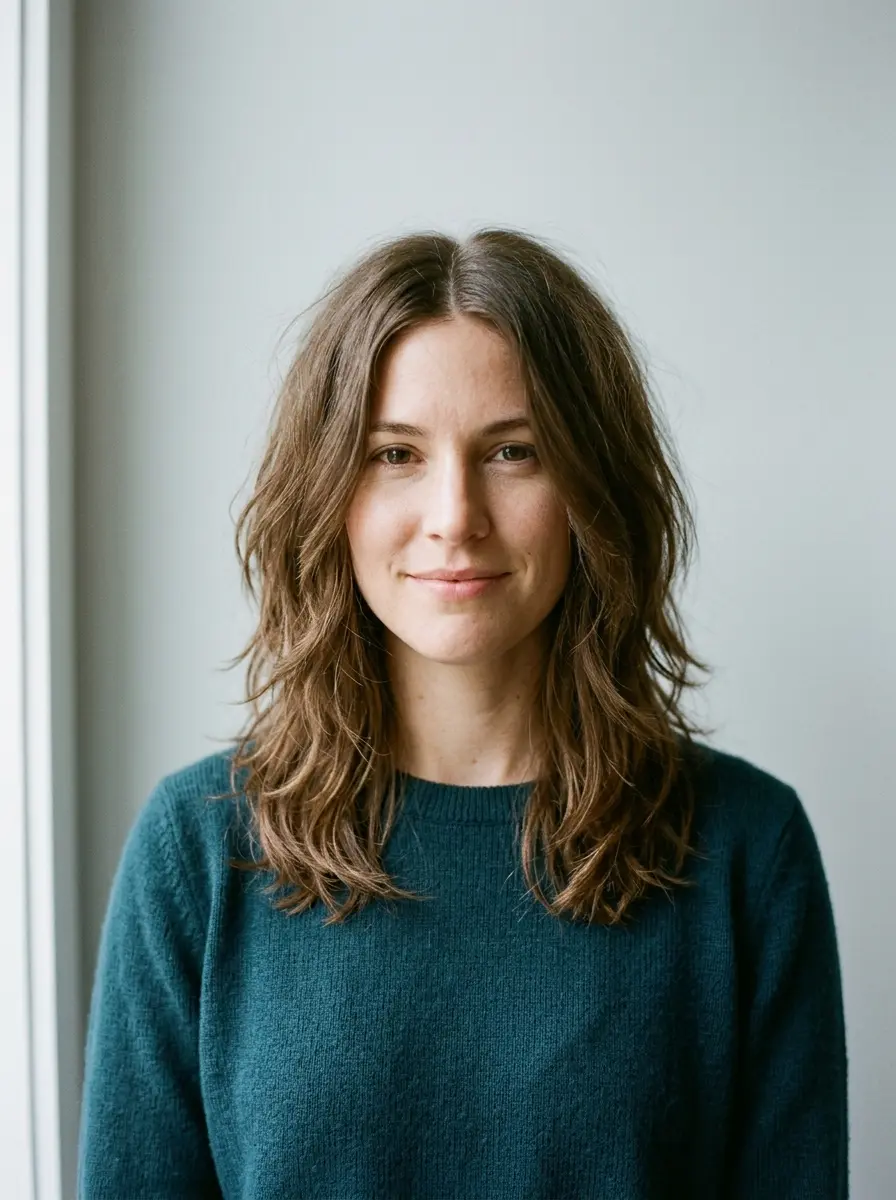
The middle part is one of the most symmetrically balanced styling choices for shoulder-length layered hair, creating an even, harmonious frame on both sides of the face that feels clean and genuinely polished.
Middle part and symmetry: Parting through the exact center distributes the layered sections evenly on each side, which creates a balanced visual weight that is particularly flattering for oval and heart-shaped faces.
Soft layers preserving fullness: Layers in this cut are cut to add movement without thinning the ends significantly, so the lower sections of the hair retain enough fullness to hold the shoulder-length line cleanly.
Styling tip: After blow-drying, use a flat iron or a large curling wand on the mid-lengths and ends only, working away from the face on each side, for a polished, directional finish that enhances the symmetrical middle part.
Salon instruction: Ask for shoulder-length hair with soft layers through the length and a middle part that keeps both sides balanced, ensuring the layers add movement while the ends stay full enough to hold their clean shape.
17. Side-Parted Medium Layers With Crown Lift
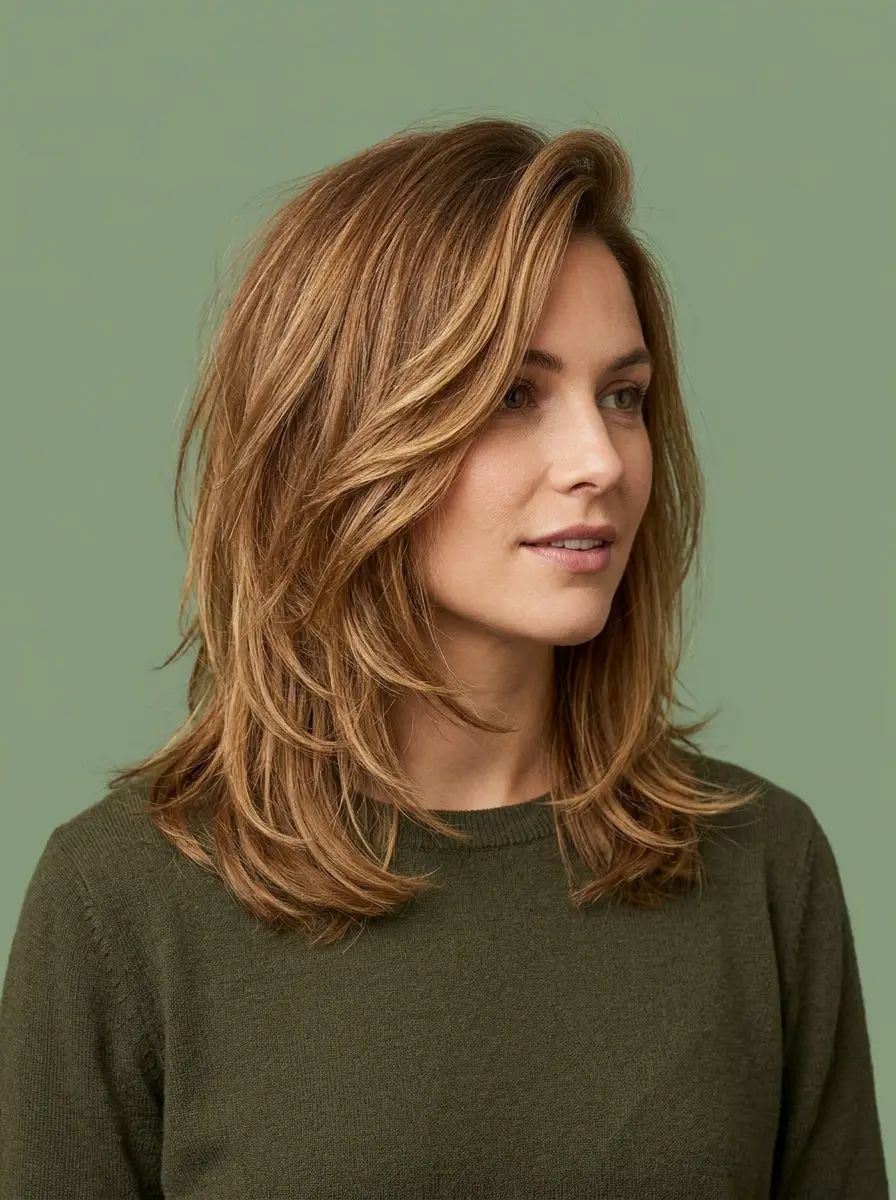
A deep side part paired with layering through the crown is one of the most effective and low-effort solutions for medium-length hair that tends to sit flat and lifeless at the top.
Side part creating root lift: Moving the part to one side forces the hair over the top of the head, which naturally pushes the roots upward and away from the scalp, creating lift that products alone cannot sustain.
Crown layers supporting the shape: Light layering specifically through the crown section gives the lifted area structure and helps it hold its height rather than collapsing back down by mid-morning.
Styling tip: Blow-dry the hair against the direction of the final part first, then flip it back into place for dramatically better root lift that holds reliably through the entire day without any additional product.
Salon instruction: Ask for medium layers with a specific focus on light crown layering that supports a side part, keeping the top softly shaped without too much aggressive thinning that would make fine sections collapse.
18. Softly Sculpted Medium Layers
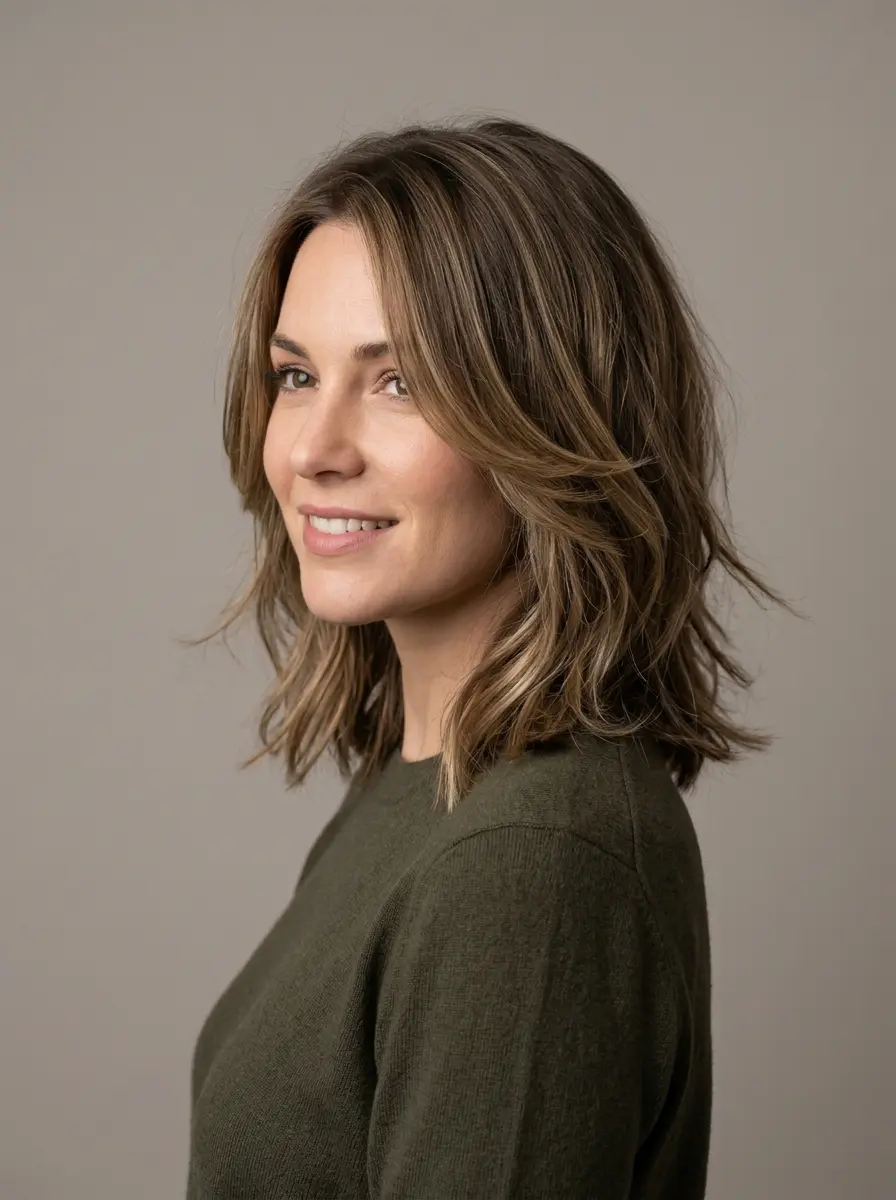
Sculpted layers occupy the territory between structured and relaxed — they give the cut a shaped, deliberate quality without the rigidity of a heavily styled result. This is medium layering at its most wearable.
Sculpting without harshness: Soft sculpting through the face area and ends creates a shaped outline that looks considered and put-together without any sharp lines or overly defined sections that age quickly.
Fringe integration: A fringe that is cut in the same soft, sculpted spirit as the rest of the layers gives the whole style a sense of unity, where every element feels like part of the same intentional design.
Styling tip: Blow-dry with a medium round brush using smooth, sweeping movements rather than tight rolling, which creates the soft, sculpted shape this cut is designed around without over-setting any one section.
Salon instruction: Ask for softly sculpted medium layers with a light fringe, specifically requesting that the finish be smooth and blended throughout so the whole cut has a gentle, shaped quality rather than sharp or choppy sections.
19. Textured Shoulder-Length Cut
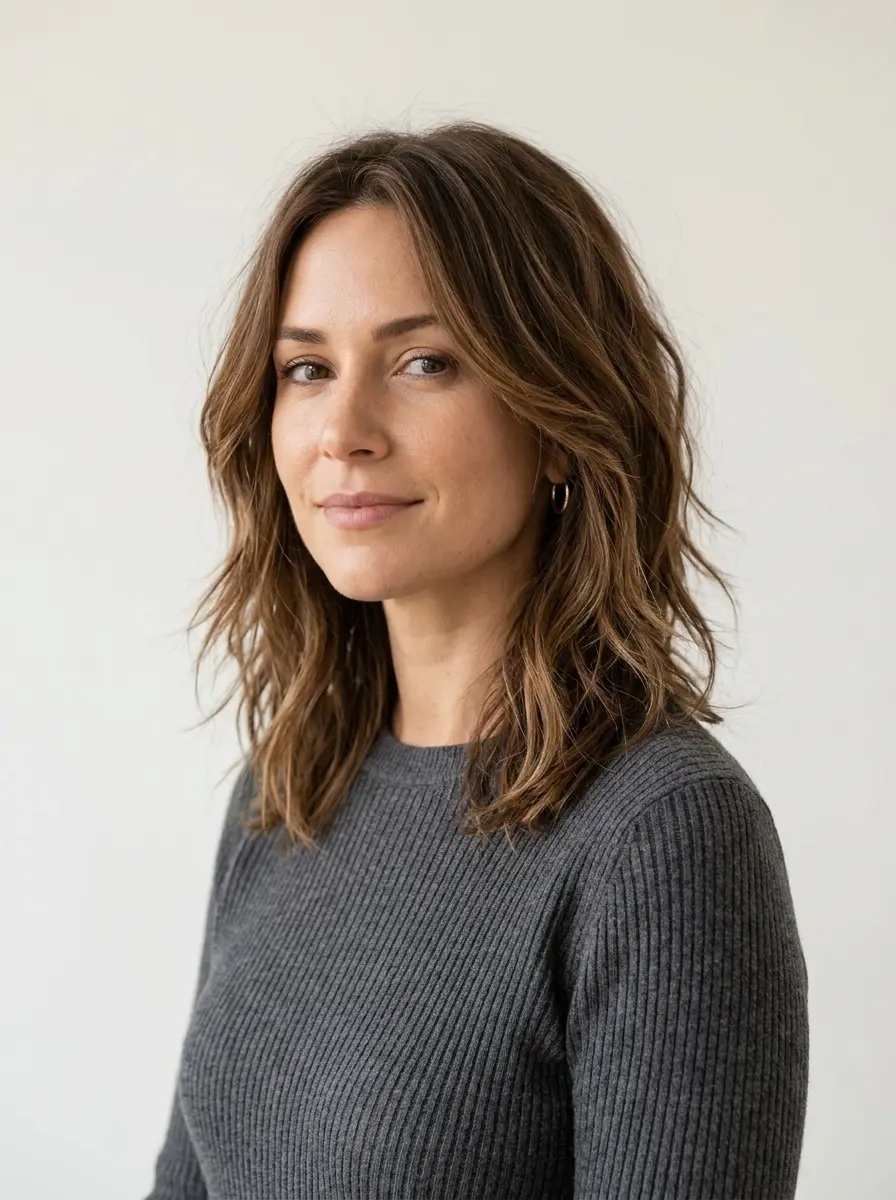
Texture built into a shoulder-length cut changes the entire feel of the style. It removes the heaviness of a solid, single-length outline and replaces it with something that looks lighter, more relaxed, and significantly more current.
Interior texture, exterior shape: Adding texture specifically through the inside sections of the cut lightens the hair and improves movement while keeping the outer silhouette looking clean, intentional, and well-maintained.
Ends holding the line: Despite the interior texture work, the ends in this cut remain strong enough to hold the shoulder-length outline clearly, so the style looks shaped and deliberate rather than thinned out and sparse.
Styling tip: A sea salt spray applied to the mid-lengths and ends before rough-drying with your fingers brings out the textured quality of this cut naturally, without requiring any precision styling or heat tools.
Salon instruction: Ask for a textured shoulder-length cut with the texture worked through the interior layers rather than the outside, keeping the outer perimeter clean and strong so the silhouette stays neat while the inside feels lighter.
20. Wavy Collarbone Cut With Internal Layers
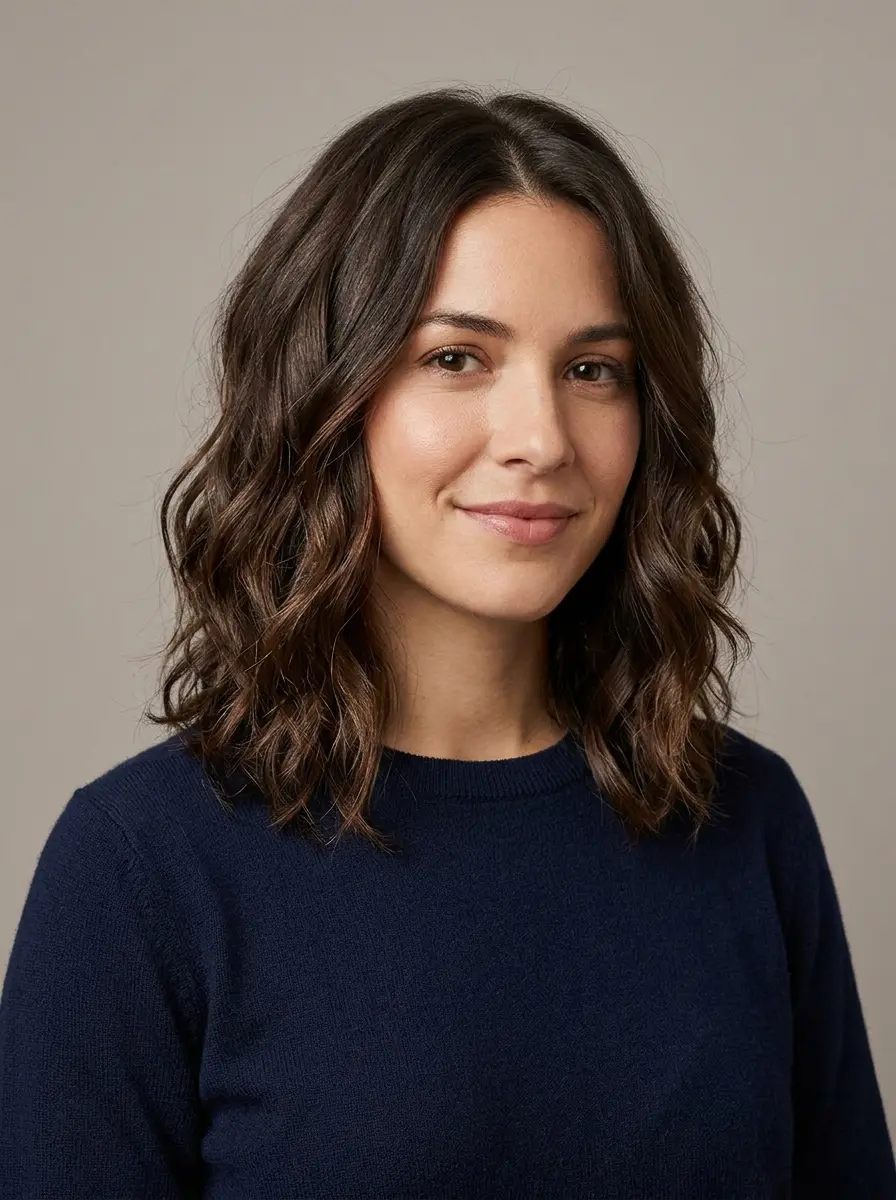
Wavy hair at collarbone length with interior layers is one of the most flattering and effortless medium-length combinations available. The waves interact beautifully with the hidden layers to create natural, organic movement.
Internal layers and wave enhancement: Layers worked through the inside of the cut reduce the bulk between waves, allowing each wave to form more freely and fall more clearly rather than being pressed flat by excess weight above.
Outer shape stays soft: Because the layers are internal rather than surface-visible, the finished cut looks smooth and naturally wavy from the outside without any obvious stepped sections that would look harsh or dated.
Styling tip: Apply a wave-enhancing cream through damp hair, twist small sections loosely, and allow to air-dry completely before separating gently with fingers for defined, frizz-free waves that show off the internal layers beautifully.
Salon instruction: Ask for a collarbone cut with internal layers that remove weight from within the hair rather than creating visible short layers on the surface, keeping the outer shape soft and natural with enough movement for waves to form freely.
Frequently Asked Questions
What is the best medium length haircut with layers for everyday wear? The best everyday option depends on your hair type and how much styling time you want to commit to. Low-maintenance medium layers or a lived-in layered lob work beautifully for minimal-effort mornings. If you enjoy a quick blowout, the blowout layers cut or the softly sculpted version gives you a polished result without complexity. Bringing a photo of your preferred finish to your stylist makes a significant difference in getting the right result.
Do layers make medium hair look thinner or fuller? It depends entirely on where the layers are placed and how aggressively they are cut. Soft, strategically placed layers that maintain fullness at the ends actually make medium hair look better proportioned and more balanced. Overly aggressive thinning or too many short layers at the ends can strip density and make fine or thin hair look sparser, which is why communicating clearly with your stylist about the finish you want is so important.
Are medium length layers suitable for thick hair? Absolutely, and they can be genuinely transformative for thick hair. Medium layers remove weight from the sides and interior sections, making thick hair sit significantly better, feel lighter, and behave more predictably. Internal layers or longer blended layers are usually the most effective approach for thick hair since they improve manageability without creating a choppy or overly textured exterior finish.
Can fine hair benefit from medium length layers? Yes, but the approach needs to be more careful. Fine hair responds best to soft, minimal layering rather than heavy thinning or lots of short pieces. Airy layers through the mid-lengths and a light blended finish at the ends add movement while preserving enough density to keep the overall shape looking full rather than wispy. Always ask specifically for soft layering techniques when visiting a stylist with fine hair.
What is the difference between a layered lob and a layered shoulder-length cut? A layered lob typically sits at or just above the collarbone and tends to have a more compact, neat silhouette that is easy to style and maintain. A layered shoulder-length cut allows slightly more movement through the lower sections and can feel a little softer and more fluid overall. Both are excellent choices — the right one simply depends on whether you prefer a tidier, more structured outline or something with a little more natural fall and movement.
Do medium layered cuts need a lot of product to look good? Most medium layered cuts require very little product when the cut itself is well-designed. Some styles, like the natural texture or low-maintenance versions, look genuinely great with just a leave-in conditioner or a light texturizing spray. Others, like the blowout layers or sculpted options, benefit from a round brush and a small amount of styling cream. In every case, the cut should do most of the work rather than relying on heavy product to compensate for a poorly placed layer.
The Quiet Power of a Well-Layered Medium Cut
There is a specific kind of satisfaction that comes from a haircut that genuinely suits you — one where the shape works with your hair’s natural behavior rather than against it. Medium length cuts with layers occupy that space more reliably than almost any other cut category.
The right layering at this length changes not just how the hair looks but how it feels to wear every day. Hair that moved reluctantly before suddenly has direction and energy. Sections that used to clump together now separate naturally. The whole experience of styling becomes easier because the cut is already doing half the work.
That is the real value of a good layered medium cut — it removes effort rather than adding it, and it makes every day feel like a better hair day.
🌿 The Cut That Makes Everything Click
Choosing a new medium length layered haircut is one of the most satisfying decisions you can make for your hair. It is not a dramatic change that requires weeks of adjustment — it is a refinement that immediately makes your existing hair feel better, look better, and behave better.
Every style in this collection was chosen because it delivers that specific combination of shape, movement, and genuine everyday wearability. Whether you are drawn to the clean precision of a collarbone lob with invisible layers or the relaxed charm of a soft mid-length shag, there is a cut here that suits your texture, your face shape, and the way you actually live with your hair.
Save the ones that feel most like your personal style. Take them to your stylist and have a specific conversation about your hair’s natural behavior, what you want more of, and what you want less of.
The right layered medium cut is not just a haircut — it is the version of your hair you have been looking for.