16 Fashion Tips for Short and Curvy Women That Make Every Outfit Look Polished
Let’s start with the most important thing: your body is not a problem to solve.
Every style tip in this guide exists to help your clothes work with your shape — not against it.
The goal is never to shrink yourself or hide who you are.
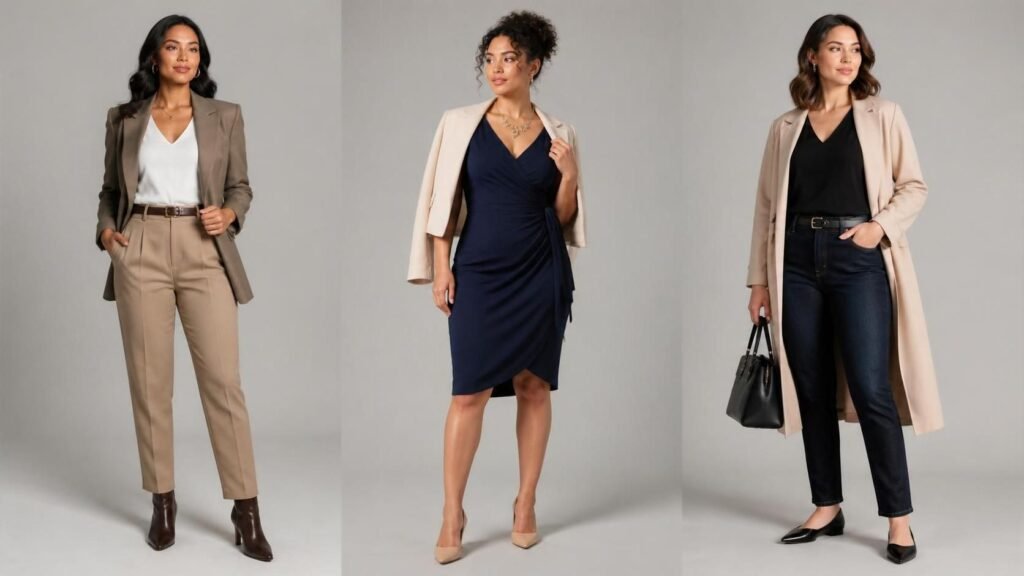
It is about finding the cuts, colors, and combinations that make you feel genuinely great every single time you get dressed.
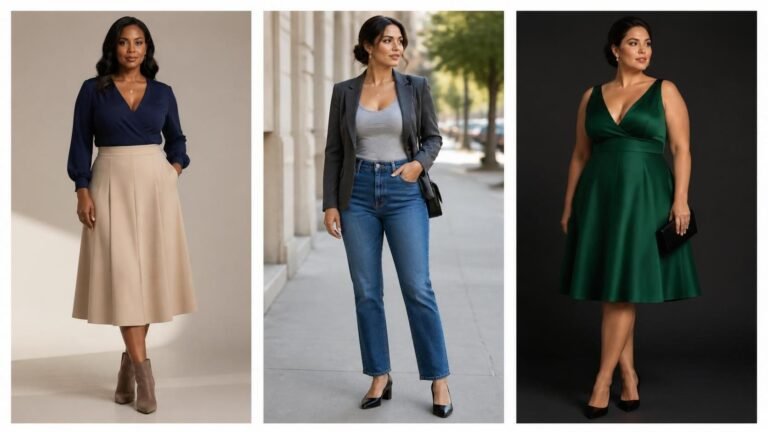
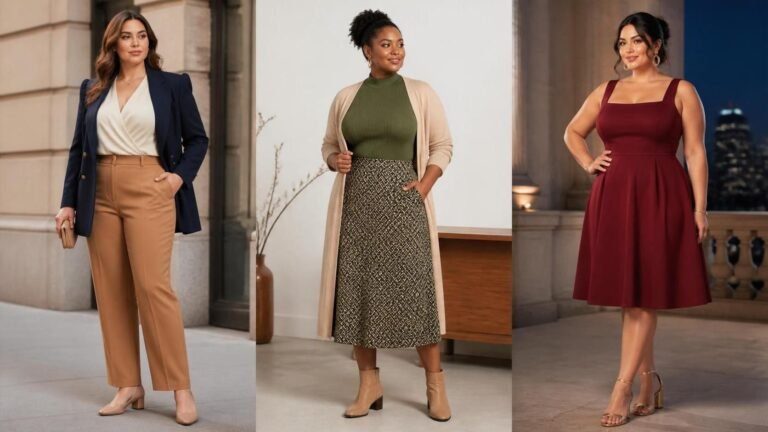
Below are 16 real, practical fashion tips for short and curvy women — picked for balance, confidence, and that effortlessly put-together look.
1. Start With a Bra That Actually Fits You Properly
Your bra is the foundation that every single outfit sits on top of.
A poorly fitted one changes the shape of your torso, pushes things in the wrong directions, and makes even great clothes look off.
Getting properly fitted — even just once — is genuinely one of the highest-impact styling decisions you can make.
Support first: A bra that lifts and separates properly smooths your torso and makes everything layered on top sit far more cleanly.
Signs it fits: The band stays level all the way around, straps do not dig in, and nothing spills over the cup edges at any point.
Where to get fitted: Most lingerie departments offer free fittings — or use an online measuring guide and a soft tape measure at home for accurate sizing.
Upgrade tip: Once you have your correct size, invest in two or three well-made everyday bras — the difference in how your clothes fit will genuinely surprise you.
2. Try Shapewear When You Want a Smooth Base
Shapewear is completely optional — and it works best when it is light, breathable, and worn by choice.
Think of it as a baseline tool for specific outfits rather than something you need under everything every day.
A smooth surface under a fitted dress or structured skirt simply makes the garment drape more cleanly.
Choose lightweight options: Seamless, soft shapewear that smooths without squeezing is far more comfortable and effective than anything restrictive.
When it helps most: Under bodycon dresses, tailored trousers, or any outfit where visible lines would bother you throughout the day.
Skip it freely: For casual outfits, relaxed fits, or any day when comfort is the priority — shapewear is a tool, not a requirement.
Comfort check: If you find yourself wanting to remove it before noon, it is either the wrong size or the wrong style — try a different cut or brand.
3. Choose Fitted Pieces Over Oversized Ones
Baggy clothes feel like a safe choice but they often work against a shorter, curvier frame.
When fabric hangs away from the body instead of following it, the eye reads width rather than shape.
Fitted does not mean skin-tight — it means clothing that acknowledges your waist exists and follows your natural line.
The sweet spot: Look for pieces that skim the body — not clinging, not tenting — with gentle shaping through seams or darts at the waist.
If you love oversized: Balance it with one fitted piece — a loose top with straight-leg jeans, or a flowy skirt with a snug top always works.
Shoulders matter: Make sure tops and jackets fit your shoulder width correctly — a top that is too wide through the shoulders adds bulk regardless of how it fits elsewhere.
Tuck trick: A simple front tuck or half-tuck on a slightly loose top instantly creates a waist and restores proportion without any tailoring needed.
4. Build Outfits Around Monochrome Dressing
Wearing one color or similar tones from top to bottom is one of the most effective styling tricks for creating a longer, leaner silhouette.
When the eye has no contrasting color to stop at, it travels uninterrupted from your neckline to your ankles.
All black, all beige, tonal navy, soft cream with ivory — all of these work beautifully and look genuinely sophisticated.
Add interest through texture: Mix matte and sheen fabrics, ribbed knits with smooth satin, or a suede jacket over a silky top — texture keeps monochrome exciting.
The shoe trick: Match your footwear to your trouser or skirt color to extend the unbroken color line all the way down your leg.
Tonal variation works too: You do not need to match exactly — pairing camel with tan or charcoal with black creates the same elongating effect with more visual depth.
Start simple: A head-to-toe black or navy outfit is the easiest entry point — and it never fails to look polished and put-together.
5. Pick Necklines That Open Up Your Upper Body
The right neckline draws the eye upward, elongates your neck, and creates the visual impression of a longer torso.
For short and curvy women, the neckline is one of the quickest ways to instantly shift proportions in your favor.
A well-chosen neckline works for you every time you get dressed without any extra effort.
V-neck and scoop necks: These are universally flattering because they create a vertical line that lengthens the neck and chest area beautifully.
Square and sweetheart necklines: Both add structure and frame the face while drawing attention to your collarbone and upper body.
Off-shoulder and wide boat necks: These widen your shoulder line visually, which creates balance against fuller hips and makes the waist appear smaller.
High-neck styling hack: If you love a high or turtleneck, layer a long pendant necklace over it — the vertical line counteracts the closed-off effect and adds length.
6. Wear Prints the Smart Way
Prints are absolutely an option for short and curvy women — the key is choosing scale and placement wisely.
Very small, busy prints can make surfaces look larger and more visually noisy than intended.
Medium to larger prints, placed thoughtfully, look beautiful and confident on curvy frames.
Scale up: Medium florals, bold geometrics, and abstract prints all work better than tiny all-over patterns which can read as busy and add visual weight.
Placement awareness: Prints on tops and jackets keep visual interest above the waist, which draws the eye upward and creates natural balance.
Anchor with solids: If you wear a printed top, pair it with a solid bottom — the contrast grounds the outfit and stops it from feeling overwhelming.
Placement prints: Look for designs that run down the side panels or center front of a garment — they contour and slim the silhouette without any extra effort.
7. Use Vertical Lines and Stripes to Your Advantage
Lines are one of the oldest and most effective styling tools — and they genuinely work when used with intention.
The direction a line travels determines where the eye goes, which means you can use lines to guide attention exactly where you want it.
Knowing which lines work for your body makes shopping and getting dressed significantly easier.
Vertical stripes: These draw the eye up and down rather than across, creating a longer and leaner visual impression every single time.
Diagonal seams and panels: Diagonal lines in garment construction naturally direct the eye away from wider areas and add a subtle slimming effect.
Horizontal stripe rule: Avoid horizontal stripes placed directly across the widest parts of your body — but a striped top tucked into high-waisted trousers works beautifully.
Seam details matter: Look for garments with vertical seams, princess lines, or side paneling — these create structure and length through the construction itself.
8. Use Darker Shades Strategically
Deeper tones recede visually, which means they de-emphasize an area rather than drawing the eye toward it.
This does not mean living in black forever — it means understanding how color placement affects your proportions.
Used thoughtfully, color becomes a quiet but powerful tool in every outfit you put together.
Color placement: Darker shades on your lower half with lighter tones on top draws the eye upward and creates a naturally balanced silhouette.
Beyond black: Deep burgundy, forest green, rich navy, plum, and dark olive all do the same job as black while giving you far more variety and personality.
Pop with accessories: Once your outfit base is tonal and balanced, a bright bag or bold earrings add personality without disrupting the clean lines you have built.
Color blocking tip: Wearing a darker shade on one side of your body and a lighter one on the other creates an optical narrowing effect that is incredibly effective.
9. Avoid Heavy Fabrics and Bulky Details
The material your clothes are made from changes everything about how they sit on your body.
Stiff, thick fabrics hold their own shape rather than following yours — and on a curvy frame, that means added volume in all the wrong places.
Soft, drapey materials move with your body and create a much more flattering result with no extra effort.
Fabric to seek: Crepe, viscose, soft jersey, lightweight denim, and cotton blends all drape well and follow your natural curves without clinging.
Drape test: Before buying any top or dress, hold the fabric up and let it fall — if it flows, it will flatter; if it holds a stiff shape, it will add bulk.
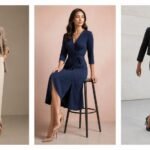
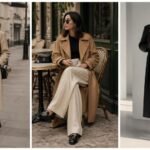
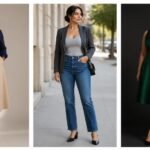
Details to avoid: Ruffles, puff sleeves, large patch pockets, and heavy embellishment placed across the chest, shoulders, or hips all add visual volume exactly where you do not want it.
Sleeker is stronger: Garments with subtle structure — a single pleat, a gentle dart, a clean seam — look far more polished on curvy frames than anything heavily embellished.
10. Choose Silhouettes That Were Made for Your Shape
Certain dress and skirt shapes work consistently well on short and curvy bodies because of how they manage proportion and balance.
Knowing your go-to silhouettes means you can shop faster, choose more confidently, and stop second-guessing yourself in fitting rooms.
The shapes below are not rules — they are reliable starting points that almost always deliver.
A-line skirts and dresses: They fit at the waist and flare gently outward, creating beautiful balance between the upper and lower body every time.
Wrap styles: The diagonal line of a wrap front defines the waist naturally and works on a wide range of body proportions without any tailoring needed.
Peplum placement: If you wear peplum, make sure the flare starts at or just above your natural waistline — too low and it widens the midsection instead of defining it.
Asymmetric and high-low hems: These add visual movement and create a diagonal line across the lower half, which reads as length and keeps the eye traveling vertically.
11. Find the Right Jeans and Pants for Your Frame
The right pair of jeans changes your entire silhouette — and the options go far beyond skinny styles.
High-waisted cuts define the smallest part of your torso and visually add length to your legs at the same time.
A clean, well-proportioned leg line matters far more than which specific style you choose.
High-waisted is key: Any trouser or jean style in a high-waisted cut immediately defines the waist and creates the appearance of longer legs beneath.
Straight and bootcut work beautifully: These leg shapes add visual balance below the hip and give a grounded, proportioned finish that flatters curvy frames.
Inseam and rise awareness: Jeans that crop just above the ankle elongate the leg — styles that end at mid-calf visually shorten your frame, so avoid that cut.
Avoid extreme fits: Super tight through the thigh with a skinny ankle can overemphasize the hip area — a clean straight leg through the thigh is always more balanced.
12. Layer Smartly Without Adding Bulk
Layering on a shorter frame requires a light touch and a clear strategy — otherwise it adds width rather than dimension.
The goal is to create vertical interest and depth without stacking fabric across the widest parts of your body.
When done well, layering actually makes you look more polished and put-together than a single layer alone.
Keep outer layers open: An open blazer, longline cardigan, or sleeveless vest creates a long vertical line down the center of your body that slims beautifully.
Tonal layering works best: Layering similar shades — cream over white, charcoal over black — maintains the elongating effect while adding depth and visual interest.
Length matters: Outer layers that end just below your widest point — whether that is the hip or the bust — keep proportions long and avoid chopping your frame.
One structured layer at a time: Avoid stacking two heavy or bulky pieces — one structured item over a fitted base is always the cleaner and more flattering approach.
13. Use a Belt to Define Your Waist
A belt is one of the most powerful proportion tools in your wardrobe — but placement is everything.
Position it at the natural waist, which sits just above the belly button, for the most flattering result.
Too low and your leg line shortens; too high and it distorts your torso length rather than highlighting it.
Wide belts: These work beautifully over dresses, coats, and fluid midi styles — they create a defined waist without competing with the rest of the outfit.
Slim belts: Better suited to high-waisted trousers or skirts where you want to add a finishing detail without drawing too much attention to the waistline itself.
Color match for length: Belting in the same color as your top or dress keeps the vertical line unbroken, which reads as longer and leaner overall.
Skip the belt sometimes: Not every outfit benefits from one — if a dress already has structure or waist seaming, adding a belt can over-define and look busy.
14. Choose Accessories That Complement Your Frame
Accessories work best for short and curvy women when they add length and draw the eye upward rather than adding visual weight.
The wrong proportions in accessories can interrupt clean lines and make an otherwise great outfit feel off-balance.
A few well-chosen pieces always do more for your look than several competing ones worn together.
Long necklaces: These create a vertical focal point that draws the eye down through the center of the body, which adds length visually and elegantly.
Drop earrings: They draw attention to the face and neck while adding a sense of height — far more flattering than very wide or chunky earrings on a petite frame.
Bag proportions: Medium and mini bags look the most proportional — oversized totes can overwhelm a smaller frame and make you appear shorter by comparison.
Strap placement: Adjust crossbody and shoulder bag straps so the bag does not rest directly at your widest point — it should sit above or below the hip, not across it.
15. Pick Footwear That Extends Your Leg Line
Shoes are one of the most overlooked styling tools for short women — and the right choice makes your legs look noticeably longer without any heels required.
The key is keeping the leg line as uninterrupted as possible from your hemline downward.
A few simple footwear strategies deliver a significant difference in how tall and proportioned you appear.
Nude or skin-tone shoes: These blend into your leg rather than creating a visual break at the ankle, which makes your legs look longer from across the room.
Pointed toe styles: These visually extend the foot forward, creating the impression of a longer leg line than a rounded or square toe does.
Ankle strap caution: Ankle straps place a strong horizontal line across the narrowest part of your leg, which cuts the leg line and makes you appear shorter.
Knee and over-the-knee boots: Worn with the right hemline — a mini skirt or midi dress — these create a long continuous leg line that is extremely flattering on shorter frames.
16. Highlight the Features You Love Most
The most powerful styling decision you can make is choosing to showcase what you genuinely love about yourself.
Great legs? Short hemlines and side-slit skirts are your best friends.
Defined arms? Sleeveless tops and cold-shoulder styles show them off beautifully.
Lead with your favorites: When you dress to highlight a feature you feel confident about, the overall look carries energy and intention that people respond to immediately.
Confidence is the real outfit: People genuinely notice how you carry yourself before they register any detail of what you are wearing — lead with that every time.
Stop dressing defensively: Choosing clothes based only on what to hide creates outfits that feel safe but never exciting — dress to show up, not to disappear.
Wear what makes you feel alive: The outfit that makes you stand a little taller, smile when you catch your reflection — that is always the right choice regardless of any rule.
Frequently Asked Questions
Q1. What is the best clothing style for short and curvy women? Fitted or semi-fitted pieces with defined waists, high-waisted bottoms, V-necklines, and monochrome outfits all work consistently well for short and curvy body types.
Q2. Should short curvy women avoid oversized clothing? Not completely — but balance is key. If you wear an oversized piece, pair it with something fitted on the opposite half to maintain proportion and avoid losing your shape entirely.
Q3. What jeans work best for short and curvy women? High-waisted straight-leg or bootcut styles are the most flattering — they define the waist, balance the hips, and visually elongate the leg line beautifully.
Q4. How can short curvy women look taller without heels? Monochrome dressing, vertical stripes, high-waisted bottoms, nude footwear, and matching shoes to trouser color all create the visual impression of extra height effectively.
Q5. What prints should short curvy women avoid? Very small busy prints and wide horizontal stripes placed at the widest part of the body tend to add visual volume — medium to large prints and vertical or diagonal patterns work much better.
Q6. How do accessories affect proportions for short curvy women? Long necklaces, drop earrings, and proportionally sized bags all add length and draw the eye upward — chunky oversized accessories or wide ankle straps interrupt your leg line and can make you appear shorter.
The Outfit Confidence Nobody Talks About
Here is something worth knowing before you go shopping next time: the most stylish short and curvy women you admire are not wearing any special formula.
They have simply figured out which pieces make them feel like themselves — and they wear those things unapologetically. That ease and comfort in their own choices is exactly what reads as style from the outside. You can absolutely build that same thing.
It starts with understanding your own body well enough to know what works, trying things without the pressure of perfection, and giving yourself permission to actually enjoy getting dressed rather than treating it like a problem to solve every morning.
Style for short and curvy women is not about rules. It is about building a wardrobe that reflects who you already are — and wearing it like you mean every single choice.
Glow Up, Show Up
Fashion is not about changing yourself — it is about expressing yourself more clearly.
These 16 tips are a starting point, not a strict playbook. Take what resonates, leave what does not, and always come back to how you actually feel when you look in the mirror.
The outfit that makes you walk out the door feeling ready is always the right one — regardless of whether it follows any rule on this list or anywhere else.
You are not dressing to impress anyone. You are dressing for the version of yourself who deserves to feel beautiful, confident, and completely at home in her own skin every single day.