10 Best Haircuts for Thin Hair That Instantly Look Thicker and Fuller
Thin hair is not a limitation — it just needs the right cut working in its favor.
The difference between flat, limp hair and full, bouncy hair often comes down to one salon appointment.
Strategic shapes, smart layering, and the right lengths can completely transform how dense and voluminous your hair appears.
Whether your hair has always been fine or has gradually thinned over time, there is a perfect cut for you.
Below are 10 game-changing haircuts for thin hair that add instant fullness, real body, and beautiful texture without any extensions or teasing required.
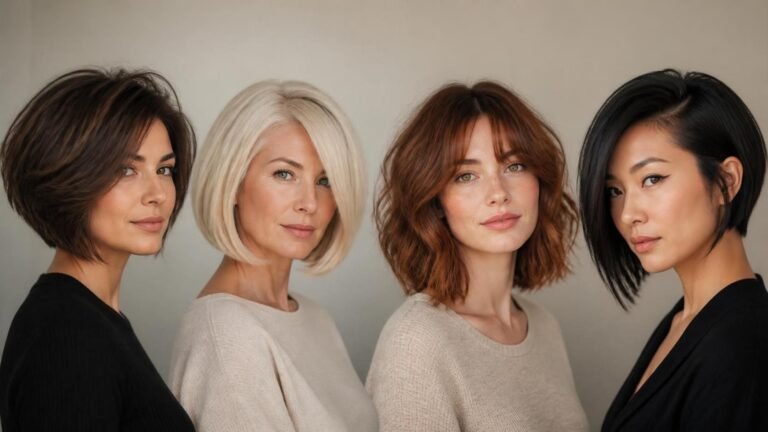
1. Blunt Bob
The blunt bob is one of the most powerful cuts you can get for thin hair — and the reason is simple.
When all your hair ends at the exact same length, the edge looks dense and full rather than wispy and sparse.
There are no layers to thin out the ends, which means every strand of hair contributes to that satisfying visual weight at the bottom.
Why it works: The clean-cut hem creates the illusion of twice as much hair because all strands land together in one solid, defined line.
Best length: A chin-to-jaw-length bob gives the most noticeable bounce and body — going too long removes the weightiness that makes this cut work so well.
Best for: Straight or slightly wavy fine hair that tends to fall flat and lose structure by midday.
Part placement: Switching between a center and side part gives you completely different looks from the same cut — both add dimension in different ways.
Styling tip: Apply a thickening spray to damp hair before blow-drying for extra density, and finish with a paddle brush to create that signature sharp, glossy edge.
2. Textured Pixie Cut
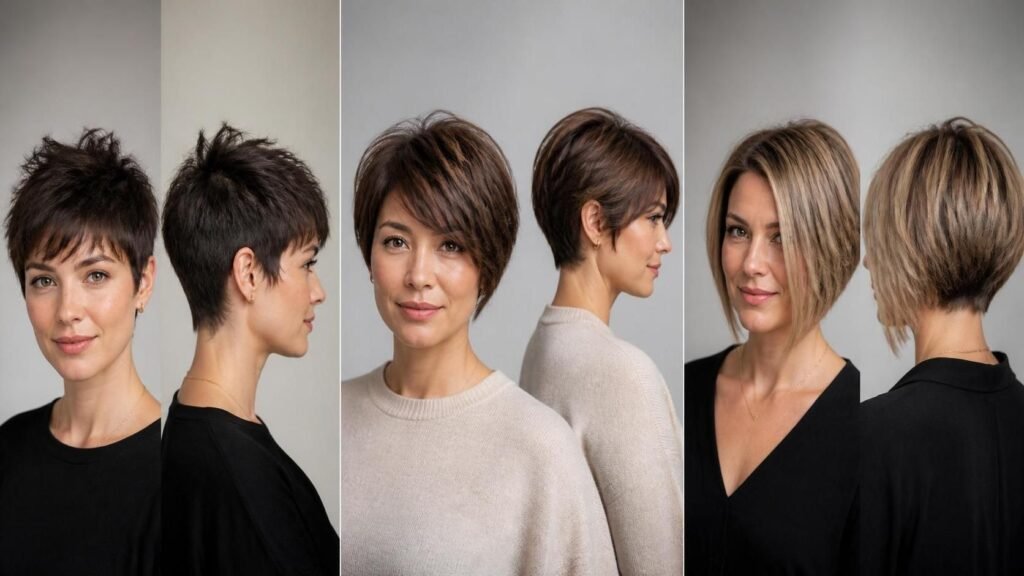
If you want to fully embrace your thin hair and turn it into a genuine style asset, a textured pixie cut is one of the boldest and most effective choices you can make.
Short layers at the crown create lift and volume exactly where flat hair needs it most.
The texture throughout the cut means your hair moves freely rather than sitting limp against your head.
Why it works: Short cuts eliminate the weight that drags fine hair down — suddenly your hair is light enough to lift and move at the roots with minimal effort.
Best for: All hair textures including straight, wavy, and curly — the pixie genuinely works on every type of thin hair regardless of natural pattern.
Product to use: A lightweight texturizing cream or a small amount of mousse worked through damp hair gives you definition and lift without heaviness.
Crown volume tip: Ask your stylist to keep slightly more length at the crown and cut in short, pointed layers — this creates volume exactly where you want it most.
Low maintenance bonus: A textured pixie requires almost no daily effort — a quick scrunch with texture cream and you are done in under five minutes every morning.
3. Lob With Subtle Layers
The lob — or long bob — is the haircut that solves the biggest challenge for thin-haired women who love length: how to keep hair from looking flat and stringy as it grows.
Subtle internal layers give the lob movement and body while the blunt-ish ends maintain visual weight and fullness.
It is genuinely the best of both worlds — enough length to style and enough shape to look intentionally full.
Why it works: The lob length sits above the shoulders which stops gravity from pulling fine hair completely flat the way longer lengths tend to do.
Layer placement matters: Ask for soft, minimal layers blended through the mid-lengths — not heavy or obvious ones — to add movement without thinning the ends.
Best for: Fine straight or wavy hair that wants the illusion of fullness without going shorter than collarbone length.
Styling option one: Wrap sections around a large-barrel curling iron for soft, full waves that look significantly thicker than your natural texture alone.
Styling option two: Blow-dry with a round brush and a side part with volume spray for a sleek, polished version that still has noticeable body at the roots.
4. Curtain Bangs With Layers
Curtain bangs are one of the most flattering additions you can make to thin hair because they add instant framing, dimension, and the visual impression of density right at the front.
Unlike a heavy blunt fringe that can look sparse on fine hair, curtain bangs are soft, parted in the center, and swept outward — which works beautifully with thinner textures.
They draw attention to your eyes, frame your face, and give your hair a purposeful, styled look even on low-effort days.
Why it works: The layered, face-framing pieces add shape and dimension at the front section where flat hair is most visible and most noticed.
Best for: Fine or thinning hair that has some natural movement or slight wave — the bangs enhance whatever texture already exists rather than fighting it.
Blow-dry technique: Use a small round brush to roll the curtain bangs outward and away from the center part while drying — this builds softness and volume into the shape from the very start.
Grow-out friendly: Curtain bangs are one of the most forgiving fringe styles to grow out — they simply blend back into face-framing layers with very little awkward in-between phase.
Styling shortcut: A quick blast with a round brush and a light-hold hairspray is all you need each morning to refresh the shape and keep the volume looking intentional.
5. Choppy Shoulder-Length Cut
A choppy shoulder-length cut uses a mix of blunt and jagged cutting techniques to create depth, texture, and the appearance of much fuller hair than the strand count alone would suggest.
The slight irregularity in the ends is what makes this cut feel lived-in and effortlessly voluminous.
It reads as naturally thick because the varying lengths at the ends prevent that flat, uniform look that fine hair tends to fall into.
Why it works: The combination of blunt and textured sections creates visual depth throughout the cut — your hair appears to have layers upon layers of body and movement.
Best for: Fine, straight, or lightly textured hair that wants edge and personality without committing to a short cut or heavy layering.
Product for this cut: Sea salt spray or a lightweight texture powder applied to dry hair enhances the choppy finish and gives the ends extra grip and visible separation.
Ask your stylist for: Point-cut ends and a few disconnected pieces through the mid-length — this creates that specifically achieved choppy texture that makes fine hair look intentionally full.
Refresh between washes: Dry shampoo at the roots and a scrunch of texture spray through the lengths revives this cut beautifully on second and third-day hair.
6. Angled Bob
The angled bob — shorter at the back and gradually longer toward the front — is a masterclass in creating volume through geometry rather than through actual hair density.
The stacked layers at the back build height and fullness exactly where fine hair tends to go completely flat.
The forward-sweeping angle draws the eye toward the face and creates a modern, polished silhouette that looks anything but flat.
Why it works: The stacked back section creates a volume illusion that reads as thickness — the layering in the nape area lifts the entire back of the head and adds structural fullness.
Best for: Fine hair of any texture that wants a sleek, modern result with noticeable volume and a shape that holds throughout the day.
Root-lifting tip: Apply a root-lifting or volumizing spray to the back and crown sections before blow-drying — this is where the volume lives in this cut and where product makes the biggest difference.
Styling trick: After drying, tuck one side of the longer front section behind your ear for a clean asymmetric effect that highlights the angle and adds intentional personality.
Maintenance note: The angled bob requires trims every six to eight weeks to maintain its shape — the stacked back grows out quickly and loses the volumizing effect when it gets too long.
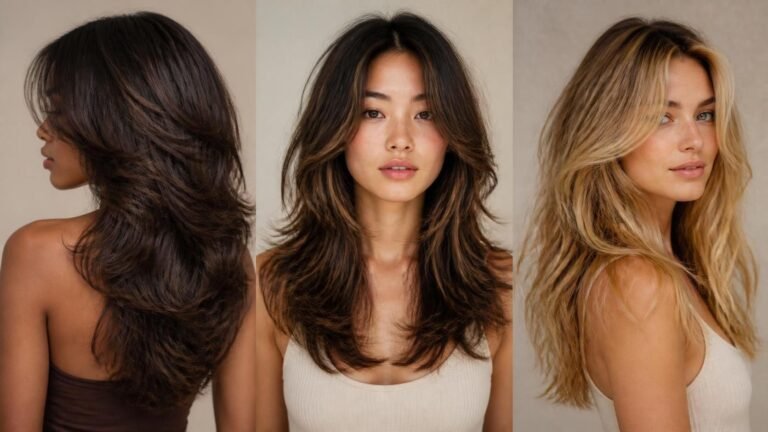
7. Layered Shag Cut
The modern shag is one of the most volume-forward haircuts available for thin hair — it uses soft, feathered layers and curtain bangs to build bounce, movement, and body throughout the entire length.
Unlike heavy, dramatic shag cuts of the past, the updated version is lighter and more controlled while still delivering remarkable fullness for fine textures.
It gives thin hair permission to move freely in every direction, which is exactly the kind of life that flat hair desperately needs.
Why it works: Strategically placed layers through the crown, mid-length, and ends lift the hair away from the head and keep it from collapsing into a single flat panel.
Best for: Wavy or lightly curly thin hair that wants its natural texture enhanced rather than smoothed away — the shag works with your wave pattern rather than against it.
Product approach: Scrunch a small amount of mousse or curl-enhancing cream through damp hair and either air-dry or diffuse — this maximizes the natural movement the shag creates.
Texture is the goal: Do not try to straighten a shag cut — the style is designed to look slightly undone and textured, and that is precisely what makes fine hair look remarkably full in this shape.
Curtain bang pairing: A shag cut with curtain bangs is one of the most complete volume-creating combinations available for fine, thinning hair — the bangs add front density while the layers build body throughout.
8. Blunt Cut With Deep Side Part
Sometimes the most transformative thing is not a new cut at all — it is a new way of parting and wearing the cut you already have.
A deep side part with a blunt cut is one of the simplest and most immediately effective volume tricks for fine hair.
When you pull all of your hair to one side, the strands stack over each other and create a visual impression of significantly more density than a center part ever would.
Why it works: A deep side part concentrates all of your hair on one side of your head, creating a stacked, layered effect that reads as notably thicker from every angle.
Best for: Super fine, pin-straight hair that sits flat with a center part and loses all visible volume by the end of the morning.
The flip trick: After blow-drying your hair in your preferred part, flip it to the completely opposite side for thirty seconds — then flip it back into place. The roots lift significantly and hold that lift far longer than drying without this step.
Root spray placement: Apply volumizing or root-lifting spray specifically to the crown section on the heavier side of the part — this is where the lift matters most for this technique.
No layers needed: The beauty of this approach is that it delivers volume through parting and styling alone — you do not need to change your cut at all to see a dramatic difference in fullness.
9. Collarbone Cut With Face-Framing Layers
The collarbone cut sits at that sweet spot between a lob and longer hair — it grazes the collarbone and uses minimal, seamlessly blended layers to build volume at the sides and front without thinning the overall density.
It is versatile enough to wear straight, wavy, or with soft curls, and the face-framing layers give it a polished, purposeful quality that always looks intentional.
This is the cut for thin-haired women who want styling options without sacrificing fullness at the ends.
Why it works: The collarbone length is light enough that gravity does not drag fine hair flat the way longer lengths do, but substantial enough to style in multiple ways with visible body.
Layer placement for this cut: Ask for face-framing layers only — blended through the front sections and around the cheekbones — rather than heavy internal layers that would thin out the ends.
Best for: All hair textures, especially fine hair that wants both length and the ability to wear it styled or natural depending on the day and occasion.
Volume styling: Use a medium-barrel curling iron to add soft, outward-curled ends — this flicks the hair away from the face and creates a fuller, rounder silhouette that photographs beautifully.
Air-dry option: This cut also works beautifully air-dried with a lightweight volumizing spray applied to damp hair — the natural movement of the length creates gentle waves that look fuller than flat-dried straight hair.
10. Feathered Layers on Short to Medium Length Hair
Feathered layers are the original volume-building technique — soft, light, and graduated layers placed specifically at the crown and around the face that create natural-looking lift without removing density from the ends.
This is not the heavy layering that thins fine hair out and makes the ends look sparse — it is precise, targeted layering that adds movement exactly where flat hair needs it most.
The result is hair that appears to have significantly more body and life while the ends remain full and substantial.
Why it works: Feathered layers create separation and movement at the top and mid-sections without thinning the perimeter — so you gain volume above without losing fullness below.
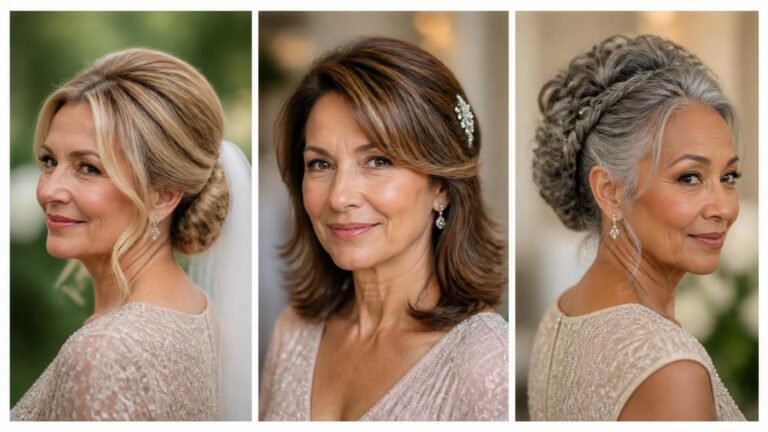
Best for: Fine hair that looks limp and lacks movement, particularly at the crown and around the face where flatness is most visible and most aging.
Root booster technique: Apply root-booster or volumizing spray specifically to the root area before blow-drying upside down — this lifts the feathered layers away from the scalp and sets the volume in place for the whole day.
Round brush finish: Wrap each section around a medium round brush while blow-drying, rolling it upward and inward at the ends — this builds volume into the shape rather than just smoothing it flat.
Avoid over-layering: The key to feathered layers on fine hair is restraint — a few well-placed layers do more for thin hair than aggressive overall layering that leaves ends looking wispy and transparent.
Pro Tips for Making Thin Hair Look Thicker Every Day
Getting the right cut is the foundation — but these daily habits make your thin hair look its fullest between salon visits.
The difference between a good hair day and a flat one is often just a product choice or a technique shift.
These are the tricks that stylists use and now you can too.
Trim regularly: Split ends on fine hair look visibly stringy and sparse — a sharp, clean trim every six to eight weeks keeps your cut looking full and your ends looking dense.
Avoid over-layering: Too many layers on thin hair removes density from the ends where you need it most — always ask your stylist for minimal, strategic layers rather than all-over thinning.
Use the right products: Volumizing mousse, dry shampoo at the roots, and a lightweight root-lifting spray add noticeable body without weighing fine hair down at all.
Blow-dry upside down: Flipping your head forward and drying your roots from underneath is one of the fastest and most effective ways to build lasting lift at the crown.
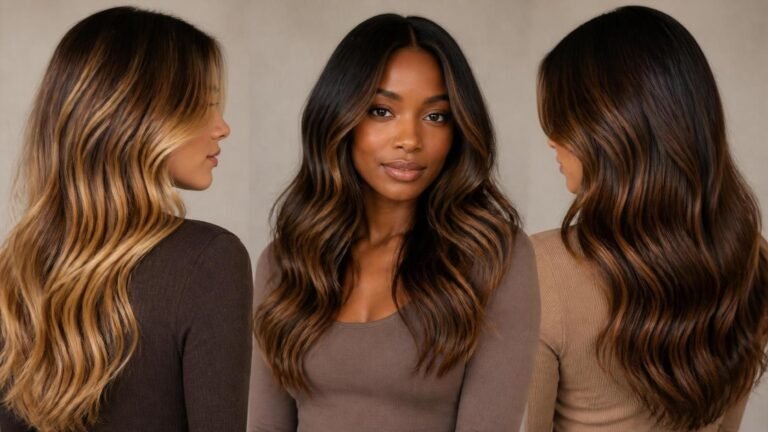
Color for depth: Highlights, balayage, or tonal variation through your color creates the visual impression of dimension and thickness — flat single-process color makes fine hair look one-dimensional.
Choosing Your Haircut by Length
Your preferred length narrows down your options beautifully — here is where to start depending on how much length you want to keep.
Short hair delivers the most dramatic volume results because removing length removes the weight that flattens fine hair.
Medium lengths give you the balance of styling versatility and noticeable fullness without going dramatically short.
Short length picks: The textured pixie, blunt bob, and angled bob all maximize volume at the crown and give fine hair its most full, dense appearance of any length category.
Medium length picks: The lob with subtle layers, the layered shag, and the collarbone cut with face-framing layers all deliver excellent body while maintaining enough length to style in different ways.
Longer length approach: Curtain bangs, feathered layers, and a deep side part technique all work to build volume within longer fine hair — though shorter cuts will always deliver more fullness overall.
Frequently Asked Questions
Q1. What is the single best haircut for very thin or fine hair? The blunt bob is widely considered the most effective cut for thin hair — the clean, even edge creates maximum visual density and the shorter length eliminates the weight that flattens fine hair.
Q2. Are layers helpful or harmful for thin hair? Minimal, well-placed layers add movement and volume — but heavy or excessive layering thins the ends dramatically. Always ask for strategic layers rather than all-over thinning.
Q3. Does shorter hair actually look thicker on fine hair? Yes — shorter lengths remove the weight that pulls fine hair flat and allow the roots to lift freely, which creates a noticeably fuller appearance throughout the cut.
Q4. Can thin hair pull off curtain bangs? Absolutely — curtain bangs are one of the most flattering fringe options for fine hair because their soft, parted shape adds face-framing fullness without requiring the density that a blunt fringe needs.
Q5. What products make thin hair look the fullest? Volumizing mousse applied to damp hair, dry shampoo at the roots for texture and grip, and a lightweight root-lifting spray before blow-drying are the three most impactful products for fine hair volume.
Q6. How often should thin hair be trimmed to maintain fullness? Every six to eight weeks is the ideal trim frequency for thin hair — regular cuts keep the ends sharp and dense, which is the single biggest factor in maintaining the illusion of fullness.
The Haircut Is Only the Beginning
Here is what most people do not realize until they are sitting in the stylist’s chair: the right cut does not just change how your hair looks — it changes how your whole morning feels.
When your hair has shape and volume built into the cut itself, getting ready becomes genuinely easy. You are not fighting your hair to create body that the cut was never designed to give you. The volume is already there, waiting to be activated with a quick blow-dry or a scrunch of product.
That ease compounds over time. You find products that work. You learn the two or three styling moves that make your specific cut look its best. And suddenly, the hair you thought was your biggest limitation becomes one of your most reliable style assets.
Thin hair styled well does not look like thin hair trying harder — it looks like intentionally beautiful, effortlessly full hair. And that starts with the right cut.
Your Best Hair Day Starts Now
You do not need more hair to have great hair — you just need the right shape for the hair you already have.
Every cut in this guide was chosen specifically because it works with fine hair rather than fighting it. Pick the one that fits your lifestyle, your length preference, and the look that genuinely excites you when you imagine it.
Take this list to your next salon appointment. Show your stylist the specific cut that speaks to you. Ask for exactly what you need — minimal layers, a sharp blunt edge, or feathered crown pieces — and watch what one good cut does.
Your fullest hair day is not behind you. It is one appointment away.